In his modern classic, The Cross of Christ, John Stott begins his consideration of Christ’s crucifixion by outlining all the times Jesus speaks of his impending death. For Christ, his earthly mission focused not on his teaching, his healing, nor his ruling; his singular focus was on his sacrifice and his atonement for sin. He knew this and as we remember Christ’s death and resurrection this week, it is good for us to know the same.
In the Synoptic Gospels (Matthew, Mark, and Luke) we find at least nine places where Jesus speaks about his death. In John’s Gospel, we find seven more statements that describe the hour of his death. In all, these passages tell us a great deal about what Jesus’s death accomplished and how our Savior understand the purposes of his crucifixion. Following Stott’s outline (see pp. 25–32), let’s consider what Christ says about his death in the Synoptic Gospels. Perhaps, if time permits, we will return to John’s Gospel. Continue reading →
And God gave Solomon wisdom and understanding beyond measure, and breadth of mind like the sand on the seashore, 30 so that Solomon’s wisdom surpassed the wisdom of all the people of the east and all the wisdom of Egypt. 31 For he was wiser than all other men, wiser than Ethan the Ezrahite, and Heman, Calcol, and Darda, the sons of Mahol, and his fame was in all the surrounding nations. 32 He also spoke 3,000 proverbs, and his songs were 1,005. 33 He spoke of trees, from the cedar that is in Lebanon to the hyssop that grows out of the wall. He spoke also of beasts, and of birds, and of reptiles, and of fish. 34 And people of all nations came to hear the wisdom of Solomon, and from all the kings of the earth, who had heard of his wisdom.
— 1 Kings 4:29–34 —
In Finding Favour in the Sight of God: A Theology of Wisdom Literature, Richard Belcher introduces the reader to the world of biblical wisdom (ch. 1). The majority of his book examines the literary and theological aspects of Proverbs (chs. 2–4), Job (chs. 5–7), and Ecclesiastes (chs. 8–10). And he finishes by showing the relationship between Wisdom and Jesus Christ (ch. 11). In all, his book provides a rich resource for studying Old Testament Wisdom.
Still, one of the most helpful parts of his book is explaining the development of wisdom in the first chapter. Contrasting critical approaches which identify wisdom literature with other ancient Near Eastern religions, Belcher connects wisdom literature in the Bible with Solomon, who was granted such wisdom when he boldly asked for the Lord’s help to rule Israel (1 Kings 3).
In his discussion of wisdom’s development, Belcher draws an important connection between Solomon and his royal wisdom and Adam and his royal priestly calling. Here’s what he says, “The account of Solomon in 1 Kings makes allusions to Adam in the garden so that Solomon functions as a second Adam.” He goes on to explain why this is the case, Continue reading →
At 4:00am on February 24, 1807, the British Parliament voted to end the British slave trade. With a count of 267 to 16, the House of Commons voted with loud cheers for the abolition of this abominable institution.
Though it would take another 26 years for slavery to be ended in Britain and its colonies, this decision by the House of Commons, which followed the majority decision of the House of Lords, proved that in the span of 50 years what was unthinkable—namely, the end of the slavery—could be put to an end through a radical change in public and political opinion.
This change raises the question: What led to that remarkable act of liberation? What changed the hearts of the British governors? Was it a war? No, not unless you count the war of words in parliament. Was it a pragmatic argument based upon economics. No, it actually cost Britain a fortune to end slavery. What was it then?
The answer can be given in three words—a man, a mission, and an unusual motivation. Continue reading →
On Sunday, I explained from Psalm 98 how God justifies sinners and demonstrates that he is both just and justifier (Rom. 3:26). From that message, let me synthesize five more truths about justice. These build upon three truths about justice from Psalm 97, and they continue to assist our understanding of justice as the Bible presents it.
What Psalm 98 Teaches Us about Justice
Because salvation means different things to different people, it is always important to define salvation from the Bible itself. In Psalm 98, therefore, we need to see how salvation is presented. And importantly, we will see that salvation comes from God’s justifying justice.
In other words, salvation is not simply the victorious defeat of God’s enemies for his people, nor is it the dismissal of guilt from his people without a legal solution, nor is it the liberation of oppressed people regardless of their sin. Rather, as we learn from Psalm 98, salvation is grounded in the events of redemptive history which turn on the exodus. In fact, we can find at least five truths about justice in Psalm 98. Continue reading →
Perhaps you have seen this Speak for Yourself video about the NBA’s decision to paint “Black Lives Matter” on the basketball courts in Orlando. I saw this video last week, as it was sent to me by a handful of family and friends. It’s worth watching, especially the first section with Marcellus Wiley. Here’s the core of what he had to say (You can find a transcript of Wiley’s whole statement here):
I don’t know how many people really look into the mission statement of Black Lives Matter, but I did. And when you look into it, there’s a couple of things that jump out to me. And I’m a black man who has been black and my life has mattered since 1974. And this organization was founded in 2013 and I’m proud of you but I’ve been fighting this fight for me and for others a lot longer.
Two things: My family structure is so vitally important to me. Not only the one I grew up in but the one I am trying to create right now. Being a father and a husband, that’s my mission in life right now. How do I reconcile that with this, the mission statement that says, “We dismantle the patriarchal practice. We disrupt the Western-prescribed nuclear family structure requirement.”
When I know statistics, when I know my reality, forget statistics, I knew this before I even went to Columbia and saw these same statistics that I’m going to read to you right now.
Children from single-parent homes versus two-parent homes. The children from the single-parent homes — this was in 1995 I was reading this — five times more likely to commit suicide. Six times more likely to be in poverty. Nine times more likely to drop out of high school. Ten times more likely to abuse chemical substances. Fourteen times more likely to commit rape, 20 times more likely to end up in prison, and 32 times more likely to run away from home.
I knew that. You know why I knew it? Because a lot of my friends didn’t have family structures that were nuclear like mine, and they found themselves outside of their dreams and goals and aspirations. So when I see that as a mission statement for Black Lives Matter, it makes me scratch my head.
The irony in this statement is thick. Not only does it bring to the forefront the difference between affirming the statement, “black lives matter,” and rejecting the organization Black Lives Matter, a distinction Albert Mohler has helpfully noted. But Wiley’s point also gets at one of the chief aims of the organization, which is to “disrupt” the family and “dismantle” the place of fathers leading in their homes. In this concern, along with others, Black Lives Matter sets forth objectives which have proven devastating to families in and out of the black community. Continue reading →
“Autonomy becomes a principle that undermines every authority and all law.”
— Herman Bavinck —
Solomon teaches us that there is nothing new under the sun. The sins and struggles of one generation morph and change in the next, but because the root cause of sin and struggle remains the same, human misery is never novel. Indeed, as Ecclesiastes 7:29 tells us, “God made man upright, but he has sought many schemes.” Yet, such schemes are only variations on a handful of themes.
For this reason, God’s completed canon (the Bible) is more than sufficient to supply us with wisdom for today. And often, Christian sages from other centuries—those saturated by God’s Word—are better able to address modern maladies than contemporary writers. An example of this is Herman Bavinck, a Dutch pastor, theologian, and ethicist. In his recently translated book, Christian Worldview, Bavinck addresses some of the most difficult issues confronting us today.
In three chapters on epistemology, ontology, and ethics, Bavinck confronts the materialism of his day. In response, he provides a thorough-going Reformed view of the world. As anyone familiar with his Reformed Dogmatics knows, his argument style rarely devolves into mere proof-texting. Rather, he shows vast knowledge of philosophy and science and argues his points by dismantling the incoherence of their views. Indeed, by focusing on the philosophers of his day, Bavinck provides an enduring argument against all who deny the wisdom and authority of God. And we do well to learn from him. Continue reading →
This week’s sermon on Psalm 98 continues our series in the Psalms which looks at the theme of God’s justice. Last week, we learned that God is the source and standard of justice. His kingdom is the place where his justice comes from heaven to earth.
This week, we see how God brings justice to the earth through the just justification of the unjust. This truth is most clearly articulated in places like Romans and Galatians, but we also find it in places like the Psalms. And this week I show from Psalm 98 how we can better understand God’s justifying justice. You can listen to the sermon or watch the video below.
In his commentary on the Psalms, Konrad Schaefer shows a “pattern of sevens” that permeates Psalms 96–99. In a section of the Psalter that already demonstrates remarkable structure, these “septets” (a group of seven) add to the unity and message of Book IV in the Psalms.
Let’s hear what Schaefer says about these septets, and then consider the merit of his observations. Why should we care about these groups of seven? (Hint: It may have something to do with the number of perfection).
Last Sunday, I suggested the source and substance of true justice comes down from Yahweh, the God of heaven and king over all creation. As he brings his rule from heaven to earth—the enthronement described in Psalm 93–100—he establishes his kingdom in righteousness and justice (Psalm 97:2).
In the fulness of time, this kingdom came in the person and work of Jesus Christ. And now, with the full disclosure of God in his inspired Word, we have all that we need for life and godliness, righteousness and justice—i.e., all that we need, until the God of justice returns and makes all things right on the last day.
You can watch the sermon from last week to a get sense of the message of Psalm 97, but today, I want to consider what God’s kingdom justice means for us living in a time between Christ’s two advents. What follows are three points of application from Psalm 97. These will also prepare the way for our consideration of Psalm 98. Continue reading →
Beginning with Psalm 93, we enter a new phase in Book IV. Namely, we find selection of seven psalms (93–99) that herald the enthronement of Yahweh as king (Yahweh Melek) and one psalm (100) that brings us back to courts of the temple, where worship is renewed. Significantly, these psalms move from Israel’s exile to the hill of the Lord, and more decisively, these psalms show God himself returning to Zion and bringing his people with him.
If the arrangement of the psalms is to be taken into account, worship culminates when the people of God are brought into God’s temple, as he sits enthroned on his holy mountain. This second temple location—a point I suggested earlier this week—is seen in Psalm 100:4, as it states, “Enter his gates with thanksgiving, and his courts with praise!” Gates and courts imply Israel’s return to the temple. Yet, even more explicitly, Psalm 99:9 reads, “Exalt the LORD our God, and worship at his holy mountain . . .” In this final verse of Psalm 99, we find the set up for Psalm 100.
In fact, as we can see in the graph below, every psalm in this section (Psalms 93–100) is “set up” by the last verse of the preceding verse. Such connections reinforce our confidence that these Psalms present a redemptive-historical narrative, and one that leads from Israel’s Babylonian Captivity (Ps. 89) to the restoration of worship in God’s temple (Ps. 100–106). Indeed, the Psalms display an incredible (chrono)logical ordering, and when we look at Psalms 93–100, we see this in the way each psalm prepares the way for the next, until the whole section tells how God is enthroned in Zion.
 In his modern classic, The Cross of Christ, John Stott begins his consideration of Christ’s crucifixion by outlining all the times Jesus speaks of his impending death. For Christ, his earthly mission focused not on his teaching, his healing, nor his ruling; his singular focus was on his sacrifice and his atonement for sin. He knew this and as we remember Christ’s death and resurrection this week, it is good for us to know the same.
 And God gave Solomon wisdom and understanding beyond measure, and breadth of mind like the sand on the seashore, 30 so that Solomon’s wisdom surpassed the wisdom of all the people of the east and all the wisdom of Egypt. 31 For he was wiser than all other men, wiser than Ethan the Ezrahite, and Heman, Calcol, and Darda, the sons of Mahol, and his fame was in all the surrounding nations. 32 He also spoke 3,000 proverbs, and his songs were 1,005. 33 He spoke of trees, from the cedar that is in Lebanon to the hyssop that grows out of the wall. He spoke also of beasts, and of birds, and of reptiles, and of fish. 34 And people of all nations came to hear the wisdom of Solomon, and from all the kings of the earth, who had heard of his wisdom.
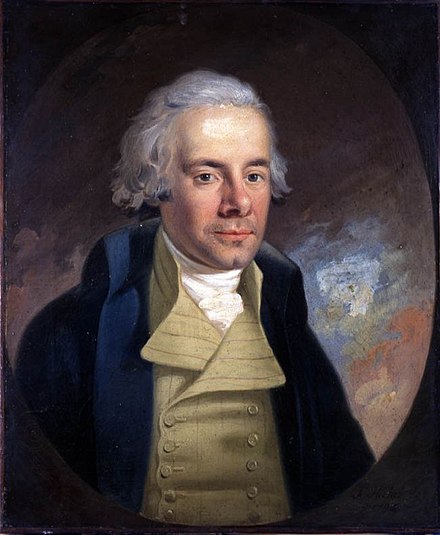 At 4:00am on February 24, 1807, the British Parliament voted to end the British slave trade. With a count of 267 to 16, the House of Commons voted with loud cheers for the abolition of this abominable institution.
 On Sunday, I explained from Psalm 98 how God justifies sinners and demonstrates that he is both just and justifier (Rom. 3:26). From that message, let me synthesize five more truths about justice. These build upon
  “Autonomy becomes a principle that undermines every authority and all law.”
 In his
  Beginning with Psalm 93, we enter a new phase in Book IV. Namely, we find selection of seven psalms (93–99) that herald the enthronement of Yahweh as king (Yahweh Melek) and one psalm (100) that brings us back to courts of the temple, where worship is renewed. Significantly, these psalms move from Israel’s exile to the hill of the Lord, and more decisively, these psalms show God himself returning to Zion and bringing his people with him.
 Via Emmaus