The Incarnation: Getting a Handle on Five Heresies

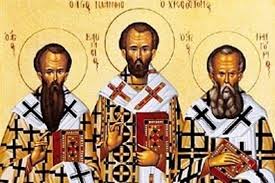
cappadociansYesterday, I gave a short introduction to a number of terms related to the Incarnation of our Lord. Today, I want to offer a short description of five heresies that have infected the church throughout the centuries.

These five heresies are named after four people (Arius, Apollinarius, Nestorius, and Eutychius—can you tell these guys aren’t from Kansas?) and one Greek word (dokein meaning “to seem” and dókēsis meaning “apparition, phantom”). These heresies are related to one another in history, and some of them actually came by means of trying to correct another. What I have spelled out below is but the simplest explanation of each term, with practical application at the end. Continue reading

Noonday Light: Biblical Theology

biblical theology

In the years before seminary, when God was awakening a hunger in my heart for the bible and theology, I was introduced to the subject of ‘biblical theology.’ Now that makes sense right? Biblical theology is the mashup of ‘bible’ and ‘theology.’ Only it is more specific than that.

As my doctoral supervisor, Stephen Wellum, recently defined it: Biblical theology is the “hermeneutical discipline,” that

Seeks to unpack God’s unfolding redemptive plan, doing justice to the diversity of it, while always remembering that despite the diversity it is one plan which reaches its fulfillment in the person and work of Jesus Christ. Biblical theology is concerned to discover how the parts of Scripture fit in terms of the whole, according to God’s intention and purposes, not our own imaginative constructions. Biblical theology is utterly essential to rightly interpreting and ‘putting together’ the whole counsel of God and thus learning to ‘think God’s thoughts after him.’

In truth, everyone has a biblical theology. But not everyone has a good biblical theology. Since living the Christian life depends wholly on knowing God, his gospel, and how God’s word relates to our lives today, biblical theology is crucial matter of consideration for pastors and those in the pew. In other words, its not an optional class some Christians might enjoy. It is central to our Christian walk.

In that vein, for those who are interested in learning how to think God’s thoughts after him according to the way that God has revealed himself over time in the Scriptures, let me suggest a few quick resources.

What the Big Idea Story? Why Biblical Theology Should Matter to Every Bible-Believing Christian. Credo Magazine has come out with their latest edition on the subject of biblical theology. It’s an up-to-date introduction on the subject. (Credo Magazine)

Biblical Theology by Gerard Von Groningen. Covenant Seminary (St. Louis, MO) offers a whole seminary class on biblical theology taught by the insightful OT scholar Gerard Von Groningen. You have to sign up for the class, but the cost is free. (Covenant Seminary)

What is Biblical Theology? A Guide to the Bible’s Stories, Symbols, and Patterns. Jim Hamilton has come out with a short introduction to the subject that helps students consider the literary structures and symbols of the Bible. These things are essential for any good biblical theology.

What’s in the Bible? Phil Vischer, the creator of Veggies Tales, has come up with a new and improved series that teaches biblical theology to young children. You can read about it here or watch a preview below. (The Gospel Coalition)

Via Emmaus. It is my meager attempt to provide on this blog a collection of biblical, theological, and biblical-theological fodder for your edification, so that you might read the Bible better.

Soli Deo Gloria, dss

Sermon Audio: The Great Exchange: How Jesus’ Life Trades Places with Our Death (John 11)


A-graveyard-at-dawn-002
Yesterday I finished my six-part series on God’s design for marriage and sex. Instead of finishing with an explicit word about sexuality, its dangers and delights, I spent our time considering God’s power to raise the dead and the devastated.

From John 11, we considered how Christ’s resurrection of Lazarus is a sign of his authority over the grave and a promise to all of us who trust in him, that he can raise us out of any miry pit, forgive us of any sin, and restore us from any deviation from God’s design. In short, Christ is the resurrection and the life, and all who look to him for the forgiveness of sins will find eternal life that does not begin at some unknown point in the future. Eternal begins with a true knowledge of Christ (John 17:3), that in turn empowers us to live a new kind of life today.

Here’s the audio for “The Great Exchange: How Jesus’ Life Trades Places with Our Death,” an exposition of John 11:1-53.

For the rest of the sermons in this series (‘God’s Design for Marriage and Sex’), go to Sermon Audio.

Soli Deo Gloria, dss

Lord’s Day Meditation: What Do We Really Need?


rainbow
What is it that we really need?

In a world full of felt needs and artificially created needs, there are plenty of commercial answers. But in a fallen world where death still reigns, there are also needs that go beyond anything that Wal-Mart sells or that Dr. Phil endorses. What do we really need?

Only Scripture gives us a true answer, and I suggest a few meditation for you on our Lord’s Day.

What Humanity Really Needs, No Man Can Provide

Is it a new start? No, Noah proves that a new start only delays the inevitable—sin, curse, separation, and death.

Is it a new place? No, Abraham was given a new place and promised a new people and a new land, yet the father of the nations still erred. His offspring include the line of Ishmael and in his own generation he died.

Is it a new law? No, God gave to Israel through Moses a new law, the best that was ever fashioned. Yet, Israel as a chosen race and a holy nation, failed to live up to their calling as a royal priesthood. They rebelled against God, and eventually experienced the exile on account of their covenant disobedience.

Is it a new leader? No, in David God chose a leader after his own heart. David was God’s man and was promised an eternal throne. Yet, the unfaithfulness of his sons eventually sealed Israel’s downfall. If the people were judged because of their law-breaking; they were equally condemned because of their fallen kings.

Is it renewed wisdom or unsurpassed riches? No again. David’s greatest son Solomon possessed wisdom and wealth. Greater than any man was this son of David. Kings and queens traveled far and wide to simply enter his presence. His people rejoiced to have him as king. Yet, still his heart was led astray, proving the mutability of man’s wisdom.

What then will resolve man’s problems? What will make wrong right? Atone for sins? Heal the hurting? Comfort the lonely? Reconcile enemies? Strengthen the weak? Make all things new?

What Man Really Needs, Only God Can Supply

As the entirety of the Old Testament testifies, the answer does not come from mankind. The answer is not found in a new start, a new place, a new law, or a new leader. Having the greatest wealth or wisdom will not cut it. What is needed?

A new life.

In 1 Corinthians 15, the first Adam, the prototype of Noah, Abraham, Moses, David, and Solomon, is contrasted with the last Adam, Jesus Christ, the greater savior, greater nation builder, greater mediator, greater king, and greater wise man. Paul writes and says,

The first man Adam became a living being; the last Adam (Jesus) became a life-giving spirit. (v. 45)

As the fulfillment of all the Old Testament types, Jesus has perfectly fulfilled the law, inherited the blessing of the law, won the right to sit on the throne, and rule the world with wisdom, justice, and compassion. He is the solution. He alone can make all things new. He alone has the power to raise the dead. And he alone gives devastated sinners hope that new life is possible.

Tomorrow, as we gather to worship, may God be pleased to open our hearts to see Jesus Christ, the desire of the nations, the hope of the world, the life-giving Spirit who alone can heal our wounds, forgive our sins, and straighten our paths. He alone gives life and ultimately, that is exactly what we need!

Tomorrow, our church considers the resurrecting power of God in Christ from John 11. I pray that many who are weak will be strengthened, many who are broken will be bound up, and that many who are dead will be made spiritually alive. This is what Jesus has the power to do. He did this for Lazarus two millennia ago, and he is still raising the dead to life today.

If you don’t know him, cry out to him that he might raise you up. If you do know him, thank him for his resurrecting power. And then go tell someone else about him.

Have a blessed Lord’s Day, dss
 

Noonday Light: The Persecuted Church

“Set your minds on things that are above, not on things that are on earth.”
— Colossians 3:2 —

persecuted

Yesterday, Fox News reported the execution of 80 people in North Korea. In full view of the public, men and women in seven cities were killed for “offenses as minor as watching South Korean movies or possessing a Bible.” This story is a sobering reminder that persecution is alive and well in our world.

Yesterday, I also received news—though a few days old—that Pastor Saeed Abedini has been moved from the Evin Prison in Iran to another installation notorious for its violence and the disappearance of prisoners. Pastor Saeed, an American who had been working to plant house churches in Iran, suffers for his simple faith in Christ.

When I hear news like this my heart sinks. I realize that these are my brothers and sisters in Christ, and I grieve and I pray. But oh, how weak are my prayers?!

Perhaps like you, I need help to know how to pray in an informed manner for the persecuted church. Sometimes I need to simply be reminded as I am by these news reports. Other times, I need biblical, historical, and practical help to know how to think about and pray for those who are suffering for the sake of Christ. If you are like me, perhaps you will be helped by these resources.

International Day of Prayer for the Persecuted Church (IDOP). November marks a time when Christians around the world are praying for the persecuted church. (IDOP.org)

9 Things You Should Know About Persecution of Christians in 2013. Joe Carter gives information about some of the most intense persecution in the world today. (The Gospel Coalition)

Voice of the Martyrs: Weekly Prayer Guide. Each week Voice of the Martyrs, a ministry begun by Romanian pastor Richard Wurmbrand, updates believers with a list of prayer needs throughout the world. (Voice of the Martyrs)

Is the Blood of the Martyrs Really the Seed of the Church? Glenn Penner turns Tertullian’s ancient axiom (“the martyrs blood is the seed of the church”) around. He suggests that true church growth always prompts persecution, and that the reason why we in the West have been free from persecution has been our compromising stance towards society. It’s worth considering. (Voice of the Martyrs)

Tortured for Christ by Richard Wurmbrand. This powerful book is Richard Wurmbrands biographical account of his blood-stained faith in Romania. If you are looking for something to read about persecution, start here. (Voice of the Martyrs)

Take time right now to pray for Christians suffering in North Korea, for Pastor Saeed, and for God to keep the persecuted church on our hearts, so that their suffering would fill up what is lacking in Christ’s afflictions (Col 1:24).

Soli Deo Gloria, dss

Gospel Logic and Revelational Beauty: John Stott on Romans 1:16-20

Rom 1On Sunday I preached from Romans 1:16-32. Earlier this summer I preached from Romans 1:16-17. Last year, I preached from Romans 1:1-7. In each instance, I found great help from John Stott.

For those unfamiliar with Stott’s work, he was an evangelical Anglican who during the latter half of the twentieth century preached the gospel, championed missions, and published numerous books, especially commentaries on the New Testament. His commentaries are always brimming with insight and full of crisp clear exposition. Thus, I share a few of his remarks on Romans 1:16-20. They helped me unpack Paul’s opening argument about the gospel, and I trust they will help you as well. Continue reading

A Theological Introduction to Ecclesiastes (pt. 3): Creation, Fall, Redemption, and Christ

[This is the final post on a theological introduction to the book of Ecclesiastes. See parts one and two].Ecclesiastes 3

Themes

Finally, there are a number of themes to consider in the book of Ecclesiastes. The ESV Study Bible lists six. These include:

  1. The Tragic Reality of the Fall.
  2. The ‘Vanity’ of Life.
  3. Sin and Death.
  4. The Joy and Frustration of Work.
  5. The Grateful Enjoyment of God’s Good Gifts.
  6. The Fear of God.

These six themes rightly observe the contents of the book. Yet, they do so in a thematic way that doesn’t sync with the biblical framework of creation, fall, and redemption. Therefore, let me suggest a four-fold scheme that augments these themes and helps us see the rudimentary features of the gospel in Ecclesiastes. Continue reading

A Sunday Hymn: Now Why This Fear?

Over the weekend, I attended the 2013 Indiana Shepherd’s Conference. It was a joy to fellowship with Indiana pastors and pastor-theologians like George Robinson, Greg Gilbert, Eric Bancroft, and Timothy Beougher.

The topic was evangelism and the conversation was motivating without being condemning. (All that to say, you should listen to the audio when it comes available in a few days).

Still, perhaps one of the greatest highlights of the time was hearing the gospel preached in song. In particular, the words of this old Augustus Toplady song caught my attention. It is called “Now Why This Fear?” and it is wonderful meditation on the good news of Christ’s death in my place. Listen to it and let it tune your heart for worship.

As we approach Sunday, may we let the words of this hymn lead us to praise and thanksgiving.

Now why this fear and unbelief?
Has not the Father put to grief
His spotless Son for us?
And will the righteous Judge of men
Condemn me for that debt of sin
Now canceled at the cross? 

Complete atonement You have made
And by Your death have fully paid
The debt Your people owed
No wrath remains for us to face
We’re sheltered by Your saving grace
And sprinkled with Your blood 

Be still my soul and know this peace
The merits of your great high priest
Have bought your liberty
Rely then on His precious blood
Don’t fear your banishment from God
Since Jesus sets you free 

Have a gospel-rich Lord’s Day!

dss

Noonday Light: Thoughts on Sex

marriage

Not a week goes by but what the news channels are filled with conversation and debate about sex. On top of the societal changes that swirl around us, legal changes are happening here and abroad. For instance, Germans now have the legal option of putting ‘other’ down as the gender of their ‘intersex’ baby. The Atlantic reports

A new law in Germany creates a third sex category on birth records. It could seem like an obvious solution to some problems of intersex: If some babies are born with bodies that are neither clearly male nor female, then it seems there should be some category beside “male” or “female.”

This is just one more example of why Christians need to have a deeply biblical understanding of sex, marriage, and gender. It is not enough anymore to believe in ‘traditional marriage’ or gender based on simple biology. In a fallen world, biology is not simple! We must have a deeply theological answer for why God’s image is only male and female, how the Fall can explain the phenomenon of intersex, and how gender is not a social construct but determined by the God who makes us in his image.

These examples are but the tip of the iceberg. To help us get a handle on some of these things, we need to take time to read, think, and study the Scriptures. To help you process some of these things, take a look at the following articles, audio, and video. They are reliable guides to help you walk in the light.

Christianity and Homosexuality: A Review of BooksTim Keller, in his October newsletter to his church reviewed and commended two important books on the subject of homosexuality. The first was Sam Allberry’s Is God Anti-Gayalso reviewed by CBMW. The second was Wesley Hill’s Washed and Waiting

Here We Stand: Midwestern Seminary & Same-Sex Marriage. Dr. Jason Allen, President of Midwestern Baptist Theological Seminary, writes why he and his school will hold fast to the biblical view of marriage.

It’s About Scripture, Not Sex. Here are three quotations for Denny Burk’s What is the Meaning of Sex? that represent three divergent views in evangelicalism today. They expose that the divide between Christians who oppose same-sex marriage and those who support it has to do with biblical interpretation, not sexual preference. The latter is always downstream from the former.

What Does He Really Want? Aileen Challies (the wife of Tim Challies) kicks off a series of blogs on the subject of sex at CBMW’s women’s channel. She seeks to deconstruct some of wrong views of sex that Christian women bring into marriage.

Holiness and Sexual PurityDenny Burk preached a message on 1 Thessalonians 4:3-8 last week. Take forty minutes to hear his exposition.

Kids and Sex. Pure Hope Ministries reminds parents that is never too young to begin addressing ‘age-appropriate’ discussions about sex.

Parenting Booklet. PureHope Ministries also has a forty-page booklet for parents on how to address the subject of sex with their children. This booklet has an appendix with “age appropriate teaching points.” If you are not familiar with Pure Hope, you should be.

If you have specific questions on this subject, please drop a note in the comments. I’d be happy to put you in touch with appropriate resources.

Soli Deo Gloria, dss

A Theological Introduction to Ecclesiastes (pt. 2): Date, Title, Genre

[This is the second part of a three-part series outlining a theological introduction to Ecclesiastes].

Ecclesiastes 2Date: Tenth Century

If Solomon is the author (see part one), the date is pretty easy to determine (10th Century B.C.). A better question might be—on the basis of Solomon’s wise but foolish life—when did Solomon write this?

The book itself portrays an aged and chastened king calling young men to avoid the mistakes he has had made. From Solomon’s life we have much to learn, and the point that Solomon wants to drive home on the basis of his own life is twofold:

  1. Fear God and keep his commandments
  2. Beware the vanity of material pleasures

This is the counsel of an older man, whose pain drives him to warn others of his mistakes. Continue reading