 On this Good Friday, I want to share a meditation from Alexander Watson (1815?–1865) related to the cross of Christ and the way Jesus’s death brought to fulfillment his triple office of prophet, priest, and king. But first, a little background.
Seven Sayings and Seven Sermons
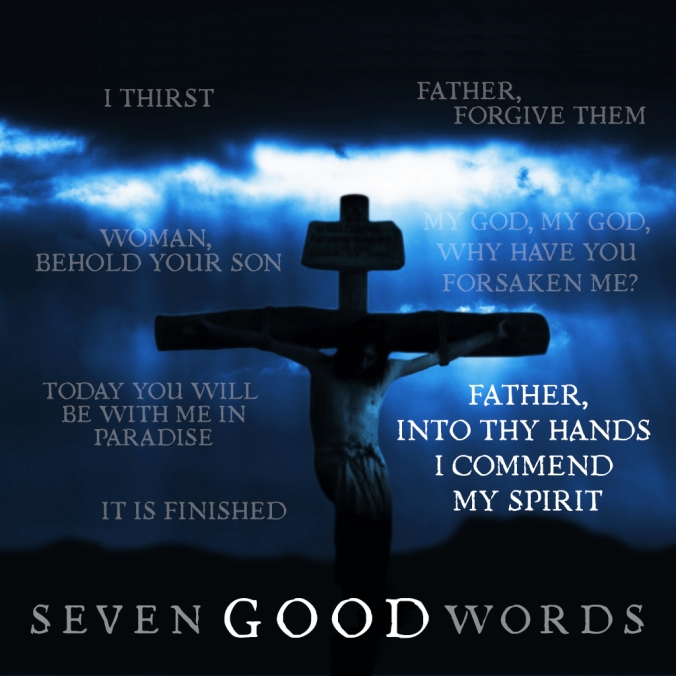
For the last six years (beginning in 2018), I have preached a Good Friday sermon that has focused on one of Jesus’s words from the cross. In all, there are seven statements found across the four gospels. Here they are in order.
- Father, forgive them, for they know not what they do. (Luke 23:34)
- Truly, I say to you, today you will be with me in paradise. (Luke 23:43)
- Woman, behold your son . . . Son, behold your mother. (John 19:26–27)
- My God, My God, why have you forsaken me? (Matthew 27:46; Mark 15:43)
- I thirst. (John 19:28)
- It is finished. (John 19:30)
- Father, into your hands I commit my spirit (Luke 23:46)
You can also listen to these songs in Andrew Peterson’s Tenebrae.
For the last six years, I have preached six sermons. And you can find them here.
- Father, Forgive Them (2018)
- Today, You Will Be With Me In Paradise (2019, no audio)
- Woman, Behold Your Son (2020, Covid year)
- My God, My God, Why Have You Forsaken Me? (2021)
- I Thirst (2022)
- It is Finished (2023)
- Father, Into Your Hands I Commit My Spirit (2024)
Along the way, I have found great help in preparing these messages and thinking about the cross of Christ by reading Alexander Watson, The Seven Sayings on the Cross; Or, The Dying Christ Our Prophet, Priest, and King.
I don’t know much about Alexander Watson, but his reflections are rich biblically, theologically, and pastorally. The book I have identifies Watson as the curate of St. John’s Church in Cheltenham, England, which puts Watson in the Church of England in the nineteenth century. A brief wiki-bio confirms this background and identifies him as an educator and editor. Perhaps that explains why I like him. Regardless, his work on the seven sayings of Jesus is delightful and worth meditation.
How the Cross Proves the Three Offices of Christ
To that end, I share his meditation on the seventh saying of Jesus.
Watson writes concerning the death of Christ, that “had he not died, his threefold office of Prophet, Priest, and King, would have been imperfectly fulfilled” (112). Indeed, for Christ to be the true prophet like Moses, the priest like Melchizedek, and the king like David, he would have to not only obey God in some ways, he must obey his Father in all ways. And thus, the cross is the place where his obedience is most tested, but also most proven. The Son obeys his Father to the uttermost, so that he can receive the triple crown of the munus triplex (the triple office).
And reflecting on the glories of his great work on the cross, Watson writes under three headings,
By dying, He, as a Prophet, taught us the truth of His own doctrine; made His Gospel a Testament and displayed the strongest faith, meekness, patience, and humility: then too did He perfect obedience, and give forth that which He Himself had declared to be the highest and chiefest act of charity: ” Greater love hath no man than this, that a man lay down his life for his friends. Ye are My friends if ye do whatsoever I command you.” (John 15:13–14)
Again, by Dying, He, Who had no other sacrifice for sins to offer than Himself, made that great Oblation which constituted Him our HIGH PRIEST for ever after the order of Melchizedec: thus only could He be the true Passover, of which the Paschal Lamb was the type; and thus alone could He become the Oblation, Propitiation, and Satisfaction for all the sins of the whole world: alike original and actual.
Further, was He not to us a King upon the royal throne of His Father David? and could He lift up His head without drinking of the brook by the way? No: His Cross was indeed His throne: there inscribed was His title,—”King of the Jews,” and there did all the power of ill,—sin, and death, and hell, lie foiled, the trophies of His victory, He having spoiled principalities and powers, making a show of them openly, and triumphing over them in His Cross. And as His Death was the means of present conquest, so was it the security for future dominion: “He humbled Himself, and became obedient unto Death, even the Death of the Cross, wherefore, God hath also highly exalted Him, and given Him a Name above every name: that at the Name of Jesus every knee should bow, both of things in heaven, and things in earth, and things under the earth” (Phil. 2:8–10). And to this end Christ both died, and rose, and revived, that He might be Lord of the dead and the living. (pp. 112–14).
Have a Good Friday
As we prepare to remember Christ’s death and resurrection this weekend, let us not forget who the cross of Christ secured the triple office of Christ. For in going to the cross, his status as prophet, priest, and king all stand out and are proven true. Jesus is the prophet who reveals to us the glories of God’s grace, the priest who has once and for all made atonement for sin, and the king who laid down his life to receive the kingdom promised to him.
In all of these ways, he is worthy of worship. And by meditating on the work of Christ (the cross) with respect to the person of Christ (the munus triplex), our minds are informed to worship him in truth and our hearts are prepared to bring him the praise he deserves.
Indeed, this how we should celebrate Good Friday. And I pray these resources and meditations may encourage you on this day.
Soli Deo Gloria, ds
 Via Emmaus