 In his book Introduction to the Old Testament as Scripture, Brevard Child’s explains his approach to canonical criticism, a term he does not like (82), but one that generally describes his approach to interpreting Scripture in its final form. Among critical scholars, i.e., those who employed historical-critical methods of interpretation, Childs championed a new (and better) approach to the Bible.
Instead of looking for the sources behind the text (e.g., Julius Wellhausen) or certain forms in the text (e.g., Herman Gunkel), or traditions running through the text (e.g., Gerhard Von Rad), Childs advocated an approach to the Bible which studied the final form of the text. In the academy, this approach turned the corner towards studying the unity of the Bible and not just its diversity. His work spurred on others to read the Bible canonically, and his labors helped turn the corner towards what is known today as TIS, the theological interpretation of Scripture.
Therefore, its worth considering what he said on the subject of reading the Bible in its canonical form. From his chapter on “Canonical Criticism,” here are a few insightful quotations, listed under five summary statements.
(Spoiler Alert: At the end, I’ll outline a few reasons why Childs approach may not be helpful as some think.) Continue reading

 I love the end of Paul’s letters. Why? Because there is so much missions-mindedness in them. For instance, in Romans 16, Paul lists a few dozen of his gospel associates. In Titus 3 he shows how he is making plans for the gospel to go throughout the Mediterranean. And in Colossians 4, he is again speaking of the laborers who are both faithful and dangerous.
 Free will.
 In his excellent book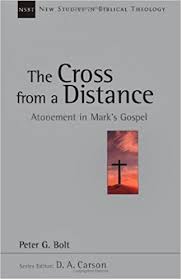
 Jesus said to them, “I am the bread of life; whoever comes to me shall not hunger, and whoever believes in me shall never thirst. But I said to you that you have seen me and yet do not believe. All that the Father gives me will come to me, and whoever comes to me I will never cast out.
 Via Emmaus