‘Mystery’—Its Definition, Use, and Significance in Daniel and the Rest of the Bible

alphabet close up communication conceptual

. . . but there is a God in heaven who reveals mysteries, and he has made known to King Nebuchadnezzar what will be in the latter days.
— Daniel 2:28 —

. . . the knowledge of God’s mystery, which is Christ,
in whom are hidden all the treasures of wisdom and knowledge.
— Colossians 2:2–3 —

In Hidden But Now Revealed: A Biblical Theology of Mystery, G. K. Beale and Benjamin L. Gladd show how “mystery,” as a word and concept play an important role in Daniel 2 and 4 and the rest of the Bible. Indeed, for anyone familiar with the word “mystery” (mysterion) in the New Testament, it is vital to see how this word comes from the context of Daniel. Conversely, for those puzzled by Daniel’s presentation of the last days, they need to see how the New Testament interprets Daniel and applies of Daniel’s mystery to Christ and his Church, as in Colossians 2:2–3.

In what follows, I will offer a definition of mystery, a sampling of its usage, and a summary of its implications. Beale and Gladd offer a comprehensive study of this topic, one that I would highly recommend. Many of my observations rely on this subject rely on their work. But, hopefully, all can see that it is the text of Scripture that is definitive for understanding mystery in Scripture. Continue reading


Dare to Be A Daniel (Remixed): A Sermon on Daniel 1

daniel05

On Sunday we started our new series on the book of Daniel. In this sermon I introduced the book and expounded the first chapter. While I am concerned that many Christians can miss the Christ-centered nature of Daniel, Daniel 1 is a chapter that serves an excellent model for Christians to imitate. And in this sermon, I show how we can and should dare to be a Daniel.

You can watch the sermon here, listen here, and find more resources on the Book of Daniel below.

Resources on Daniel

Soli Deo Gloria, ds

An Invitation to the Book of Daniel: Neither Diet Plans, Nor Date-Setting, Nor Dares to Be Like Daniel, But Dreams, Dominion, and Resurrection from the Dead

daniel05What is Daniel about?

There are lots of answers to this question, but not all of them are equal. Like so many books of the Bible, Daniel is often “used” more than “read.” And when readers “use” Daniel they come up with diet plans, end-times dating schemes, and moralistic teachings devoid of gospel power. To be sure, Daniel does talk about food, future events, and bold faithfulness, but until we understand that Daniel is a book about God and the arrival of his eternal kingdom, we will miss much of the message.

So again, what is Daniel about? Let me answer that in six ways—three negative, three positive. Continue reading

Getting into Daniel: Five Notes on Daniel 1

daniel05This month our church begins a new sermon series on the book of Daniel and Daniel is also the book of the month for the Via Emmaus Bible Reading Plan. With both of those things in mind, I will begin today to post a few notes from each chapter in Daniel, starting with Daniel 1. As with the notes I wrote for Joshua, these notes will primarily be theological in orientation. Yet, because good theology depends on good grammatical and historical observations, they will also tap into various literary issues in the book of Daniel.

As we read /preach through Daniel, if there are observations or questions you have, please leave them in the comments. For now, here are five introductory notes on Daniel 1. There will be more to come.

Five Note on Daniel 1

1. Daniel highlights Israel’s captivity and release.

1In the third year of the reign of Jehoiakim king of Judah, Nebuchadnezzar king of Babylon came to Jerusalem and besieged it. . . . 21And Daniel was there until the first year of King Cyrus. (1:1, 21)

Daniel 1 begins in 605 BC, when Nebuchadnezzar first raids Jerusalem and plunders the temple and takes the leaders from the royal family (see vv. 1–3). Daniel 1 ends in 539 BC, with a mention of the first year of Cyrus (v. 21), king of Persia (6:28). Cyrus would eventually grant Israel the right to return to Jerusalem and rebuild the temple (see Isaiah 44:28; 45:1ff.). In Daniel 10:1, he is mentioned again in association with Daniel’s vision.

It is noteworthy that Daniel 1 includes Daniel’s entrance and exit from Babylon. The former sets the context for the whole book—God’s people in exile in Babylon. The latter flashes a light of hope, that the exiles will be released from bondage. Captivity is not the final word for Israel, and the inclusion of Cyrus in the first chapter speaks to that. The mention of Cyrus’s also indicates that the book is written after the exile and after Cyrus sends Israel back to Jerusalem. Continue reading

The Penultimate Step toward Jesus: Reading Psalms 90–106 Canonically

low angle grayscale photo of empty brick stairs

Photo by Ravi Kant on Pexels.com

Anyone who has spent time reading this blog knows that I’ve done a bit of writing on the Psalms and their canonical shape. Seeing the arrangement of the Psalms not only helps us appreciate how Scripture holds together, it also helps us understand the message of the Psalter. In what follows I want to dig into Psalms 90–106 (Book 4) and show a few ways the arrangement helps discern the message. In particular, I am persuaded these Psalms fit with Israel’s return from exile and the construction of the temple (i.e. the Second Temple).

Since I haven’t seen this argument made much in the literature, I’m floating these ideas here as a way of reading Book 4 as a unified whole. Let me know what you think and if these three observations make sense of how you read the Psalms. Continue reading

Yahweh’s Penultimate Enthronement: Observing the Return-From-Exile Narrative in Psalms 90–106

the-psalmsIt is unmistakable that Psalms 96, 105, and 106 find their genesis in 1 Chronicles 16. Just read them together, and you will see how the psalms take up different parts of 1 Chronicles. With this background, it begins to help us see how to understand the message of Book IV in the Psalter, as well as the timing of Book IV.

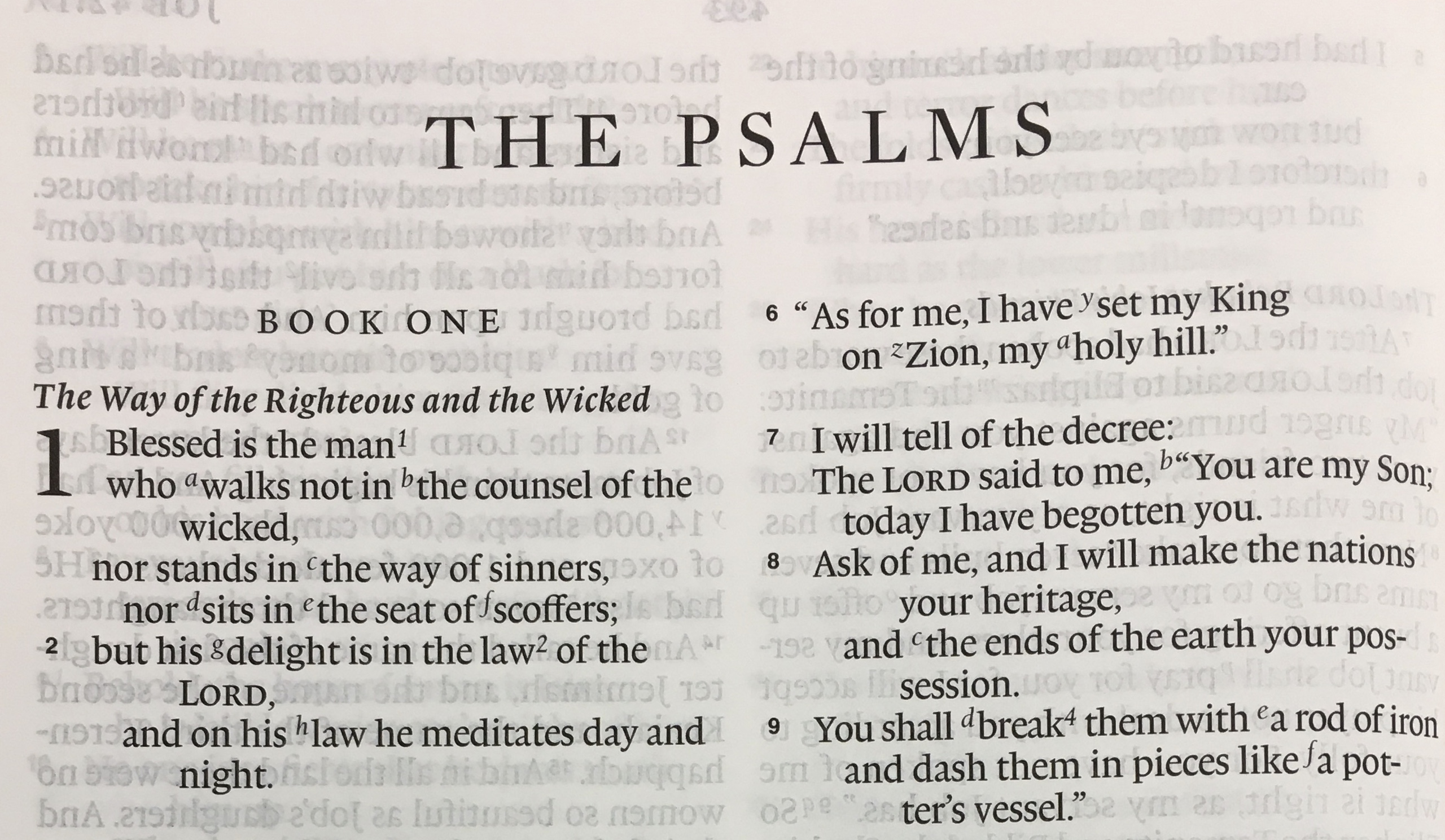
In the original setting (in 1 Chronicles 16), David writes a psalm to celebrate the ark of the covenant coming to Jerusalem. After the ark, the symbol of God’s ruling presence, had been lost in battle to the Philistines and displaced from God’s people, David took pains to bring the ark to its proper place—the tabernacle set up in Jerusalem.

From another angle, this return of the ark can be described as the Lord’s enthronement. In David’s lifetime, we find the first enthronement of God in his holy city. What was promised by God, going back to Exodus 15:17–18 . . .

(You will bring them in and plant them on your own mountain,
the place, O Lord, which you have made for your abode,
the sanctuary, O Lord, which your hands have established.
18  The Lord will reign forever and ever.”)

. . . came to fruition under David’s rule.

Yet, when we read the Psalms in chronological order, we find that Psalms 90–106 do not match up with the Lord’s enthronement in David’s day. Rather, placed after David died (see Psalm 71) and after David’s sons had lost the throne (Psalm 89), Book IV describes a new enthronement, or what David Mitchell (The Message of the Psalter) calls a “return from exile.” Clearly, Book IV is using the event of the Lord’s enthronement in David’s day as “type” that can be applied in a new setting. But what is that setting? And when? Continue reading

What To Do When God’s House Is Closed for Business: Seven Sermons from Joel

caution03

Over the last month and a half, our church has looked at the book of Joel. In these strange and turbulent times, we have found that this ancient book has a plethora of wisdom to comfort, instruct, and strengthen God’s people. Here are the seven messages from that series.

As you can see, this series bridged the gap from worshiping at home to worshiping together outside. Our Lord has been faithful to sustain our church during this time, but we recognize that we still inhabit a time where the Spirit and the flesh are at war. Thankfully, Joel helps us to understand that truth, and it gives us confidence to trust that God is still working in our midst.

Soli Deo Gloria, ds

In Order to Dwell in God’s Presence: Seven Ways to Read Psalms

IMG_4667This month brings us to the Book of Psalms in the Via Emmaus Bible Reading plan. And I say “Book” because Psalms is more than a collection of random songs; it is a highly structured book which tells the redemptive story of David and his greater Son—the king who is enthroned on Zion.
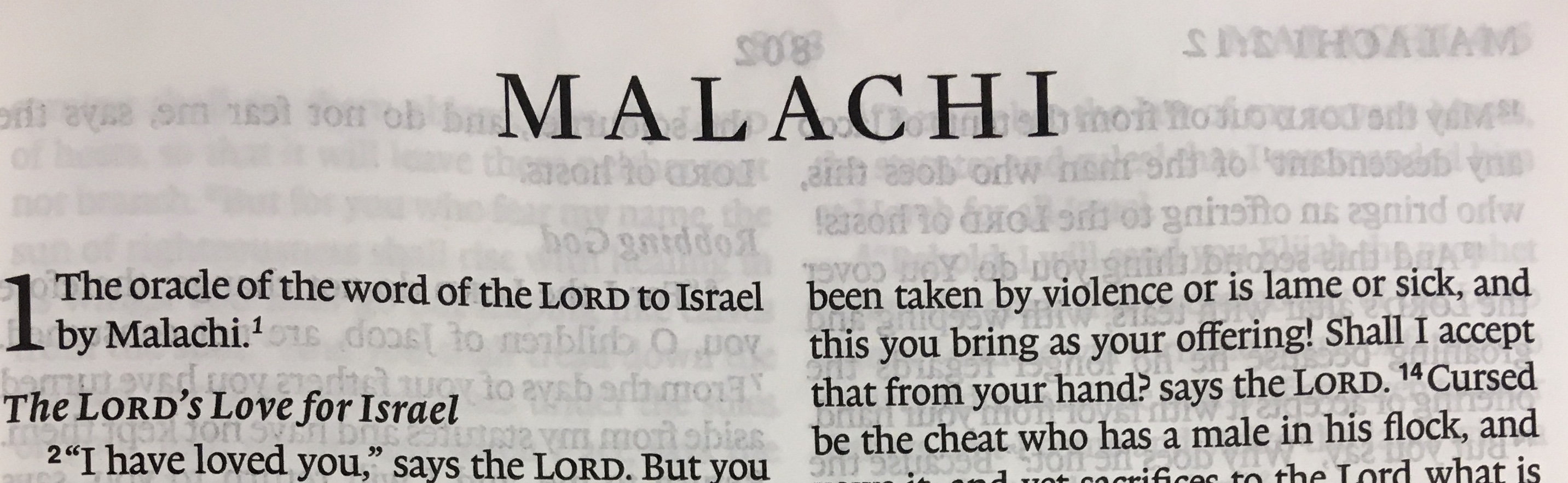
In fact, the Psalter is composed of five books (Pss 1–41; Pss 42–72; Pss 73–89; Pss 90–106; Pss 107–50) and demonstrates many convincing proofs that the order of the Psalms is intentional. If you have spent any time on this blog, you know how much time I have spent arguing this point and showing how (I think) the Psalms are organized. 

In this post, which begins our look at the Psalms this month, I want to offer seven reading strategies for reading, understanding, and praying the psalms. These approaches are suggestive, not exhaustive; there is not one right way to read the Psalms, but knowing that the Psalms possess a unified message may be helpful for reading the psalms this month. If you have another way(s) to read the Psalms, please include them in the comments. Here are my seven suggestions.

Continue reading