Via Emmaus on the Road: Hebrews 4

Further Resources


Hebrews 4 (ESV)

Therefore, while the promise of entering his rest still stands, let us fear lest any of you should seem to have failed to reach it. For good news came to us just as to them, but the message they heard did not benefit them, because they were not united by faith with those who listened. For we who have believed enter that rest, as he has said,

“As I swore in my wrath,

‘They shall not enter my rest,’ ”

although his works were finished from the foundation of the world. For he has somewhere spoken of the seventh day in this way: “And God rested on the seventh day from all his works.” And again in this passage he said,

“They shall not enter my rest.”

Since therefore it remains for some to enter it, and those who formerly received the good news failed to enter because of disobedience, again he appoints a certain day, “Today,” saying through David so long afterward, in the words already quoted,

“Today, if you hear his voice,

do not harden your hearts.”

For if Joshua had given them rest, God would not have spoken of another day later on. So then, there remains a Sabbath rest for the people of God, 10 for whoever has entered God’s rest has also rested from his works as God did from his.

11 Let us therefore strive to enter that rest, so that no one may fall by the same sort of disobedience. 12 For the word of God is living and active, sharper than any two-edged sword, piercing to the division of soul and of spirit, of joints and of marrow, and discerning the thoughts and intentions of the heart. 13 And no creature is hidden from his sight, but all are naked and exposed to the eyes of him to whom we must give account.

Jesus the Great High Priest

14 Since then we have a great high priest who has passed through the heavens, Jesus, the Son of God, let us hold fast our confession. 15 For we do not have a high priest who is unable to sympathize with our weaknesses, but one who in every respect has been tempted as we are, yet without sin. 16 Let us then with confidence draw near to the throne of grace, that we may receive mercy and find grace to help in time of need.

Soli Deo Gloria!

Via Emmaus on the Road: Hebrews 3

Further Resources


Hebrews 3 (ESV)

Jesus Greater Than Moses

Therefore, holy brothers, you who share in a heavenly calling, consider Jesus, the apostle and high priest of our confession, who was faithful to him who appointed him, just as Moses also was faithful in all God’s house. For Jesus has been counted worthy of more glory than Moses—as much more glory as the builder of a house has more honor than the house itself. (For every house is built by someone, but the builder of all things is God.) Now Moses was faithful in all God’s house as a servant, to testify to the things that were to be spoken later, but Christ is faithful over God’s house as a son. And we are his house, if indeed we hold fast our confidence and our boasting in our hope.

A Rest for the People of God

Therefore, as the Holy Spirit says,

“Today, if you hear his voice,

do not harden your hearts as in the rebellion,

on the day of testing in the wilderness,

where your fathers put me to the test

and saw my works for forty years.

10  Therefore I was provoked with that generation,

and said, ‘They always go astray in their heart;

they have not known my ways.’

11  As I swore in my wrath,

‘They shall not enter my rest.’ ”

12 Take care, brothers, lest there be in any of you an evil, unbelieving heart, leading you to fall away from the living God. 13 But exhort one another every day, as long as it is called “today,” that none of you may be hardened by the deceitfulness of sin. 14 For we have come to share in Christ, if indeed we hold our original confidence firm to the end. 15 As it is said,

“Today, if you hear his voice,

do not harden your hearts as in the rebellion.”

16 For who were those who heard and yet rebelled? Was it not all those who left Egypt led by Moses? 17 And with whom was he provoked for forty years? Was it not with those who sinned, whose bodies fell in the wilderness? 18 And to whom did he swear that they would not enter his rest, but to those who were disobedient? 19 So we see that they were unable to enter because of unbelief.

Soli Deo Gloria!

Joshua the Priest

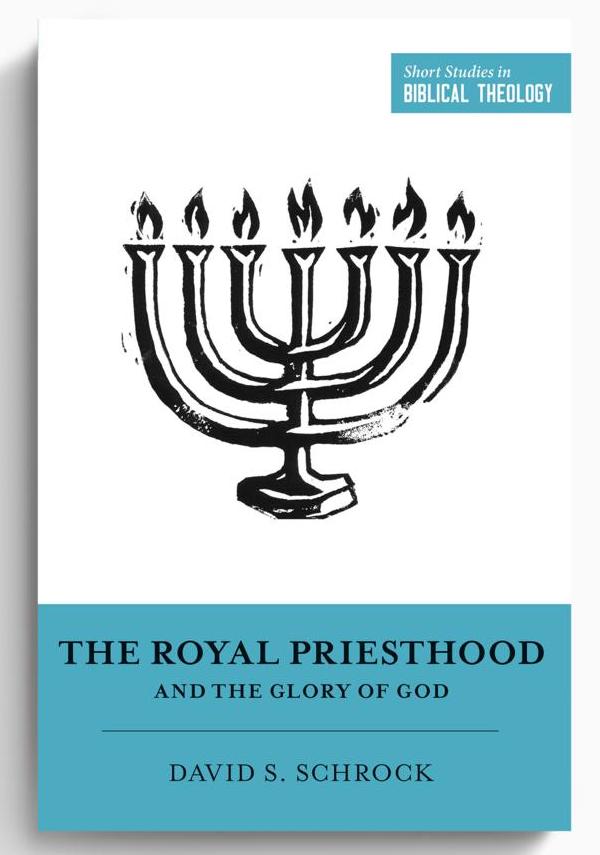
b02007a106a73b935c8de8eeb4be056cab88c37fEarlier this year, Crossway published my book The Royal Priesthood and the Glory of God in their Short Studies in Biblical Theology series. In that book I show priesthood begins in the Garden of Eden, develops across the Old Testament, culminates in Jesus Christ, and proliferates in the life of the church. The church is a priesthood of believers with Christ as the great high priest.
In my book, I show many but not all of the people who should be identified as priests. As a “short study,” my book could not cover everything in the Bible, and hence there remain many glorious portraits of the priesthood throughout Scripture. And one of them (not found in my book) is Joshua son of Nun.

Joshua is a well-known figure in the Old Testament and the New, but is he a priest? In the following paragraphs, I will answer that question and show a number of reasons for understanding Joshua as priest.

Like Moses before him and Jesus after him, Joshua demonstrates his priesthood through his covenant mediation, his teaching, his intercession before God, his purification of the land, and more. Indeed, it is fair to say that all the leading figures in Israel’s history are priests, either by explicit reference or by the merit of their actions. Indeed, these priestly actions are also what reveal Christ’s priesthood in the Gospels. And thus, it is worth our time to see how Joshua’s priesthood foreshadows his greater namesake.

Continue reading

Seeing Jesus in the Old Testament: More Than 120 Notes on the Book of Joshua

joshua07This week we finished up our series on the book of Joshua. Here is a run down of all the notes, sermon, and related resources that we put together for that marvelous book.

120 Notes on (Almost) Every Chapter of Joshua

  1. Getting to Know Joshua, Son of Nun, and Joshua, Son of God: Or, 10 Things About Joshua 1
  2. Rahab’s Redemption: 10 Things About Joshua 2
  3. Baptism in the Jordan River: 10 Things about Joshua 3–4
  4. 10 Things about Joshua 5:1–12**
  5. A Text Filled with Types: 10 Things About Joshua 5–6
  6. How God’s Judgment upon Achan’s Sin Teaches Us to Find Grace in Christ: 10 Things about Joshua 7
  7. 10 Things about Joshua 8**
  8. His Mercy is More: 10 Things about Joshua 9
  9. Under His Feet: 10 Things About Joshua 10
  10. The Last Battle: 10 Things About Joshua 11–12
  11. 10 Things about Joshua 13–19**
  12. The Wisdom of God at Work in Israel and the Church: 10 Things About Joshua 20–21
  13. Old Testament Instruction for the New Testament Church: 10 Things About Joshua 22
  14. Love God, Flee Idols, and Remember That Jesus is with You: 10 Things about Joshua 23
  15. Seeing Jesus in the Old Testament: 10 Things about Joshua 24

** Placeholders for future ’10 Things’ on these chapters. Continue reading

Covenant Life: Yesterday, Today, and Forever (Joshua 24)

joshua07

Covenant Life: Yesterday, Today, and Forever (Joshua 24)

On Sunday we looked at Joshua 24, the last chapter in Joshua, and concluded our series on this Jesus-centered book.

In Joshua 24, the soon-to-be-departed leader of Israel called Israel to renew their covenant with God. By reminding Israel of God’s grace in their past and calling them to seek Yahweh’s grace for their present, Joshua renewed a covenant that anticipated a greater covenant in the future.

Indeed, as we have seen in all of Joshua, this book points to Jesus with remarkable, and at times shocking, clarity. It is not a book where we have to read Jesus back into the Old Testament. Instead, as the first book written after Moses, a book that helps us learn to read the rest of the Prophets and Writings, Joshua (Yeshua = Jesus) is unmistakably Christotelic (written to bring us to Christ at-the-end). And Joshua 24 may be the most fulsome in  leading us to Christ. At least, that’s what I argue in this sermon!

You can listen to the sermon online. Response questions and additional resources can be found below. Continue reading

Seeing Jesus in the Old Testament: 10 Things about Joshua 24

michel-porro-vfaFxFltAvA-unsplashIn the last chapter of Joshua, we see Joshua leading Israel to renew their covenant with God before he dies. In this final act of faithfulness, Joshua finishes what he started—bringing Israel into the land—and receives the honorific title Servant of the Lord. Here are 10 things about this covenant renewal and the close of Joshua.

1. Joshua 24 is one of many covenant renewals in the Bible.

Beginning in Deuteronomy (or Exodus 32–34), Israel adopted a practice of renewing their commitment to Yahweh. When there was a transition of power (like from Moses to Joshua), or when there was a sin that broke covenant with God (e.g., the Golden Calf or the sin of Baal-Peor), Israel’s faithful leaders led the nation to renew their covenant.

For instance, when Achan’s sin brought judgment on Israel, Joshua led the nation to renew their covenant with God (Josh. 8:30–35). At the same time, this covenant renewal came at a time when Israel was entering a land filled with idols. So, it also had a positive sense of confessing Israel’s faith to Yahweh in a land filled with idols. For both reasons, it makes sense that we find a covenant renewal in Joshua 8.

Now, in Joshua 24 we find another covenant renewal. Much like Moses, he assembles the people of God as he anticipates death. He presses Israel to be faithful to the covenant Yahweh made with them at Sinai. Joshua is not initiating a “new” covenant; he is calling the people to recommit themselves to the first covenant. And in this way, he repeats and reinforces a model of faithfulness that will be seen throughout the Old Testament. Other examples of covenant renewals in the Bible include:

  • Asa leads Israel to renew their commitment to God (2 Chronicles 15)
  • Josiah leads Israel to renew the covenant with God when he discovers the book of the Law (2 Kings 23)
  • Ezra and Nehemiah work to lead the nation of Israel to recommit themselves to God when the second temple is built (Ezra 10; Nehemiah 9–10)
  • The Lord’s Supper is a covenant renewal, as the church remembers Christ’s new covenant every time they take the elements (1 Corinthians 10–11)

This string of covenant renewals helps to set the context of Joshua 24 and its importance in redemptive history. Continue reading

Beloved, Keep the Faith: What Jesus’s Final Words Say That Joshua’s Can’t (Joshua 23)

joshua07

Beloved, Keep the Faith: What Jesus’s Final Words Say That Joshua’s Can’t (Joshua 23) (Sermon Audio)

In Joshua’s penultimate chapter in Joshua, we hear a word from Joshua calling for an ultimate commitment to God. Speaking to the people he has led out of the wilderness and into the Promised Land, Joshua says “Be very careful, therefore, to love the Lord your God” (v. 11).

In short, Joshua’s last words to Israel urge Israel to keep the faith. Only, as Joshua 24:31 indicates, Israel’s faithfulness is very short-lived. Only one generation after Joshua continues to keep the covenant (renewed in Joshua 24). Thus, for all that Joshua has done and said, it is ultimately ineffective. And as we read his words today, we can feel the same kind of discouragement, if we don’t place the weakness of his sermon with the eternal life that Christ gives with his final words.

Indeed, in this week’s sermon we will see how Joshua’s final words, like his entire life, are meant to lead us to Christ. From this connection everything that Joshua can be applied to us today, with (re)assurance that our faith will endure because Christ himself is keeping us (Jude 2), even as we keep ourselves in the love of God (Jude 21).

You can listen to the sermon online. For more on Joshua 23, you can read this week’s Ten Things blogpost: Love God, Flee Idols, and Remember That Jesus is with You: 10 Things about Joshua 23.

Soli Deo Gloria, ds


Love God, Flee Idols, and Remember That Jesus is with You: 10 Things about Joshua 23

michel-porro-vfaFxFltAvA-unsplashJoshua 23 is the penultimate chapter in the book and a call for Israel to make an ongoing, ultimate commitment to Yahweh. Here are ten things about this chapter to help us understand its main point with applications for us today.

1. Joshua 23 is the second of three assemblies that close the book of Joshua.

In the last three chapters of Joshua, the book comes to a close with three assemblies. In chapter 22, an emergency meeting is called when the Western tribes fear that the Eastern tribes committed idolatry by building an altar on the banks of the Jordan. In chapter 24, Joshua leads the nation to renew their covenant with Yahweh. But in Joshua 23, before that formal process of agreement, Joshua gives a more personal appeal for Israel to love God with all their heart and to guard themselves from idolatry.

In this way, Joshua 23 serves as a bridge between Joshua 22 and Joshua 24. It unites the three chapters with the theme of idolatry—or rather, a warning against idolatry. More specifically, this chapter focuses on the leaders in Israel, who are listed in verse 2: “elders, leaders, judges, and officials.” Importantly, as Joshua comes to the end of his life (vv. 1–2, 14), he is looking to this next generation of leaders to keep covenant with God. This shows how the nation prospers when the nation has faithful leaders (cf. 24:31). Continue reading

Old Testament Instruction for the New Testament Church: 10 Things About Joshua 22

michel-porro-vfaFxFltAvA-unsplashWhen we think about finding help for practical matters in the church, 1 Corinthians and 1 Timothy are books that come to mind. However, Joshua should be added to the list of places we go to find help for practical ecclesiology. In this list of ten, we will see how Joshua 22 fits into the book of Joshua. And from its place in the book of Joshua, we will see at least five ways this chapter informs a variety of church matters.

1. Joshua 22 begins the fourth and last section of Joshua.

In Joshua there are three or four major sections, depending on how you organize the book. But however you arrange it, Joshua 22 begins a new section, one composed of three concluding assembles. As Dale Ralph Davis puts it,

Observe that each of these last three chapters begins when Joshua summons (Hebrew, qara’) Israel or some significant segment of it (22:1; 23:2; 24:1). Thus the book closes with three assemblies of the people of God. Remember that all this immediately follows the heavy theological text, 21:43-45, which emphatically underscores Yahweh’s fidelity to his promise.

By contrast, chapters 22–24 are preoccupied with the theme of Israel’s fidelity to Yahweh (22:5, 16, 18, 19, 25, 29, 31; 23:6, 8, 11; 24:14-15, 16, 18, 21, 23, 24).’ Hence the last three chapters constitute the writer’s major application: Israel must respond in kind to Yahweh’s unwavering faithfulness. Willing bondage [think: Paul’s use of the word doulos] to this faithful God is their only rational and proper response. The logic is that of the ‘therefore’ of Romans 12:1 as it follows the divine mercies of Romans 1-11. In principle it is the same as ‘love so amazing, so divine, demands my soul, my life, my all.’ (Joshua, 169–70)

Davis’s observation about these three assemblies is most helpful for establishing a link between Israel living in the land and God’s people living before God today. Thus, we can be sure that these chapters are meant to help churches walk together in covenant unity.

Continue reading

The Problem with All Critical Theories of the Bible

hans-peter-gauster-3y1zF4hIPCg-unsplash.jpg5 The aim of our charge is love that issues from a pure heart and a good conscience and a sincere faith. 6 Certain persons, by swerving from these, have wandered away into vain discussion, 7 desiring to be teachers of the law, without understanding either what they are saying or the things about which they make confident assertions.
— 1 Timothy 1:5–7 —

In his excellent commentary on the book of Joshua, pastor and Old Testament scholar, Dale Ralph Davis, addresses the problem of critical theories used to interpret the Bible. Taking aim at the documentary hypothesis, a view which conjures up multiple sources behind the Old Testament, Davis singles out the real problem of this approach—it eviscerates the reliability of God’s Word and mutes God’s message. By adding undo complexity, it obscures the clarity of Scripture.

In response to this cumbersome and faith-eroding approach, he gives wise counsel: Continue reading