
In recent years, few practices have been more fruitful for my Bible reading and preaching than (attempting to find and) discovering the structure of a biblical passage. Dave Helm and the good folks at Simeon Trust call this structure the “bone and marrow” of any passage. Just like the human body is built with interconnected bones that give shape to the body, so the arguments, narratives, and poetry of the Bible has a recognizable skeletal structure that gives shape to the passage.
This is true at the microscopic level, where biblical authors organize a few verses around a chiasm or some other literary structure. It is also true at the macroscopic level, where we can recognize the literary structure of entire books. This latter macrostructure is most helpful for discovering the main argument of a book and why the author is writing what he is writing in the way he is writing.
Recently, I have found help on this front from a book by David Dorsey. In his Literary Structure of the Old Testament, this Old Testament scholar provides the macro-structure of every book in the Hebrew Bible, as well as many smaller literary structures in various books. At present, I have not read the whole book nor have I agreed with everything I have read, but by and large, Dorsey’s careful treatment of the Bible provides a helpful outline of every book.
As our church begins to look at Joshua this Sunday, I thought I’d share a couple of his outlines, simplified and color-coded, to help us see how the macro-structure of Joshua clarifies the main point of this book. Indeed, as Joshua has some longer section regarding land divisions, etc., I believe seeing the larger scope of the book will help us understand the main points. Continue reading
 The Old Testament is the not the only place where we find expositional preaching. Jesus himself preached expositionally. In fact, he was more than an expositional preacher, according to John John 1:18 he literally ‘exegeted’ the Father, meaning that he explained, exposed, and revealed the character of God in his very life and person.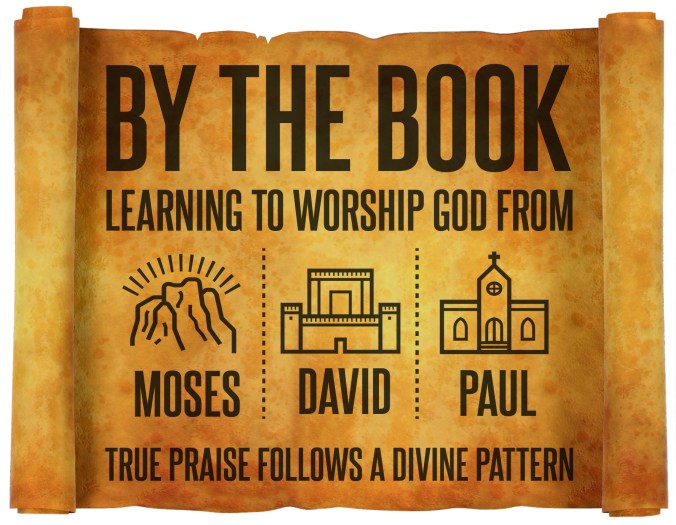
 If Scripture stands against our natural and cultural bent towards innovative worship, it also provides a biblical pattern for the kind of worship God requires. Last week I considered the first problem—namely,
  In preparation for Sunday’s sermon on worship, here are ten observations from Deuteronomy 4:9–31.
 So Jacob swore by the Fear of his father Isaac,

 Now we know that the law is good, if one uses it lawfully
 Via Emmaus