The Church as Christ’s New Creation: How a Multi-Ethnic Church Fulfills God’s Promises to Israel

tung-wong-70780This mystery is that the Gentiles are fellow heirs, members of the same body, and partakers of the promise in Christ Jesus through the gospel.
— Ephesians 3:6 —

In Ephesians 2 Paul spends a great deal of time explaining how the Jews and Gentiles are no longer divided by covenant or country, but instead have become in Christ ‘one new man in place of the two’ (v. 15). This “two becomes one” theme culminates and crystalizes in Ephesians 2:18–21, when he says that the temple Christ is building is comprised of Jews and Gentiles. He writes,

And he came and preached peace to you who were far off and peace to those who were near. 18 For through him we both have access in one Spirit to the Father. 19 So then you are no longer strangers and aliens, but you are fellow citizens with the saints and members of the household of God, 20 built on the foundation of the apostles and prophets, Christ Jesus himself being the cornerstone, 21 in whom the whole structure, being joined together, grows into a holy temple in the Lord.

Amazingly, in these verses, Paul highlights at least three ways in which the temple is comprised of Jews and Gentiles.

  1. He says that Christ preached peace to those who were far off and peace to those who were near (v. 17), which is to say Christ preaches peace by his Spirit to far off Gentiles and near(er) Jews. There is not a different message for each group and there is certainly not a different covenant. Rather, the same message of Christ-centered peace is offered by Christ to all people—whether Jew or Gentile.
  2. He says both Jews and Gentiles have access in one Spirit to the Father (v. 18). Indeed, in Christ those who were once near do not have a greater access than those who were far off. Like John and Peter (John 20:4), one may have arrived at the empty tomb sooner than the other, but the first one to Christ did not get a greater blessing. So it is with Jews and Gentiles in Christ—both have access to the triune God and neither have more access than the other.
  3. He says Gentiles, who were once separated from the blessings of God (Ephesians 2:11–12), and Jews, who once clearly had multiple advantages over the Gentiles (see Romans 3:1–2; 9:4–5) are now fellow citizens. Indeed they are fellow members of the household of God, such that only with one another can the temple of God be joined together.

In short, Paul’s explanation in Ephesians 2 of reconciliation makes clear that in Christ there is neither Jew nor Greek, but instead there is one new covenant people who possess all the same blessings in Christ. Continue reading

More Than Could Be Asked or Imagined: Four Surprising Ways Christ and His Church Fulfilled the Promises to Israel

ben-white-197668When you read this, you can perceive my insight into the mystery of Christ, which was not made known to the sons of men in other generations as it has now been revealed to his holy apostles and prophets by the Spirit. This mystery is that the Gentiles are fellow heirs, members of the same body, and partakers of the promise in Christ Jesus through the gospel.

— Ephesians 3:4–6 —

In Ephesians 3, Paul explains how the unity of Jews and Gentiles in the church was a mystery hidden to the Old Testament people of God. In the strongest fashion he explains how Christ’s cross created “one new man” (2:15), tearing down the wall of hostility between Jew and Gentile. The result in Ephesians 3:6 is that Gentiles are “fellow heirs” (sugklēronomos) , “fellow members of the body”(sussōma), and “fellow sharers (summetoxa) of the promise in Christ Jesus”.

In these three desciptions, Paul uses the strongest terms to explain that the status of Jews and Gentiles is equal in Christ. No longer are the people of Israel advantaged over the Gentiles, as it was under the Sinai Covenant. Now in Christ Jews and Gentiles share equal statues. As Paul teaches, both are condemned for their sin and thus both redeemed by God’s free gift of grace—not by law-keeping. This makes all participants in Christ’s new covenant equals, brothers and sisters, co-heirs with their Lord.

Still, to get a handle on this newness in Christ, it is equally important to understand how the apostolic teaching was new—new to the first century believers and new to anyone today entering the church today. On that newness, Clinton Arnold gives a succinct outline of the ways in which the plan of God was previously unknown but now revealed through the gospel.

Under four points, he identifies (1) the means, (2) the Mosaic law, (3) the manner, and (4) the magnitude as constituting something different and greater than could be seen by the Old Testament saints. Here’s what Arnold writes (Ephesians, 190), Continue reading

An Argument for the (Selective) Use of Visual Aids in Expositional Preaching

karl-fredrickson-27507For me, few things are more exciting than studying the Word of God and considering how to apply and communicate God’s truth to others. Following a pattern set forth by Ezra (7:10), to study the Word, apply the Word, and teach the Word, is a glorious privilege. And yet, few things are more daunting or discouraging!
For all the gold that we find in Scripture (Psalm 19:10–11), we must communicate it with lips of dust. Therefore, we should not be surprised when we struggle to do so. In fact, discouragement and difficulty is a preacher’s common companion. As Paul queried about the ministry of the new covenant, “Who is sufficient for these things?” (2 Cor 2:16). The answer is, “No one is sufficient” Therefore, we must trust God and his Spirit to accomplish what we cannot.

At the same time, we should learn a thing or two about preaching the Word over time. For instance, this summer as I preached on the Psalms, I learned that sometimes it is exceedingly beneficial to use visual aids. As someone committed to expositional preaching, it has been my conviction to employ word pictures not visual aids. But this summer, as I preached through the Psalms, I learned that sometimes word pictures are best captured through visual imagery. Continue reading

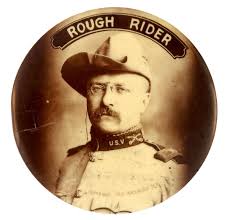
Teddy Roosevelt and His Rough Riders: An Illustration of Diversity’s Glory

teddy

There is a peculiar kind of glory that comes to a man
who unifies and empowers genuine diversity for a common good.

In history, we celebrate stories of heroic leaders who take disconnected misfits and make them a strong army. If you are familiar with the Bible, you might think of David and his mighty men—a diverse group of malcontents who became champions under David’s command. If you are more familiar with popular movies, you might think of Remember the Titans, where Coach Herman Boone led a newly-integrated T.C. William high school to a state football championship.

Indeed, we love to hear stories of leaders who take natural-born opponents and unite them together for the same cause. And even more, in our ultra-divided world, we need to hear these stories. And thankfully, there are many such stories that can be told.

Recently, I came across such a story in Jon Knokey’s book, Theodore Roosevelt and the Making of American LeadershipIn this fascinating book, Knokey tells the colorful tale of what happened when 1000 radically-different men from all over America were formed into a single fighting unit under the leadership genius of Colonel Roosevelt.

Here’s what he says. It’s long but entertaining and worth the read as it gives a fresh illustration of what we find in Ephesians 2—something I sought to bring out in yesterday’s sermon on Christ and his Church. Continue reading

“Give Me Life . . . According to Your Word”: How God’s Law Leads to Gospel Life

ben-white-131241There is a way of thinking today that says life and liberty are found by rejecting or rewriting the law. Personal expression is all that matters: “Just be yourself . . . Be authentically you!” And if any rules or laws—be they religious or otherwise—get in the way, just reject or rewrite those restrictions.

Importantly, Scripture is not silent on this matter. And it teaches the opposite. Instead of rejecting the law as a place of life and freedom, it actually says that life is found in keeping the law. Or to be more specific, life is enjoyed as one seeks to obey the law. Yes, Paul says that the law does not have power to make alive (Romans 8:3), but that is not all he says about the law (see Romans 13:8; Galatians 5:13–14).

Moreover, Psalm 119 demonstrates what a heart cries, when it has been circumcised by the law. In other words, whereas mere obedience cannot earn life; those who have been made alive by God will hunger and thirst for life in the law. Obedience to the law is not antithetical to life; it is the very essence of life under the Lord.

So let us consider how Psalm 119 cries out for life in the Word of God. Continue reading

Paul, Timothy (Keller), and the Making of Good Arguments

grant-lemons-82179In 1 Corinthians 15 Paul engages the skeptic about questions concerning resurrection of the body. In verse 35 he writes, “But someone will ask, ‘How are the dead raised? With what kind of body do they come?'”

To this he turns to nature to make his argument. Instead of simply rejecting the error of “the fool” (v. 36), he argues for the plausibility of the resurrection from a commonly held belief—that plants rise from the ‘dead’ when the seed is planted in the ground.

Here’s how he argues. First, Paul uses the farmer’s field to explain the resurrection in terms of seed and plant (vv. 36–38). Then he points to the various kinds of flesh on earth and the various kinds of glory in the heavens (vv. 39–41). In order to begin taking steps to show how the dust of earth might be raised up and transformed into glory (see vv. 42–49), he appeals to nature to explain their plausibility. In these two analogies, therefore, Paul moves from shared belief in nature, to greater truth revealed in the gospel of Jesus Christ.

Materially, Paul’s words makes a strong argument for how the resurrection will happen. But formally, Paul’s approach to the skeptics is a vital lesson in how to communicate truth to a doubting world. In this approach to skeptics, we can learn much. Continue reading

“But Now”—Learning to Live in the Newness of Christ

photo-1416958672086-951aa7064010 2It has often been observed that the “last days” are not just some future event of tribulation and doom but are instead the days of Christ’s church, inaugurated by his resurrection. Thus, as Acts 2:17 and Hebrews 1:2 teach us, the last days have begun with the finished work of Christ and will culminate when he comes again to consummate what his resurrection began.

Such an observation stands behind the notion of an inaugurated eschatology, the belief that the kingdom of God is already and not yet. Indeed, coming out of the debates with George Eldon Ladd in the mid-twentieth century, evangelical theology has found a large consensus on this fact—the kingdom is not only present and it is not only future; rather the kingdom of God has been inaugurated but awaits its culmination.

Certainly, this view of the kingdom is different than the way the Old Testament Prophets foresaw the coming kingdom. To them the coming of the messiah meant the restoration of Israel’s kingdom, the outpouring of the Spirit, and a new age marked by resurrection and life. What we find in the New Testament, however, is that this new age would come in the midst of the old, and that the last days of the old age would coincide with the era of the church, whereby the people of God would bear witness to Christ’s future return.

Biblical evidence for this two-phased kingdom is found in the Gospels where Jesus speaks of the kingdom as already (Matthew 12:28) and not yet (Matthew 24:35). It is also found in the arrival of the Holy Spirit which has made born again believers new creations in Christ (2 Corinthians 5:17), but without restoring the whole cosmos yet—what Isaiah 65 describes as a new heavens and new earth. Likewise, the resurrection of Christ—the first-fruits of the new creation—indicates a redemptive-historical shift from the old age to the new. And its this resurrection shift that is picked up by certain language in the New Testament.

Beginning with Paul’s speech to in Athens (Acts 17), there are two words that mark the change brought about by Christ’s resurrection. These words are nuni de, “but now.” As Fleming Rutledge observes in her provocative book on Christ’s crucifixion (and resurrection), “this radical newness, this transformation, is epitomized by the very frequent appearance in Paul’s letters and the epistles of Peter of the phrase “but now” (nuni de)” (The Crucifixion60).

Her observation reflects the apocalyptic nature of the New Testament, that the future has invaded the present (to borrow Ladd’s language), the kingdom of heaven has come to earth, and the resurrection of Jesus has marked a new stage in redemptive history. Indeed, the kingdom is not consummated yet, but neither is it absent. And importantly, the presence of the kingdom and the resurrection power of Christ is witnessed through the apocalyptic phrasing “but now.” Continue reading

Marveling at the Lord’s Teaching: A Meditation for Bible Teachers

ben-white-128604Marveled.

Astonished.

Amazed.

In Luke 4, these three words are used to describe the effect Jesus’ teaching had on people. First, in response to Jesus’ reading of Isaiah 61, coupled with his announcement that “this Scripture has been fulfilled in your hearing” (v. 21), Luke record, “all spoke well of him and marveled at the gracious words that were coming from his mouth” (v. 22). Second, verse 32 says of Jesus teaching on the Sabbath (v. 31), “and they were astonished at his teaching, for his word possessed authority.” And third, verse 36 reports “they were all amazed” because with his words “he commands the unclean spirits, and they come out.”

In these reports, Luke uses three words to express the effect Jesus had on people. And more specifically, the effect Jesus’ words had on people. First, Jesus words amazed (θαυμάζω) people. That is, people were “extraordinarily impressed or disturbed” (BDAG) by his speech. This word is often used to speak of supernatural miracles (Luke 8:25), healings (Luke 11:4), and eventually the resurrection (Luke 24:41). But in this case, they were amazed at the graciousness of his words. Continue reading

Temple-Building and Divine Warfare: Two Important Themes to Understand Ephesians 2:11–22

ihor-malytskyi-226011In his illuminating book Ancient Near Eastern Themes in Biblical Theology, Jeffrey J. Niehaus argues convincingly that a regular and repeating pattern of salvation occurs in the ancient Near East (ANE).  This pattern follow this basic order:

A god works through a man (a royal or prophetic figure, often styled a shepherd) to wage war against the god’s enemies and thereby advance his kingdom. The royal or prophetic protagonist is in a covenant with the god, as are the god’s people. The god establishes a temple among his people, either before or after the warfare, because he wants to dwell among them.  This can mean the founding (or choice) of a city, as well as a temple location. The ultimate purpose is to bring into the god’s kingdom those who are not part of it.[1]

Developing this basic schema, Niehaus demonstrates how the Old Testament and New Testament follow this eschatological temple-building motif.[2]  Or better, so-called gods used God’s own pattern to establish their false temples, which in time God would recover and employ to defeat all competitors who have sought to build their temples in opposition to his. Indeed, as many biblical scholars have observed (see below), this pattern temple-building and divine warfare fills the Scriptures and helps us to understand its message.

Therefore, in what follows, I will trace temple-building and divine warfare to make sense of Ephesians 2:11–22. This glorious passage is a key New Testament example of temple-building. In it, God is seen restoring all creation through his Son’s cross, which then creates a new people (the church), but that people as God’s Spirit-filled temple become a visible witness of his victory over his enemies. Continue reading

Lordship from the Start: A Meditation on Saving Grace

francesco-gallarotti-72602.jpg

Updated: I’ve included a few quotes from Charles Ryrie and Robert Wilkin to demonstrate my concerns with their truncated understanding of faith.

Although it has been some time since John MacArthur’s The Gospel According to Jesus launched a biblical salvo into the Free Grace Movement, every now and again I come across people who believe in Non-Lordship Salvation. I have Charles Ryrie’s book So Great Salvation book on my shelf—a book that argues against Lordship Salvation—because a friend who denied Lordship salvation gave it to me as a free gift.

But the trouble with Ryrie’s position is the way in which Scripture itself speaks of faith. In one place he writes, “it seems that many believers do not settle the matter of personal, subjective lordship of Christ over the years of their lives until after they have been born again” (68). Aside from the convoluted grammar of that sentence, he essentially suggests a faithless faith, a belief that may never bear the fruit of faithfulness. As Robert Wilkin, the executive director of the Grace Evangelical Society, puts it, “Christians can fail to endure, fall away, and prove to have been wicked,” and thus “salvation is based on faith in Christnot faithful service for Christ(Four Views of the Role of Works at the Final Judgment, 29, emphasis his).

If this sounds like amazing grace to you, it doesn’t ring true with all Scripture says. Because in the Bible, faith is qualified by terms like obeying the truth, following Christ, feeding on Christ, honoring the Son, and keeping God’s commands. For instance, in both Romans 1:5 and 16:26, Paul speaks of securing the “obedience of faith” in the gospel. What does that mean? In short, it means that saving faith is more being convinced or giving creedal affirmation of the gospel, which is Ryrie’s stated definition of faith (So Great Salvation, 144).

By contrast, a new covenant understanding of the question describes faith as the life and breath of a man or woman made alive by the Spirit. Thus, from the beginning, faith in Jesus Christ has eyes to see who Christ is (2 Corinthians 4:5), a desire to turn from all other idolatrous lords (Acts 3:19; 26:20), and a willingness to submit oneself to him. This is what a full examination of Scripture indicates and what  Luke 7 demonstrates. Continue reading