 In his excellent book on the Trinity, Fred Sanders makes a number of key observations related to seeing (and not seeing) the Trinity in the Old Testament. (This subject takes up the whole of chapter 8 in The Triune God).
- A biblical formulation of the Trinity
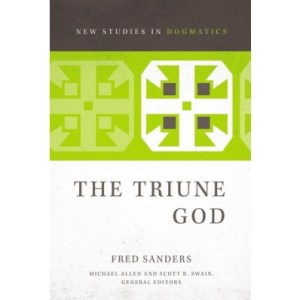 should not begin with the Old Testament. Because the doctrine is revealed in the historical events of the Incarnation and Pentecost, not the propositions of the text, we must begin with the events recorded in the New Testament, not the hints contained in the Old. Sanders rightly corrects strictly chronological approaches to the Trinity: “The root idea of revelation is not verbal announcement but the unveiling or disclosing of something that has been present, though concealed. . . . The triunity of God was revealed when the persons of the Trinity became present among us in a new way, showing up in person and becoming the object of our human observation” (40).
 - With the full revelation of God as Father, Son, and Holy Spirit, we can look backwards to see “adumbrations” of the Trinity in the Old Testament. As Sanders notes, “The doctrine of the Trinity did not arise and cannot stand without the Old Testament, but the Old Testament’s usefulness for Trinitarianism is retrospective and dependent on the light provided by the fullness of revelation” (212).
- In this way, the doctrine of the Trinity is a ‘mystery’ in the biblical sense. In the New Testament, mysterion speaks of those realities that were once hidden, but are now revealed. The Trinity fits well into this biblical category: “God did not yet reveal his triunity until the fullness of time had come. The Trinity is a mystery in the biblical sense: always true, once concealed, now revealed” (210).
- More specifically, trinitarian exegesis in the Old Testament is prosoponic (from the Greek word for person). Prosoponic or “prosopological exegesis is a technical expression, but an important one for discussions about the Trinity. It simply means reading the Old Testament in light of the New, where the persons (prosopon) are distinguished in the Old Testament text. “Having met Christ and the Spirit [in the Incarnation and Pentecost], we can look for them in the Old Testament in a way we could not have without having met them in person” (227).
- Prosoponic exegesis requires rereading. “What is required for doctrinal interpretation of the Old Testament is a hermeneutical framework that acknowledge the complex structures of the revelation, and an approach to reading the documents that precede and follow the revelation. The key hermeneutical category for this kind of interpretation is rereading” (215, emphasis mine). In rereading, we gain new understanding, insight not available on a first reading. In this way, readers do not add meaning to the text, but instead see the text in the fullness of later revelation. A good example of this is reading Genesis 1 in light of John 1, Colossians 1, and Hebrews 1.
From hermeneutical commitments like these, Sanders helps us get our bearings on reading the Old Testament. In fact, his chapter on reading the Old Testament retrospectively is one of the best I’ve read on grasping the theological unity and eschatological development of the Bible. For these reasons, I would highly recommend his book, especially if you struggle to see how grammatical-historical exegesis relates to the whole Bible. Continue reading
 And God blessed them. And God said to them, “Be fruitful and multiply and fill the earth and subdue it, and have dominion over the fish of the sea and over the birds of the heavens and over every living thing that moves on the earth.
 Christmas is a time filled many wild and wonderful
 Psalm 136 is a glorious, antiphonal Psalm detailing the steadfast love of God with the various actions of God’s redemption throughout history. A brief reading of the Psalm notices the Psalm’s uniqueness, where every attribute of God or demonstration of power is followed by the refrain: “for his steadfast love endures forever” (ESV) or “for His lovingkindness is everlasting” (NASB).
 Isaiah is massive book that displays an even larger vision of God’s glory. And because of the scale and grandeur of its message, it often seems difficult to grasp its meaning. Sure, there are those familiar verses we often return to, but how do we grasp at the whole message of Isaiah?
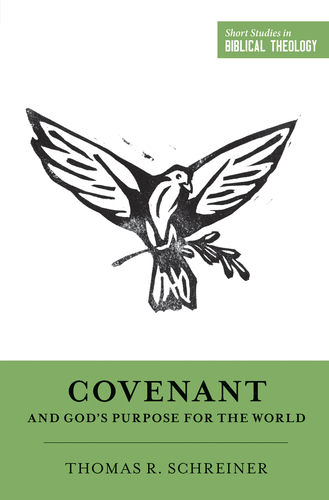 A few years ago, Crossway Books began a series called Short Studies in Biblical Theology. These books are wonderful introductions to various topics on biblical theology. So far they have included,
 And a Redeemer will come to Zion, to those in Jacob
 Via Emmaus