Be Fruitful and Multiply: A Canonical Reading

bill-williams-3302And God blessed them. And God said to them, “Be fruitful and multiply and fill the earth and subdue it, and have dominion over the fish of the sea and over the birds of the heavens and over every living thing that moves on the earth.
— Genesis 1:28 —

Few commands in Scripture are more important than the first one: “Be fruitful and multiply and fill the earth and subdue it.”

In Genesis 1 we learn God made mankind in his image and after his likeness. The purpose of this “imaging” is disputed and multi-faceted (as I’ve described here). However, it is clear that the first command is to be fruitful and multiply, a pregnant command if there ever was one.

In fact, from the placement of this command—the first chapter of the first book in the Bible—we see how programmatic this command is. It is fundamental to being human, and therefore it applies to every one of us. At the same time, from a canonical reading of Scripture we learn how this phrase repeats and develops, so that it bears significance for more than just having babies. In other words, though it never loses this meaning (child-bearing is an implicit part of humanity), the progress of revelation also shows how fruitfulness relates to the Word of God, regeneration, and the Great Commission.

So, in what follows, I will list out many places where this language (“be fruitful and multiply”) occurs, with a few comments along the way.  Then, I will list four ways that reading Genesis 1:28 canonically helps us understand this verse and the whole structure of the Bible. Continue reading

12 Quotes from Peter Gentry’s Book on the Biblical Prophets

prophets

Peter Gentry, Donald L. Williams Professor of Old Testament Interpretation at The Southern Baptist Theological Seminary, has written an incredibly helpful and accessible book in How to Read and Understand the Biblical Prophets. In this 140-page book, there is much general wisdom about reading Scripture and many specific applications for reading the Prophets, especially Isaiah.

In his plain-spoken and even humorous way, Gentry helps deepen our understanding how different the prophetic literature is. But even more, he gives tools to read these ancient words better.

In preaching Isaiah this month, I’ve found much help in How to Read and Understand the Biblical Prophets. I share a dozen of the best quotes from his book below. These give a taste of what you’ll find in this book. But let me encouragement you, if you take seriously the study of Scripture, pick up this book and spend time thinking about how to read the Prophets.  Continue reading

Love Came Down: A Christmas Meditation on John 3:16

rawpixel-com-445786Christmas is a time filled many wild and wonderful traditions.
 

For instance, the Japanese celebrate Christmas with their favorite holiday meal—Kentucky Fried Chicken. Since 1974 KFC has been the Japanese’ Christmas meal. If you traveled to the Philippines in this season, you’d come across a festival of giant lanterns, where 11 different village compete to build the largest and most elaborate lantern.

If you go to Europe, you will find the Austrians pair Saint Nicholas with a demonic figure named Krampus. St. Nick rewards the good boys and girls; Krampus punishes the bad ones. And if you go up to Iceland, you will hear of 13 Yule Lads—13 tricksy trolls who break into homes and lick spoons, slam doors, and steal yogurt.

Here in America too, Christmas is filled with tradition. From gifts under the tree to long lines at the mall, from Santa Baby to the Trans-Siberian orchestra, our country celebrates the season with all sorts traditions that make us feel the Christmas spirit. Continue reading

Come and Worship the King (Isaiah 60)

Torah

Come and Worship the King (Isaiah 60)

At Christmas we celebrate God’s light come into the world. And on Christmas Eve this year we looked at how Isaiah 60 both predicts and expands our understanding of God’s glorious light. In the fullness of time, we see how the Magi in Matthew 2 fulfill Isaiah’s promise of the nations coming to worship the Lord. This teaches us that coming to Zion is not simply a future reality; it is something we also experience through Jesus Christ.

As Hebrews 12:22 tells us, when we worship the Lord we have come to Mount Zion and join in the worship that is ever present in glory. Truly, this way of thinking stretches our imagination, but it is the way Scripture leads us to think—which a firm grasp of finding our position in Christ in the heavenly places (cf. Eph 2:5).

At Christmas, we ponder both the coming of God from heaven to earth. But we should also consider what that means, and how Christ’s Incarnation leads us to heaven—just as Isaiah 60 envisions.

With that in mind, you may find the following discussion questions and additional resources helpful. You can also listen to the sermon online. I pray these resources are an encouragement to you as you celebrate the birth of our Lord. Continue reading

Grasping the Covenantal Love of Psalm 136

zoriana-stakhniv-347480Psalm 136 is a glorious, antiphonal Psalm detailing the steadfast love of God with the various actions of God’s redemption throughout history. A brief reading of the Psalm notices the Psalm’s uniqueness, where every attribute of God or demonstration of power is followed by the refrain: “for his steadfast love endures forever” (ESV) or “for His lovingkindness is everlasting” (NASB).

In all, the Psalm praises God for who he is (vv. 1–3), what he has done in creation (vv. 3–9), what he has done for Israel in redemption (vv. 10–22), and what he has done for “us in our low estate” (vv. 23–26). The last four verses seem to reflect a move from history to personal experience.

Certainly, in these 26 verses, the Psalmist is using repetition to stress the covenant love of God. Yet, it is tempting to skip over the refrains,  thinking I’ve read this before. But this is to miss the force of God’s love, if the reader replaces “his steadfast love endures forever” with some kind of mental “ditto.” Indeed, this repeated explanation for God’s action reveals much about God’s love and works powerfully to impress his love on our hearts.

Therefore, lets consider five truths about God’s covenantal love, that may help us better hear Psalm 136 and give praise to God. Continue reading

Two Rivers Run Through It: Tracing Zion and Zera’ (Seed) through the Book of Isaiah

matt-lamers-328906Isaiah is massive book that displays an even larger vision of God’s glory. And because of the scale and grandeur of its message, it often seems difficult to grasp its meaning. Sure, there are those familiar verses we often return to, but how do we grasp at the whole message of Isaiah?
In what follows, I am going to trace out two key themes that may help us see the forest and not just a few trees. The first stream relates to Zion, the key place in the book. The second relates to the messiah, or the seed (zera’), the key person in the book. By holding these two streams together, I think it helps us see the arrangement of the forest so that we can climb the heights in this glorious book. Continue reading

Six Biblical Evidences for a Covenant in Creation

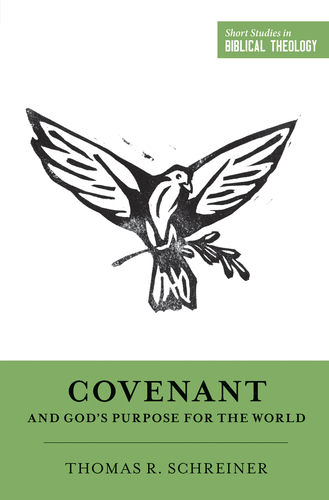
covenantA few years ago, Crossway Books began a series called Short Studies in Biblical Theology. These books are wonderful introductions to various topics on biblical theology. So far they have included,

Most recently, I read Tom Schreiner’s book on covenant, where in 120 pages he unpacks in plain language the biblical covenants from the covenant in creation to the new covenant in Christ. While the whole book is worth reading, I found his discussion on the first covenant a helpful introduction to God’s with mankind mediated through Adam, what some have called a creation covenant.

Six Evidences for a Covenant in Creation

On this disputed understanding of Genesis 1–2, Tom Schreiner summarizes six reasons for seeing a covenant in creation. While his work does not delve into the technical aspects of the debate, his clear presentation should give the reader a strong biblical case for seeing God’s creation in covenantal terms.

Here is a summarized version of his list with a few reflections on his points. Continue reading

The Divine Warrior Wrapped in Swaddling Clothes

samuel-zeller-364234And a Redeemer will come to Zion, to those in Jacob
who turn from transgression,” declares the Lord.
— Isaiah 59:20 —

Wars and rumors of war.

Throughout the world right now, armies are planning and preparing for various military operations. Closer to home, domestic abuse, interpersonal strife, and political injustice continue unabated. Just this week, I learned that a man was shot and nearly killed less than a block from my house.

All that to say, we live in a violent world. And it is right, to pray for, work for, and want for something better. But it is wrong, to think that this sort of violence is new or that God is unaware.

As Ecclesiastes says, “there is nothing new under the sun (1:9). Injustice, immorality, and bloodshed are as old as sin itself. But just as old is the promise that God redeem his people and deliver them from the curse of sin.

This was the promise in Genesis 3:15, when God said to the Serpent: “I will put enmity between you and the woman, and between your offspring and her offspring; he shall bruise your head and you shall bruise his heel.” And this ancient promise is just as good today as it was 4000 years before Christ.

Indeed, if you’re familiar with the Bible, you know how strange and circuitous God’s story of salvation story is. God did not bring peace to his people in Genesis 4. Rather, he let the world go to seed—literally.

In Genesis 4, Cain killed Abel in cold blood. Theologically speaking, the seed of the serpent killed the seed of the woman. And from this first act of aggression, bloodshed has followed. Yet, in the face of this violence, God chose one people from whom he would bring a peace-maker. Often Israel, like Abel, would find themselves subjected to the serpent’s seed. But at other times, they would themselves become a brood of vipers, earning the divine wrath of God.

This is how Isaiah 59 depicts Jerusalem, when God compares their sin to that of snakes and spiders. And it is this graphic image that Paul applies to the whole world, when he quotes Isaiah 59:6–7 in Romans 3:15–18:

Their mouth is full of curses and bitterness.
Their feet are swift to shed blood;
in their paths are ruin and misery,
and the way of peace they have not known.

For us who live in the same dark world described in the Bible, we need to remember that this is the backdrop to the birth of Christ. Continue reading

Singing the Four ‘Spirit’ Songs in Isaiah 56–66

motyer

Perhaps you are familiar with the four Servant Songs in Isaiah. They are found in Isaiah 40, 49, 50, and 53. And I would contend, they are deeply important for understanding who Christ is and how God promised to save his people.

But do you know there are also four “Spirit” songs in Isaiah? Or better, as Alec Motyer puts it, there are four songs in Isaiah 56–66 that identify the Spirit-anointed Savior who will also come to be identified with Christ? Until, reading Alec Motyer’s commentary on Isaiah 56–66, I had not seen that.

Sure, I had often wondered why Christian tradition stops counting the Servant songs at Isaiah 53, when Isaiah 61 is clearly another song extolling the glories of a Spirit-anointed Servant. But until preparing for this current sermon series, I had not put together the reality of four songs in Isaiah 59, 60, 61, and 63. Nor did I make the connection of these chapters with the previous four Servant songs in any specific way.

But after reading Motyer’s observations, it’s hard to miss the way in which these four ‘songs’ balance and apply the previous four songs. In what follows, let me share Motyer’s illuminating insights. I’ll add a few (work in progress) observations at the end. Continue reading

Mapping Isaiah and Beholding Christ: A Literary Study of Isaiah 59

himesh-kumar-behera-216019This Sunday I will preach Isaiah 59. And to prepare for this Christmas message, I have spent time getting to know the landscape of Isaiah. Because the literary shape is so important for understanding the (theological) message of any book, I’ve spent time trying to figure out how this one chapter fits into the whole of Isaiah.

In what follows, I will share a few observations from what I’ve found. If you are interested, I’d love to hear your feedback and insight into this glorious chapter. Continue reading