Via Emmaus Podcast: Two New Episodes (Genesis & Matthew)

podcastlogo

We are still working out the bugs on our new podcast, but here are two new podcasts that discuss passages of Scripture in Genesis and Matthew. This podcast was begun  to help our church and anyone else read the Bible better.

If you have any questions for this podcast, feel free to ask here.

NEW EPISODES

EPISODE 03OT: Genesis 8–14 |  January 21, 2019  |  Anton Brooks & David Schrock

In this episode we discuss the curse of Ham, the tower of Babel, Abraham’s tithe to Abraham, and more from the book of Genesis. For more on Genesis, see

EPISODE 03NT: Matthew 8–13 |  January 21, 2019  |  Anton Brooks & David Schrock

In this episode we discuss Jesus’s acts of healing, the meaning of an apostle, point of parables, and more from the book of Matthew. For more on Matthew, see

Continue reading

A Biblical View of the Body

ltbSo glorify God in your body. 
— 1 Corinthians 6:20 —

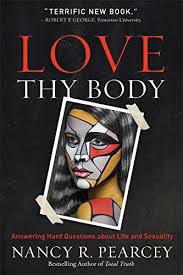
Last night our church discussed the book Love Thy Body: Answering Hard Questions about Life and Sexuality by Nancy Pearcey. I cannot stress how important this book is.

In a room of 30 church-going men and women, few could remember a time when a pastor or church had taught a series on the body. Most instead reflected on the way churches have focused on the soul/spirit to the neglect of the body. Though Scripture has much to say about creation and God’s view of the body, many in the church have been fed a diet of Gnostic wisdom.

Gnosticism is the ancient philosophy that denigrated the material world and the body. It valued the spirit, the mind, the soul; it rejected the material as impure and unholy. Probably more by accident than intention, evangelicals have followed this way of thinking. We have not done a good job teaching a positive view of the body, and we must look to Pope John Paul II to find a robust theology of the body.

In a hyper-confused world that denies the significance of the body, Christians need to give attention to the body. This is why Love Thy Body is so needed, as it tackles all sorts of subjects related to the body. It gives a grid (Francis Schaeffer’s Upper Story and Lower Story House) for understanding why so many hate the body. And it helps Christians to embrace a unified worldview that appreciates the material and immaterial part of mankind. For all these reasons, I would recommend Pearcey’s book.

I would also encouraged believers to arm themselves with Scripture that speaks about the body. To that end, I share this four-fold list. Following the pattern of creation-fall-redemption-resurrection, it gives a number of key texts for appreciating what Scripture says about the body.

Take time to read these verses and what they mean for your body. I am not including any commentary on the verses, but let me encourage you to think about how they give us a realistic and comprehensive view of the body. Continue reading

The Four Seeds of Abraham: Natural, National, Christ, and “In Christ”

thibaut-marquis-97935-unsplash.jpg

Now the promises were made to Abraham and to his offspring.
It does not say, “And to offsprings,” referring to many, but referring to one,
“And to your offspring,” who is Christ.
— Galatians 3:16 —

Who is Abraham’s offspring? Or is it, Who are Abraham’s offspring? Is it one or many? Or both?

In the Bible one of the most important realities to grasp is how the Bible presents itself. In other words, because Scripture is the inspired interpretation of God’s actions in the world—even as God’s Word is itself a divine action—it is vital to see how God’s earlier revelation prepares the way for his later purposes.

Sometimes this is called an “eschatological” reading of Scripture. That may sound complicated, but it’s not. Eschatology means “the study of last things” (eschatos = last), and most of the time people immediately jump to what they perceive are the “last things” in the Bible. However, if we consider that God stands outside of time and created all things for the purpose putting them under his Son’s feet (see Ephesians 1:10), then we must read the Bible as one unified-but-unfolding plan of redemption.

In this way, eschatology doesn’t begin in Revelation, or Daniel, or Zechariah, it begins in Genesis. And from Genesis to Revelation, God is working all things for the purposes of his people—the offspring of Abraham.

But who is/are Abraham’s offspring? Continue reading

‘Sin Crouching at the Door’ or ‘A Sin Offering at the Gate’: Michael Morales on Genesis 4:7

morales

If you do well, will you not be accepted?
And if you do not do well, sin is crouching at the door.
Its desire is contrary to you, but you must rule over it.”
— Genesis 4:7 —

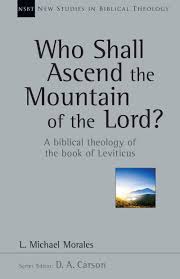
In one of the best books I read last year—a biblical theology of Leviticus—Michael Morales (Who Shall Ascend the Mountain of the Lord?offers an alternative reading to Genesis 4:7. Actually, he recalls a traditional reading found in commentators like Adam Clarke (1762–1832), Adoniram Judson (1788–1850), Young’s Literal Translation (1862), Jamieson, Fausset, and Brown (1877), and Matthew Henry (1662–1714) (p. 57n51).

Commenting on the way sin crouches at the door, he argues that the language could also be render “sin offering,” and that there is good reason for seeing the door, or gate, is the place where the sons of Adam brought their sin offerings—or, should have brought their sin offerings.

I appreciate this interpretation as it pays careful attention to the cultic themes of Genesis (i.e., temple, sacrifice, priesthood) and the way it explains in more objective terms why Cain’s offering is rejected and Abel’s is accepted. The reason? The former rejected God’s Word and Gods’ way; he brought a sacrifice of his own choosing, rather than the sin offering which God prescribed. Meanwhile, Abel brought a offering which responded to God’s Word in faith and sought atonement for his sin.

Read in the context of Moses’s five books, this seems like a superior interpretation, as Morales explains further. Continue reading

Bread and Wine at the Table of a Righteous King (A Meditation on the Lord’s Supper)

MelchizedekDear Church,

You have been invited to covenant meal—a table set in the midst of hostile enemies. Bread and wine are the food and drink of choice. The host is a righteous king who is lives in the holy city Jerusalem, and serves God Most High as a faithful priest.

When you look at your invitation, the RSVP calls you to renounce your idols and acknowledge the greatness of your host. This table, offered freely to you, is set for those who believe God’s promises and refuse to partner with the kings of this world. Indeed, this table does not communicate righteousness. Rather, it is for those who have been justified by faith in the promises of God Most High.

What is this invitation describing?

If you said, the Lord’s Supper, you’d be correct. And if you said Abram’s meal with Mechizedek, you’d also be right. But how can this be?  How can one description point to two events? The answer is that God ordained the Old Testament events of Genesis 14 to prepare the way for Jesus Christ and the covenant he sealed with his blood and celebrated on the night before his crucifixion.

Therefore, just as learning the history of Passover helps us appreciate and apply the Lords’ Supper today, so does learning the story of Melchizedek and his covenant meal. Continue reading

Joshua & Associates: Finding Your Place in Christ’s Royal Priesthood (Zechariah 3)

priestcolorJoshua & Associates: Finding Your Place Christ’s Royal Priesthood (Zechariah 3)

The angel of the Lord. A satanic accuser in the throne room of God. A priest with dirty clothes. The promise of a coming Messiah. And a front row seat to God’s plan of redemption. On Sunday we considered all of these items, as they appear together in Zechariah 3.

Finishing up our series on the priesthood, we saw in Sunday’s sermon how our lives fit into the incredible storyline of the priesthood. From Zechariah 3, in particular, we learned how God restored the priesthood after the exile, which served as “sign” (v. 8) for a greater priesthood to come.

If you want to understand how the priesthood moved from the Old Testament to the New, Zechariah is an important book. And this sermon will help you understand that book and how Joshua the high priest foreshadowed the coming of a greater Joshua and his friends.

You can listen to the sermon online. Response questions are below along with a few resources on Zechariah and the priesthood. Continue reading

In Search of a Priest Like Melchizedek (Genesis 14; Psalm 110; Hebrews 7)

priestcolor

In Search of a Priest Like Melchizedek (Genesis 14; Psalm 110; Hebrews 7)

Who is Melchizedek? And why is Jesus called a high priest like Melchizedek? And what does Mel—can we abbreviate his strange name?—have to do with the church and the world today?

On Sunday, I tried to answer those questions with an animated tour of the Bible. Incorporating the artistic gifts of Jeff Dionise, our elder for outreach, I preached a three part message that started with Melchizedek in history (Genesis 14), moved to Melchizedek in poetry and prophecy (Psalm 110), and finished with Jesus Christ, or Melchizedek in fulfillment (Hebrews 7).

In what follows you can listen to the message or trace the story with the graphics displayed below. Additional resources are also found below. Response questions will return next week as our church finishes up its series on the priesthood.

Happy Thanksgiving!
ds Continue reading

A Family of Royal Priests: Why the Priesthood of Believers Must Be “In Christ” (My ETS Presentation)

etsThis week the Evangelical Theological Society is meeting in Denver, Colorado. And this morning I am presenting a paper entitled: “A Family of Royal Priests: Why the Priesthood of Believers Must Be In Christ

The topic of priesthood is one that has long captured my attention. It was the subject of my dissertation. Next year, I am planning to publish a book on the subject with Crossway, in their Short Studies in Biblical Theology series. And last year, I read and reviewed Andrew Malone’s book God’s Mediators: A Biblical Theology of the Priesthood.

In that book, Malone makes the case that the priesthood of believers is not derived from the high priesthood of Christ. This view, which Malone argues for with surprising vehemence, divides Christ from his covenant people, at least with respect to the priesthood. It does not attend to the way Scripture explains the “making of priests,” nor does it do justice to many passages that conjoin the priesthood Christ with his kingdom of priests.

So in response to Malone, I wrote this paper, to make a theological and exegetical case for the unified priesthood of Christ and his people. It’s not short, but if you read it, I’d love to know your thoughts.

Soli Deo Gloria, ds

The Church as New Covenant Levites (Numbers 25; Malachi 2–3; Ephesians 4)

priestcolorThe Church as New Covenant Levites (Sermon Audio)

I am __________.

In individualistic cultures, these words are usually filled with various accomplishments, activities, or vocations. I am a musician. I am a doctor. I am a (recovering) alcoholic. However, in more communal cultures, this sentence is more likely completed with relational predicates. I am a son. I am a mother. I am a husband.

Of course, studies that have employed this fill-in-the-blank test have only produced general trends. Nevertheless, it is interesting to consider what words you use to introduce yourself. Are you first and foremost defined by what you do? Or by who you are with? Or is it some combination of the two?

This Sunday we will again consider the priesthood in Israel and how the family vocation of guarding the temple defined the Levites. At the same time, we will see how the events of their history inform the backstory to our own priestly calling. As Isaiah 66:21 says of the nations who will come to Christ in the new creation: “Some of them also I will take for priests and for Levites.”

Indeed, for those in Christ we find that we both have family and a vocation that fills in the blanks of our life and gives us both redemption and service in God’s kingdom. Like the Levites given to the priest to serve God in his house (Num. 8:19), we too are servants given to Christ, who in turn has given us to the church (Eph. 4:8, 11–12).

Therefore, learning the history of the Levites is not just learning someone else’s family history. If you are in Christ, it is your family history, not to mention a key part in how God has brought redemption to the world.

This week’s sermon can be heard online. Response questions are below, as additional resources.

Soli Deo Gloria, ds Continue reading

A Kingdom of Priests: Washed, Worshiping, Working, and Witnessing (Exodus 19:6; 1 Peter 2:9)

priestcolorA Kingdom of Priests: Washed, Worshiping, Working, and Witnessing (Exodus 19:6; 1 Peter 2:9)

Are you a royal priest? How do you know? What is a kingdom of priests? And how does that really apply today? Is this title for individuals? Or should it be a community identity?

Many questions swirl around the biblical idea of priesthood. And on Sunday we considered Peter’s words to the church: “You are a royal priesthood” (1 Peter 2:9). In examining his words, we learned that they go back to Exodus 19:6 and come in the context of worship on the mountain God.

By examining Exodus 19:6, therefore, in its original context and comparing it to 1 Peter 2, we were able to learn how God makes a priestly people, what a kingdom of priests do, and how this title of royal priesthood applies to us today.

You can listen to the sermon online. Discussion questions and additional resources can be found below. Continue reading