Was Jesus Among the Larpers? How Reading John 4 with Genesis 29 Helps Us Understand Biblical Typology and Jesus’s Identity

gabriel-rissi-MrdSyMik4ao-unsplash

Well, Well, Well, Look What We Have Hear: A Marriage, A Mountain, and a Messiah (pt. 1) — A Sermon on John 4:1–18

In John’s Gospel we learn that Jesus is the Word made flesh (1:14), the Only Begotten God (1:18), the Lamb of God who takes away the sin of the world (1:19), and the one to whom all the Law and Prophets wrote (1:45). But did you also know that Jesus was also a Larper? Not a leper, mind you, but Larper—a Live Action Role Player.

As best I could find online, Larping is a type of game where a group of people wear costumes representing a character they create to participate in an agreed [upon] fantasy world. Most recently, Larping gained attention in the Marvel Comic series Hawkeye, but it’s been around a lot longer than that. If you need an example of what Larping looks like up close, just go to a Medieval festival near you, and you will surely find a group of Live Action Role Players.

Now, if you don’t want to go to a Medieval Festival to see LARP-ing, you could also read John 4. In this famous chapter, where Jesus confronts the woman at the well, the Lord assumes the role of particular character from the world of the Patriarchs. Indeed, as John tells it, Jesus is a man (or “bridegroom,” see John 3:29) who meets a woman at a well, who will in time, become his bride. Let’s consider how this works. Continue reading

Preach Hebrews the Next Time You Don’t Have a Preacher, Plus a Post-Script on Answered Prayer

dawn-mcdonald-2RADIf5oR28-unsplashWhat will you do the next time you do not have a preacher? Oh, I am not talking about planning for an upcoming Sunday when you, or your pastor, will be absent, or when multiple teaching elders are unavailable. I am talking about when it becomes apparent 10 hours or 10 minutes before Sunday morning that the man called to preach simply cannot do it.

In such a situation, you have a few options. You could call on someone to preach something already prepared. Such preparation includes having a sermon ready, but it could also mean calling on a “prepared” person who could open a text and give a faithful exposition. Elder-qualified pastors and Bible teachers would fall into this category. And one of the best Resurrection Sunday expositions I ever heard came from a seminary professor who was called to preach 10 minutes before service as the teaching pastor lay ill in his office—literally, he was writhing in pain on the floor. (He’s okay now).

Extreme moments call for extreme measures. And churches shouldn’t be surprised that in a fallen world where clay pots preach the glories of God that sometimes those vessels of dust cannot stand and speak. Yet, knowing that, we can still be caught off guard, or in need of immediate relief. And this last weekend was such a case in our church.

What We Did When the Preacher Couldn’t Preach

As many readers of this blog know, I am not a full time blogger—hence, the regular but not absolutely consistent blog schedule. Day to day, I have the joy of serving at Occoquan Bible Church, located in Northern Virginia. Since 2015, I have been pastor for preaching and theology. So, most Sundays I am the one standing up and preaching.

At the same time, we have a deep bench of gifted preachers. And if you check our website, you will find messages from Ben, Rod, Jared, Dave, Ron, and Jeff. All of our elders have preached multiple times to our church. And by conviction, we do this because we believe the pulpit is the Lord’s, not man’s. It is God’s Word that is preached, not our own. And it is the faithful preaching of God’s Word that builds his church, not the gifting of any one pastor. For that reason, we intentionally share the pulpit. And by design I preach about 40 times a year, not 52.

Continue reading

Getting Back Into John’s Gospel: An Introduction to Jesus Christ in John 1–2

john03When John Calvin returned to Geneva, after being exiled from the city for three years, he picked up right where he left off. Rather than preaching some preacher-centered ‘I’m Back” message, he simply preached the next verse in the Bible. So great was Calvin’s commitment to verse-by-verse exposition, he made no fanfare for his return to the pulpit. Rather, he preached the next verse in the text and pointed people to Christ.

This week, our church did something similar. In March 2020, we were forced to stop gathering for two months. And though we continued to preach the Bible (online at first and soon after together), we moved from John to Psalms and Joel and other scriptures. In leaving John, we always planned to come back, and by God’s grace we were able to do that on Sunday.

Picking up where we left off, we overviewed John 1–2 to remember what those chapters said. In seven portraits from those two chapters, we saw a beautiful picture of Christ. And in return, we learned two important things about ourselves. You can find those nine truths in this sermon: Getting Back Into the Gospel of John. You can also find our earlier sermons here, plus other resources on John’s Gospel.

May the Lord bless this series and permit us to continue to study the Gospel of John.

Soli Deo Gloria, ds

How John’s Prologue Placards the Glory of God’s Son: 10 Things About John 1:1–18

john03Sunday we begin a new sermon series on John’s Gospel. Whereas other sermon series may need an introductory sermon, John gives us his own in his opening “prologue.” In what follows, we will note ten things about those opening 18 verses.

1. John 1:1–18 introduces us to themes that will run throughout John’s Gospel.

In his commentary on John, Colin Kruse paints two word pictures to describe John’s opening verses. He says that the prologue functions like (1) an overture that introduces an opera or (2) a foyer to a theater “where various scenes from the drama to be enacted inside are placarded” (John, 52). With these visual aids in place, he helps us “see” how John 1:1-18 previews many themes in John’s Gospel.

These themes include,

  • Jesus’s pre-existence (1:1a / 17:5, 24)
  • Jesus’s union with God (1:1c/8:58; 10:30; 20:28),
  • the coming of life in Jesus (1:4a/ 5:26; 6:33; 10:10; 11:25-26; 14:6),
  • the coming of light in Jesus (1:4b, 9/ 3:19; 8:12; 12:46),
  • the conflict between light and darkness (1:5 / 3:19; 8:12; 12:35, 46),
  • believing in Jesus (1:7, 12 / 2:11; 3:16, 18, 365 5:24 6:69; 11:25; 14:1; 16:27; 17:21; 20:25),
  • the rejection of Jesus (1:10, 11/ 4:44; 7:21; 8:59; 10:31; 12:37-40; 15:18),
  • divine regeneration (1:13/3:1-7),
  • the glory of Jesus (1:14/ 12:41; 17:5, 22, 24),
  • the grace and truth of God in Jesus (1:14, 17/ 4:24; 8:32; 14:6; 17:17; 18:38)
  • Jesus and Moses/the law (1:17/ 1:45; 3:14; 5:46; 6:32; 919; 9:29),
  • only Jesus has seen God (1:18/ 6:46), and
  • Jesus’ revelation of the Father (1:18/ 3:34; 38; 12:49-50; 14:6-11; 17:8). (52)

2. John 1:1–18 demonstrates a very clear chiastic structure.

In his article, “The Pivot of John’s Prologue,” Alan Culpepper makes a compelling argument for a chiastic structure in the prologue. Continue reading

Seeing is Believing: Returning to John’s Gospel

john03In the Spring of 2020, our church began a new sermon series on the Gospel of John. Little did we know that things would get really weird in March of that year, when the onslaught of Covid-19 led us to stop gathering for eight weeks. During that time and after, we looked Psalm 90–106 and Joel. Thereafter, our church studied Daniel, 1 Peter, and Proverbs 1–9, to name a few. Yet, it has always been the hope to resume our sermon series in John.

Thankfully, and under the Lord’s providence, we plan to restart this series next Sunday. In that sermon, I will give an overview of the whole Gospel. The following week, I will (Lord willing) restart a verse-by-verse exposition of John’s Gospel. That first message will begin where we left off in John 3 with the incredible encounter between Jesus and Nicodemus. Today, for those in our church or others who might benefit from a sermon series on John’s Gospel, I share the five messages that we preached in 2020.

Continue reading

Returning to Romans: An Epistle of Faith, Hope, and Love

kelly-sikkema-GPoh17DxqdM-unsplashIn the Fall of 2019 our church began a Bible study in the book of Romans. It ran through the first seven chapters of Paul’s magnum opus, but in March 2020, when the world shut down, we pushed pause on this book. When we returned to church, our Bible study shifted to Leviticus. But with that study completed, we are now returning to Paul’s largest letter. And for those interested in following along, they can find previous lessons here. New lessons will also be posted on the same page each week through the Spring.

For this blogpost, I want to offer a brief sketch of the book and how Paul’s triad of Faith, Hope, and Love organize his magnificent exposition of the gospel. For those studying Romans (again), this will help acquaint you with the book as a whole. And it also will provide a way of seeing the gospel, and what the gospel achieves, in this whole letter. Additionally, this approach to Romans may also remind us of how Paul brought unity to the church of Rome, when it was facing divisions. Today, we face the same. And thus, we need to learn as much from Paul as we can about what the gospel is and what the gospel does.

Continue reading

Brother-Theologians: Preach the Word!

samuel-zeller-432101A few years ago I wrote this article on David Prince’s website. As I go to teach Systematic Theology 1 this week, I am reminded of it, and the need for theologians to be preachers.

In theology, we are not just called to study and store up knowledge of truth. We are called to study to show ourselves approved so that we may preach—or teach, or write, or counsel, or anything else that qualifies as heralding the good news—sound doctrine. To that point, I repost this article, in hopes that God may continue to raise up men sound in doctrine who will preach the Word.

*********

When I came to seminary, I wanted to study the Bible and theology. Having never “preached” a Sunday morning message, I was uncertain as to the role preaching would have in my life. Ten years later, through a combination of providential opportunities and willingness to preach whenever I was asked, I have finished my theological education  (Yes, it took a decade!) and have preached more Sundays than not.

For nearly five years I have filled the pulpit at my current church—first as a supply preacher, then an interim pastor, and last as the senior pastor. In the lustrum before serving at our church, I like so many of my seminary peers preached in nursing homes, urban missions, country parishes. It was a wonderfully painful time, one where precious little flocks like Corn Creek Baptist Church endured my preaching and helped me learn how to preach.

During that time, preaching was a priority, but so was theology. By training, I am a systematic theologian, or at least, that’s what my degree says. Therefore, as a pastor and a theologian, I feel a measure of familiarity with both vocations. And I feel a fraternal affection and responsibility to exhort aspiring theologians with what Paul commanded Timothy: Preach the Word! Continue reading

A Grace That Endures: Eleven Words of Comfort in Times of Crisis (Psalm 119:25–32)

boat out at sea at dusk

Amazing grace, How sweet the sound / That saved a wretch like me.
I once was lost, but now I am found, / Was blind, but now I see.
‘Twas grace that taught my heart to fear, / And grace my fears relieved.
How precious did that grace appear / The hour I first believed.

These lyrics are the opening words to John Newton’s famous hymn Amazing Grace. And they recall his miraculous conversion from a trader of slaves to a slave of Christ. And if you have tasted the grace of Christ  in your life and experienced the forgiveness of sins, the regenerating work of the Spirit, and the undeserved love of the Father, then his lyrics are precious beyond words. For in Newton’s hymn, we find a testimony of grace that recalls our salvation as well.

Yet, Amazing Grace is not only a hymn of salvation, it is also a hymn of preservation. For it continues . . . Continue reading

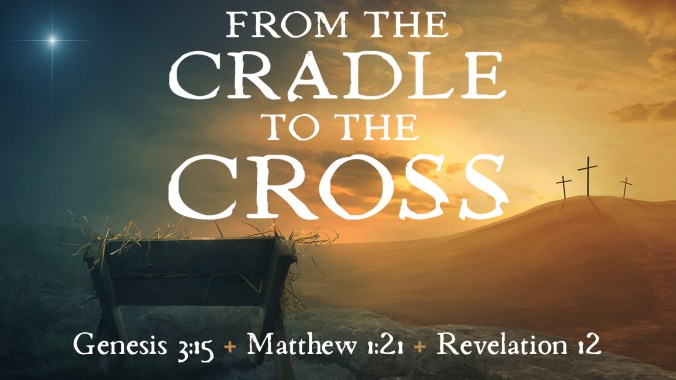
The Seed of the Woman Wins (Revelation 12): How Reading Revelation Rightly Gives Us Lasting Hope

1920x1080 CradleAny time you read Revelation, it is like stepping out of reality and into a carnival of mirrors. Only those mirrors do not, or should not, reflect our own faces, so much as they reflect the prophets of the Old Testament, whose faces were reflected the glory of God’s Son.

While Revelation is a book that is filled with signs, those signs have a registered trademark—a trademark found in the Old Testament. And anytime we read Revelation we should labor to understand the book in its canonical context. To that end, let me offer three words of how to interpret and apply this chapter.

These three exhortations come from my last sermon on Revelation 12. But they would apply to any passage in this glorious and mystifying book. Continue reading

The Genealogy of Jesus Christ: A Christmas Meditation (Matthew 1:1-17)

close up shot of a stained glass

In Paul’s first letter to the Corinthians, he says that the cross of Christ is a stumbling block for Jews (1:23). Due to the Law’s instruction, it is clear that law-abiding Jews would take offense at anyone hung on tree. As Moses announced in Deuteronomy 21:23, such a man was accursed by God.  Understandably, the call to believe in and worship a man nailed to a tree would have been hard to accept.

Two thousand years removed from Golgotha, the cross has become a symbol of peace and hope. In the West, Christians have grown up seeing crosses on church steeples and tee shirts. More than a few devotees to Christ adorn them around their neck or ink them on their skin. Clearly, the cross is no longer a stumbling block.

What is a stumbling block today is the Bible itself. In almost a complete reversal, the word of God, which would have posed no cultural problem for the Jews of Jesus’ day, causes many professing Christians to wince and excuse its contents.

For many, the world of the Bible is foreign. Its words, warfare, and worship are hard to understand. Add to this the self-deprecating truths of total depravity and unconditional election, and you have a Bible that is not just unfamiliar, but even offensive.  Yet, it is not only doctrine that trips up Bible readers; it is also genre selection. Continue reading