Tolle Lege: The Return of the Strong Gods by R. R. Reno

an aerial shot of the apple park in california

Apple Park in Cupertino, California

From Brexit to the rise and fall of Donald Trump, we have heard a lot about the dangers of globalism and return of populism. Many charged Trump with a kind of nationalism that led to all kinds of racism, fascism, and other political maladies. But many others, would share a concern for commercial giants like Apple, Amazon, and Alphabet Inc. (that’s Google’s parent company) who are assuming powers that transcend geopolitical nations.

In short, debates range today over what is most dangerous: Is it the tyrannical rise of globalism which calls for diversity, antiracism, and economic justice? Or is the greater concern a view of the world that affirms boundaries, borders, and limited budgets?

Those are big questions which touch on every area inch of public life, but connecting them all is a shared history of how to make sure that the fascism of Nazi Germany and the race-based slavery of America don’t happen again. Indeed, the push towards diversity and the denial of strong authorities is strongly associated with a push against the world events that ran from 1917 to 1945. Throw in the boom of technology and the ideologies of the 1960s (chronicled in Carl Trueman’s The Rise and Triumph of the Modern Self ) and you have a starting place for understanding our age.

The Return of the Strong Gods

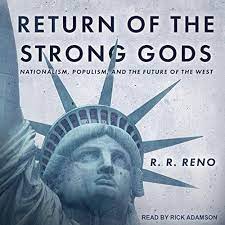
renoAdding to this understanding in R. R. Reno’s book The Return of the Strong Gods: Nationalism, Populism, and the Future of the West. In this work of history and cultural commentary, Reno begins with the idea of the Open Society put forward by Karl Popper. He argues that Popper, along with many others, pushed hard against the militant authorities of the two world wars and called for a society that had no such “strong gods.” Reno explains how this worked out in the liberal policies of the 1960s and following, and how our world today is suffering under the weight of a world without any strong ideas. In other words, by evacuating strong leaders, strong ideas, strong gods from the world, it created a nice, safe, open space for individuals to express themselves without destroying others. Continue reading

Restoring the Right Hand of Fellowship: A New Sermon Miniseries

jack-sharp-ShCVvQbQBDk-unsplashFour Truths About Fellowship: A Sermon on 1 John 1:1–2:6

As we know all too well, sin always separates. And thus, when fellowship breaks, there is, lurking somewhere, sin unconfessed. In those times, it is tempting to fix the problem(s) with our own wisdom and to work overtime to recreate the fellowship that was had before. Yet, in times when fellowship is lost, we must remember that God alone can “fix” it. And accordingly we should seek him first and all his righteousness.

To put it seasonally, before the Lord gives his church spring rains, he often makes us feel the bitterness of winter’s cold. This coldness may have known sources, or its chilling drafts may strike us without ever revealing the source of their cold. Yet, whatever the source of winter, we should remember that God is working, and that spring is coming. As Hosea 6:1–3 tells us, we must remember that the Lord is the one who breaks us, so that he can bind us; he hurts us (or permits us to feel pain), so that he can heal us (see Psalm 105). Then, from this place of weakened condition, we are invited to return to know the Lord.

This is the promise: God will sanctify his people, and he will bring them to confess their sins. And until sin is confessed, joy will be withheld. Yet, when we seek his light and see our darkness, it will prompt true confession, repentance, forgiveness, and grace. And this grace will bring a new season of fellowship, all provided by the Lord. Continue reading

Fellowship 101: Five Truths To Move Beyond Bubba’s Shrimp Scampi

erika-giraud-7KhbREQPFD4-unsplashWhat does fellowship mean?

In Christian circles the word fellowship, and its Greek equivalent (koinōnia), is used for all kinds of things. There are fellowship meals, fellowship events, fellowship coordinators, fellowship halls, and even internship experiences called fellowships. Additionally, you have a ministry called Bible Study Fellowship, which labors to distinguish themselves from being a church, even as some individuals treat that ministry as their church. At the same time, there are churches who go by the name Bedrock Baptist Fellowship, or something like that. And you can find all sorts of resources aimed to improve fellowship.

With all its various uses, “fellowship” is the equivalent to Bubba’s endless array of Shrimp Dishes. Indeed, like shrimp kabobs, shrimp creole, shrimp gumbo, etc., fellowship goes with everything. Yet, by going with everything, its utility has permitted Christians to do many things with fellowship that go beyond the bounds of the Bible.

Again, what does fellowship mean?

If we open our concordances, we find the word koinōnia (fellowship, partnership) 19 times in the New Testament: Acts 2:42; Romans 15:26; 1 Corinthians 1:9; 10:16 [2x]; 2 Corinthians 6:14; 8:4; 9:13; 13:14; Galatians 2:9; Philippians 1:5; 2:1; 3:10; Philemon 6; Hebrews 13:16; and 1 John 1:3, 6, 7. From these uses, we might begin to see what God says about fellowship.

Clearly, any time we restrict ourselves to a word to form a doctrine or a practice we miss related concepts, metaphors, stories, and more. Yet, because this word is used so often to justify so many types of Christian activities, we would do well to examine the word. Do we have a faithful understanding of the word? And do we abide by it? Continue reading

Hang On and Hold Fast: A New Year’s Resolution for 2024

chjpdmf0zs9sci9pbwfnzxmvd2vic2l0zs8ymdiylteyl2xyl2rpz2l0ywxjd2nvbw1vbndlywx0agz0odq4djm1nc1pbwfnzs5qcgc. . . Let us run with endurance the race that is set before us,
looking to Jesus, the founder and perfecter of our faith . . .
Hebrews 12:1–2

Let us hold fast the confession of our hope without wavering,
for he who promised is faithful.
Hebrews 10:23

As we step into 2024, I want to offer two words pictures that frame the way we might think about the upcoming year. If this election year is anything like the last election year (2020), it will, in the infamous words of Ned Ryerson, be a “doozy.”

Doozy or not, however, the year of the Lord 2024 was planned by God before the foundation of the world and it will proceed according to his plan, whether than plan involves regime changes, military operations, economic failures, societal revolution, or just mundane progress. In all that could occur this year, there is nothing that will separate us, the children of God, from the love of God in Jesus Christ. And so, as we step into this year, we should do so with faith in God’s son, hope in God’s future, and love for God’s people.

To do that I want to offer two images from Hebrews. Both call Christians to refuse to shrink back and to endure the trials of life with steadfastness. With these biblical images, may the Spirit of God give us grace to endure as we think rightly about this upcoming year. Continue reading

A Tale of Two Fishermen: Peter, Jesus, and the Meaning of 153 Fish

people standing on brown wooden dock

If you have ever fished, or known someone who has, then you know the temptation to embellish. What began as a small catch, becomes a medium catch, becomes a large catch. Maybe this is a stereotype, but fishermen are notorious for letting their stories grow over time.

The same can be true with Scripture, especially in books like Revelation, Daniel, or John. When a biblical author uses symbolism to portray his message, the true words of God can be enlarged, exaggerated, or embellished over time.

This method of embellishment often is often associated with something called allegory, as interpreters of Scripture take something in text of Scripture and interpret it by something outside of Scripture. This extra-biblical ‘thing,’ might be a philosophy, a moral imperative, or a doctrinal truth. But what it is not is something that immediately comes from the text of Scripture.

Historically, this allegorical method of interpretation has taken a number like 153—the number of fish in Peter’s catch (John 21:11)—and turned the fish into a symbol for something else. For instance, Augustine, who is at times helpful and at other times allegorical, derived from this number a proof text for the Trinity (See Klink, John, 902). How so?  

Well if you add 1 + 2 + 3 + 4 all the way up to 17, you arrive at the total of 153. One hundred fifty-three is a perfect triangle number for 17. Even more, when you add the 10 Commandments to 7 gifts of the Holy Spirit, you get 17, which gives you a triangular number of 153 that symbolizes the Trinity.

It’s as simple as that. Can’t you see it? No? Neither can I. Continue reading

The Priesthood of All Believers: A Call for All to Proclaim the Gospel

b02007a106a73b935c8de8eeb4be056cab88c37fLast year I wrote a book on the priesthood, and tonight I will teach a lesson on the priesthood of believers in Romans 15. And so in preparation for that lesson, I am dusting off a piece of my dissertation (edited) and posting it here. It’s on the priesthood of believers.

*********

When we think of the priesthood of believers, we often think of 1 Peter 2:5, 9–10, and rightly so. In addition to defiling the high priest’s servant when he cut off his ear (N.B. Jesus does not heal Malchus in John’s Gospel), Peter also picked up the sword of the Spirit to positively articulate a vision of the church as a royal priesthood. And in what follows, I will reflect on his thoughts from his first epistle.

At the same time, Paul too had a vision for the priesthood–a vision for priesthood that is often under-appreciated. And so, in the second portion below, I will highlight the one place where he uses the word “priest,” actually “priestly” (hierourgounta). From his usage, and Peter’s, we learn a key lesson, that the priestly ministry of the church means evangelism for all. Let’s consider. Continue reading

Consider Jesus . . . According to the Scriptures: Why He Gives the Spirit to Us is Better Than “He Gets Us”

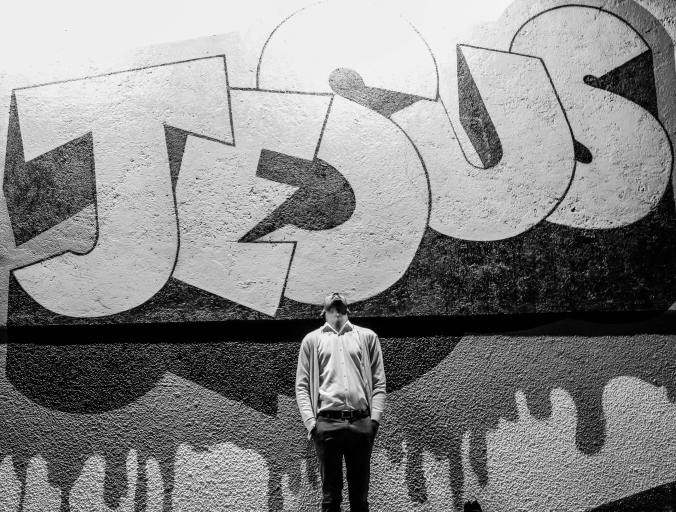
gift-habeshaw-QDP10NbwcyE-unsplashConsider Jesus.

Those two words are a simple command found in the book of Hebrews. More completely they read.

Therefore, holy brothers, you who share in a heavenly calling, consider Jesus, the apostle and high priest of our confession, who was faithful to him who appointed him, just as Moses also was faithful in all God’s house. (Heb. 3:1–2)

In Hebrews, Jesus is the main subject. And his person and work are compared and contrasted to everything in the Old Testament. Jesus is like Moses, only better. Jesus is like Abraham, only better. Jesus is like Adam, Aaron, Joshua, Melchizedek—only better.

Jesus is the true and lasting high priest, the king whose throne will never end, the Son who speaks a better word than all the prophets, and the sacrifice who ended all sacrifices. Indeed, Jesus is better. And therefore, we who possess a holy calling must consider Jesus.

But importantly, when we consider Jesus, we must do so in the way Scripture speaks and not just in the way the world speaks or we thinks.

He Gets Us Remakes Jesus in Our Own Image

Right now there is an evangelistic campaign called He Gets Us, and if you watch the Super Bowl, you may see some of their commercials. Even if you don’t watch that game, you should know about this movement that plans to spend one billion dollars marketing Jesus and has made connections with Southern Baptists, until Kevin Ezell reversed course. Long story short, this is not a small movement, which makes their truncated gospel not a small problem. Continue reading

Imagine That: Why You Need to Cultivate a Sanctified Imagination

gray and blue sky

A few months ago, I attended a conference where the speaker shared about his counsel to those battling sexual sin. Paraphrasing, he said, “Imagine every impure action as another thrust of the spear into the side of Jesus.” Woe! What a sobering and sickening image! Can you say that? Should you think that, really?

Never before had I heard someone speak so graphically about the need for the use of imagination in our fight against temptation. However, as I have reflected on his point, I am increasingly convinced he is exactly right.

Imagination, when rightly used, is one of the most powerful tools God gives us to put off the old nature and to walk in the new. After all, Jesus himself said to those battling lust, “gouge out your eye” and “cut off your hand” (Matt 5:29–30). But it is not just for lust. In every area of life, we need to train and retool our imagination for the purpose of sanctification and greater gospel service.

Imagination in the Bible

The Bible is filled with imagery. From the Spirit brooding over the waters (Genesis 1) to John’s vision of a glorious city, dressed like a virgin bride (Revelation 21), the Bible drips with word pictures like the Matrix rains green code. Jesus regularly employs parables to capture the imagination of his disciples. The prophets of old spoke of Israel as a harlot, while Paul speaks of the church as a radiant bride.

The question is, do you see it? In a way that most fast-paced Americans don’t appreciate, Scripture begs to be pondered s . . l . . o . . w . . l . . y.

When Psalm 32:8-9 says, “Be not like a horse or a mule, . . . which must be curbed with bit and bridle, or it will not stay near you,” it moves us to stop and reflect: What is it about these animals that must be avoided? Is it the same thing for each beast? Or are these they expressing two opposite errors—e.g., the error of running ahead of God like a wild horse and the error of lagging behind God like a stubborn mule?  The imagery fires the imagination and impresses upon us the need to walk humbly with our God.

Moreover, Scripture calls us to discipline our imaginations. Paul says in 2 Corinthians 10:5 that we are to “take captive every thought to Christ.” Because Satan wages war with words of deception, Jesus’ disciples “destroy arguments and every lofty opinion raised against the knowledge of God” by means of ‘thought-control.’ Only this mental exercise is not some metaphysical séance. Rather, it is meditation on the propositions and poetry of God’s Word.

To wield the Sword well—another image, I might add—takes not only a right doctrine but a sanctified imagination. Such an imagination begins with learning the gospel and God’s view of the world (Rom 12:1–2), but soon this renewed mind must and will generate new thoughts that serve the needs of those around us. While some believers may be more creative than others, imagining acts of kindness for others is not limited to creative-types. It is a universal calling for everyone purchased by God to do good works. We all must employ our minds to imagine that which is excellent and praiseworthy (Phil 4:8).

Three Places Where Imagination is Key: Sincere Sympathy, Holy Outrage, and Practical Service

Let’s get more specific. Instead of talking in the abstract about imagining concrete ways of doing gospel-empowered good, let’s consider three ways imagination serves as the link between good intentions and good works.

First, a sanctified imagination creates sincere sympathy.

Think about the last time you heard sad news. How did you feel? Chances are if you have experienced a similar pain, you were quick to empathize. But if the mourner experienced something foreign to you, you may have been slower to weep with the one who was weeping. What to do? The answer, of course, is to pray that God would comfort that person. But is that all? I don’t think so.

Using our imagination, we can conceive of what a widow goes through on the anniversary of her husband’s death, even if we’ve never been married. By means of a sanctified mind we can consider what a son misses when he grows up without a father, or what a father of four worries about when he loses his job. In short, we don’t need to have shared the same experience to minister comfort, but we do need is an imagination that makes up the difference.

Second, a sanctified imagination fuels holy outrage.

In Ephesians 4:26 Paul quotes Psalm 4:4, saying, “Be angry and do not sin.” For most of us, we need to guard against undue anger. However, in a world where moral outrage is dulled by a diet of sitcoms and emotionless news reporting, many Christians need to learn how to “be angry.” Here again, “pondering”—not visceral experience—is key (see Psalm 4:4–5).

For instance, how should we feel about sex trafficking or late term abortion? To begin with, we must let the truth of God’s word inform our thinking. But after that, what? Is it enough to have cognitive data? Can statistics alone form our moral conscience? I think not.

Before, during, and after we encounter these travesties in print or in person, we must use our minds to aid our hearts feel the effect of men stealing girls from their homes or babies being mutilated in their mother’s wombs. Of course, this kind of deliberate rumination is unpleasant and painful; some might unnecessary or even wrong-headed. But honestly, how else will we learn to hate the horrors of sex trafficking and abortion, unless we feel with the victims, and with the Lord, the heinousness of the crimes?

The same goes for any other form of brutality, abuse, or ethical injustice. Personal narratives are needed to grow our moral conscience. And when personal experiences are lacking—either because of distance or present circumstance—biblically-informed contemplation of our neighbors need is what we need to prepare our hearts for the day when we do meet those suffering from injustice.

In truth, we cannot personally tackle every moral dilemma in the world, but we can and must cultivate a moral conscience that abhors every kind of injustice. A sanctified imagination does that by creating in us a holy outrage at sin and a deepening love for Christ who alone can make all things new.

Third, a sanctified imagination quickens practical service.

The golden rule demands a sanctified imagination, for without it we would regularly bless others in the very same way we want to be blessed. In other words, when we love another, we need to think about who they are, what they need, and how they will receive our love. This requires imagining the living conditions of another and prayerfully considering what would serve this person. Husbands desperately need to think this way, but so do social workers and car manufacturers.

In the home, husbands love their wives best when they imagine new ways to serve them—according to what delights the wife, not the husband. In the workplace, engineers show love by thinking about how the products they are making will improve life for the people who buy their cars. Social workers show love by dreaming up an elaborate birthday party for the child who has never received a present.

On it goes. In every arena of life, imagination will help you be a better servant and a better lover. Indeed, without such imagination, you will grow tired in your compassion. Likewise, without a creative imagination the person who rejects your offer of the gospel will probably not hear it again from you. Yet, with a Spirit-led, gospel-driven imagination, there are countless ways to insert the gospel into the natural rhythms of life and conversation. After all, Jesus is the Maker of all things, and all things point back to him (Eph 1:10).

Creativity is for All New Creations in Christ

Of course, genuine service can happen with little creativity. Jesus said that a simple cup of cold water given in his name would be rewarded (Matt 10:42; cf. 25:35–40). Yet, in some instances the only way to deliver a cup of water involves the ingenuity of international travel and the problem-solving of purifying dirty water.

All the same, if we desire to be salt and light in the world and to share the gospel with the poor and needy, a sanctified imagination will be necessary. Especially among those people who are hard to love or hard to reach, a sanctified imagination is not optional but essential. It is part of the bridge system that moves vertical faith to horizontal love. It flows from a mind renewed by the gospel of Jesus Christ, and it has an endless array of applications.

Give it a shot this week. As you read the Scripture, pay attention to the imagery. Ask God to awaken your imagination. Instead of filling your mind with the endless images of television and YouTube, let the Word of God prompt your creativity. Begin to imagine what you can do to serve others and to share the message of Christ’s cross and resurrection, the only message that sanctifies the mind and brings peace and justice to the world.

Soli Deo Gloria, ds

This article was originally posted on the ERLC Canon & Culture page.

Photo by Caio on Pexels.com

Engaging Tim Keller’s Politically-Subtle, Seeker Sensitive Movement

coin telescope in a viewing deck

In November, Christ Over All published a series of article on evangelicalism and its history over the last century. If you didn’t see those articles, I would encourage you to check them out. They will give you a solid introduction to the key doctrines, debate, and debaters over the last one hundred years. This month, in an encore piece, we have just published a two-part consideration of Tim Keller and his impact on evangelicalism.

In many ways, I am thankful for Keller’s ministry, his heart for evangelism, and his faithfulness to the Lord. On occasion I have cited his works on this cite, and I recommended this evergreen article on church size dynamics to some men today. At the same time, Keller’s method of ministry bears careful observation. And in these two pieces, you get a sense of how Keller’s Third Way-ism has negatively impacted evangelicals. In what follows, I offer the concluding paragraphs of Mark DeVine’s analysis. Take a look and then go back and read his full argument here and here.

A Politically-Subtle, Seeker Sensitive Movement 

Between 1994 and 2006 Reformed theologian David Wells published four volumes that track and analyze how church growth movements, despite their formal assent to orthodox, evangelical doctrinal statements, have nevertheless compromised the faith. Unfortunately, Keller’s Third Way, despite its stated determination not to do so, has often done just this, producing terrible ethical fruit.

What most distinguishes the Keller-led Reformed resurgence from the other major church growth movements among evangelicals over the last half century? Is it theology, or something else? The “seeker,” “church growth,” and “purpose-driven life” movements targeted predominantly white suburban communities. Comparatively, the Keller movement aimed to reach the more ethnically diverse blue communities located in urban centers. Each movement labored to remove as many stumbling blocks to the gospel in order the reach their respective targeted communities.

Measured in buildings, bucks, and bodies, each movement was successful, at least for a time. Yet, looking over the last twenty years, it becomes clear that Keller-movement Evangelicals built platforms, brands, and messages in order to be found winsome by the blue communities they sought to reach. As with the old-line liberalism of Friedrich Schleiermacher, exquisite sensitivity to target audiences will shape the message delivered far more than its deliverers intended. Only in this case, winsomeness has elicited complaints and thoughtful retractions from Reformed evangelicals who once flew the Keller flag. All of this suggests that once again, the gospel once has suffered distortion in the otherwise laudable quest to avoid unnecessary violation of unbelievers’ sensibilities.

Such a result of Keller’s Third Way is disheartening, but not surprising. The message of the cross is foolishness to the world, and yet it is the wisdom of God (1 Cor. 1:18–25). Doctrinally sound evangelicals have too often been enticed to package the product of the gospel in cellophane for the consumer, yet wisdom, or its opposite, is proven by her children. Over the last decade, many children of Tim Keller’s Third Way have imagined that formal adherence to an orthodox confession is sufficient to protect the gospel message from distortion. But it’s not.

As the seeker-senstive and purpose-driven movements of the 1980s taught us, branding and ongoing messaging exert powerful influence on how that confession is received. And now the same is being seen with Keller’s politically-subtle, blue-community-sensitive seeker model. In each of these iterations, the fruit of these sincere efforts to advance the gospel have found themselves making friends with the world at the expense of the intrinsically offensive gospel that the world so desperately needs.

May the Lord help us to see this clearly, and to walk in his light accordingly.

Soli Deo Gloria, ds

Photo by Ramil Ugot on Pexels.com

The Literary Structure of Isaiah 1–66: Eleven Infographics

concrete building

For the last two months, I have preached through the book of Isaiah, one section at a time. In all, that made for seven sermons and seven sermon handouts. In attempting to capture and communicate the message of Isaiah, I looked for the literary structures of Isaiah. First, I looked at the big picture of the book. Next, I considered each section. And last, I tried to see the branches on the trees, that are found in the glorious forest of Isaiah.

For each sermon, I put them together in infographics that look something like the stairs pictured above. What follows then are eleven screen shots of the book of Isaiah. They follow a basic chiastic structure for the whole book (see below), and each attempt to show the dramatic arc of judgment and salvation in each section, even down to the ten oracles of Isaiah 13–24.

Isaiah 1–12

Isaiah 13–27

Isaiah 28–35

Isaiah 36–39

Isaiah 40–48

Isaiah 49–54

Isaiah 55–66

As I went through Isaiah, I found help from David Dorsey, Alec Motyer, Barry Webb, Peter Leithart, the Chiasmus Xchange, and others. And for those who look at these outlines, I am sure that much more could be done to show the literary connections of the book, both at the micro- and macro-levels. But for now, I leave these outlines here, in hopes they may serve you as you read, study, or preach Isaiah. 

If you have further reflections and/or insights into this glorious book, please share them in the comments. At the bottom, I also linked to the seven sermons that arose from these outlines. May these graphical outlines be a source of encouragement and help as you hear the voice of God in Isaiah. Continue reading