 “And whatever you ask in prayer, you will receive, if you have faith.”
— Matthew 21:22 —
Therefore I tell you, whatever you ask in prayer,
believe that you have received it, and it will be yours.
— Mark 11:24 —
In my high school year book, my senior quote was from Jesus: “Therefore I tell you, whatever you ask in prayer, believe that you have received it, and it will be yours.” Young in my faith but zealous, I was learning how to follow Christ and this verse seemed to be an appropriate way to express my devotion. Not to mention, it marked something of my eighteen-year-old theology: If I put my mind to it, Jesus could do anything.
In subsequent years, I’ve seen that my introduction to Christ came through various shades of moralistic, therapeutic deism with splashes of the Bible mixed in. I believed in God, the Bible, the historical death and resurrection, and my need for salvation, but I really didn’t understand the logic of the gospel—even though I believed in Christ crucified.
I believe God, in his unspeakable kindness, used a psychologically-slanted message of salvation to create in me a simple trust in Jesus. In a way that only a sovereign God could design, he planted the truth of Christ’s preciousness in my heart, even if it would take some time to see the darker lines of the gospel—namely God’s absolute holiness, my absolute need for atonement, and that faith included a dying to self and living for his glory (in a word, repentance is part of saving faith).
For me, college served as a crash course in theology, where the doctrines of grace began to redraw my earlier understanding of Christ and salvation. But before college, I believed Christ came to save me from hell and to help me fulfill my life’s purposes. After all I had found verses that said as much—Matthew 21:22 and Mark 11:24 being prime examples.
So, in my misguided zeal, I quoted Mark 11:24, a verse that I think many people misunderstand. Continue reading →
 What a straightedge is to a carpenter’s board, Jesus is to the human soul.
 In recent days, I’ve seen two excellent posts on writing better from David Gunderson and Charles Spurgeon, via
  In his book
 I love the end of Paul’s letters. Why? Because there is so much missions-mindedness in them. For instance, in Romans 16, Paul lists a few dozen of his gospel associates. In Titus 3 he shows how he is making plans for the gospel to go throughout the Mediterranean. And in Colossians 4, he is again speaking of the laborers who are both faithful and dangerous.
 Free will.
 In his excellent book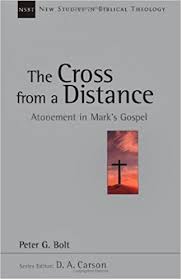
 Jesus said to them, “I am the bread of life; whoever comes to me shall not hunger, and whoever believes in me shall never thirst. But I said to you that you have seen me and yet do not believe. All that the Father gives me will come to me, and whoever comes to me I will never cast out.
 Via Emmaus