 When one of my closest friends (Trent Hunter) and my doctoral supervisor (Stephen Wellum) write a book together on biblical theology, it is not surprising I’d commend it. In fact, I did that months before it came out and as soon as it came out, I assigned our “Theology Thursday” book study, a men’s group at our church, to discuss Christ from Beginning to End: How the Full Story of Scripture Reveals the Full Glory of Christ. We’ll do that Thursday, but before then let me say a couple things about this new book.
In this biblical theology the reader will find a well-crafted but non-technical summary of the Bible which helps people understand how to read the Bible and what is in the Bible. Following the trajectory of the biblical covenants (with Adam, Noah, Abraham, Israel, David, and Christ), Christ from Beginning to End incorporates a biblical vision which I have shared with them in personal discussions and teaching for the last decade.
In fact, the book itself comes from the teaching ministry of Dr. Wellum at Southern Seminary and Ninth & O Baptist Church, where Trent worked with Dr. Wellum in his Sunday School class. This is where I met them both, and I rejoice in the publication of this book, as it so well-expresses the way I hold the Bible—as a result, no doubt, of my time spent with Dr. Wellum. Still in reading this book, one feature stood out above the rest, and one I want to highlight it here.
From beginning to end, Wellum and Hunter make a strong connection between the first and last Adam. In fact, somewhere in the middle of reading, I realized that I can’t think of another biblical theology that does as a good a job of connecting Adam to the rest of the Bible. With meticulous consistency, they show how each biblical covenant mediates the gap between Adam and Christ, and how figures like Abraham, Israel, and David both repeat Adam and anticipate the Second Adam (Christ).
Indeed, without having read the book I was already giving it away, because of my close friendship with both of these brothers. But now having read it, I commend it for a fresh reason. If you want to understand the Bible’s Adam-Christ typology, a framework that fills Paul’s letters (e.g., Romans 5 and 1 Corinthians 15) and the rest of the New Testament (e.g., Hebrews 1–2), Wellum and Hunter’s book is the place to begin.
In addition to giving a biblical framework for the world (i.e., creation-fall-redemption-new creation) and expounding how the biblical covenants work their way towards Jesus Christ, this attention to Adam helps us understand how Christ is more than a New Israel or a Savior of our own making. He is the true man (Adam) and the one who is both God and the Son of God, according to the biblical covenants, who has come to bring redemption to all the nations—just as God promised Adam (Genesis 3:15), Abraham (Genesis 12:1–3), Israel (Exodus 19:5–6), and David (1 Samuel 7:19; cf. Psalm 72).
In what follows, therefore, I share 15 quotes from Christ from Beginning to End which I pray may help you see the role of Adam in the Scripture. At the same time, if these quotes pique your interest in biblical theology and Adam’s role in God’s redemptive history, I encourage you to pick up this book and read through it. Better yet, pick up a handful of copies, share them with friends, and then meet to discuss. That’s what we are doing on Thursday. You should do the same. Continue reading →
 What is in a name? Or, for that matter, what is in a place? In the Bible, often there is a lot in a place or a name. Just think about Jabez (1 Chronicles 4:9–10) or what Nathanel thought about Nazareth (John 1:46).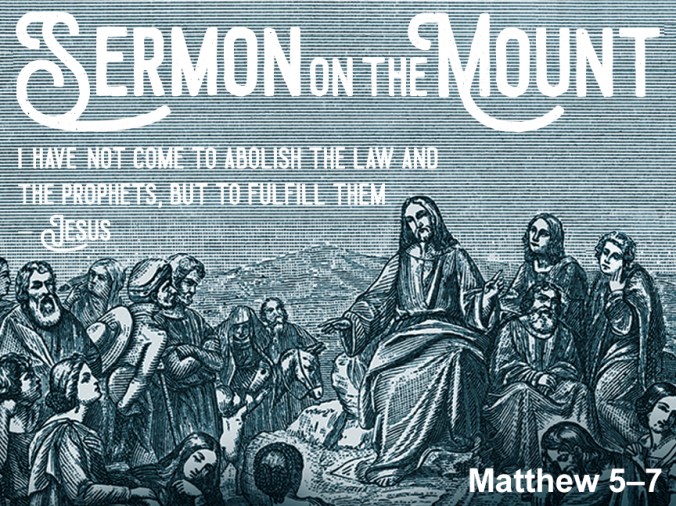
 This summer our church looked at Jesus’s words concerning giving. In Sunday School, we studied Randy Alcorn’s helpful little book called
  Tonight we begin our verse-by-verse study of Hebrews in
 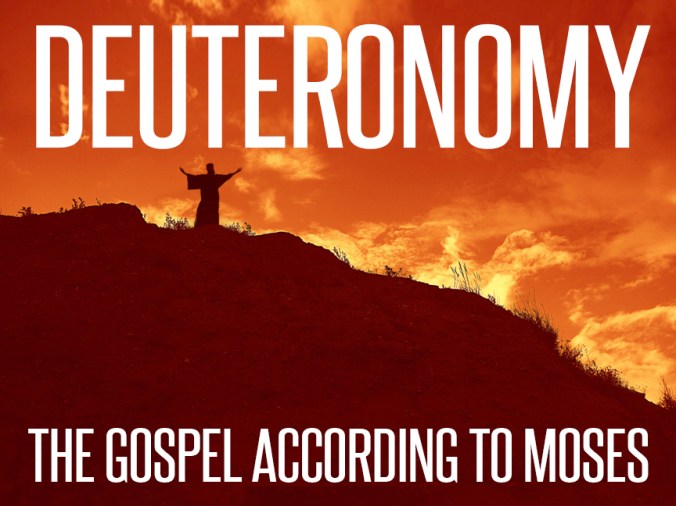 If you could only take one book of the Bible with you on a deserted island, what would it be? Psalms? The Gospel of John? Hebrews? What about Deuteronomy?
 In the Bible we learn that preaching is not the only way God’s Word is communicated. In the Old Testament, the Levites are seen explaining the Law to the people of Israel (Nehemiah 8:7–8). And in the New Testament, Paul says of his ministry, “I did not shrink from declaring to you anything that was profitable, and teaching you in public and from house to house” (Acts 20:20).
 Over the summer, our church considered many of the things Jesus said about money. In a
  Via Emmaus