Over the weekend, I attended the 2013 Indiana Shepherd’s Conference. It was a joy to fellowship with Indiana pastors and pastor-theologians like George Robinson, Greg Gilbert, Eric Bancroft, and Timothy Beougher.
The topic was evangelism and the conversation was motivating without being condemning. (All that to say, you should listen to the audio when it comes available in a few days).
Still, perhaps one of the greatest highlights of the time was hearing the gospel preached in song. In particular, the words of this old Augustus Toplady song caught my attention. It is called “Now Why This Fear?” and it is wonderful meditation on the good news of Christ’s death in my place. Listen to it and let it tune your heart for worship.
As we approach Sunday, may we let the words of this hymn lead us to praise and thanksgiving.
Now why this fear and unbelief? Has not the Father put to grief His spotless Son for us? And will the righteous Judge of men Condemn me for that debt of sin Now canceled at the cross?
Complete atonement You have made And by Your death have fully paid The debt Your people owed No wrath remains for us to face We’re sheltered by Your saving grace And sprinkled with Your blood
Be still my soul and know this peace The merits of your great high priest Have bought your liberty Rely then on His precious blood Don’t fear your banishment from God Since Jesus sets you free
Not a week goes by but what the news channels are filled with conversation and debate about sex. On top of the societal changes that swirl around us, legal changes are happening here and abroad. For instance, Germans now have the legal option of putting ‘other’ down as the gender of their ‘intersex’ baby. The Atlantic reports
A new law in Germany creates a third sex category on birth records. It could seem like an obvious solution to some problems of intersex: If some babies are born with bodies that are neither clearly male nor female, then it seems there should be some category beside “male” or “female.”
This is just one more example of why Christians need to have a deeply biblical understanding of sex, marriage, and gender. It is not enough anymore to believe in ‘traditional marriage’ or gender based on simple biology. In a fallen world, biology is not simple! We must have a deeply theological answer for why God’s image is only male and female, how the Fall can explain the phenomenon of intersex, and how gender is not a social construct but determined by the God who makes us in his image.
These examples are but the tip of the iceberg. To help us get a handle on some of these things, we need to take time to read, think, and study the Scriptures. To help you process some of these things, take a look at the following articles, audio, and video. They are reliable guides to help you walk in the light.
It’s About Scripture, Not Sex. Here are three quotations for Denny Burk’s What is the Meaning of Sex?that represent three divergent views in evangelicalism today. They expose that the divide between Christians who oppose same-sex marriage and those who support it has to do with biblical interpretation, not sexual preference. The latter is always downstream from the former.
What Does He Really Want? Aileen Challies (the wife of Tim Challies) kicks off a series of blogs on the subject of sex at CBMW’s women’s channel. She seeks to deconstruct some of wrong views of sex that Christian women bring into marriage.
Kids and Sex. Pure Hope Ministries reminds parents that is never too young to begin addressing ‘age-appropriate’ discussions about sex.
Parenting Booklet. PureHope Ministries also has a forty-page booklet for parents on how to address the subject of sex with their children. This booklet has an appendix with “age appropriate teaching points.” If you are not familiar with Pure Hope, you should be.
If you have specific questions on this subject, please drop a note in the comments. I’d be happy to put you in touch with appropriate resources.
[This is the second part of a three-part series outlining a theological introduction to Ecclesiastes].
Date: Tenth Century
If Solomon is the author (see part one), the date is pretty easy to determine (10th Century B.C.). A better question might be—on the basis of Solomon’s wise but foolish life—when did Solomon write this?
The book itself portrays an aged and chastened king calling young men to avoid the mistakes he has had made. From Solomon’s life we have much to learn, and the point that Solomon wants to drive home on the basis of his own life is twofold:
Fear God and keep his commandments
Beware the vanity of material pleasures
This is the counsel of an older man, whose pain drives him to warn others of his mistakes. Continue reading →
[This post starts a three-part series aimed to introduce Ecclesiastes and draw a few theological implications from its overview].
To get a handle on the book of Ecclesiastes it is imperative to understand who the human author is (or in this case, who is the most likely candidate). Likewise, since Ecclesiastes is part of the biblical canon, it behooves us to see how the New Testament cites Ecclesiastes. Last, since Ecclesiastes is one of many wisdom books, and one of three in Solomon’s corpus (Proverbs and Song of Songs being the other two), we will consider how Proverbs and Ecclesiastes relate to the life of Solomon and how a structural comparison with Proverbs helps us better understand this enigmatic book. Continue reading →
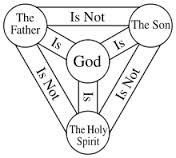
Over the weekend I presented the first part of a ‘bare-bones’ outline of the Trinity. In short order, I argued that the doctrine can be sub-divided into two basic assertions, which each require a healthy dose of explaining. The first proposition is God is oneGod. The second proposition is God is three Persons. Under those headings I added the following points.
God is One God
The Father is God.
The Son is God.
The Holy Spirit is God.
The Father, Son, and Holy Spirit are Uncreated, Co-Eternal, Inseparable, and Perfectly Equal in Essence.
God is Three Persons
God is Father, Son, and Holy Spirit.
The Father Sends the Son and the Spirit.
The Son is Sent by the Father, and Sends the Spirit.
The Spirit is One Sent by Father and Son.
Father, Son, and Holy Spirit works together to create the cosmos, sustain life, and redeem the church.
God’s visible actions in history reveals his invisible triune nature.
Because of the difference in classification (God and persons) there is no logical inconsistency between saying God is ‘one’ and God is ‘three.’ Still, there is natural difficulty (not too mention the effect of sin on our thinking) in trying to understand how God is one and three. On the one hand, natural man cannot grasp an infinite God—even with God’s inspired word. On the other hand, God’s revelation under the guidance of the Holy Spirit guides Christians to a true but incomplete knowledge of him.
Keeping our creatureliness and Godward-dependence in mind as we approach this doctrine, this outline aims to help us put some of the pieces together. Since, I’ve already laid out a defense of God as one God, the next step is to pick up the second proposition—God is three persons—and consider the first four points. Continue reading →
“Set your minds on things that are above, not on things that are on earth.”
– Colossians 3:2 –
Last week, Victoria Bekiempis asked the question: Are Churches Are Making America Poor? She reported in Newsweek that a group of atheists in Washington D. C. want to crack down on churches with ‘crooked’ books. Troubling as this report may be, it is worth considering how churches might relate to the poor. Here a few articles on the matter.
What the Poor Need Most. Joe Carter gives a personal testimony to the riches of his poverty and Christians’ responsibility to care for the poor. (Acton Blog)
The Poverty of the Nations. Greg Forster reviews Wayne Grudem and Barry Asmus’s new book economics and policy-making that brings about human flourishing. (The Gospel Coalition)
Therefore a man shall leave his father and his mother and hold fast to his wife, and they shall become one flesh.
— Genesis 2:24 —
Do you not know that your body
is a temple of the Holy Spirit within you, whom you have from God?
You are not your own,
for you were bought with a price.
So glorify God in your body.
— 1 Corinthians 6:19-20 —
From the intricate arrangements of the cell to the massive construction of stars in the Milky Way, the God who made the heavens and the earth and everything in them is—to put it plainly—a Designer.
On earth, God has made mankind in his image. Male and female he created the human race. And on the day when he fashioned the man from the ground and made woman from his side (see Genesis 2:4-25), God also designed the institution of marriage and gave to Adam and Eve the gift of sex so they could partner in covenant union, procreate children who bear God’s image and likeness. At the same time, God made sex pleasurable as a good gift to his married couples.
Tragically, when sin crippled the human race (Gen 3), men and women made to honor God with their sexuality began to abuse and misuse his gift. In just a few generations, Lamech had married two women and by Genesis 19, homosexual desires had overcome the men in Sodom and Gomorrah. Today, sex is manipulated and marketed with dizzying speed.
Christians need to learn how to think about these things and we must come to the Bible to get our bearings. These two messages, preached over the last two Sundays, are my attempt to help our church think about God’s designs for marriage and sex.
I pray they may help you understand what God’s word says about this blessed gift, and how the power of God’s gospel can help you walk in holiness.
Tomorrow my sermon will expound 1 Corinthians 6:12-20, a passage that calls believers to glorify God with their bodies. With that in mind, I could think of no better prayer to meditate on than the one recorded in Arthur Bennett’s Valley of Vision.
May God be pleased to purify his bride as we meditate on Paul’s inspired words to flee sexual immorality and pursue God’s glory with our bodies.
LORD JESUS,
I sin— Grant that I may
never cease grieving because of it, never be content with myself, never think I can reach a point of perfection.
Kill my envy, command my tongue, trample down self. Give me grace
to be holy, kind, gentle, pure, peaceable, to live for thee and not for self, to copy thy words, acts, spirit, to be transformed into thy likness, to be consecrated wholly to thee, to live entirely to thy glory.
Deliver me
from attachment to things unclean, from wrong associations, from the predominance of evil passions, from the sugar of sin as well as its gall,
that with self-loathing, deep contrition, earnest heart searching, I may come to thee, cast myself on thee, trust in thee, cry to thee, be delivered by thee.
O God, the Eternal All, help me to know that
all things are shadows, but thou art substance, all things are quicksands, but thou art mountain, all things are shifting, but thou art anchor, all things are ignorance, but thou art wisdom.
If my life is to be a crucible amid burning heat, so be it,
but do thou sit at the furnace mouth to watch the ore that nothing be lost.
If I sin willfully, grievously, tormentedly, in grace
take away my mourning and give me music; remove my sackcloth and clothe me with beauty; still my sighs and fill my mouth with song, then give me summer weather as a Christian.
Amen. May this washed, sanctified, and justified sinner proclaim a message of God’s gospel that purifies all who hear it.
There is nothing bare-bones about the Trinity. But sometimes when introducing this doctrine it helps to give a brief, ‘bare-bones’ outline to help young believers or novice theologians understand the parameters of orthodox belief about Scripture’s deepest mystery.
With such an intention, let me lay out a bare-bones doctrine of the Trinity. In its shortest and most incomplete delineation, the Christians doctrine affirms two things: (1) God is One God and (2) God is Three Persons. This denies modalism (one god in three forms) and tritheism (three gods), and gets on the way to a right view of the doctrine. Continue reading →
Set your minds on things that are above, not on things that are on earth.” – Colossians 3:2 –
Yesterday, most of America (and beyond) celebrated Halloween. But for Bible-toting, Bible-quoting Protestants, there was another more significant ‘holiday’: Reformation Day.
On this day (October 31) in 1517, Martin Luther nailed his 95 theses to the Wittenberg Castle Door. In lieu of that great day, here are a handful of links to spur on your love for God’s word and to give thanks to God for the ‘monk with a mallet.’
October 31, 1517. Here’s a synopsis of what happened on the day now called “Reformation Day” 496 years ago. (History Channel)
Luther’s 95 Theses. Here are Martin Luther’s ninety-theses condemning the errors of the Roman Catholic Church. (Spurgeon.com)
Finally, here is a scene from the movie Lutherwhich depicts Luther’s bold stand against Rome. It captures Luther’s famous line stand:
Unless I am convinced by the testimony of the Scriptures or by clear reason (for I do not trust either in the pope or in councils alone, since it is well known that they have often erred and contradicted themselves), I am bound by the Scriptures I have quoted and my conscience is captive to the Word of God. I cannot and will not recant anything, since it is neither safe nor right to go against conscience. May God help me. Amen


 Over the weekend I presented the first part of a

 Via Emmaus