Via Emmaus on the Road: Romans 1 (Plus an Intro to Romans)

Further Resources


Romans 1 (ESV)

Greeting

Paul, a servant of Christ Jesus, called to be an apostle, set apart for the gospel of God, which he promised beforehand through his prophets in the holy Scriptures, concerning his Son, who was descended from David according to the flesh and was declared to be the Son of God in power according to the Spirit of holiness by his resurrection from the dead, Jesus Christ our Lord, through whom we have received grace and apostleship to bring about the obedience of faith for the sake of his name among all the nations, including you who are called to belong to Jesus Christ,

To all those in Rome who are loved by God and called to be saints:

Grace to you and peace from God our Father and the Lord Jesus Christ.

Longing to Go to Rome

First, I thank my God through Jesus Christ for all of you, because your faith is proclaimed in all the world. For God is my witness, whom I serve with my spirit in the gospel of his Son, that without ceasing I mention you 10 always in my prayers, asking that somehow by God’s will I may now at last succeed in coming to you. 11 For I long to see you, that I may impart to you some spiritual gift to strengthen you— 12 that is, that we may be mutually encouraged by each other’s faith, both yours and mine. 13 I do not want you to be unaware, brothers, that I have often intended to come to you (but thus far have been prevented), in order that I may reap some harvest among you as well as among the rest of the Gentiles. 14 I am under obligation both to Greeks and to barbarians, both to the wise and to the foolish. 15 So I am eager to preach the gospel to you also who are in Rome.

The Righteous Shall Live by Faith

16 For I am not ashamed of the gospel, for it is the power of God for salvation to everyone who believes, to the Jew first and also to the Greek. 17 For in it the righteousness of God is revealed from faith for faith, as it is written, “The righteous shall live by faith.”

God’s Wrath on Unrighteousness

18 For the wrath of God is revealed from heaven against all ungodliness and unrighteousness of men, who by their unrighteousness suppress the truth. 19 For what can be known about God is plain to them, because God has shown it to them. 20 For his invisible attributes, namely, his eternal power and divine nature, have been clearly perceived, ever since the creation of the world, in the things that have been made. So they are without excuse. 21 For although they knew God, they did not honor him as God or give thanks to him, but they became futile in their thinking, and their foolish hearts were darkened. 22 Claiming to be wise, they became fools, 23 and exchanged the glory of the immortal God for images resembling mortal man and birds and animals and creeping things.

24 Therefore God gave them up in the lusts of their hearts to impurity, to the dishonoring of their bodies among themselves, 25 because they exchanged the truth about God for a lie and worshiped and served the creature rather than the Creator, who is blessed forever! Amen.

26 For this reason God gave them up to dishonorable passions. For their women exchanged natural relations for those that are contrary to nature; 27 and the men likewise gave up natural relations with women and were consumed with passion for one another, men committing shameless acts with men and receiving in themselves the due penalty for their error.

28 And since they did not see fit to acknowledge God, God gave them up to a debased mind to do what ought not to be done. 29 They were filled with all manner of unrighteousness, evil, covetousness, malice. They are full of envy, murder, strife, deceit, maliciousness. They are gossips, 30 slanderers, haters of God, insolent, haughty, boastful, inventors of evil, disobedient to parents, 31 foolish, faithless, heartless, ruthless. 32 Though they know God’s righteous decree that those who practice such things deserve to die, they not only do them but give approval to those who practice them.

Soli Deo Gloria!

Via Emmaus on the Road: Acts 27

Further Resources

Acts 27 (ESV)

Paul Sails for Rome

27 And when it was decided that we should sail for Italy, they delivered Paul and some other prisoners to a centurion of the Augustan Cohort named Julius. And embarking in a ship of Adramyttium, which was about to sail to the ports along the coast of Asia, we put to sea, accompanied by Aristarchus, a Macedonian from Thessalonica. The next day we put in at Sidon. And Julius treated Paul kindly and gave him leave to go to his friends and be cared for. And putting out to sea from there we sailed under the lee of Cyprus, because the winds were against us. And when we had sailed across the open sea along the coast of Cilicia and Pamphylia, we came to Myra in Lycia. There the centurion found a ship of Alexandria sailing for Italy and put us on board. We sailed slowly for a number of days and arrived with difficulty off Cnidus, and as the wind did not allow us to go farther, we sailed under the lee of Crete off Salmone. Coasting along it with difficulty, we came to a place called Fair Havens, near which was the city of Lasea.

Since much time had passed, and the voyage was now dangerous because even the Fast was already over, Paul advised them, 10 saying, “Sirs, I perceive that the voyage will be with injury and much loss, not only of the cargo and the ship, but also of our lives.” 11 But the centurion paid more attention to the pilot and to the owner of the ship than to what Paul said. 12 And because the harbor was not suitable to spend the winter in, the majority decided to put out to sea from there, on the chance that somehow they could reach Phoenix, a harbor of Crete, facing both southwest and northwest, and spend the winter there.

The Storm at Sea

13 Now when the south wind blew gently, supposing that they had obtained their purpose, they weighed anchor and sailed along Crete, close to the shore. 14 But soon a tempestuous wind, called the northeaster, struck down from the land. 15 And when the ship was caught and could not face the wind, we gave way to it and were driven along. 16 Running under the lee of a small island called Cauda, we managed with difficulty to secure the ship’s boat. 17 After hoisting it up, they used supports to undergird the ship. Then, fearing that they would run aground on the Syrtis, they lowered the gear, and thus they were driven along. 18 Since we were violently storm-tossed, they began the next day to jettison the cargo. 19 And on the third day they threw the ship’s tackle overboard with their own hands. 20 When neither sun nor stars appeared for many days, and no small tempest lay on us, all hope of our being saved was at last abandoned.

21 Since they had been without food for a long time, Paul stood up among them and said, “Men, you should have listened to me and not have set sail from Crete and incurred this injury and loss. 22 Yet now I urge you to take heart, for there will be no loss of life among you, but only of the ship. 23 For this very night there stood before me an angel of the God to whom I belong and whom I worship, 24 and he said, ‘Do not be afraid, Paul; you must stand before Caesar. And behold, God has granted you all those who sail with you.’ 25 So take heart, men, for I have faith in God that it will be exactly as I have been told. 26 But we must run aground on some island.”

27 When the fourteenth night had come, as we were being driven across the Adriatic Sea, about midnight the sailors suspected that they were nearing land. 28 So they took a sounding and found twenty fathoms. A little farther on they took a sounding again and found fifteen fathoms. 29 And fearing that we might run on the rocks, they let down four anchors from the stern and prayed for day to come. 30 And as the sailors were seeking to escape from the ship, and had lowered the ship’s boat into the sea under pretense of laying out anchors from the bow, 31 Paul said to the centurion and the soldiers, “Unless these men stay in the ship, you cannot be saved.” 32 Then the soldiers cut away the ropes of the ship’s boat and let it go.

33 As day was about to dawn, Paul urged them all to take some food, saying, “Today is the fourteenth day that you have continued in suspense and without food, having taken nothing. 34 Therefore I urge you to take some food. For it will give you strength, for not a hair is to perish from the head of any of you.” 35 And when he had said these things, he took bread, and giving thanks to God in the presence of all he broke it and began to eat. 36 Then they all were encouraged and ate some food themselves. 37 (We were in all 276 persons in the ship.) 38 And when they had eaten enough, they lightened the ship, throwing out the wheat into the sea.

The Shipwreck

39 Now when it was day, they did not recognize the land, but they noticed a bay with a beach, on which they planned if possible to run the ship ashore. 40 So they cast off the anchors and left them in the sea, at the same time loosening the ropes that tied the rudders. Then hoisting the foresail to the wind they made for the beach. 41 But striking a reef, they ran the vessel aground. The bow stuck and remained immovable, and the stern was being broken up by the surf. 42 The soldiers’ plan was to kill the prisoners, lest any should swim away and escape. 43 But the centurion, wishing to save Paul, kept them from carrying out their plan. He ordered those who could swim to jump overboard first and make for the land, 44 and the rest on planks or on pieces of the ship. And so it was that all were brought safely to land.

Soli Deo Gloria!

Via Emmaus on the Road: Acts 22

Further Resources


Acts 22 (ESV)

22 “Brothers and fathers, hear the defense that I now make before you.”

And when they heard that he was addressing them in the Hebrew language, they became even more quiet. And he said:

“I am a Jew, born in Tarsus in Cilicia, but brought up in this city, educated at the feet of Gamaliel according to the strict manner of the law of our fathers, being zealous for God as all of you are this day. I persecuted this Way to the death, binding and delivering to prison both men and women, as the high priest and the whole council of elders can bear me witness. From them I received letters to the brothers, and I journeyed toward Damascus to take those also who were there and bring them in bonds to Jerusalem to be punished.

“As I was on my way and drew near to Damascus, about noon a great light from heaven suddenly shone around me. And I fell to the ground and heard a voice saying to me, ‘Saul, Saul, why are you persecuting me?’ And I answered, ‘Who are you, Lord?’ And he said to me, ‘I am Jesus of Nazareth, whom you are persecuting.’ Now those who were with me saw the light but did not understand the voice of the one who was speaking to me. 10 And I said, ‘What shall I do, Lord?’ And the Lord said to me, ‘Rise, and go into Damascus, and there you will be told all that is appointed for you to do.’ 11 And since I could not see because of the brightness of that light, I was led by the hand by those who were with me, and came into Damascus.

12 “And one Ananias, a devout man according to the law, well spoken of by all the Jews who lived there, 13 came to me, and standing by me said to me, ‘Brother Saul, receive your sight.’ And at that very hour I received my sight and saw him. 14 And he said, ‘The God of our fathers appointed you to know his will, to see the Righteous One and to hear a voice from his mouth; 15 for you will be a witness for him to everyone of what you have seen and heard. 16 And now why do you wait? Rise and be baptized and wash away your sins, calling on his name.’

17 “When I had returned to Jerusalem and was praying in the temple, I fell into a trance 18 and saw him saying to me, ‘Make haste and get out of Jerusalem quickly, because they will not accept your testimony about me.’ 19 And I said, ‘Lord, they themselves know that in one synagogue after another I imprisoned and beat those who believed in you. 20 And when the blood of Stephen your witness was being shed, I myself was standing by and approving and watching over the garments of those who killed him.’ 21 And he said to me, ‘Go, for I will send you far away to the Gentiles.’ ”

Paul and the Roman Tribune

22 Up to this word they listened to him. Then they raised their voices and said, “Away with such a fellow from the earth! For he should not be allowed to live.” 23 And as they were shouting and throwing off their cloaks and flinging dust into the air, 24 the tribune ordered him to be brought into the barracks, saying that he should be examined by flogging, to find out why they were shouting against him like this. 25 But when they had stretched him out for the whips, Paul said to the centurion who was standing by, “Is it lawful for you to flog a man who is a Roman citizen and uncondemned?” 26 When the centurion heard this, he went to the tribune and said to him, “What are you about to do? For this man is a Roman citizen.” 27 So the tribune came and said to him, “Tell me, are you a Roman citizen?” And he said, “Yes.” 28 The tribune answered, “I bought this citizenship for a large sum.” Paul said, “But I am a citizen by birth.” 29 So those who were about to examine him withdrew from him immediately, and the tribune also was afraid, for he realized that Paul was a Roman citizen and that he had bound him.

Paul Before the Council

30 But on the next day, desiring to know the real reason why he was being accused by the Jews, he unbound him and commanded the chief priests and all the council to meet, and he brought Paul down and set him before them.

Soli Deo Gloria!

Via Emmaus on the Road: Acts 14

Further Resources


Acts 14 (ESV)

Paul and Barnabas at Iconium

14 Now at Iconium they entered together into the Jewish synagogue and spoke in such a way that a great number of both Jews and Greeks believed. But the unbelieving Jews stirred up the Gentiles and poisoned their minds against the brothers. So they remained for a long time, speaking boldly for the Lord, who bore witness to the word of his grace, granting signs and wonders to be done by their hands. But the people of the city were divided; some sided with the Jews and some with the apostles. When an attempt was made by both Gentiles and Jews, with their rulers, to mistreat them and to stone them, they learned of it and fled to Lystra and Derbe, cities of Lycaonia, and to the surrounding country, and there they continued to preach the gospel.

Paul and Barnabas at Lystra

Now at Lystra there was a man sitting who could not use his feet. He was crippled from birth and had never walked. He listened to Paul speaking. And Paul, looking intently at him and seeing that he had faith to be made well, 10 said in a loud voice, “Stand upright on your feet.” And he sprang up and began walking. 11 And when the crowds saw what Paul had done, they lifted up their voices, saying in Lycaonian, “The gods have come down to us in the likeness of men!” 12 Barnabas they called Zeus, and Paul, Hermes, because he was the chief speaker. 13 And the priest of Zeus, whose temple was at the entrance to the city, brought oxen and garlands to the gates and wanted to offer sacrifice with the crowds. 14 But when the apostles Barnabas and Paul heard of it, they tore their garments and rushed out into the crowd, crying out, 15 “Men, why are you doing these things? We also are men, of like nature with you, and we bring you good news, that you should turn from these vain things to a living God, who made the heaven and the earth and the sea and all that is in them. 16 In past generations he allowed all the nations to walk in their own ways. 17 Yet he did not leave himself without witness, for he did good by giving you rains from heaven and fruitful seasons, satisfying your hearts with food and gladness.” 18 Even with these words they scarcely restrained the people from offering sacrifice to them.

Paul Stoned at Lystra

19 But Jews came from Antioch and Iconium, and having persuaded the crowds, they stoned Paul and dragged him out of the city, supposing that he was dead. 20 But when the disciples gathered about him, he rose up and entered the city, and on the next day he went on with Barnabas to Derbe. 21 When they had preached the gospel to that city and had made many disciples, they returned to Lystra and to Iconium and to Antioch, 22 strengthening the souls of the disciples, encouraging them to continue in the faith, and saying that through many tribulations we must enter the kingdom of God. 23 And when they had appointed elders for them in every church, with prayer and fasting they committed them to the Lord in whom they had believed.

Paul and Barnabas Return to Antioch in Syria

24 Then they passed through Pisidia and came to Pamphylia. 25 And when they had spoken the word in Perga, they went down to Attalia, 26 and from there they sailed to Antioch, where they had been commended to the grace of God for the work that they had fulfilled. 27 And when they arrived and gathered the church together, they declared all that God had done with them, and how he had opened a door of faith to the Gentiles. 28 And they remained no little time with the disciples.

Soli Deo Gloria!

Via Emmaus on the Road: John 6

Further Resources

John 6 (ESV)

Jesus Feeds the Five Thousand

After this Jesus went away to the other side of the Sea of Galilee, which is the Sea of Tiberias. And a large crowd was following him, because they saw the signs that he was doing on the sick. Jesus went up on the mountain, and there he sat down with his disciples. Now the Passover, the feast of the Jews, was at hand. Lifting up his eyes, then, and seeing that a large crowd was coming toward him, Jesus said to Philip, “Where are we to buy bread, so that these people may eat?” He said this to test him, for he himself knew what he would do. Philip answered him, “Two hundred denarii worth of bread would not be enough for each of them to get a little.” One of his disciples, Andrew, Simon Peter’s brother, said to him, “There is a boy here who has five barley loaves and two fish, but what are they for so many?” 10 Jesus said, “Have the people sit down.” Now there was much grass in the place. So the men sat down, about five thousand in number. 11 Jesus then took the loaves, and when he had given thanks, he distributed them to those who were seated. So also the fish, as much as they wanted. 12 And when they had eaten their fill, he told his disciples, “Gather up the leftover fragments, that nothing may be lost.” 13 So they gathered them up and filled twelve baskets with fragments from the five barley loaves left by those who had eaten. 14 When the people saw the sign that he had done, they said, “This is indeed the Prophet who is to come into the world!”

15 Perceiving then that they were about to come and take him by force to make him king, Jesus withdrew again to the mountain by himself.

Jesus Walks on Water

16 When evening came, his disciples went down to the sea, 17 got into a boat, and started across the sea to Capernaum. It was now dark, and Jesus had not yet come to them. 18 The sea became rough because a strong wind was blowing. 19 When they had rowed about three or four miles, they saw Jesus walking on the sea and coming near the boat, and they were frightened. 20 But he said to them, “It is I; do not be afraid.” 21 Then they were glad to take him into the boat, and immediately the boat was at the land to which they were going.

I Am the Bread of Life

22 On the next day the crowd that remained on the other side of the sea saw that there had been only one boat there, and that Jesus had not entered the boat with his disciples, but that his disciples had gone away alone. 23 Other boats from Tiberias came near the place where they had eaten the bread after the Lord had given thanks. 24 So when the crowd saw that Jesus was not there, nor his disciples, they themselves got into the boats and went to Capernaum, seeking Jesus.

25 When they found him on the other side of the sea, they said to him, “Rabbi, when did you come here?” 26 Jesus answered them, “Truly, truly, I say to you, you are seeking me, not because you saw signs, but because you ate your fill of the loaves. 27 Do not work for the food that perishes, but for the food that endures to eternal life, which the Son of Man will give to you. For on him God the Father has set his seal.” 28 Then they said to him, “What must we do, to be doing the works of God?” 29 Jesus answered them, “This is the work of God, that you believe in him whom he has sent.” 30 So they said to him, “Then what sign do you do, that we may see and believe you? What work do you perform? 31 Our fathers ate the manna in the wilderness; as it is written, ‘He gave them bread from heaven to eat.’ ” 32 Jesus then said to them, “Truly, truly, I say to you, it was not Moses who gave you the bread from heaven, but my Father gives you the true bread from heaven. 33 For the bread of God is he who comes down from heaven and gives life to the world.” 34 They said to him, “Sir, give us this bread always.”

35 Jesus said to them, “I am the bread of life; whoever comes to me shall not hunger, and whoever believes in me shall never thirst. 36 But I said to you that you have seen me and yet do not believe. 37 All that the Father gives me will come to me, and whoever comes to me I will never cast out. 38 For I have come down from heaven, not to do my own will but the will of him who sent me. 39 And this is the will of him who sent me, that I should lose nothing of all that he has given me, but raise it up on the last day. 40 For this is the will of my Father, that everyone who looks on the Son and believes in him should have eternal life, and I will raise him up on the last day.”

41 So the Jews grumbled about him, because he said, “I am the bread that came down from heaven.” 42 They said, “Is not this Jesus, the son of Joseph, whose father and mother we know? How does he now say, ‘I have come down from heaven’?” 43 Jesus answered them, “Do not grumble among yourselves. 44 No one can come to me unless the Father who sent me draws him. And I will raise him up on the last day. 45 It is written in the Prophets, ‘And they will all be taught by God.’ Everyone who has heard and learned from the Father comes to me— 46 not that anyone has seen the Father except he who is from God; he has seen the Father. 47 Truly, truly, I say to you, whoever believes has eternal life. 48 I am the bread of life. 49 Your fathers ate the manna in the wilderness, and they died. 50 This is the bread that comes down from heaven, so that one may eat of it and not die. 51 I am the living bread that came down from heaven. If anyone eats of this bread, he will live forever. And the bread that I will give for the life of the world is my flesh.”

52 The Jews then disputed among themselves, saying, “How can this man give us his flesh to eat?” 53 So Jesus said to them, “Truly, truly, I say to you, unless you eat the flesh of the Son of Man and drink his blood, you have no life in you. 54 Whoever feeds on my flesh and drinks my blood has eternal life, and I will raise him up on the last day. 55 For my flesh is true food, and my blood is true drink. 56 Whoever feeds on my flesh and drinks my blood abides in me, and I in him. 57 As the living Father sent me, and I live because of the Father, so whoever feeds on me, he also will live because of me. 58 This is the bread that came down from heaven, not like the bread the fathers ate, and died. Whoever feeds on this bread will live forever.” 59 Jesus said these things in the synagogue, as he taught at Capernaum.

The Words of Eternal Life

60 When many of his disciples heard it, they said, “This is a hard saying; who can listen to it?” 61 But Jesus, knowing in himself that his disciples were grumbling about this, said to them, “Do you take offense at this? 62 Then what if you were to see the Son of Man ascending to where he was before? 63 It is the Spirit who gives life; the flesh is no help at all. The words that I have spoken to you are spirit and life. 64 But there are some of you who do not believe.” (For Jesus knew from the beginning who those were who did not believe, and who it was who would betray him.) 65 And he said, “This is why I told you that no one can come to me unless it is granted him by the Father.”

66 After this many of his disciples turned back and no longer walked with him. 67 So Jesus said to the twelve, “Do you want to go away as well?” 68 Simon Peter answered him, “Lord, to whom shall we go? You have the words of eternal life, 69 and we have believed, and have come to know, that you are the Holy One of God.” 70 Jesus answered them, “Did I not choose you, the twelve? And yet one of you is a devil.” 71 He spoke of Judas the son of Simon Iscariot, for he, one of the twelve, was going to betray him.

Soli Deo Gloria!

Via Emmaus on the Road: John 3

Further Resources


2:1–11

2:12

2:13–3:21

3:22–36

4:1–42

4:43–45

4:46–54

Cana in

Galilee

Capernaum

(in Galilee)

Jerusalem Courts

Judea

Samaria

The Well

Galilee

Cana in

Galilee

Jerusalem House

Samaritan Homes

Wedding with family + disciples

Levitical city (?) – purification jars

Mother

Brothers

Disciples

Pharisees and the Ds (2:13–25)

Nicodemus (3:1–21)

John the Baptist

Samaritan Woman
(4:1–24)

Samaritans & Disciples (4:25–42)

Hometown

Raised son Gentile (?) Official


Night (3:2)

Day

Midday (4:6)


Passover (2:23)


Passover (4:45)


John 3 (ESV)

You Must Be Born Again

Now there was a man of the Pharisees named Nicodemus, a ruler of the Jews. This man came to Jesus by night and said to him, “Rabbi, we know that you are a teacher come from God, for no one can do these signs that you do unless God is with him.” Jesus answered him, “Truly, truly, I say to you, unless one is born again he cannot see the kingdom of God.” Nicodemus said to him, “How can a man be born when he is old? Can he enter a second time into his mother’s womb and be born?” Jesus answered, “Truly, truly, I say to you, unless one is born of water and the Spirit, he cannot enter the kingdom of God. That which is born of the flesh is flesh, and that which is born of the Spirit is spirit. Do not marvel that I said to you, ‘You must be born again.’ The wind blows where it wishes, and you hear its sound, but you do not know where it comes from or where it goes. So it is with everyone who is born of the Spirit.”

Nicodemus said to him, “How can these things be?” 10 Jesus answered him, “Are you the teacher of Israel and yet you do not understand these things? 11 Truly, truly, I say to you, we speak of what we know, and bear witness to what we have seen, but you do not receive our testimony. 12 If I have told you earthly things and you do not believe, how can you believe if I tell you heavenly things? 13 No one has ascended into heaven except he who descended from heaven, the Son of Man. 14 And as Moses lifted up the serpent in the wilderness, so must the Son of Man be lifted up, 15 that whoever believes in him may have eternal life.

For God So Loved the World

16 “For God so loved the world, that he gave his only Son, that whoever believes in him should not perish but have eternal life. 17 For God did not send his Son into the world to condemn the world, but in order that the world might be saved through him. 18 Whoever believes in him is not condemned, but whoever does not believe is condemned already, because he has not believed in the name of the only Son of God. 19 And this is the judgment: the light has come into the world, and people loved the darkness rather than the light because their works were evil. 20 For everyone who does wicked things hates the light and does not come to the light, lest his works should be exposed. 21 But whoever does what is true comes to the light, so that it may be clearly seen that his works have been carried out in God.”

John the Baptist Exalts Christ

22 After this Jesus and his disciples went into the Judean countryside, and he remained there with them and was baptizing. 23 John also was baptizing at Aenon near Salim, because water was plentiful there, and people were coming and being baptized 24 (for John had not yet been put in prison).

25 Now a discussion arose between some of John’s disciples and a Jew over purification. 26 And they came to John and said to him, “Rabbi, he who was with you across the Jordan, to whom you bore witness—look, he is baptizing, and all are going to him.” 27 John answered, “A person cannot receive even one thing unless it is given him from heaven. 28 You yourselves bear me witness, that I said, ‘I am not the Christ, but I have been sent before him.’ 29 The one who has the bride is the bridegroom. The friend of the bridegroom, who stands and hears him, rejoices greatly at the bridegroom’s voice. Therefore this joy of mine is now complete. 30 He must increase, but I must decrease.”

31 He who comes from above is above all. He who is of the earth belongs to the earth and speaks in an earthly way. He who comes from heaven is above all. 32 He bears witness to what he has seen and heard, yet no one receives his testimony. 33 Whoever receives his testimony sets his seal to this, that God is true. 34 For he whom God has sent utters the words of God, for he gives the Spirit without measure. 35 The Father loves the Son and has given all things into his hand. 36 Whoever believes in the Son has eternal life; whoever does not obey the Son shall not see life, but the wrath of God remains on him.

Soli Deo Gloria!

From Creation to New Creation: A Seven Day Pattern in Genesis 1–3

time lapse photo of stars on night

Both James Jordan and Alistair Roberts have made a case that the literary structures of Genesis 1 and Genesis 2 mirror one another.[1] As evidenced in Genesis 1:1–2:3, creation took place over the course of seven days—six days of work, one day of rest. Equally, Genesis 2:4–25 follows a similar pattern, as observed below, as does Genesis 3, which Jordan develops in his book Trees and Thorns: Studies in the First Four Chapters of Genesis.

If this reading is correct, then the first three chapters of Genesis give us three parallel events—three weeks that speak of the same creation week. To put it in temple terms, Genesis 1 gives us the creation of the macro-temple, the cosmos; Genesis 2 gives us the formation of the micro-temple, the garden; and Genesis 3 gives us the defilement of the garden which leads to the de-creation of the cosmos, what I might call the massacred-temple.

If this approach is correct, then it not only stresses the seven day pattern of creation, with each chapter following the same basic pattern (see below). But it also situates the first three chapters as following.

  • Genesis 1 outlines the full, seven-day creation week (Gen. 1:1–2:3),
  • Genesis 2 returns to Day 6 to detail how God created man at the beginning of the day and woman at the end of the day (Gen. 2:4–22),
  • Genesis 2:23–25 develops the glory of God’s good creation, as the woman comes to the man when he awakes on Day 7. But it continues to watch that glory turn to shame, as the rest of Day 7 follows the tragic sin of humanity to believe the serpent, eat the fruit, and rebel against God. As a result, man’s first disobedience results in him being cut off from the Tree of Life (Gen. 3:1–24; cf. Rom. 5:12, 18–19).[2]

Following Jordan and Roberts, therefore, I offer the following seven day outline of Genesis 1–3. Let me know what you think and how it might be improved. At the end, I’ll share why reading these chapters in this way matters. Continue reading

Salvation from Judgment: A Survey of John’s “Good News”

eskay-lim-nhPSp2wB5do-unsplashA number of years ago, a church I know purchased something like 100,000 copies of the Gospel of John. Why? So that they could share the message of salvation with everyone in their Chicago suburb. That is to say, by putting a copy of John’s Gospel in everyone’s mailbox, they hoped to share the good news of salvation with all their neighbors.

I don’t know the fruit of that endeavor, but I know it was motivated by a commitment to the Word, a passion to sow the seeds of the gospel, and a prayerful desire to see their neighbors know God and find salvation in the Son. And the use of John makes sense. As John tells us, the Evangelist wrote his book so that his audience would believe in Christ. As John 20:30–31 reads,

Now Jesus did many other signs in the presence of the disciples, which are not written in this book; but these are written so that you may believe that Jesus is the Christ, the Son of God, and that by believing you may have life in his name.

“Life in his name” is another way of saying salvation (John 3:16) or entrance into the kingdom of God (John 3:3–5). And so, John’s Gospel is rightly associated with the theme of salvation. And more, it is usually not associated with judgment. Jesus even says as much. “For I did not come to judge the world but to save the world” (John 12:47).

Case closed. Jesus has come to save, not to judge, and so let’s print up the Gospel of John and send it to everyone who needs salvation. So good, so far. Except, we haven’t answered the question: Saved from what? Saved from death? From sorrow? From sin? From what? Well, that’s what brings us back to judgment—a theme ignored or despised by many who offer Christ today.

The answer to the question about salvation in John’s Gospel is inextricably related to Jesus’s testimony regarding his judgment and the role of the Spirit who brings to completion the judgment of Christ reigning in glory (cf. Psalm 110). To show this, and to better appreciate what salvation is, I will show from John’s Gospel how the theme of judgment develops. And in its development, it may be surprising how prominent judgment is and how important it is for John’s message of salvation. Continue reading

The Literary Structure of Isaiah 1–66: Eleven Infographics

concrete building

For the last two months, I have preached through the book of Isaiah, one section at a time. In all, that made for seven sermons and seven sermon handouts. In attempting to capture and communicate the message of Isaiah, I looked for the literary structures of Isaiah. First, I looked at the big picture of the book. Next, I considered each section. And last, I tried to see the branches on the trees, that are found in the glorious forest of Isaiah.

For each sermon, I put them together in infographics that look something like the stairs pictured above. What follows then are eleven screen shots of the book of Isaiah. They follow a basic chiastic structure for the whole book (see below), and each attempt to show the dramatic arc of judgment and salvation in each section, even down to the ten oracles of Isaiah 13–24.

Isaiah 1–12

Isaiah 13–27

Isaiah 28–35

Isaiah 36–39

Isaiah 40–48

Isaiah 49–54

Isaiah 55–66

As I went through Isaiah, I found help from David Dorsey, Alec Motyer, Barry Webb, Peter Leithart, the Chiasmus Xchange, and others. And for those who look at these outlines, I am sure that much more could be done to show the literary connections of the book, both at the micro- and macro-levels. But for now, I leave these outlines here, in hopes they may serve you as you read, study, or preach Isaiah. 

If you have further reflections and/or insights into this glorious book, please share them in the comments. At the bottom, I also linked to the seven sermons that arose from these outlines. May these graphical outlines be a source of encouragement and help as you hear the voice of God in Isaiah. Continue reading

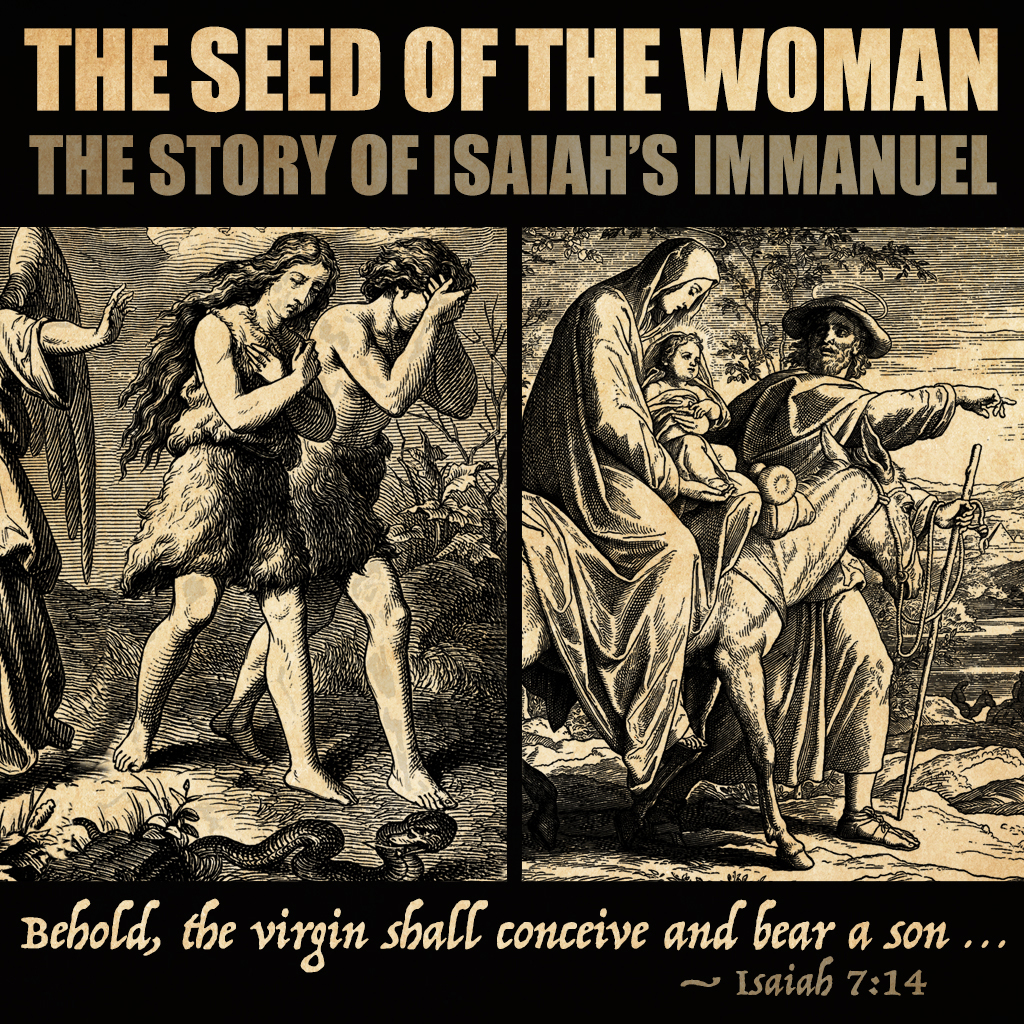
Faith, Hope, Love, and a True Savior: Four Questions of Life and Death (Isaiah 36–39)

Seed of the Woman 1024x1024

Faith, Hope, Love, and a True Savior: Four Questions of Life and Death (Isaiah 36–39)

In Isaiah, the middle of the book presents us with a series of questions: Will you trust God when you are under threat? Will you turn to God when your life is in peril? Will you see God’s discipline as an act of love? And who is the king that can save you?

Truly, the book of Isaiah is not only one that foretells the coming of the messiah. It is also one that calls us to trust in the God who promised to send his Son as our messiah. In the events of Hezekiah’s life, which take center stage in Isaiah 36–39, we find an example of how one man trusted God and then failed to trust God. Indeed, Isaiah 36–39 is both a living parable for believers and a series of historical events that moves the story along in Isaiah’s long book.

On Sunday I preached a sermon these four chapters, complete with a spiritual parable about squirrels. If you are looking to learn how to have faith, hope, and love in the midst of hard times, this sermon may serve you well. In looking at Hezekiah’s faith and folly, we learn how to trust God and how to look for the greater king to come, the son of David who is greater than Hezekiah, the greatest of Israel’s kings (2 Kgs. 18:5).

Indeed, during this advent season, we continue to walk through Isaiah’s Gospel in order to see God’s plan of salvation. And in God’s plan of salvation, we not only find the promise of a king who will save his people (Matt. 1:21). We also find instructions for how the people of God shall respond to this Savior-King. To that end, you can listen to this sermon on Isaiah 36–39 to see how God calls us to trust him even when it costs us. This handout on Isaiah 36–39 may also help you to see what is in the text.

Until next time, let us continue to proclaim Christ from all Scriptures in order to make disciples of all the nations.

Soli Deo Gloria, ds