Via Emmaus on the Road: Hebrews 10

Further Resources


Hebrews 10 (ESV)

Christ’s Sacrifice Once for All

10 For since the law has but a shadow of the good things to come instead of the true form of these realities, it can never, by the same sacrifices that are continually offered every year, make perfect those who draw near. Otherwise, would they not have ceased to be offered, since the worshipers, having once been cleansed, would no longer have any consciousness of sins? But in these sacrifices there is a reminder of sins every year. For it is impossible for the blood of bulls and goats to take away sins.

Consequently, when Christ came into the world, he said,

“Sacrifices and offerings you have not desired,

but a body have you prepared for me;

in burnt offerings and sin offerings

you have taken no pleasure.

Then I said, ‘Behold, I have come to do your will, O God,

as it is written of me in the scroll of the book.’ ”

When he said above, “You have neither desired nor taken pleasure in sacrifices and offerings and burnt offerings and sin offerings” (these are offered according to the law), then he added, “Behold, I have come to do your will.” He does away with the first in order to establish the second. 10 And by that will we have been sanctified through the offering of the body of Jesus Christ once for all.

11 And every priest stands daily at his service, offering repeatedly the same sacrifices, which can never take away sins. 12 But when Christ had offered for all time a single sacrifice for sins, he sat down at the right hand of God, 13 waiting from that time until his enemies should be made a footstool for his feet. 14 For by a single offering he has perfected for all time those who are being sanctified.

15 And the Holy Spirit also bears witness to us; for after saying,

16  “This is the covenant that I will make with them

after those days, declares the Lord:

I will put my laws on their hearts,

and write them on their minds,”

17 then he adds,

“I will remember their sins and their lawless deeds no more.”

18 Where there is forgiveness of these, there is no longer any offering for sin.

The Full Assurance of Faith

19 Therefore, brothers, since we have confidence to enter the holy places by the blood of Jesus, 20 by the new and living way that he opened for us through the curtain, that is, through his flesh, 21 and since we have a great priest over the house of God, 22 let us draw near with a true heart in full assurance of faith, with our hearts sprinkled clean from an evil conscience and our bodies washed with pure water. 23 Let us hold fast the confession of our hope without wavering, for he who promised is faithful. 24 And let us consider how to stir up one another to love and good works, 25 not neglecting to meet together, as is the habit of some, but encouraging one another, and all the more as you see the Day drawing near.

26 For if we go on sinning deliberately after receiving the knowledge of the truth, there no longer remains a sacrifice for sins, 27 but a fearful expectation of judgment, and a fury of fire that will consume the adversaries. 28 Anyone who has set aside the law of Moses dies without mercy on the evidence of two or three witnesses. 29 How much worse punishment, do you think, will be deserved by the one who has trampled underfoot the Son of God, and has profaned the blood of the covenant by which he was sanctified, and has outraged the Spirit of grace? 30 For we know him who said, “Vengeance is mine; I will repay.” And again, “The Lord will judge his people.” 31 It is a fearful thing to fall into the hands of the living God.

32 But recall the former days when, after you were enlightened, you endured a hard struggle with sufferings, 33 sometimes being publicly exposed to reproach and affliction, and sometimes being partners with those so treated. 34 For you had compassion on those in prison, and you joyfully accepted the plundering of your property, since you knew that you yourselves had a better possession and an abiding one. 35 Therefore do not throw away your confidence, which has a great reward. 36 For you have need of endurance, so that when you have done the will of God you may receive what is promised. 37 For,

“Yet a little while,

and the coming one will come and will not delay;

38  but my righteous one shall live by faith,

and if he shrinks back,

my soul has no pleasure in him.”

39 But we are not of those who shrink back and are destroyed, but of those who have faith and preserve their souls.

On the Hill of the Lord It Will Be Provided (Genesis 22)

1920x1080-it-is-finished

God said what?

He told his servant Abraham to go and sacrifice his son, only son, Isaac, the one whom he loved.

And did he? Is that what God requires? Why would God do that? And why would Abraham obey?

If the conversation about Genesis 22 is challenging, imagine how difficult the conversation between father and son was between aged Abraham and Isaac, his teenage son. As they walked for three days to the hill of the Lord:

Isaac: Father, where is the sacrifice?  

Abraham: The Lord will provide, son.

And gloriously, the Lord did provide—for Abraham, Isaac, Israel, and us!

In Genesis 22, we enter one of the richest passages in the Bible. Every verse says something to us about God, his demands on humanity, his provision for humanity, and the pathway of death that leads to life.

Indeed, if you are feeling tried and tested and on the verge of despair and death, Genesis 22 is for you. And in this sermon you will hear a message of gospel hope that begins in Genesis, leads to Christ, and comes to us. Even more, after seeing how Genesis 22 prepares the way for Christ’s death and resurrection, we also find model of obedience that every disciple of Christ is called.

You can find the sermon here. If you want to dig deeper into Genesis 22, you can also check out my dissertation. Start on page 71 (PDF p. 86) and you will find 20 pages on the typology of this glorious chapter. For more on the cross of Christ, stayed tuned to our most recent sermon series.

Soli Deo Gloria, ds

Seeing Leviticus with New Eyes: Understanding the Pollution of Sin and the Need for Sacrifice

steve-sharp-DmM6NQcavuI-unsplashOn Tuesday’s nights I teach a class on Leviticus, which I have affectionately entitled, “Leviticus: The Most Exciting Book You’ve (N)ever Read). If you are interested in learning a thing or two about this vitally important book and how it teaches us about Christ, the gospel, and the logic of God’s atonement, you can find the lessons here
This week, as we considered the Reparation Offering—which if you will listen has some application for considering the modern question of reparations—I began with a discussion on the difference between this offering and the Purification Offering. On that point, I found the following explanation of sin as pollution helpful. In his commentary on Leviticus, Gordon Wenham observes the way Moderns fail to understand the cultic idea of sin and pollution. This is one of many reasons why we struggle to understand Leviticus. But once we understand how Israel’s sin defiled the tabernacle and its various sections (i.e., the altar, the holy place, and the holy of holies), we begin to understand what the sacrifices did. This understanding of the sacrificial system, in turn, helps understand what Christ did in his atoning sacrifice, as well as what it means that Jesus is our propitiation.

Again, this is why we are looking at Leviticus. And to help us understand that book and the whole concept of sacrificial worship and atonement for our sin, I share these reflections from Gordon Wenham. Continue reading

‘Sin Crouching at the Door’ or ‘A Sin Offering at the Gate’: Michael Morales on Genesis 4:7

morales

If you do well, will you not be accepted?
And if you do not do well, sin is crouching at the door.
Its desire is contrary to you, but you must rule over it.”
— Genesis 4:7 —

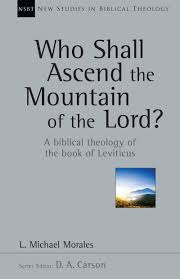
In one of the best books I read last year—a biblical theology of Leviticus—Michael Morales (Who Shall Ascend the Mountain of the Lord?offers an alternative reading to Genesis 4:7. Actually, he recalls a traditional reading found in commentators like Adam Clarke (1762–1832), Adoniram Judson (1788–1850), Young’s Literal Translation (1862), Jamieson, Fausset, and Brown (1877), and Matthew Henry (1662–1714) (p. 57n51).

Commenting on the way sin crouches at the door, he argues that the language could also be render “sin offering,” and that there is good reason for seeing the door, or gate, is the place where the sons of Adam brought their sin offerings—or, should have brought their sin offerings.

I appreciate this interpretation as it pays careful attention to the cultic themes of Genesis (i.e., temple, sacrifice, priesthood) and the way it explains in more objective terms why Cain’s offering is rejected and Abel’s is accepted. The reason? The former rejected God’s Word and Gods’ way; he brought a sacrifice of his own choosing, rather than the sin offering which God prescribed. Meanwhile, Abel brought a offering which responded to God’s Word in faith and sought atonement for his sin.

Read in the context of Moses’s five books, this seems like a superior interpretation, as Morales explains further. Continue reading

Christ, Our Willing Sacrifice

Hebrews 10:4 states that the blood of bulls and goats cannot atone for sin. To those familiar with the argument of Hebrews or the typology of sacrifice in the Bible, it will come as no surprise that an animal cannot atone for the sins of a human. The Old Testament sacrifice can only purify the flesh, and only for a time. The value of an animal is insufficient for ransoming men made in the image of God. Only another man can do that, but then only if that man is unblemished in body and will.

Writing about the mind of Christ in Philippians 2, Alec Motyer makes this point extremely well (see his commentary, The Message of Philippians, 117). Continue reading

Lottie Moon: Service and Solicitor for Missions Giving

Service

When Lottie evaluated her ministry in China, she felt that the first 18 years of the work were just sowing with very little reaping.  From 1873-1890, she labored to learn the language, the customs, and the best ways to do evangelism.  And it was only after 2 decades that she began to see much fruit. Part of this was the way Lottie conceived of conversion.  She was not looking for numbers but transformed lives.  But also, it was the providence of God.  Sometimes in God’s perfect timing, the fruit takes much longer to form than we would want.  Yet, this should not have been a surprise to Lottie, for 18 years was the same amount of time it took for her own conversion.

As the years turned into decades, the focus of her ministry changed.  In 1873, Lottie began as a school teacher to young girls, but after ten years, she requested a permanent change to a ministry comprised of personal evangelism. She wrote to her supervisor, “Under no circumstances do I wish to continue in school work, but I long to go and talk to the thousands of women around me” (387).  This adamant statement was not a disgruntled complaint, but a heart that had traded in her intellectual pursuits for more personal ministry.  She continues, “If I am to devote myself to evangelistic work in the city and country I must be free from the school” (387).  This change would prepare the way for her most fruitful years of ministry, still eight years away.

It is worth noting the conditions that she endured in China. Her reports describe “long days of teaching, traveling, enduring poor weather and verbal abuse, uncomfortable accommodation, and nauseating food” all of which “had no romantic appeal for her.”  Remember, Lottie was a Southern Belle who used to skip church to eat heavy meals.

Like Jesus, she would often go days without personal times of quiet and solitude.  While she experienced a kind of loneliness in China, there were other times she could not be left alone.  When she would travel into the countryside, the Chinese women and children would badger her with questions, fondle her clothing, and interrogate her manners.  They had a childlike inquisitiveness that never failed to verbalize what they were thinking, and there would be times when she would nearly crack under the pressure of constant scrutiny.

For 30 years, this was the majority of her work.  Going house-to-house, village-to-village, introducing women and children to the gospel.  There were times when she would “preach” to mixed audiences (men and women), because she feared for their souls.  She did not want to miss the opportunity to tell the good news, but her standard ministry target was the women and children.

Missions Fund Raiser

Teaching and personal evangelism did not exhaust her duties, because she also served as a valuable reporter from China back to the United States.  A compelling writer, she held regular correspondence with the Foreign Mission Board back in Virginia, and her stories were widely circulated among the women’s missionary societies that were springing up in the late 1800’s.

This written correspondence is perhaps what has left the greatest legacy among Southern Baptists.  And among all her letters, her plea for funds during the Christmas season in 1887 is the one that has had the longest lasting effect.  Writing to Southern Baptist women, she says,

How many there are among our women, alas! Alas!  Who imagine that because ‘Jesus Paid It All” they need pay nothing, forgetting that the prime object of their salvation was that they should following the footsteps of Jesus Christ in bringing back a lost world to God, and so aid in bringing the answer to the petition our Lord taught his disciples: ‘Thy kingdom come”’ (383).

She would later say,

Should we not press it home upon our consciences,’ she asked, ‘that the sole object of our conversion was not the salvation of our own souls, but that we might become co-workers with our Lord and Master in the conversion of the world? (383)

Lottie Moon’s Enduring Legacy

Such was the boldness of Lottie Moon.  She picked up her cross and daily followed Jesus Christ, and she was glad to call others to do the same.  Indeed, she did so because of her love for her Savior and for the people of China.  Her joy was increased as she saw the Chinese come to faith, and she called others to increase their joy as well.

This is the reason why today Southern Baptists take up a missions offering in her name.  The goal is not to guilt people into giving, but out of the overflow of the heart, men and women might give funds so that more people might hear the gospel and the chorus of praise around the world might increase.

For a view on gospel-motivated giving, see my Gospel-Motivated Generosity is a Mark of True Obedience.

Check back tomorrow to consider a number of lessons from Lottie Moon’s life.

Soli Deo Gloria, dss