Whose ‘Blessed’? Five Reflections from the Psalms

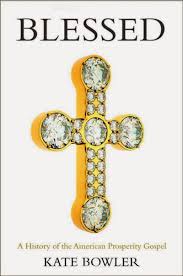
blessedBlessingIt’s what every wants, but few know how to get.

In America, we have a certain brand of blessing that has come to be known as the prosperity gospel. You can find its explicit version on TBN and its more subtle form in a Christian bookstore near you. This subtler prosperity gospel comes with invitations to ask God for the impossible and promises to help you break through to the blessed life. In its softer form, the blood of Christ may not be denied; it’s just hidden behind the luggage of the Lord’s blessings.

In other words, instead of centering on the “blessed and only Sovereign” (1 Tim 6:15), this soft prosperity preaching, as Kate Bowler calls it, centers on man and his earthly desires. Lost is a sense of eternal gravitas and the biblical conviction that God created the universe for his glory. What it lacks is a sense of what blessing is and isn’t. We need to let Scripture inform our understanding of blessing, and we need to see that true blessing is radically God-centered. Continue reading

Psalm 89: A Covenantal Problem . . . and Its Resolution

Psalm 89 presents the Bible reader with a covenantal problem. Located at the end of Book 3 (Psalms 73-89), it prepares the way for a new movement of God in Books 4 and 5 (Psalms 90-106 and 107-50). It stresses God’s unilateral promise to David that God will keep his covenant. For instance, read verses 28, 34-37.

My steadfast love I will keep for him forever, and my covenant will stand firm for him.

I will not violate my covenant or alter the word that went forth from my lips. Once for all I have sworn by my holiness; I will not lie to David. His offspring shall endure forever,his throne as long as the sun before me. Like the moon it shall be established forever, a faithful witness in the skies.” 

Yet, it also laments that God has renounced the covenant (v. 38-39).

But now you have cast off and rejected; you are full of wrath against your anointed. You have renounced the covenant with your servant; you have defiled his crown in the dust.

Hence the problem. Continue reading

Psalm 104 and Genesis 1 in Graphic Display

In his brief but illuminating commentary on the Psalms, Derek Kidner graphs the relationship between Genesis 1 and Psalm 104.  I have reproduced an expanded version of his exegetical chart below.  It shows well how the Psalmist wrote his hymn of praise in the light of Moses creation account.

Creation Day        Formed & Filled
Day 1 Gen 1:3-5 Light & Darkness Ps 104:1-2a Light
Day 2 Gen 1:6-8 Heaven & Earth Ps 104:2b-4 Divides the waters
Day 3 Gen 1:9-10 Land & Sea Ps 104:5-9 Land and water distinct
   “   “ Gen 1:11-13 Ps 104:14-18 Vegetation, trees, hills/rocks
Day 4 Gen 1:14-19 Vegetation Ps 104:19-23 Luminaries as timekeepers
Day 5 Gen 1:20-23 Sea & Sky Animals Ps 104:25-26 Creatures of sea and air
Day 6 Gen 1:24-28 Animals & People Ps 104:21-24 Animals and Man
   “    “ Gen 1:29-31 Ps 104:27-30 Food appointed for all

Derek Kidner, Psalms 73-150, Tyndale Old Testament Commentary (Downers Grove, IL: InterVarsity, 1973), 368.

Of course, the relationship is not hard and fast, many aspects of the Psalm bleed into other sections, but like creation itself there is order and overlap.  Pericopes, like ecosystems, often do not have fixed boundaries, but rather discernible patterns and parameters.  God has called us to find order in his organic world/Word, but not to force our mold on either. For a lengthier description of Psalm 104, read my last post, “Seeing the Glory of God in Creation

Soli Deo Gloria, dss

Seeing the Glory of God in Creation: Genesis 1 and Psalm 104

Psalm 104 is an elongated meditation on God’s creative glory. It is a hymn of praise, that seems to be intentionally paired with Psalm 103.  Both begin the same way: “Bless the Lord, oh my soul!”  They are both hymns of praise: Psalm 103 is praise for God the Savior-King; Psalm 104 praise for God the Creator-King.  And both make explicit use of God’s history with Israel, especially as it is recorded by Moses.  Psalm 103 quotes Exodus 34:6-7 as it recounts the glory of God in redemption; and Psalm 104, as we will see, structures its entire praise chorus based on the creation account of Genesis 1.  It is this creative glory that we will consider today and this week.

Genesis 1 

In Genesis 1, Moses recounts the creation of the world.  Using a literary structure that highlights the creative wisdom and beauty of God, Moses gives a poetic description of creation, that is historical and accurate, even though it does not measure up to the scientific standards of our day.  (For a discussion on the genre and the intention of Genesis 1, see G.K. Beale, The Erosion of Inerrancy).

Moses describes how God in six days created the world ex nihilo. While not giving us exact information about all that was happened in creation; the testimony of Scripture is clear.  God alone is the maker of heaven and earth.  In the New Testament, Hebrews 11:3 describes creation like this, “”By faith we understand that the universe was created by the word of God, so that what is seen was not made out of things that are visible.”  Likewise, Colossians says of Jesus the Divine Word, “For by him all things were created, in heaven and on earth, visible and invisible… all things were created through him and for him” (1:16).

Thus, in the first three days God forms the world—YHWH created light and darkness (Day 1), he separated the waters above from the waters below (Day 2), and he divided the land and the sea (Day 3).  Then he fills it.  On Day 4, the son and the moon as placed in the sky to govern, respectively, the day and the night.  On Day 5, the sea and sky are filled with sea creatures and birds.  And finally,  on the pinnacle of creation, Day 6, land animals and men and women, made in God’s image, are created.

Psalm 104

In Psalm 104, the same emphasis on God’s creativity can be found.  But even more striking is the way that the Psalmist (David?) follows the six-days of creation to worship the king of glory.  In opposition to those who see Genesis 1 as a myth borrowed from another ancient Near Eastern culture, this Psalm seems to affirm the veracity of the event.  Or at least, it gives praise to God for his creation, without questioning in the slightest the truthfulness of Genesis 1.

But more than an apologetic confirmation, Psalm 104 is a hymn of praise, and it wonderfully recounts the six days of creation.

Day 1. Verses 1-2 describe the formation of light. Majestic is the description: Like the priest who robes himself with beauty and glory (Exod 28:2), God clothes himself with splendor and majesty.  The language is figurative, but I believe it is meant to awaken us to the reality that the beauty of the heavens tells us something about God.  His heavens declare his glory; the skies above proclaim his handiwork.  He cannot be seen by men, but in the kaleidoscope of light that resides in the sky, we are introduced to the kind of glorious light in which he dwells.

Day 2. Verses 2-4 depict the separation of the upper chambers from the lower chambers. Just like a cosmic temple, God has created heaven and earth to dwell with his image bearers.  The colors, patterns, shapes, and images in the tabernacle were meant to reproduce much of what is seen in nature.  They are not incidental.  The macrocosm of the universe is related to the microcosm of the tabernacle/temple/Christ/church.  What takes place in the microcosm has effects for the macrocosm.  For instance, when Christ (the tabernacle of God) was crucified, the heavens (the cosmic dwelling place of God) grew dark.  Likewise, the promise of universal restoration will not happen apart from the revelation of the sons of God (Rom 8).  There is much to ponder in this reality, that God dwells with us in his creation, but is not in anyway dependent on his creation. (Again, G.K. Beale is helpful, see his The Temple and the Church’s Mission).

Day 3.  In Genesis, this day included both the division of land and sea, and the planting of vegetation.  Psalm 104 develops both of these things in verses 5-18,; plus, it shows how their creation supports men and animals which come later in the Genesis narrative.  Verses 5-9 tell of the way God commanded the waters to flee, how he made dry land.  They recount the first act of the third day. Verses 10-13 are a bridge between the sections.  They explain how God split the earth with rivers, but how these formations function to serve the animals that are coming. Verses 14-18 is the second act of Day 3.  Here the land is sown with vegetation for man and beast. The world is a cornucopia of fruits, vegetables, grains, nuts, spices, herbs.

Day 4. Verses 19-23 describes the way God put the sun and moon in place to give order to our seasons and the days.  Just as man is positioned to govern the animals (cf Psalm 8), so the sun and moon govern the day and night, respectively.  Like the horn blast from our local factory, which tells all the inhabits of Seymour that it is 7am; 930am; or noon… the sun and moon are messengers to us.  When the sun arises: It is time to work. Verse 23, “Man goes out to his work… until evening.”  Even more, in Psalm 89:37, Ethan speaks of the moon as a perpetual witness to God’s covenant with David.  In other words, just like the moon which testifies to God’s unchanging reign over the universes; the throne of David will stand until the moon is no more (Ps 72:7).

Day 5. Embedded in verses 17, 24 are the description of the birds and sea creatures formed on Day 5.  With freedom and beauty, God has designed birds to glide on the wind, and for humpback whales to “play” in the deep.  Who says God is prudish!  His world is filled with wonder, mystery, beauty, energy, and productivity.  He waters to earth and satisfies its inhabitants.  If a sparrow does not die apart from his will; than neither will one of his own image-bearers perish apart from his will and decree.

Day 6 is the capstone and it is described throughout verses 14-24.  In verse 14, the land animals are supplied with food; man is likewise given ground to cultivate.  Verse 15 anticipates the gladness that comes from God’s creation given to man—oil for his face, bread for his stomach, wine for his for his heart.  Verse 23 gives us instruction for man’s relationship with the world—we are to work it, mine it, grow it, organize, develop it. Verse 24 is the culminating feature of all God’s creation!  Why has God made anything?  It is to display his manifold wisdom, power, benevolence, and perfection.  The king of all the earth has filled his planet with boundless life.  Each aspect tells us something about him.

Therefore, we ought to study the creation in order to better know and love our Maker and Savior, Jesus Christ.  God has made the world good, and even under the curse of sin, its beneficence is evident.  So good is it still, that people worship the creation instead of the Creator.  Yet, we are better to follow the words of Psalm 104, to bless the Lord for all that he has given to us in creation.  For indeed, “all things were created through him and for him.”

Soli Deo Gloria, dss
Gospel Logic from Psalm 103

Gospel Logic Remembers God’s Covenant Faithfulness.

This week we have been taking especial note of the way biblical characters think.  Since our mind is the seat of all change in our lives, and because God’s word has called us to be transformed by the renewing of our minds (Rom 12:1-2), and because God has supplied us in his Word with all that we need for cognitive transformation (2 Pet 1:3-4; cf. Ps 19:7-11), we ought to think often about how we can fill our minds with gospel truths, and to know where to find such thoughts when times of trouble come–and they will come.

One of those places of personal gospel proclamation is Psalm 103. Today, we are simply going to point out a nine truths from Psalm 103–truths that have the power to lift weary souls and engender hope in the hearts of the desperate.

Gospel Logic speaks to himself; it does not listen to himself (v. 1).

Bless the LORD, O my soul, and all that is within me, bless his holy name!

Gospel Logic reminds oneself of the comfort that memory brings; poor memory is one of the first steps towards misery (v. 2). 

Bless the LORD, O my soul, and forget not all his benefits, . . . 

Gospel Logic recalls God’s history of personal faithfulness (v. 3-5).

Who forgives all your iniquity, who heals all your diseases, who redeems your life from the pit, who crowns you with steadfast love and mercy, who satisfies you with good so that your youth is renewed like the eagle’s.

Gospel Logic revisits God’s history of redemptive faithfulness (v. 6-7).

The LORD works righteousness and justice for all who are oppressed. He made known his ways to Moses, his acts to the people of Israel.

Gospel Logic ruminates on the name and character of God (v. 8-12) 

The LORD is merciful and gracious, slow to anger and abounding in steadfast love. He will not always chide, nor will he keep his anger forever. He does not deal with us according to our sins, nor repay us according to our iniquities. For as high as the heavens are above the earth, so great is his steadfast love toward those who fear him; as far as the east is from the west, so far does he remove our transgressions from us.

Gospel Logic does not try to make oneself larger, smarter, or more succesful in order to find security or comfort; rather, it embraces and admits weakness and delights in God’s unconditional electing love for them (v. 13-14).  

As a father shows compassion to his children, so the LORD shows compassion to those who fear him. For he knows our frame; he remembers that we are dust.

Gospel Logic reasons that this trial is short-lived and will not pass into the new creation; meanwhile the promise of God’s eternal weight of glory keeps our hearts anchored to God’s goodness (v. 15-19).

As for man, his days are like grass; he flourishes like a flower of the field; for the wind passes over it, and it is gone, and its place knows it no more. But the steadfast love of the LORD is from everlasting to everlasting on those who fear him, and his righteousness to children’s children, to those who keep his covenant and remember to do his commandments.

Gospel Logic does not try to reduce God’s sovereignty, it does not delight in man’s free will.  It delights in the One whose reign is absolute and meticulous (v. 19).

The LORD has established his throne in the heavens, and his kingdom rules over all.

Gospel Logic offers a sacrifice of praise based on God’s infinite worth, not based on the presence of joy in my heart.  Whether we feel it or not, God is radiantly beautiful, and he is always worthy of worship. (v. 20-22)

Bless the LORD, O you his angels, you mighty ones who do his word, obeying the voice of his word! Bless the LORD, all his hosts, his ministers, who do his will! Bless the LORD, all his works, in all places of his dominion. Bless the LORD, O my soul!

May we read Psalm 103 today and be spurred on towards love and good deeds as we hear the gospel: Soul, bless the Lord!  And forget not all of his benefits… Such gospel logic will sustain us in this life, and it will find eternal expression in the age to come.

Soli Deo Gloria, dss

Gospel Logic in Psalm 42-43

Gospel Logic Replaces Personal Sorrow with Heavenly Promises.  

Nowhere is this method of mental and emotional exchange more evident than in Psalm 42-43. Following the train of thought begun with the gospel logic of Abraham and Moses, today we will turn from descriptive prose to two enumerated lists to unpack the plight experienced by the sons of Korah, as well as the promises that these descendents of Levite looked to in order to find hope.

Six Causes for Spiritual Depression

In his exposition on Psalm 42, James M. Boice designates six causes of spiritual depression.  This is not an exhaustive list in these Psalms or in life, but they are real and prevalent among Christians striving for godliness.  According to Boice, the Psalmist is in the depth of despair as a result of . . .

  1. Forced absence from the temple of God, where God was worshiped (42:1-2).
  2. The taunts of unbelievers (42:3, 10).
  3. Memories of better days (42:4).
  4. The overwhelming trials of life (42:7).
  5. Failure of God to act quickly on our behalf (42:9).
  6. Attacks from ungodly, deceitful, and wicked persons (43:1).
Add to this list any personal maladies, physical pains, relational strife, and just the stuff of life, and you will find that the concoction in Psalm 42-43 is enough to plunge anyone into the depths of despair.  Yet, Psalm 42-43 is not just an example of how a Christian complains.  It is an example of how a hurting Christian hopes!  Like Abraham and Moses, he reasons from the gospel an exchanges deadly thoughts for thoughts of life and light.

Four Spirit-Powered Acts of Faith

Godly living depends entirely on the grace of God to reach us and sustain us.  Unless God takes the first step, we would remain spiritual dead and buried by the avalanche of our own despair.  However, for those who have received the light of life and the power of the Holy Spirit who “causes us to walk in God’s statutes,” there is an invitation and indeed an expectation that children of God who have the spirit of adoption prompting them to pray would take ahold of God’s and draw near to the father by faith in order to find grace (cf. 2 Cor 4:6; Ezek 36:26-27; Rom 8:16-17; James 4:8; Heb 4:14-16).

This is exactly what we find in Psalm 42-43.  For sake of space and time, we will only focus on Psalm 42:5-11.

  1. Gospel Logic speaks to your soul; it does not listen (v. 5). The Psalms beckon us to talk to ourselves.  Often when we see people talking to themselves, we can think that they are a little crazy.  However, Psalms like this one and others (cf. Ps 103) teach us that the crazy ones are those who simply listening to the nagging, complaining, angry voices that ricochet in their heart.  God’s word gives us soothing, healing, liberating truths that free us from sin and enable us to run to Christ.  Like the Gerasene demoniac, when we listen to God’s words we will find a peace that we previously did not know (Mark 4).  Therefore, continue to give ear to God’s word.  Learn how to preach the promises–not the law–to yourself!  Talk to others who have learned the art of speaking the gospel to themselves, and then go do likewise.
  2. Gospel Logic inquires of the heart, but is not ensnared by the heart (v. 6). Gospel logic does not tell you “to fake it until you make it.”  Rather, it calls us to assess the condition of my heart, but not to be mastered by my heart and the polluted feelings that emit from it.  God has given us feelings as a thermometer for the spiritual condition of our inner self.  But notice, while the heart takes the temperature of our spiritual condition, it should not set the temperature.  God’s word and the Holy Spirit should.  Our heart is desperately sick and incapable of giving me a good reading on how I am doing.  Paul said in 1 Corinthians 4:4 that even if “I am not aware of anything against myself, . . .  I am not thereby acquitted.”  Likewise, John insinuates that at times his heart condemns him, but that God is greater than his heart (1 Jn 3:19-20).  Do you see what Paul, John, and the Korahites are saying? Inquire of your heart, but do not become ensnared by it.  Look to God’s gospel, and live your life in its liberating light.  “It is for freedom that Christ has set you free!” (Gal 5:1; cf. John 8:32).
  3. Gospel Logic dwells on God’s whereabouts, not yours (v. 6-10).  Too often, we let external circumstances determine our demeanor, our decisions, and the level of our despair.  Psalm 42-43 does the opposite.  In a land far from God’s dwelling place, it remembers the goodness of the Lord in the dwelling of his temple, and it hopes again that a day of return is coming.  While the devil and his minions taunt us, our hope is not found in our conditions, but in our Christ.  And as Romans 8:32 promises, there is nothing that God will not give to those for whom Christ died.  Take heart. Look to back to the cross. Look ahead to the new creation.  Stop looking around to judge your feelings.  Look up (Ps 121)! Look ahead. Those who endure with Christ, will be received in Christ!
  4. Gospel Logic repeats the promises of God until truth conquers fear (v. 11). We are always tempted to quit.  We read God’s word for a day or maybe two and we can expect immediate change.  However, it doesn’t usually work that way.  God’s word often works in slower, more imperceptible ways.  It works the way a healthy diet cleanses the blood and strengthens the heart.  It renews the mind over time, rarely does the onset of Bible reading function like a blood transfusion or a heart transplant.  Thus, keep reading!  Keep memorizing!  Keep listening to sermons!  Don’t give up.  God never abandons his word and he never abandons those who seek him in the regular reading of his word.

Let these encouragements press you back to the Bible, and from the Bible back to the Lord.  Too many times I encounter “good Christians” whose lives are in shambles because they are wallowing in the mire, instead of lifting their Bibles and trusting the words God has given them.  They know the key, but they fail to apply it to the lockers of their heart.  Yet, I believe if they would only take up God’s word and read they would find the solace and strength that they so desire.

Friend, let us plunge ourselves into the living water of God’s word and find how satisfying his word truly is.  As Psalm 119:25 urges, “My soul clings to dust; give me life according to your word!”

Soli Deo Gloria, dss

Redemption in the Key of D(avid): A One-Page Guide To Reading the Psalms Canonically

Yesterday I taught through the Psalms.  150 Psalms in about an hour.  It was a fast-paced survey of how the Psalter moves…

from the suffering and glory of the historical David in Psalms 1-72
to fall of David’s house and Israel’s exile because of their covenant breaking in
Psalms 73-89
to a YHWH-centered interlude in
Psalms 90-106 which promises redemption and recovery of God’s people because of God’s covenant faithfulness and steadfast love…
to finally the messianic hope of another greater David to come in
Psalms 107-150.

Overall, reading the Psalter as one glorious story of redemption– “Redemption in the Key of D(avid),” you might say– is an illuminating and I would argue the most biblical way to read the Psalms.

It is evident that the Psalms are more than the ancient Israelites equivalent to a WOW Worship CD.  It is not a random compilation of the best hits from the Temple.  The (chrono)logical arrangement of the Psalter is impressive. As Old Testament scholars are helping us see, the content of the Psalms tells us the story of redemptive history, looking back to the David of history and anticipating the eschatological David to come who is God himself (Psalm 110:1; cf Psalm 45:6,).  In other words, while each Psalm is captivating in its own right, set in its own historical, put together,  it becomes evident that a larger story is being told.

To help my church and anyone else who is interested, I have put my notes online, which include a one page outline of the Psalter according to its canonical arrangement.  If it can serve you as a helpful ‘bookmark’ or ‘roadmap,’ please print it out and stick in your Bible to help see how the Psalms fit together to point us to Christ.

It is amazing to see Christ in all of Scripture, and anything that pastor-teachers can do to show how all the Bible leads to Christ will always encourage the faith of our people.  Here are the notes:

Psalms: Redemption in the Key of D(avid)
A Canonical Reading of the Psalter
.

For more on this subject see, John Walton’s JETS article (1991), “Psalms: A Cantata About the Davidic Covenant,”Paul House’s chapter on the Psalms in his Old Testament Theology, and Stephen Dempster’s section on the Psalms in Dominion and Dynasty. I bet Jim Hamilton will also have a great chapter on this when his book, God’s Glory in Salvation Through Judgment comes out this Fall.

Soli Deo Gloria, dss

Psalm 137:9 and the Imprecatory Psalms

Here is a post from Wellum’s Couples“Wednesday Word.”  It is a summary of Dr. Wellum’s biblical-theological consideration of the Imprecatory Psalms from Sunday, August 31, 2008.

The imprecatory psalms are some of the most shocking words in the Bible. Take Psalm 137:9: “Blessed shall he be who takes your little ones and dashes them against the rock!” This week, Dr. Wellum walked through these challenging verses in the Psalter and encouraged students of the Bible to read these verses in the full context of God’s revelation.

A Christ-Centered Interpretation
Due to the shocking nature of many of these imprecatory psalms, three primary interpretive responses have been proffered. Some have attempted to dismiss the imprecatory psalms as vengeful cries from a primitive people. Unfortunately, in making this assertion they disregard Scripture’s unity and authority, and they make themselves self-sufficient arbiters of God’s Word. A second approach is similar. In the progress of redemption and revelation, the New Testament imperative to love your enemies has trumped this Old Testament ethic of retribution. While acknowledging the place of these psalms in history, they make them out to be obsolete. The problem again is that this method disjoints the Bible, when in fact the NT interprets these psalms in light of Christ.

A third approach, advocated by Dr. Wellum, is to read these imprecations in the light of Christ. As we put these Davidic words in Jesus’ mouth, we begin to understand his pleas from the cross. Likewise, we better understand the purpose of these troubled psalms. On this side of the cross, we can read these psalms fearfully as we consider the eschatological retribution that will be poured out on Christ’s aggressors, who have not trusted in his own wrath-bearing atonement. This nuanced approach is most faithful to the Bible and most in accord with the progress of revelation.

A Biblical-Historical Context
To understand these wrathful psalms it is necessary to put them in their proper place in redemptive history. Since the uprising in the garden, all creation has been sentenced under a curse to receive the judgment of God (Gen. 3:14-19; cf. Rom. 8:19-22). Appropriately, the imprecatory psalms excoriate those persons, nations, and societies that wage war with God—in truth, this is all humanity. Simultaneously, the imprecatory psalms assert the coming vindication of God. In Genesis 3:15, a ray of light shines in the cursed skies, “a seed of the woman would crush the head of the seed of the serpent.” This promise is embedded in the context of cosmic conflict—the serpent’s offspring will rage against the children of God (cf. Ps. 2). This spiritual warfare must be seen as the underlining context of the imprecatory psalms.

Carried out in the fullness of time, this head-crushing seed of the women is Jesus Christ. Contending in his life against the powers and principalities, he is hoisted on a cross to die. This act of weakness turns out to be his moment of triumph, for in his death delivers to Satan his death blow (cf. Col. 2:15; Rev. 12). The imprecatory psalms point to this eschatological event (Ps. 69; cf. Matt. 27:34; Jn. 19:28ff). On the cross, Jesus Christ endured the imprecatory wrath called down on the enemies of God, and he did this in order to reconcile enemies of God to the Father (cf. Rom. 5:10). In this light then, the destruction of the Babylonian children in Psalm 137 is seen as imagery depicting the serpent’s demise. Moreover, Psalm 137:9, written in under the skies of Babylon, retells the hope of the proto-evangelium, a seed-crushing son. This is also explains the counter-intuitive notion that the destroyer of reptilian infants is “blessed.”

Modern sensitivities may militate against such violent language, but the biblical notion of peace comes at the price of blood. The imprecatory psalms are cries of justice for the Righteous God to carry out his judgment. This was done through military conflict in the OT (i.e. the language of the imprecatory psalms), and in the NT it was finished on the cross. Today, as we read these challenging verses we are confronted to ask ourselves, “What Spirit shall we hear?” The spirit of this age tells us to dismiss these hard sayings as archaic folly, but the Spirit of Christ points us to swallow these bitter words and look to the cross and to the end of the age when Jesus will come again to put all things under his feet.

Application
As we close, consider three applications: 1) Renewing our minds with the message of these psalms affirms in our own hearts the righteousness of God and the sinfulness of humanity; 2) Embracing these imprecations moves us to exalt God in his mercy and in his justice; and 3) Petitioning God according to these Psalms prepares us for the Day of Judgment, and prompts us to cling to the cross.

May we this week cry out to God, Maranatha! Come Lord Jesus! And may we tell everyone we know how to escape the coming wrath foretold in the imprecatory psalms.

Listen to the whole lesson: The Imprecatory Psalms

Singing the Psalms

Do you sing the Psalms? If not, why not?

Joe Holland makes a strong argument for including the Psalms in our corporate worship and daily lives. His blog on “Rediscovering the Psalms” makes a case for the value and vitality of finding a good Psalter and singing God’s word.

He writes of an encounter with a Peruvian minister who challenged his thinking in the way he intentionally chose the Psalms as an instrument for renewing minds of his congregation with the biblical, theological, and missional content of the Psalms. He writes of the Peruvian pastor:

First, he was convicted that psalm singing was the biblical pattern of New Testament worship. Second, he was fighting heresy in his churches. False teaching slipped into his churches through folk songs slightly adjusted for worship. Psalm singing was his attempt to guard his people from heresy sung to a familiar tune. Third, he said, “I sing psalms because they are militant.” He wanted to teach his people that Christians daily engage in spiritual warfare. The psalms provided a war-time mentality to his young churches.

From there Holland goes on to give eight reasons why we ought to sing the Psalms. Here are his points:

1. When you sing psalms you literally sing the Bible.
2. When you sing the psalms you interact with a wealth of theology.
3. When you sing the psalms you are memorizing Scripture.
4. When you sing the psalms you guard against heresy.
5. When you sing the psalms you engage a collection of songs that address the full range of human emotions.
6. When you sing the psalms you praise the person and work of Jesus Christ.
7. When you sing the psalms you are training for spiritual warfare.
8. When you sing the psalms you are engaging the communion of saints.

May we considered his exhortations, find a good Psalter, and sing praises to our king, sing praises (Ps. 47:6).

(HT: Justin Taylor)

Biblical-Theological Resources on the Psalter

This summer our Adult Bible Fellowship, Wellum’s Couples, has been studying the book of Psalms. Attempting to read the Psalter as a canonical unit, instead of 150 disjointed praises and laments, Dr. Wellum has been showing us the themes and the biblical-theological connections established in the Psalms.  This weekend, I had the privilege of teaching Psalm 24.

In preparation for the lesson, I considered a number of books and articles that proved helpful in reading the Psalter canonically.  In contrast to the higher-critical scholarship done in the later nineteenth and twentieth century, the resources listed below mark a more recent turn in Psalm scholarship, seeking to point out the unity and structure of the Psalter. Not all the resources are equally helpful or detailed, but they are a place to start if you are desirous of reading the Psalter as one, God-inspired canonical unit.

Stephen Dempster, Dominion and Dynasty (IVP: 2003) pp. 194–202.

Dempster sees David as the main idea in the Psalter: “[The Psalter’s] fivefold structure echoes the first section of the canon, the five books of Moses. Seventy-three of the psalms have the name ‘David’ in their titles, and Davidic psalms are strategically placed in each book of the Psalter. The Psalter opens with a flurry of Davidic psalms and closes with a similar grouping, Ps. 3-9; 11-32; 34-41; 138-145 (194).

Jamie Grant, “Singing the Cover Version: Psalms, Reinterpretation and Biblical Theology in Acts 1–4” in The Scottish Bulletin of Evangelical Theology.

Grant’s journal article attempts to show how NT usage of the Psalter in Acts 1-4 could serve as a helpful paradigm for reading the Scriptures typologically. Grant also has another book,The King as Exemplar: The Function of Deuteronomy’s Kingship Law in the Shaping of the Book of Psalms (SBL: 2004), that looks helpful for reading the Psalter well.

Geoffrey W. Grogan, Psalms (Eerdmans, 2008)

Brand new commentary on the Psalms in the The Two Horizons OT Commentary series. Grogan spends the first half of the book commenting on individual psalms, and the second half considering the Psalter thematically, biblical-theologically, and then with regard to contemporary issues in evangelical theology. The second half of the book seems very helpful in drawing out themes in the Psalter, but it does not do as well in helping to understand the internal structure of the Psalms themselves.

Paul House, “The God Who Rules,” in Old Testament Theology (IVP:1998), p. 402–23.

Though only a chapter, this may have been the most helpful treatment. Citing John Walton’s JETS article on the Psalter (1991), House writes: “Psalms displays a ‘content agenda’ that includes an introduction (Ps 1-2), David’s conflict with Saul (Ps 3-41), David’s Reign (Ps 42-72), the Assyrian crisis (Ps 73-89), reflection on Jerusalem’s destruction (Ps 90-106), reflection on the return to the land (Ps 107-145) and concluding praises (146-150). These divisions and contentment statements keep faith with the shape of the Psalms ans offer ways by which major theological themes may be discussed. They also allow for both essential diversity and necessary unity in Psalms interpretation” (405).

David C. Mitchell, The Message of the Psalter: An Eschatological Programme in the Book of the Psalms  (Sheffield Academic:1997).

Mitchell’s work underscores the eschatological trajectory in the Psalms in general; chapter 2 considers the arrangement of the Psalter in particular. Recognizing “the headings and content of individual psalms, the sequence of the Psalms, the arrangement of the internal collections and the five-book arrangement” (89), Mitchell attempts to construct a reading the Psalter that is both tied to history and eschatological in emphasis. He sees Zechariah 9-14 as a key to understanding the Psalms, and he spends much time developing this intratextual link. Some of his connections seem speculative, but his work challenges us the reader to consider the Psalter more carefully.

Marvin Tate’s article in Peter Craigie’s Word Biblical Commentary, Psalms (Word: 2004) p. 438–72.

Found in the 2004 update of Peter Craigie’s commentary, Southern Seminary’s own Psalm scholar writes a helpful piece, tracing recent scholarship on the Psalter. He writes: “There is too much evidence of intention and design to assume that the Psalter was simply thrown together in a jumble out of disparate texts without regard to placement or design. We need not, and should not, expect the process to reflected in the Psalms to meet the standards of a modern artistically structured texts. A fully “systematic” redaction will not be found, but this need not deter us from a careful analysis of intertextual relationships between continguous psalms in pairs, clusters, blocks, books, and divisions, as well as the psalter as whole (468).

Soli Deo Gloria, ds