Isaiah’s Search for Godly Offspring: A Storyline for the Son(s) of God

josue-michel-eCZ24v-sQyM-unsplashAnd what was the one God seeking? Godly offspring.
— Malachi 2:15 —

Maybe’s its odd to start of meditation on Isaiah by citing Malachi, but as I will show, Malachi 2:15 encapsulates a key theme that runs through the book of Isaiah—namely, the presence of godly offspring in the place of God’s dwelling (Zion). From the beginning to the end of Isaiah, the search for godly offspring is a central theme that holds the book together. And if we are going to understand the message of Isaiah—and not just verses from Isaiah—we need to see how it fits together.

The Search for Godly Offspring Begins

When Isaiah begins, he immediately brings us into God’s courtroom, where Yahweh, the sovereign ruler  of the cosmos is bringing a judgment against his people Israel. Isaiah 1:2–4 reads,

Hear, O heavens, and give ear, O earth; for the Lord has spoken: “Children [sons] have I reared and brought up, but they have rebelled against me. 3 The ox knows its owner, and the donkey its master’s crib, but Israel does not know, my people do not understand.” 4 Ah, sinful nation, a people laden with iniquity, offspring [seed/s] of evildoers, children [sons] who deal corruptly! They have forsaken the Lord, they have despised the Holy One of Israel, they are utterly estranged.

Here is the problem: God had redeemed the seed of Abraham in order to make them a kingdom of priests and a holy nation (Exod. 19:6). Yet, by the eighth century B.C., during the reigns of “Uzziah, Jotham, Ahaz, and Hezekiah, kings of Judah” (1:1), the city of God had become corrupt. Jerusalem traded in iniquity, so that wickedness marked all their ways and evil impelled all their intentions. As Isaiah 1:1–18 makes clear, the godly offspring were absent. And as a result, Isaiah 1–5 recall God’s intentions to empty Zion of all wickedness, so that he could once again create sons and daughters who would bear fruit for his glory.

This vision is how Isaiah begins his prophecy, and it helps us to see how the whole book will proceed. That is to say, by paying attention to the overlapping themes of sons and seeds (i.e. offspring), mothers and daughters, childbirth that succeeds and childbirth that fails, we get a clear(er) picture of what God is expecting of Israel and what God is planning to do for his rebellious people.

In truth, anyone who has been around church on Christmas knows the famous verses of Isaiah 7:14 and 9:6–7. But I suspect most don’t know how those verses fit into the structure of Isaiah and how the whole book anticipates the birth of Christ and the new birth promised by him (see John 3).

One way we misread Isaiah is to climb aboard the promise of Immanuel in Isaiah 7:14 and make it a connecting flight to Matthew 1:23. Positively, this approach may heighten our confidence in the predictive nature of the Old Testament—a truth I gladly affirm—but negatively, it fails to understand what Isaiah 7:14 means (in context) and how all of Isaiah is anticipating the virgin birth of God’s Son.

While direct flights are great when traveling from coast-to-coast, they are not advisable when seeking to understand the Bible cover-to-cover. And thus, in what follows I will trace the promise of seeds, sons, childbirth, and motherhood through Isaiah to show how the whole book anticipates the coming of Christ and all those children who will be born by the Spirit—the godly offspring that God has formed in his new covenant people. Continue reading
The Via Emmaus Bible Reading Plan: February Resources for Exodus, Jeremiah, and Mark

Jesus washing the feet of Saint Peter on Maundy Thursday

This month the Via Emmaus Reading Plan is looking at Exodus, Jeremiah, and/or Mark. (See below for the tracks). If you are following this plan, or looking for a new reading plan, you can find helpful resources on the following pages. 

Track 1: Exodus

Track 2: Jeremiah

Track 3: Mark

If you have other resources on these books, please feel free to share.

May the Lord bless you and keep you and make his face shine upon you as you draw near to him in his Word. Continue reading

Reading for Scripture Saturation: Renewing the Via Emmaus Bible Reading Plan in 2022

Jesus washing the feet of Saint Peter on Maundy Thursday

How can a young man keep his way pure? By guarding it according to your word.
10  With my whole heart I seek you; let me not wander from your commandments!

11  I have stored up your word in my heart, that I might not sin against you.
12  Blessed are you, O Lord;
teach me your statutes!
— Psalm 119:9–12 —

With 2021 ending and 2022 approaching, you may be thinking about how to read the Bible in the new year. I hope so. The Word of God is not a trifle; it is our very life (Deut. 32:47). Man does not live on bread alone, but on every word that proceeds from the mouth of God (Deut. 8:3; Matt. 4:4). With that in mind, we should aim to read the Bible and to read it often!

Truly, the Bible is not a book to read once, or even once a year. It is meant to be imbibed and inhabited, adored and adorned, studied and savored. Mastery of the Bible does not mean comprehensive understanding of Scripture; it means ever-increasing submission to the Master who speaks in Scripture. This is why in the closing days of the year, it’s good to consider how we can saturate ourselves with Scripture in the next year.

Personally though, I wonder if our daily reading plans help us with this idea of Scripture saturation. Often, such plans call for reading single chapters from various parts of the Bible. And the daily routine can invite checking the box without understanding the book. So my question has been: Does such reading help us or hinder us in our Bible consumption and consumption? Continue reading

Avoiding Monsters in the Apocalypse: Three Requirements for Reading Revelation

man people art blue

“Though St. John the Evangelist saw may strange monsters in his vision,
he saw no creature so wild as one of his own commentators.”
— G. K. Chesterton —

Few books are more mysterious, more difficult, or more confusing than the book of Revelation. Simultaneously, because of its sensational imagery and more than a few best-selling, end-times thrillers, few books are more commonly requested. Countless are the times I have been asked when I will preach Revelation. And here is my standard answer: I will preach Revelation, after I preach Exodus, Isaiah, Daniel, Zechariah. So far, I’m halfway there.

As a teacher who will give an account for his teaching (James 3:1), I do not want to be on record for teaching this glorious and mysterious book until I am better acquainted with the Old Testament and the rest of the Bible. With more than 400 allusions to the Old Testament, Revelation is thickest book in the Bible, and it requires extra care when taught. Therefore, wise readers will seek to understand the book not with current events but with the biblical canon.

To that end, I share a few comments from commentators who avoid the monstrosity’s to which Chesterton alludes. And they do so by reading Revelation soberly and with a constant gaze upon the Old Testament. May we learn from them as we continue to read Revelation and the vision of Christ found therein. Continue reading

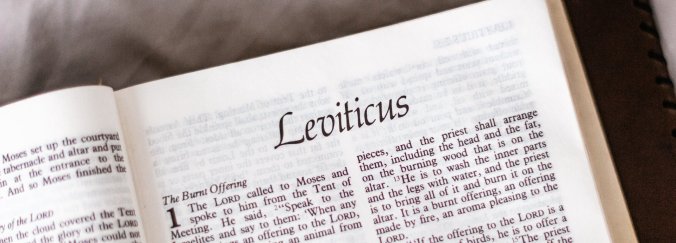
The Most Exciting Book You’ve (N)ever Read: Twenty Lessons on Leviticus

imageThe Most Exciting Book You’ve (N)ever Read. 
That’s how I framed the book of Leviticus when I invited members of our church to study it last January. And this week, by God’s grace, we finished going through the book. Admittedly, our study could have done more. But for 20 weeks (Spring and Fall), those who were at first skeptical of Leviticus kept coming back to the see the good news proclaimed in Moses’s central book. Many even would agree that Leviticus is an exciting book.

In the list below are the lessons I taught on Leviticus. Again, they do not exhaust the book, but they give a general sense of the book and its message, with regular connections to Christ and the Church. I share them here for anyone who wants to know more of Leviticus. Continue reading

The Heart of the Gospel: A Sermon on Penal Substitution (Isaiah 53)

1920x1080-it-is-finishedIn the Old Testament, there are a handful of passages critical for understanding Christ’s cross. Over the last few weeks, I have preached on many of them (Genesis 22, Exodus 12, Leviticus 16; Ben Purves also did an outstanding job preaching Psalm 22). There are other passage too that our current sermon series won’t cover (e.g., Numbers 21, Psalm 118, Zechariah 9–14, etc.) But the most important passage in the Old Testament for learning what Christ’s cross achieved is Isaiah 53 (technically, Isaiah 52:13–53:12). And that was the text I preached this week.

In this fifteen verse, five stanza “Servant song,” we are introduced to the One who will die for the sins of his people. In particular, he offers a guilt offering in the place of those who deserve God’s penalty of death.

In recent years, the idea of Christ’s penal substitution and God pouring out his wrath on the Son has not set well with many—both those inside the church and those outside the church, as well as those leaving the church. Indeed, with an appeal to God’s universal love, many have misunderstood how Christ’s death, as a penal substitute, is good news and necessary for salvation. Others have questioned how guilt can be transferred from one person, or one group, to another.

Many of these questions have been well answered in the book Pierced for Our Transgressionsas well as by many others in church history. In every case, Isaiah 53 plays a prominent role in explaining what Christ’s cross achieved. And in my sermon yesterday, you can hear why the most important thing about the cross is not what could be seen with the naked eye, but what the Father, Son, and Spirit achieved in the cross. Indeed, while Mel Gibson’s Passion captured the brutality of the cross, it did not explain the divine design of Christ’s cross, nor how Christ’s death might benefit those who believe upon him.

Truly, if you want to understand the cross, you have to look to the Scripture and especially to Isaiah 53. So here is a sermon that explains why the cross of Christ and especially penal substitution stands at the heart of the gospel and the good news that Christ died for sinners.

Soli Deo Gloria, ds

1–2 Kings Among the Prophets: Learning to Read Ancient History as Gospel Literature

battle black blur board game

If you have ever read 1–2 Kings, you may wonder how the two books hang together. What is the main message? And what does this ancient book have to say to us today? Is it simply an historical record of Israel’s kings? Or, being found in Israel’s canon as one of the Prophets, should we read 1–2 Kings as a book of prophetic literature?

Without denying the royal character of 1-2 Kings—“kings” is in the title after all—there are many good reasons for seeing 1–2 Kings as a book with a strongly prophetic message. Making this point, Peter Leithart in his Brazos Theological commentary on 1 and 2 Kingsmakes a number of compelling observations, Continue reading

On the Hill of the Lord It Will Be Provided (Genesis 22)

1920x1080-it-is-finished

God said what?

He told his servant Abraham to go and sacrifice his son, only son, Isaac, the one whom he loved.

And did he? Is that what God requires? Why would God do that? And why would Abraham obey?

If the conversation about Genesis 22 is challenging, imagine how difficult the conversation between father and son was between aged Abraham and Isaac, his teenage son. As they walked for three days to the hill of the Lord:

Isaac: Father, where is the sacrifice?  

Abraham: The Lord will provide, son.

And gloriously, the Lord did provide—for Abraham, Isaac, Israel, and us!

In Genesis 22, we enter one of the richest passages in the Bible. Every verse says something to us about God, his demands on humanity, his provision for humanity, and the pathway of death that leads to life.

Indeed, if you are feeling tried and tested and on the verge of despair and death, Genesis 22 is for you. And in this sermon you will hear a message of gospel hope that begins in Genesis, leads to Christ, and comes to us. Even more, after seeing how Genesis 22 prepares the way for Christ’s death and resurrection, we also find model of obedience that every disciple of Christ is called.

You can find the sermon here. If you want to dig deeper into Genesis 22, you can also check out my dissertation. Start on page 71 (PDF p. 86) and you will find 20 pages on the typology of this glorious chapter. For more on the cross of Christ, stayed tuned to our most recent sermon series.

Soli Deo Gloria, ds

It Is Finished: Beholding the Cross of Christ from All of Scripture

Have you ever watched a new movie, where you started 10 minutes before the end?

Many years ago, when big hair was still in style, I was introduced to Back to the Future in this way. My friends were watching this movie and I joined them at point where Doc Brown crashed through garbage cans, warned Marty and his girlfriend about their future children, and drove to a place where “we don’t need roads.”

If you only know the last ten minutes of Back to the Future, however, you won’t understand the significance of the DeLorean, the date (November 5, 1955), the speed (88 miles per hour), or the electricity (1.21 Gigawatts) that makes time travel possible. Nor will you understand the flux capacitor and its cruciform power to rewrite history. All of these details are revealed over the course of the movie and only in watching the movie from beginning to end, can you make sense of its ending. 

Something similar happens when we open our Bibles and behold the man hung upon a Roman cross. While many well-intentioned evangelists point to Christ’s cross as the center piece of our Christian faith and the way of our salvation, it is an event in history that only makes sense when you begin in the beginning. That Christ was buried in a garden tomb does more than give us an historical referent; it tells the significance of Christ’s death as the way of God’s new creation, because after all it was in a garden where Adam sinned and brought death to the world. Now, raised from a garden tomb, Jesus as the new Adam has introduced a new way of life.

In this vein, the biblical storyline is necessary for understanding why the Son of God had to die on a tree, be buried in a tomb, and raised to life on the third day. Indeed, even if we know that Christ did not stay dead—that he rose from the grave, walked the earth teaching his disciples for forty days, and ascended to heaven, where he now sits in glory—we cannot make sense of the cross. Or at least, our interest in Christ’s death and resurrection leads us to ask: But what does it mean?

Indeed, the way to understand Christ’s life, death, and resurrection is to place those events in the timeline of God’s redemptive history. That timeline begins in creation, proceeds through the fall of mankind into sin, and picks up countless promises of grace and types of salvation throughout the Old Testament. In fact, to be most precise, God’s plan for Christ’s cross did not begin in space and time; it began before God spoke light into the darkness (Gen. 1:3). As Peter says in his first sermon (Acts 2:23) and his first epistle (1 Peter 1:20), the cross of Christ was the centerpiece of God’s eternal plan for the salvation of his people.

In Scripture, therefore, the cross is the climactic work of God to redeem sinners and rescue the dying. Indeed, while Jesus now reigns in glory, and his victorious resurrection gives assurance that all those who trust in him will have eternal life, it is vital to understand what Christ did on the cross and what it means when Christ said on the cross, “It is finished” (John 19:30).

Continue reading

On Reading Leviticus: Four Reading Strategies for This Glorious Book

Jesus washing the feet of Saint Peter on Maundy Thursday

With a new month (March) comes a new book in the Via Emmaus Reading Plan. This year I am reading Track 1 and listening to Track 3. And for those who are reading along this plan, or for those who are interested in reading Leviticus—“The Most Exciting Book You’ve (N)Ever Read”—I offer this reading strategy with resources.

This year, we have read Genesis and Exodus, and now we come to Leviticus, which is arguably the centerpiece of the whole Pentateuch. As I have taught in this Bible Study, borrowing from the work of Michael Morales (Who Shall Ascend the Mountain of the Lord?) who cites many others, the book of Leviticus is the literary center and high point of the Pentateuch. Thematically, we might capture it this way:

Genesis begins in Eden, the Garden of God and ends in Egypt, a place of exile and death;

Exodus moves from Egypt through the wilderness to Sinai;

Leviticus is entirely written at Sinai;

Numbers moves from Sinai through the wilderness to the Promised Land (i.e., Israel sits poised to enter the land at the end of the book);

Deuteronomy prepares the people to move from exile in the wilderness into the Garden of God, the land of Canaan.

From this locational/thematic chiasm (and there are other literary clues that indicate an intentional shaping of the Pentateuch), we see that Leviticus is not a book we must “get through.” In the Pentateuch, it is the book we must “get to.”

We need Leviticus, so that we might learn what it takes to dwell near to God. This month, as we read Leviticus, we need to consider how this book gives us more than a detailed list of instructions for the priests of Israel. It invites us to approach a holy God and to do so through the finished work of Christ—the One who fulfills all the requirements of the Levitical system of sacrifice. In what follows I will offer a handful of resources to help you read this book, starting with four reading strategies for Leviticus. Continue reading