Via Emmaus on the Road: Hebrews 10

Further Resources


Hebrews 10 (ESV)

Christ’s Sacrifice Once for All

10 For since the law has but a shadow of the good things to come instead of the true form of these realities, it can never, by the same sacrifices that are continually offered every year, make perfect those who draw near. Otherwise, would they not have ceased to be offered, since the worshipers, having once been cleansed, would no longer have any consciousness of sins? But in these sacrifices there is a reminder of sins every year. For it is impossible for the blood of bulls and goats to take away sins.

Consequently, when Christ came into the world, he said,

“Sacrifices and offerings you have not desired,

but a body have you prepared for me;

in burnt offerings and sin offerings

you have taken no pleasure.

Then I said, ‘Behold, I have come to do your will, O God,

as it is written of me in the scroll of the book.’ ”

When he said above, “You have neither desired nor taken pleasure in sacrifices and offerings and burnt offerings and sin offerings” (these are offered according to the law), then he added, “Behold, I have come to do your will.” He does away with the first in order to establish the second. 10 And by that will we have been sanctified through the offering of the body of Jesus Christ once for all.

11 And every priest stands daily at his service, offering repeatedly the same sacrifices, which can never take away sins. 12 But when Christ had offered for all time a single sacrifice for sins, he sat down at the right hand of God, 13 waiting from that time until his enemies should be made a footstool for his feet. 14 For by a single offering he has perfected for all time those who are being sanctified.

15 And the Holy Spirit also bears witness to us; for after saying,

16  “This is the covenant that I will make with them

after those days, declares the Lord:

I will put my laws on their hearts,

and write them on their minds,”

17 then he adds,

“I will remember their sins and their lawless deeds no more.”

18 Where there is forgiveness of these, there is no longer any offering for sin.

The Full Assurance of Faith

19 Therefore, brothers, since we have confidence to enter the holy places by the blood of Jesus, 20 by the new and living way that he opened for us through the curtain, that is, through his flesh, 21 and since we have a great priest over the house of God, 22 let us draw near with a true heart in full assurance of faith, with our hearts sprinkled clean from an evil conscience and our bodies washed with pure water. 23 Let us hold fast the confession of our hope without wavering, for he who promised is faithful. 24 And let us consider how to stir up one another to love and good works, 25 not neglecting to meet together, as is the habit of some, but encouraging one another, and all the more as you see the Day drawing near.

26 For if we go on sinning deliberately after receiving the knowledge of the truth, there no longer remains a sacrifice for sins, 27 but a fearful expectation of judgment, and a fury of fire that will consume the adversaries. 28 Anyone who has set aside the law of Moses dies without mercy on the evidence of two or three witnesses. 29 How much worse punishment, do you think, will be deserved by the one who has trampled underfoot the Son of God, and has profaned the blood of the covenant by which he was sanctified, and has outraged the Spirit of grace? 30 For we know him who said, “Vengeance is mine; I will repay.” And again, “The Lord will judge his people.” 31 It is a fearful thing to fall into the hands of the living God.

32 But recall the former days when, after you were enlightened, you endured a hard struggle with sufferings, 33 sometimes being publicly exposed to reproach and affliction, and sometimes being partners with those so treated. 34 For you had compassion on those in prison, and you joyfully accepted the plundering of your property, since you knew that you yourselves had a better possession and an abiding one. 35 Therefore do not throw away your confidence, which has a great reward. 36 For you have need of endurance, so that when you have done the will of God you may receive what is promised. 37 For,

“Yet a little while,

and the coming one will come and will not delay;

38  but my righteous one shall live by faith,

and if he shrinks back,

my soul has no pleasure in him.”

39 But we are not of those who shrink back and are destroyed, but of those who have faith and preserve their souls.


Via Emmaus on the Road: Hebrews 8

Further Resources


Hebrews 8 (ESV)

Jesus, High Priest of a Better Covenant

Now the point in what we are saying is this: we have such a high priest, one who is seated at the right hand of the throne of the Majesty in heaven, a minister in the holy places, in the true tent that the Lord set up, not man. For every high priest is appointed to offer gifts and sacrifices; thus it is necessary for this priest also to have something to offer. Now if he were on earth, he would not be a priest at all, since there are priests who offer gifts according to the law. They serve a copy and shadow of the heavenly things. For when Moses was about to erect the tent, he was instructed by God, saying, “See that you make everything according to the pattern that was shown you on the mountain.” But as it is, Christ has obtained a ministry that is as much more excellent than the old as the covenant he mediates is better, since it is enacted on better promises. For if that first covenant had been faultless, there would have been no occasion to look for a second.

For he finds fault with them when he says:

“Behold, the days are coming, declares the Lord,

when I will establish a new covenant with the house of Israel

and with the house of Judah,

not like the covenant that I made with their fathers

on the day when I took them by the hand to bring them out of the land of Egypt.

For they did not continue in my covenant,

and so I showed no concern for them, declares the Lord.

10  For this is the covenant that I will make with the house of Israel

after those days, declares the Lord:

I will put my laws into their minds,

and write them on their hearts,

and I will be their God,

and they shall be my people.

11  And they shall not teach, each one his neighbor

and each one his brother, saying, ‘Know the Lord,’

for they shall all know me,

from the least of them to the greatest.

12  For I will be merciful toward their iniquities,

and I will remember their sins no more.”

13 In speaking of a new covenant, he makes the first one obsolete. And what is becoming obsolete and growing old is ready to vanish away.

Soli Deo Gloria!

Via Emmaus on the Road: Hebrews 7

Further Resources


Hebrews 7 (ESV)

The Priestly Order of Melchizedek

For this Melchizedek, king of Salem, priest of the Most High God, met Abraham returning from the slaughter of the kings and blessed him, and to him Abraham apportioned a tenth part of everything. He is first, by translation of his name, king of righteousness, and then he is also king of Salem, that is, king of peace. He is without father or mother or genealogy, having neither beginning of days nor end of life, but resembling the Son of God he continues a priest forever.

See how great this man was to whom Abraham the patriarch gave a tenth of the spoils! And those descendants of Levi who receive the priestly office have a commandment in the law to take tithes from the people, that is, from their brothers, though these also are descended from Abraham. But this man who does not have his descent from them received tithes from Abraham and blessed him who had the promises. It is beyond dispute that the inferior is blessed by the superior. In the one case tithes are received by mortal men, but in the other case, by one of whom it is testified that he lives. One might even say that Levi himself, who receives tithes, paid tithes through Abraham, 10 for he was still in the loins of his ancestor when Melchizedek met him.

Jesus Compared to Melchizedek

11 Now if perfection had been attainable through the Levitical priesthood (for under it the people received the law), what further need would there have been for another priest to arise after the order of Melchizedek, rather than one named after the order of Aaron? 12 For when there is a change in the priesthood, there is necessarily a change in the law as well. 13 For the one of whom these things are spoken belonged to another tribe, from which no one has ever served at the altar. 14 For it is evident that our Lord was descended from Judah, and in connection with that tribe Moses said nothing about priests.

15 This becomes even more evident when another priest arises in the likeness of Melchizedek, 16 who has become a priest, not on the basis of a legal requirement concerning bodily descent, but by the power of an indestructible life. 17 For it is witnessed of him,

“You are a priest forever,

after the order of Melchizedek.”

18 For on the one hand, a former commandment is set aside because of its weakness and uselessness 19 (for the law made nothing perfect); but on the other hand, a better hope is introduced, through which we draw near to God.

20 And it was not without an oath. For those who formerly became priests were made such without an oath, 21 but this one was made a priest with an oath by the one who said to him:

“The Lord has sworn

and will not change his mind,

‘You are a priest forever.’ ”

22 This makes Jesus the guarantor of a better covenant.

23 The former priests were many in number, because they were prevented by death from continuing in office, 24 but he holds his priesthood permanently, because he continues forever. 25 Consequently, he is able to save to the uttermost those who draw near to God through him, since he always lives to make intercession for them.

26 For it was indeed fitting that we should have such a high priest, holy, innocent, unstained, separated from sinners, and exalted above the heavens. 27 He has no need, like those high priests, to offer sacrifices daily, first for his own sins and then for those of the people, since he did this once for all when he offered up himself. 28 For the law appoints men in their weakness as high priests, but the word of the oath, which came later than the law, appoints a Son who has been made perfect forever.

Soli Deo Gloria!

Via Emmaus on the Road: 2 Corinthians 3

Further Resources


2 Corinthians 3 (ESV)

Ministers of the New Covenant

Are we beginning to commend ourselves again? Or do we need, as some do, letters of recommendation to you, or from you? You yourselves are our letter of recommendation, written on our hearts, to be known and read by all. And you show that you are a letter from Christ delivered by us, written not with ink but with the Spirit of the living God, not on tablets of stone but on tablets of human hearts.

Such is the confidence that we have through Christ toward God. Not that we are sufficient in ourselves to claim anything as coming from us, but our sufficiency is from God, who has made us sufficient to be ministers of a new covenant, not of the letter but of the Spirit. For the letter kills, but the Spirit gives life.

Now if the ministry of death, carved in letters on stone, came with such glory that the Israelites could not gaze at Moses’ face because of its glory, which was being brought to an end, will not the ministry of the Spirit have even more glory? For if there was glory in the ministry of condemnation, the ministry of righteousness must far exceed it in glory. 10 Indeed, in this case, what once had glory has come to have no glory at all, because of the glory that surpasses it. 11 For if what was being brought to an end came with glory, much more will what is permanent have glory.

12 Since we have such a hope, we are very bold, 13 not like Moses, who would put a veil over his face so that the Israelites might not gaze at the outcome of what was being brought to an end. 14 But their minds were hardened. For to this day, when they read the old covenant, that same veil remains unlifted, because only through Christ is it taken away. 15 Yes, to this day whenever Moses is read a veil lies over their hearts. 16 But when one turns to the Lord, the veil is removed. 17 Now the Lord is the Spirit, and where the Spirit of the Lord is, there is freedom. 18 And we all, with unveiled face, beholding the glory of the Lord, are being transformed into the same image from one degree of glory to another. For this comes from the Lord who is the Spirit.

Soli Deo Gloria!

You Will Be Saved By Childbearing: A Sermon That Touches Baptist Churches, Christian Homes, and Christian Nationalism

baby beside woman

Truly, truly, I say to you, you will weep and lament, but the world will rejoice. You will be sorrowful, but your sorrow will turn into joy. When a woman is giving birth, she has sorrow because her hour has come, but when she has delivered the baby, she no longer remembers the anguish, for joy that a human being has been born into the world. So also you have sorrow now, but I will see you again, and your hearts will rejoice, and no one will take your joy from you.
— John 16:21–23 —

Few things in life are more terrifying or exhilarating than the final moments before a baby is born. When a wife turns to her husband and says, “It’s time,” that husband knows—or he better know—that everything he’s doing needs to stop. Now!

A few weeks ago, this scenario played itself out on national television, as Robert Griffin took a phone call and immediately ran from the field during the middle of the Fiesta Bowl. While at first his co-hosts questioned him for taking a call during the live broadcast, as soon as the reason was given, everyone understood and everyone cheered. Such is the celebration that comes when the long-awaited child is here and about to enter the world.  (I share the clip with great pain for my Michigan Wolverines.)

Indeed, there is something wonderful about birth, even as it comes through immense pain for the mother and an immense sense of helplessness (not to mention adoration) for the father. Even more, childbirth is meant to picture something of God’s plans for salvation.

Like marriage, childbirth is a picture of the gospel, or at least the new birth, which comes when God grants life to his children. Explaining regeneration in John 3, Jesus indicates that this new birth—a birth from above—is much more than a metaphor. It is the very means by which God is going to save the world.

Likewise, as Jesus nears the cross, he returns to the imagery of childbirth, when in John 16:21–23, he says that the birth of pangs of salvation are here. As the bridegroom, Jesus says that “It’s time!” And importantly, he is not only saying that it is time for his cross, but he is also saying it is time for the bride (the church) to experience the pain of receiving her children.

In the Old Testament, especially in Isaiah, we discover that Mount Zion is a mother who will receive the children of God (cf. Psalm 87). And now that Jesus is going to be lifted up (on Calvary but also in glory), it is time for Mother Zion to receive her offspring. This is a key point in John 16 and one that we need to understand, if we are going to rightly relate childbirth to salvation and salvation to rearing children in the Lord.

On Sunday, I preached on this point and you can find the sermon here. Along the way, this sermon touched on appropriate and inappropriate ways to relate home and heaven, child birth and salvation—subjects that are on the forefront of Christian’s minds today.

As the moral fiber of our country continues to crumble, in large part because the family has been eviscerated, Christian Nationalism seems to offer a suitable solution. Yet, advocates of Christian Nationalism, especially those who are Baptist, should know that the foundations offered by the likes of Stephen Wolfe—see p. 217 in his The Case for Christian Nationalism—depend upon a view of the covenant that Baptists cannot affirm. For this reason and others, Baptists should be cautious of trying to reform America with his brand of postmillennialism. Instead, we should go back to Scripture to see how the new covenant informs the mission of the church, the way Christians can impact culture, and the way the law applies to the state today.

Long story short, more needs to be said on how child birth relates to salvation and how churches should foster Christian homes and influence nations with Christian truth. In the months ahead, Christ Over All will be addressing just this in two issues on the Christian Home (May) and Christian Nationalism (October). In our day, all of us need to think more carefully about how God is bringing light into the world and how the church plays a part in influencing the state. Stay tuned. Until then, however, I offer this sermon as entrée to the subject.

Soli Deo Gloria, ds

Photo by Jonathan Borba on Pexels.com

Take Up Your Bed and Walk: Seeing Jesus as the End of the Sabbath in John 5

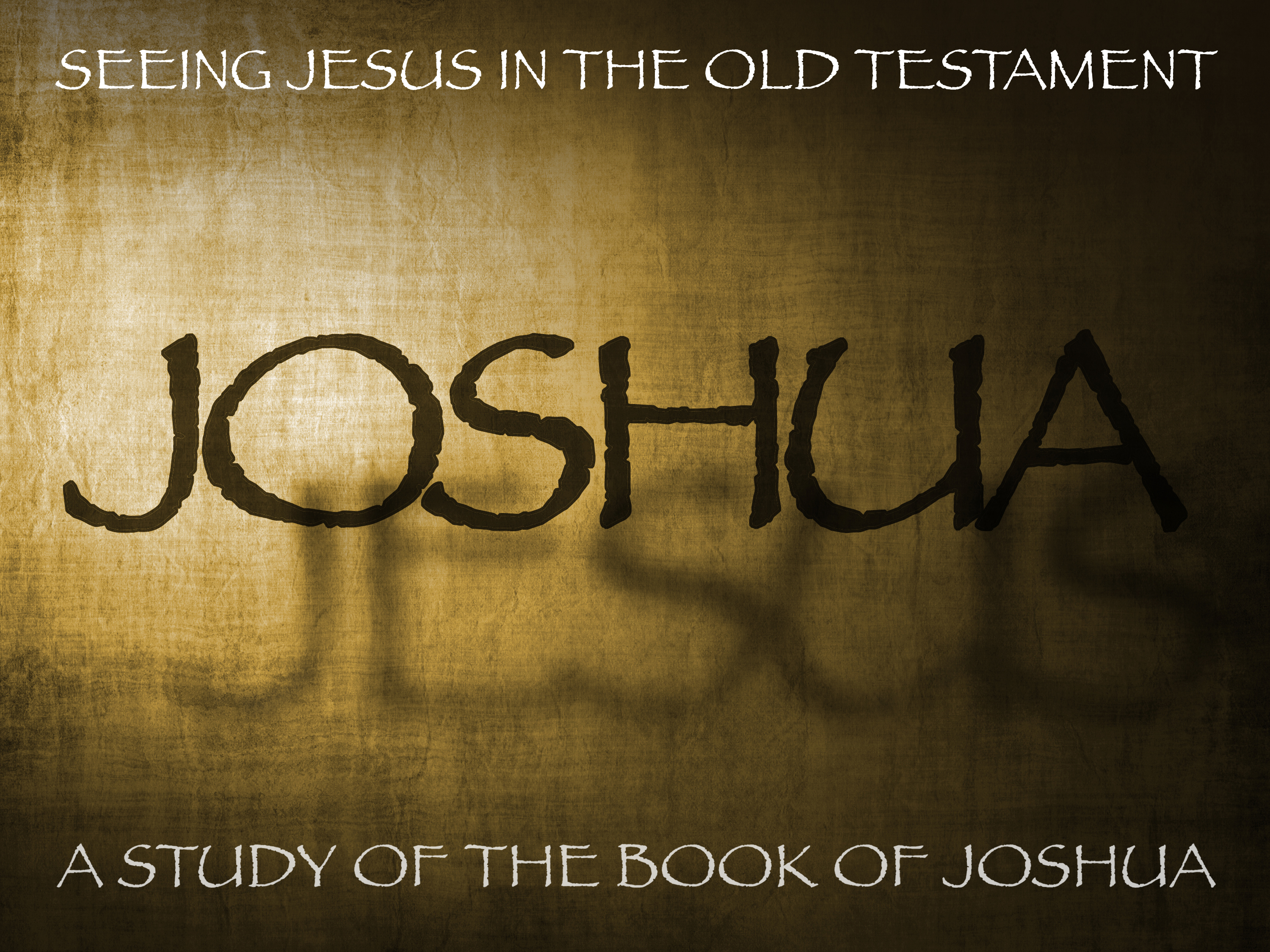
Window N6, Cloisters, Gloucester CathedralWhen Jesus said “I have come not to abolish the Law, but to fulfill it” (Matthew 5:17), what did he mean? Specifically, what did he have in mind with respect to the Sabbath? Is the Fourth Commandment (Remember the Sabbath, to keep it holy”) an enduring command mutatis mutandis? That is, once we make the necessary changes to the day, the place of our worship, and the full revelation of God in Christ, do we keep this day? Or do we not?

This question has generated entire books and led to more than a few fissures in the Church? And one of many arguments for Sabbatarianism (i.e., the ongoing practice of the Fourth Commandment) is that the New Testament does not need to reissue a command for the Sabbath, if it is laid out plainly in the Old Testament. But what if the New Testament actually issues a command that stands against the Fourth Commandment? Is it possible that the New Testament doesn’t reissue a command for the Sabbath, because there are places where it abrogates the old covenant system of Sabbath?

In answer to that question, one may think of Colossians 2:16–17 or Romans 14:5, or even Matthew 5:17. If Jesus fulfills the Sabbath in himself (see Matthew 11:28), then does that bring the old covenant practice to an end? This is where my reading of Scripture, informed by the likes of Steve Wellum and Thomas Schreiner leads, but recently I have found another passage that confirms this reading—one that I have not seen elsewhere. And so, I offer this reflection on John 5:1–18 and its copious use of Jeremiah 17:1–29, a passage that bears directly on the Sabbath. Continue reading

Seeing New Creation Light in John 2–4: Three Ways Jesus Replaces the Darkness of the Old Covenant

brown and green grass field during sunset

A few weeks ago I offered a literary analysis of John 2–4. Today, I’ll add a few more thoughts on this remarkable passage.

In John 2–4, Marriage and Resurrection Go Together in Sign and Substance

First, there is an undeniable inclusio that connects Jesus’s first sign (turning water into wine) in John 2:1–12 to his second sign (healing the royal official’s son) in John 4:47–54. Observing the connections between these two bookends, Jim Hamilton finds 6 connections, to show how John mirrors these two events. Here is how he frames it (John, 101).

  • A need is communicated to Jesus (4:47; cf. 2:3),
  • but he initially rebuffs the petitioner (4:48; cf. 2:4).
  • When the petitioner responds in faith (4:49; cf. 2:5),
  • Jesus gives a command that is obeyed (4:50; cf. 2:7-8),
  • at which point the need is met (4:51-52; cf. 2:9-10).
  • These are then identified as the first and second signs, in response to which people believe in Jesus (4:53-54; cf. 2:11).

To this we could add the observation that the wedding takes place on the third day (John 2:1), as does the healing of the official’s son—i.e., it occurs on the day after the second day (4:40, 43).

From these seven links in the text, it would be a failure to “hear” John if we did not read them together. And what happens when we let the wine interpret the healing and vice versa? My short answer is that the themes of the wedding and its wine, combined with the resurrection of the son, are make a theological claim that the resurrection of the Son is what brings the wine of God’s new creation marriage. Continue reading

Covenant Life: Yesterday, Today, and Forever (Joshua 24)

joshua07

Covenant Life: Yesterday, Today, and Forever (Joshua 24)

On Sunday we looked at Joshua 24, the last chapter in Joshua, and concluded our series on this Jesus-centered book.

In Joshua 24, the soon-to-be-departed leader of Israel called Israel to renew their covenant with God. By reminding Israel of God’s grace in their past and calling them to seek Yahweh’s grace for their present, Joshua renewed a covenant that anticipated a greater covenant in the future.

Indeed, as we have seen in all of Joshua, this book points to Jesus with remarkable, and at times shocking, clarity. It is not a book where we have to read Jesus back into the Old Testament. Instead, as the first book written after Moses, a book that helps us learn to read the rest of the Prophets and Writings, Joshua (Yeshua = Jesus) is unmistakably Christotelic (written to bring us to Christ at-the-end). And Joshua 24 may be the most fulsome in  leading us to Christ. At least, that’s what I argue in this sermon!

You can listen to the sermon online. Response questions and additional resources can be found below. Continue reading

Beloved, Keep the Faith: What Jesus’s Final Words Say That Joshua’s Can’t (Joshua 23)

joshua07

Beloved, Keep the Faith: What Jesus’s Final Words Say That Joshua’s Can’t (Joshua 23) (Sermon Audio)

In Joshua’s penultimate chapter in Joshua, we hear a word from Joshua calling for an ultimate commitment to God. Speaking to the people he has led out of the wilderness and into the Promised Land, Joshua says “Be very careful, therefore, to love the Lord your God” (v. 11).

In short, Joshua’s last words to Israel urge Israel to keep the faith. Only, as Joshua 24:31 indicates, Israel’s faithfulness is very short-lived. Only one generation after Joshua continues to keep the covenant (renewed in Joshua 24). Thus, for all that Joshua has done and said, it is ultimately ineffective. And as we read his words today, we can feel the same kind of discouragement, if we don’t place the weakness of his sermon with the eternal life that Christ gives with his final words.

Indeed, in this week’s sermon we will see how Joshua’s final words, like his entire life, are meant to lead us to Christ. From this connection everything that Joshua can be applied to us today, with (re)assurance that our faith will endure because Christ himself is keeping us (Jude 2), even as we keep ourselves in the love of God (Jude 21).

You can listen to the sermon online. For more on Joshua 23, you can read this week’s Ten Things blogpost: Love God, Flee Idols, and Remember That Jesus is with You: 10 Things about Joshua 23.

Soli Deo Gloria, ds


Love God, Flee Idols, and Remember That Jesus is with You: 10 Things about Joshua 23

michel-porro-vfaFxFltAvA-unsplashJoshua 23 is the penultimate chapter in the book and a call for Israel to make an ongoing, ultimate commitment to Yahweh. Here are ten things about this chapter to help us understand its main point with applications for us today.

1. Joshua 23 is the second of three assemblies that close the book of Joshua.

In the last three chapters of Joshua, the book comes to a close with three assemblies. In chapter 22, an emergency meeting is called when the Western tribes fear that the Eastern tribes committed idolatry by building an altar on the banks of the Jordan. In chapter 24, Joshua leads the nation to renew their covenant with Yahweh. But in Joshua 23, before that formal process of agreement, Joshua gives a more personal appeal for Israel to love God with all their heart and to guard themselves from idolatry.

In this way, Joshua 23 serves as a bridge between Joshua 22 and Joshua 24. It unites the three chapters with the theme of idolatry—or rather, a warning against idolatry. More specifically, this chapter focuses on the leaders in Israel, who are listed in verse 2: “elders, leaders, judges, and officials.” Importantly, as Joshua comes to the end of his life (vv. 1–2, 14), he is looking to this next generation of leaders to keep covenant with God. This shows how the nation prospers when the nation has faithful leaders (cf. 24:31). Continue reading