Wide are God’s Mercies: Giving Public Praise to Our Lord for His Ongoing Work at Our Church

nathan-dumlao-KYiGu8qqEcM-unsplashMy companion stretched out his hand against his friends; he violated his covenant. 21 His speech was smooth as butter, yet war was in his heart; his words were softer than oil, yet they were drawn swords. 22 Cast your burden on the Lord, and he will sustain you; he will never permit the righteous to be moved.

– Psalm 55:20–22 –

Recently, I received an email that brought to mind a dozen or so events from the last ten years. The email was intended to lay charges against our church, myself, and my fellow elders. And, in a world that offers multiple perspectives, those accusations are certainly one interpretation. However, as we learn from Proverbs 18:17, “The one who states his case first seems right, until the other comes and examines him.”

Today, I have no interest in examining the charges made. They have been examined often over the last six months and before, but I do have an interest in giving thanks to God for the charges that have been made and for the events they recall. For in fact, all of things that were brought to light are, from another angle, testimonies of God’s grace. And thus, I want to give public praise to God for all the ways that his mercies have been made new over the last decade.

When Paul defended himself in 2 Corinthians against the charges of the super-apostles, he boasted in his weaknesses. In what follows, I will do much of the same. But more, I will boast in the kind and loving work of God in a local church that was once featured negatively in a book by Nancy Pearcey.

As with all local churches, ours is made up of members who have feet of clay. And yet, with clay feet we are learning to walk with our Lord, and looking back on the last three decades, God has demonstrated his mercy and grace again and again. And for that reality, I am profoundly grateful. And I share these ten reflections as a testimony to the wideness of God’s of God’s past mercies, which funds the promise of future grace.

Continue reading

With Genuine Repentance Comes Pardon: John Calvin on How to Seek and Grant Forgiveness

alex-shute-b7QwXDDEwv8-unsplashThen Peter came up and said to him,
“Lord, how often will my brother sin against me,
and I forgive him? As many as seven times?”
Jesus said to him, “I do not say to you seven times,
but seventy-seven times.
– Matthew 18:21–22 –

What happens when someone asks for forgiveness, but all outward signs indicate anything but a willing spirit? Is the offended party obligated to grant forgiveness the moment the offender says, “Will you forgive me,” or does it depend? If forgiveness depends on repentance, as Jesus says in Luke 17:3, just how much fruit is requisite for such repentance to be deemed genuine?

To put it into actual situations: Does the offended child whose sibling is forced to say “I’m sorry” have to mechanically say, “I forgive you”? Or to take it one step further, does the parent need to discipline the hesitating child for not offering forgiveness immediately?

What about the Christian family of a victim of violent crime, do they need to automatically grant forgiveness when the judge forces the criminal to issue an apology? Or are they permitted to consider the sincerity of the apology? Equally, should Christians forgive terrorists, who go to their deaths spewing hatred against their victims?

Or more basically, when pastors mediate conflict in the church, what is the proper response to a church member whose longstanding self-justification is suddenly reversed? Does the offended party need to issue an immediate grant of forgiveness? Or does the newfound repentance need time to settle? Equally, if the member will not forgive when repentance is genuine, what must be done then?

Fortunately, we are not the first generation to wrestle through such questions. And most recently, I came across an incredibly illuminating passage from John Calvin on Jesus’s teachings on forgiveness and repentance. Ever pastoral, Calvin provides some important qualifications for offering forgiveness, granting forgiveness, and even withholding forgiveness until repentance is deemed genuine.

Strikingly, Calvin does not suffer from our modern captivity to making others feel affirmed. Instead, he affirms the need to offer forgiveness to any and all who ask. But wisely, he also cautions Christians from mistakenly granting forgiveness prematurely. In his comments on Jesus’s teaching on forgiveness, he rightly urges Christians to extend grace in the same way they received grace. But also, he holds the line on repentance, stressing the importance of making sure repentance is genuine.

Having recently thought quite a bit about this very point, I offer six reflections on Calvin’s views on forgiveness, repentance, and reconciliation. I have added his full comment at the bottom. Continue reading

Forgive One Another: A Simple Introduction to a Challenging Command

winding road warning sign near the forest

Forgive. One. Another.

Those three words are easy to say; less easy to understand; and sometimes nearly impossible to practice. Truly, for as simple as forgiveness should be, seeking and receiving forgiveness is often the things that brings us to our knees.

Who knew that sins forgiven in heaven could be so difficult to forgive on earth?

Yet, that is often the case. Forgiveness is often a misunderstood doctrine, as well as a misapplied practice. Therefore, Christians who seek forgiveness, demand forgiveness, or seek to help others forgive, often find that the Christian practice of peace-making is more difficult than they might first imagine.

In response, genuine believers may grow frustrated—with themselves, with others, with God, or with the church. How can the cross of Christ not have its full effect? It seems so simple.

And yet, I might offer a different perspective. Continue reading

Imagine That: Why You Need to Cultivate a Sanctified Imagination

gray and blue sky

A few months ago, I attended a conference where the speaker shared about his counsel to those battling sexual sin. Paraphrasing, he said, “Imagine every impure action as another thrust of the spear into the side of Jesus.” Woe! What a sobering and sickening image! Can you say that? Should you think that, really?

Never before had I heard someone speak so graphically about the need for the use of imagination in our fight against temptation. However, as I have reflected on his point, I am increasingly convinced he is exactly right.

Imagination, when rightly used, is one of the most powerful tools God gives us to put off the old nature and to walk in the new. After all, Jesus himself said to those battling lust, “gouge out your eye” and “cut off your hand” (Matt 5:29–30). But it is not just for lust. In every area of life, we need to train and retool our imagination for the purpose of sanctification and greater gospel service.

Imagination in the Bible

The Bible is filled with imagery. From the Spirit brooding over the waters (Genesis 1) to John’s vision of a glorious city, dressed like a virgin bride (Revelation 21), the Bible drips with word pictures like the Matrix rains green code. Jesus regularly employs parables to capture the imagination of his disciples. The prophets of old spoke of Israel as a harlot, while Paul speaks of the church as a radiant bride.

The question is, do you see it? In a way that most fast-paced Americans don’t appreciate, Scripture begs to be pondered s . . l . . o . . w . . l . . y.

When Psalm 32:8-9 says, “Be not like a horse or a mule, . . . which must be curbed with bit and bridle, or it will not stay near you,” it moves us to stop and reflect: What is it about these animals that must be avoided? Is it the same thing for each beast? Or are these they expressing two opposite errors—e.g., the error of running ahead of God like a wild horse and the error of lagging behind God like a stubborn mule?  The imagery fires the imagination and impresses upon us the need to walk humbly with our God.

Moreover, Scripture calls us to discipline our imaginations. Paul says in 2 Corinthians 10:5 that we are to “take captive every thought to Christ.” Because Satan wages war with words of deception, Jesus’ disciples “destroy arguments and every lofty opinion raised against the knowledge of God” by means of ‘thought-control.’ Only this mental exercise is not some metaphysical séance. Rather, it is meditation on the propositions and poetry of God’s Word.

To wield the Sword well—another image, I might add—takes not only a right doctrine but a sanctified imagination. Such an imagination begins with learning the gospel and God’s view of the world (Rom 12:1–2), but soon this renewed mind must and will generate new thoughts that serve the needs of those around us. While some believers may be more creative than others, imagining acts of kindness for others is not limited to creative-types. It is a universal calling for everyone purchased by God to do good works. We all must employ our minds to imagine that which is excellent and praiseworthy (Phil 4:8).

Three Places Where Imagination is Key: Sincere Sympathy, Holy Outrage, and Practical Service

Let’s get more specific. Instead of talking in the abstract about imagining concrete ways of doing gospel-empowered good, let’s consider three ways imagination serves as the link between good intentions and good works.

First, a sanctified imagination creates sincere sympathy.

Think about the last time you heard sad news. How did you feel? Chances are if you have experienced a similar pain, you were quick to empathize. But if the mourner experienced something foreign to you, you may have been slower to weep with the one who was weeping. What to do? The answer, of course, is to pray that God would comfort that person. But is that all? I don’t think so.

Using our imagination, we can conceive of what a widow goes through on the anniversary of her husband’s death, even if we’ve never been married. By means of a sanctified mind we can consider what a son misses when he grows up without a father, or what a father of four worries about when he loses his job. In short, we don’t need to have shared the same experience to minister comfort, but we do need is an imagination that makes up the difference.

Second, a sanctified imagination fuels holy outrage.

In Ephesians 4:26 Paul quotes Psalm 4:4, saying, “Be angry and do not sin.” For most of us, we need to guard against undue anger. However, in a world where moral outrage is dulled by a diet of sitcoms and emotionless news reporting, many Christians need to learn how to “be angry.” Here again, “pondering”—not visceral experience—is key (see Psalm 4:4–5).

For instance, how should we feel about sex trafficking or late term abortion? To begin with, we must let the truth of God’s word inform our thinking. But after that, what? Is it enough to have cognitive data? Can statistics alone form our moral conscience? I think not.

Before, during, and after we encounter these travesties in print or in person, we must use our minds to aid our hearts feel the effect of men stealing girls from their homes or babies being mutilated in their mother’s wombs. Of course, this kind of deliberate rumination is unpleasant and painful; some might unnecessary or even wrong-headed. But honestly, how else will we learn to hate the horrors of sex trafficking and abortion, unless we feel with the victims, and with the Lord, the heinousness of the crimes?

The same goes for any other form of brutality, abuse, or ethical injustice. Personal narratives are needed to grow our moral conscience. And when personal experiences are lacking—either because of distance or present circumstance—biblically-informed contemplation of our neighbors need is what we need to prepare our hearts for the day when we do meet those suffering from injustice.

In truth, we cannot personally tackle every moral dilemma in the world, but we can and must cultivate a moral conscience that abhors every kind of injustice. A sanctified imagination does that by creating in us a holy outrage at sin and a deepening love for Christ who alone can make all things new.

Third, a sanctified imagination quickens practical service.

The golden rule demands a sanctified imagination, for without it we would regularly bless others in the very same way we want to be blessed. In other words, when we love another, we need to think about who they are, what they need, and how they will receive our love. This requires imagining the living conditions of another and prayerfully considering what would serve this person. Husbands desperately need to think this way, but so do social workers and car manufacturers.

In the home, husbands love their wives best when they imagine new ways to serve them—according to what delights the wife, not the husband. In the workplace, engineers show love by thinking about how the products they are making will improve life for the people who buy their cars. Social workers show love by dreaming up an elaborate birthday party for the child who has never received a present.

On it goes. In every arena of life, imagination will help you be a better servant and a better lover. Indeed, without such imagination, you will grow tired in your compassion. Likewise, without a creative imagination the person who rejects your offer of the gospel will probably not hear it again from you. Yet, with a Spirit-led, gospel-driven imagination, there are countless ways to insert the gospel into the natural rhythms of life and conversation. After all, Jesus is the Maker of all things, and all things point back to him (Eph 1:10).

Creativity is for All New Creations in Christ

Of course, genuine service can happen with little creativity. Jesus said that a simple cup of cold water given in his name would be rewarded (Matt 10:42; cf. 25:35–40). Yet, in some instances the only way to deliver a cup of water involves the ingenuity of international travel and the problem-solving of purifying dirty water.

All the same, if we desire to be salt and light in the world and to share the gospel with the poor and needy, a sanctified imagination will be necessary. Especially among those people who are hard to love or hard to reach, a sanctified imagination is not optional but essential. It is part of the bridge system that moves vertical faith to horizontal love. It flows from a mind renewed by the gospel of Jesus Christ, and it has an endless array of applications.

Give it a shot this week. As you read the Scripture, pay attention to the imagery. Ask God to awaken your imagination. Instead of filling your mind with the endless images of television and YouTube, let the Word of God prompt your creativity. Begin to imagine what you can do to serve others and to share the message of Christ’s cross and resurrection, the only message that sanctifies the mind and brings peace and justice to the world.

Soli Deo Gloria, ds

This article was originally posted on the ERLC Canon & Culture page.

Photo by Caio on Pexels.com

The Resurrection and the Life: How Jesus Raises the Dead (A Sermon on John 11:17–44)

john03

The Resurrection and the Life: How Jesus Raises the Dead (A Sermon on John 11:17–44)

John’s Gospel is written so that we might believe that Jesus is the Christ, the Son of God (John 20:31). And in John’s Gospel there are many ways eye-witnesses testify to Christ and many other ways John shows followers of Jesus coming to and growing in faith. In fact, John 11 is one of the key places where believers are pressed to believe and to believe more deeply.

For all Christians, there is a need to grow in faith. While God grants spiritual life and Christ-centered faith, living faith cannot stagnate. It must be exercised in order to grow. Even more, what faith God has given for today will not carry us into tomorrow or for the next ten years, unless it grows. Accordingly, we need daily grace for growing faith.

Wonderfully, God delights to uphold the faith of his saints. He who gives us faith in the new birth also gives us strength to keep believing. And Sunday’s sermon, I showed from John 11 how God grew the faith of Martha, Mary, and many others, as he raised Lazarus from the dead.

You can find the sermon here. You can also find last week’s sermon on John 11:1–16 here. I pray it may strengthen your faith as you continue to trust in the one who is the resurrection and the life.

Soli Deo Gloria, ds

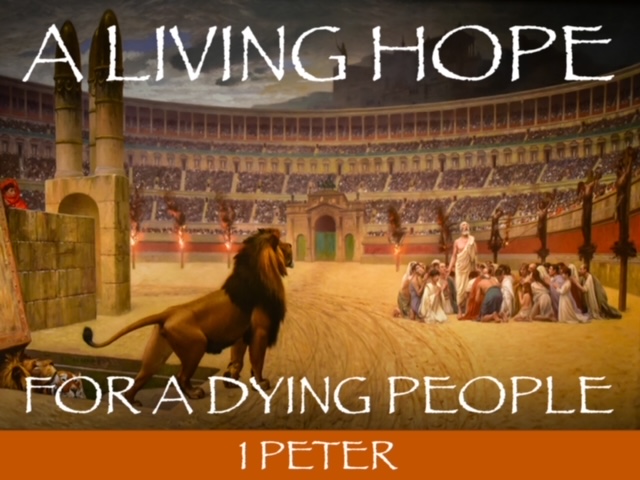
Getting Into God’s Sovereign Grace: From Peter to the Elect Exiles to the Father, Son, and Spirit (1 Peter 1:1–2)

image001On Sunday, our church began a new series in the book of 1 Peter. Introducing the book, we focused on the salutation (1 Peter 1:1–2), two verses that introduce Peter, the elect exiles, and the triune God from whom all grace and peace come. From this short introduction we discovered a number of things about the book, its author, its setting, and the sovereign grace of God.


If you are unfamiliar with 1 Peter, it is well worth your time to study in 2021. Because, as those who are familiar with 1 Peter know, Peter’s message of living hope is tailor-made for Christians living in difficult times. For us living in a time of pan(dem)ic, political upheaval, and cultural breakdown, we need Peter’s strong words of encouragement. For the next five months, we will (as the Lord wills) focus on this encouraging book.

You can find the sermon audio. The video is below, along with these articles that might be of help after listening to the message.

Soli Deo Gloria, ds

Faith: The Greatest Gift (1 Timothy 1:12–20)

livingchurch

Faith: God’s Greatest Gift (1 Timothy 1:12–20)

On Sunday we saw how Paul shares the story of his salvation and what God’s grace in his life teaches us about the gospel. Amazingly, God’s grace does not come in response to Paul’s repentance and faith. Rather, God’s grace is the source and start of Paul’s faith.

The same is true for you and I. And the more we see the source of our faith as God alone, the more God’s grace will strengthen our faith and empower us to live for Christ.

In this week’s sermon, we take time to consider how God’s grace creates faith and how sharing our faith with one another strengthens the church and glorifies the Eternal King, the Immortal, Invisible, Only God.

You can listen to the sermon online. Response questions are below, as are a few other resources.

Response Questions

  1. How familiar are you with Paul’s testimony? What encourages you? Confuses you? Amazes you by the Apostle Paul?
  2. Why do you think inspired Scripture includes five places where his salvation is told (see Acts 9, 22, 26; Galatians 1–2; 1 Timothy 1). What does that teach us about the place of testimonies?
  3. Read Ephesians 2:8–9; Philippians 1:29; 1 Timothy 1:13. Where does faith come from? What does the text say?
  4. Why does it matter that faith is received as a gift, rather than a ‘work’ that merits a reward? How does faith as a gift magnify God’s grace? How does denying faith’s gift deny God’s grace?
  5. Why does joy matter so much for the Christian? (See John 15:11; Romans 14:17; Galatians 5:22–23; Philippians 4:4)
  6. If you feel joyless, how can you cultivate joy in the Lord? How does sharing your faith and hearing the testimonies of others cultivate joy?
  7. What comes to mind as you read Paul’s words to Timothy about Hymaenus and Alexander? Why does remaining in the faith matter for salvation? (Hint: it bears witness to the faithfulness and power of God — Romans 8:28–39; Philippians 1:6)
  8. Share your story of salvation, or any other recent series of events where you have seen God at work. Consider: What are ways you can continue to shared/hear these stories?

Additional Resources

Soli Deo Gloria, ds

Gospel-Motivated Giving

om-prakash-sethia-301978-unsplashThis summer our church looked at Jesus’s words concerning giving. In Sunday School, we studied Randy Alcorn’s helpful little book called The Treasure PrincipleYou can listen to the series here. And in our series on the Sermon on the Mount, we have looked at Jesus words about giving in Matthew 6:1–4, treasure in Matthew 6:19–24, and trusting God with our material needs in Matthew 6:25–34. You can listen to those sermons here:

Still, giving is not just something that Jesus talked about. It is something that goes back to the beginning of corporate worship. For in Exodus, when God redeemed his people from Egypt, he led them to contribute to the construction of the tabernacle. With the gifts God provided for Israel through the “plundering of the Egyptians,” God’s people gladly gave to the construction of God’s dwelling place.

Today, as the church has become the temple of the Holy Spirit, God’s people continue to give to its upbuilding, as the Lord moves our hearts. Jesus’s words about storing up treasure in heaven, and not on earth may even refer directly to this temple-directed giving (see Nicholas Perrin, Jesus the Temple), However, throughout the Bible there is a theme of God’s people giving to the upbuilding of God’s dwelling place because of the work of grace in their lives.

This is first seen in Exodus and continues until today. Accordingly, we can learn much by seeing the relationship between grace and giving, and how gospel-motivated giving is both similar and different from all other forms of philanthropy. Continue reading

The Sword of the Lord: In Nineveh and Now (Nahum 1:9–2:13)

nahum05The Sword of the Lord: In Nineveh and Now (Nahum 1:9–2:13)

What did Jesus mean when he said, “I have not come to bring peace, but a sword” (Matthew 10:34)? On Sunday, we considered that question from the book of Nahum.

The connection between Matthew and Nahum is found in the fact that Nahum presents the sword of the Lord in all of its flame and fury, while Jesus comes to first extinguish the Lord’s wrath in his own flesh. Then, after his resurrection, he now has all authority to carve out a new community and one day bring judgment on all flesh.

All of these features are considered in this week’s sermon. You can listen to this sermon online. Discussion questions are below,  as well as additional resources. Continue reading

Into the Depths: An Introduction to the Book of Jonah

jonah04

Into the Depths: An Introduction to the Book of Jonah (Jonah 1:1–4:8)

Jonah is an amazing book, but one that requires repeated readings, a willingness to learn, and a commitment to the God who created the world, controls the nations, and directs all history to the true prophet, priest, and king—Jesus Christ.

On Sunday we started a six week journey through the story of Jonah. Let me encourage you to read the book in one sitting—it’s only 48 verses—and consider how this book exposes the hardness of our hearts, even as it displays the mercy and grace of God.

For an introduction to the book, you can listen to the sermon online. But don’t miss some of the resources below. They will help you get a greater sense of the book in its historical, literary, and canonical contexts (i.e., how it fits in the Minor Prophets). Discussion questions and additional resources are below. Continue reading