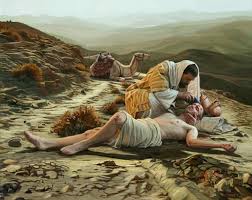
“Blessed are the merciful, for they shall receive mercy”
Matthew 5:7 was the text I preached yesterday. In my sermon, I answered three questions:
Does God show mercy to everyone?
Why does Jesus say “Blessed are the merciful” instead of “Blessed are the faithful?”
What does mercy look like?
In answering that final question, I gave the answer: True mercy gives generously and forgives sincerely in order to increase thanksgiving to God (cf. Rom 15:8-9). In response to the mercies of God (i.e., the gospel), mercy proactively schemes, plans, and prays for the increase of thanksgiving to God by means of our giving to those in need and forgiving those who have offended us. In short, genuine mercy involves giving and thanksgiving in order to cause thanksgiving to God.
If you have struggled with understanding how we can be merciful, or if you—like me—have struggled to be merciful, consider this beatitude which calls us to cry out for mercy, so that we too might be merciful!
Let me encourage you to take some time to read the articles, beginning with Jonathan Leeman’s editorial. Leeman rightly assesses the stock market value of the prosperity gospel and warns us not to buy its goods. Let’s pray that God would open our eyes to see the prosperity gospel pervading our land and enticing our heart, so that we can turn from its idolatrous offerings and find true blessing in Jesus Christ alone.
If you need further reason to read this journal, consider Leeman’s insightful editorial: Continue reading →
On Sunday I preached from Romans 1:16-32. Earlier this summer I preached from Romans 1:16-17. Last year, I preached from Romans 1:1-7. In each instance, I found great help from John Stott.
For those unfamiliar with Stott’s work, he was an evangelical Anglican who during the latter half of the twentieth century preached the gospel, championed missions, and published numerous books, especially commentaries on the New Testament. His commentaries are always brimming with insight and full of crisp clear exposition. Thus, I share a few of his remarks on Romans 1:16-20. They helped me unpack Paul’s opening argument about the gospel, and I trust they will help you as well. Continue reading →
Not a week goes by but what the news channels are filled with conversation and debate about sex. On top of the societal changes that swirl around us, legal changes are happening here and abroad. For instance, Germans now have the legal option of putting ‘other’ down as the gender of their ‘intersex’ baby. The Atlantic reports
A new law in Germany creates a third sex category on birth records. It could seem like an obvious solution to some problems of intersex: If some babies are born with bodies that are neither clearly male nor female, then it seems there should be some category beside “male” or “female.”
This is just one more example of why Christians need to have a deeply biblical understanding of sex, marriage, and gender. It is not enough anymore to believe in ‘traditional marriage’ or gender based on simple biology. In a fallen world, biology is not simple! We must have a deeply theological answer for why God’s image is only male and female, how the Fall can explain the phenomenon of intersex, and how gender is not a social construct but determined by the God who makes us in his image.
These examples are but the tip of the iceberg. To help us get a handle on some of these things, we need to take time to read, think, and study the Scriptures. To help you process some of these things, take a look at the following articles, audio, and video. They are reliable guides to help you walk in the light.
It’s About Scripture, Not Sex. Here are three quotations for Denny Burk’s What is the Meaning of Sex?that represent three divergent views in evangelicalism today. They expose that the divide between Christians who oppose same-sex marriage and those who support it has to do with biblical interpretation, not sexual preference. The latter is always downstream from the former.
What Does He Really Want? Aileen Challies (the wife of Tim Challies) kicks off a series of blogs on the subject of sex at CBMW’s women’s channel. She seeks to deconstruct some of wrong views of sex that Christian women bring into marriage.
Kids and Sex. Pure Hope Ministries reminds parents that is never too young to begin addressing ‘age-appropriate’ discussions about sex.
Parenting Booklet. PureHope Ministries also has a forty-page booklet for parents on how to address the subject of sex with their children. This booklet has an appendix with “age appropriate teaching points.” If you are not familiar with Pure Hope, you should be.
If you have specific questions on this subject, please drop a note in the comments. I’d be happy to put you in touch with appropriate resources.
While America watches prosperity preachers on the new TV series “Preachers of L. A.,” John Piper drives the point home that such ‘Christianity’ is not Christianity at all. It is idolatry.
In opposition to the false claims of riches offered by the prosperity gospel, true Christianity teaches you how to suffer and to say “God is enough.” Any message that offers Jesus as a means to another end—health and healing, wealth and wisdom, or prosperity and pleasure—is a false gospel.
Jesus is the end of the gospel.
He is the pearl of great price. He is worth selling everything to gain, he’s worth losing everything to keep him. He is the center-piece of the gospel, and there is nothing better behind him. He calls himself the door in John 10, but it is not because behind him is a better prize. In him is the fullness of God, and when we enter through him, we come to the Father, who like the Son is the goal of the gospel.
A friend of mine once quipped that when we tell people we are ‘fine,’ we are really saying in code that we are Freaked Out, Insecure, Neurotic, and Emotional (F. I. N. E.). I think he has a point, as ‘fine’ is so often used to cover up deep-seated insecurities and hurt.
Sad as it may be, this is the human condition. We are masters of making fig-leaf coverings. We have lost our original covering of righteousness, and deep down we all know that something is not quite right.
On biblical terms: We are made to bear the image of God’s glory, but in our sin we have fallen short. Therefore, we need restoration to be who God made us to be. In other words, we need to be remade in the image of God. Praise be to God that this is what the gospel of Jesus Christ accomplishes. Consider just a few verses. Continue reading →
Ever walk plan on making a home repair in less than an hour, only to find that four hours into it, the problem has only gotten worse?
Unfortunately, this kind of thing happens all the time.
Faced with the thorns and thistles of our fallen world, we groan under the weight of problems and predicaments that are more difficult than we expect. The same is true with inter-personal relationships.
In marriages, schools, and businesses all over the world, people sin against one another. The result? Conflict! Continue reading →
There has been much recent debate on the nature of the gospel. Did Paul get it right? Or should we look to Jesus to know the gospel? See the panel discussion at the recent TGC Conference: Did Jesus Preach the Gospel?
Taking a biblical-theological approach, the gospel is best understood when we look at all that the Bible has to say about the subject. This includes the proto-gospel preached to Adam (Gen 3:15), the gospel preached beforehand to Abraham (Gal 3:8), the good news which David celebrated in the Psalms (esp. 40:9; 68:11; 96:2), and the good news announced by Isaiah (40:9; 41:27; 52:7; 60:6; 61:1) and the other prophets (Nahum 1:15; Joel 2:32). Likewise, to rightly discern the meaning of the gospel to the early church we must look at its multiple uses in the gospels, letters, and John’s singular use in Revelation 14:6.
In this fabric of gospel theology, it is important to remember that God has given us four inspired accounts of the gospel. These don’t stand out as different gospels; nor do they reclaim the true gospel—as some infer. They are rather four accounts of the one true gospel that all the apostles preached. In conversation with the OT gospel promises and the epistolary explanations of the gospel, the four gospels give us a message of the person and work of Jesus Christ, the one who stands at the center of the gospel.
Starting yesterday, I began to consider the gospel in the gospels, or better the gospel according to the ‘gospelists’–Matthew, Mark, Luke, and John. Continue reading →
UPDATE: On the basis of a few comments and further reflection, here is an updated outline of the chiasmus in Matthew 3-4. What do you think?
In preparation for Sunday’s message, I came across some themes in Matthew 3:1-4:17 that seemed to present themselves as a conceptual chiasmus in Matthew’s gospel. The issue revolves around the identity of Jesus, which the whole point of Matthew’s writing and the point he is trying to make early on in his gospel.
What I noticed is that in chapters 3-4 is that Matthew seems to pit John’s testimony about Jesus against Satan’s questions to Jesus. The former affirms the sonship of Christ and prepares the way (3:3) for the Father to declare his unconditional approval of the son (3:17). By contrast, Satan takes the word of God and twists it back against Jesus so that, he questions Jesus identity with it (4:1-11).
In the end, John’s testimony proves true as Jesus abides in God’s word (4:4, 7, 10) and resists the temptation of the devil. In the end, John’s proclamation of the kingdom’s nearness (3:2) is confirmed by Jesus’ devotion to the Father. Therefore, Matthew records Jesus’ announcement of the kingdom, which nicely concludes this section of his gospel (4:17).
Here is my conceptual outline below. Would love to hear your thoughts. Continue reading →
This week, I have been thinking about (and blogging about) ‘hospitality evangelism.’ A good friend and former seminary classmate, Matthew Wireman, pushed back via Twitter—that vast forum for nuanced perspectives—and said why not just call “hospitality evangelism,’ ‘hospitality.’ Rightly, he insisted that all hospitality should include gospel conversation and that we should not see hospitality as the new door-to-door program, where we invite people in only to give them a fiery invitation to repent of their sins and turn to Jesus. We should in essence always be hospitable, without any other motive.
Or at least, that is what I took him to mean from his 140 characters.
So, should we drop the label ‘hospitality evangelism’ and just go with ‘hospitality,’ trusting that people will catch the drift and will focus on bringing Christ into the conversation? Or should we teach our people to combine hospitality and evangelism, whether or not they use the label ‘hospitality evangelism’?
Here are a few reflections on that question and the need for evangelicals to remember what hospitality and fellowship really are. Continue reading →
 “Blessed are the merciful, for they shall receive mercy”


 Via Emmaus