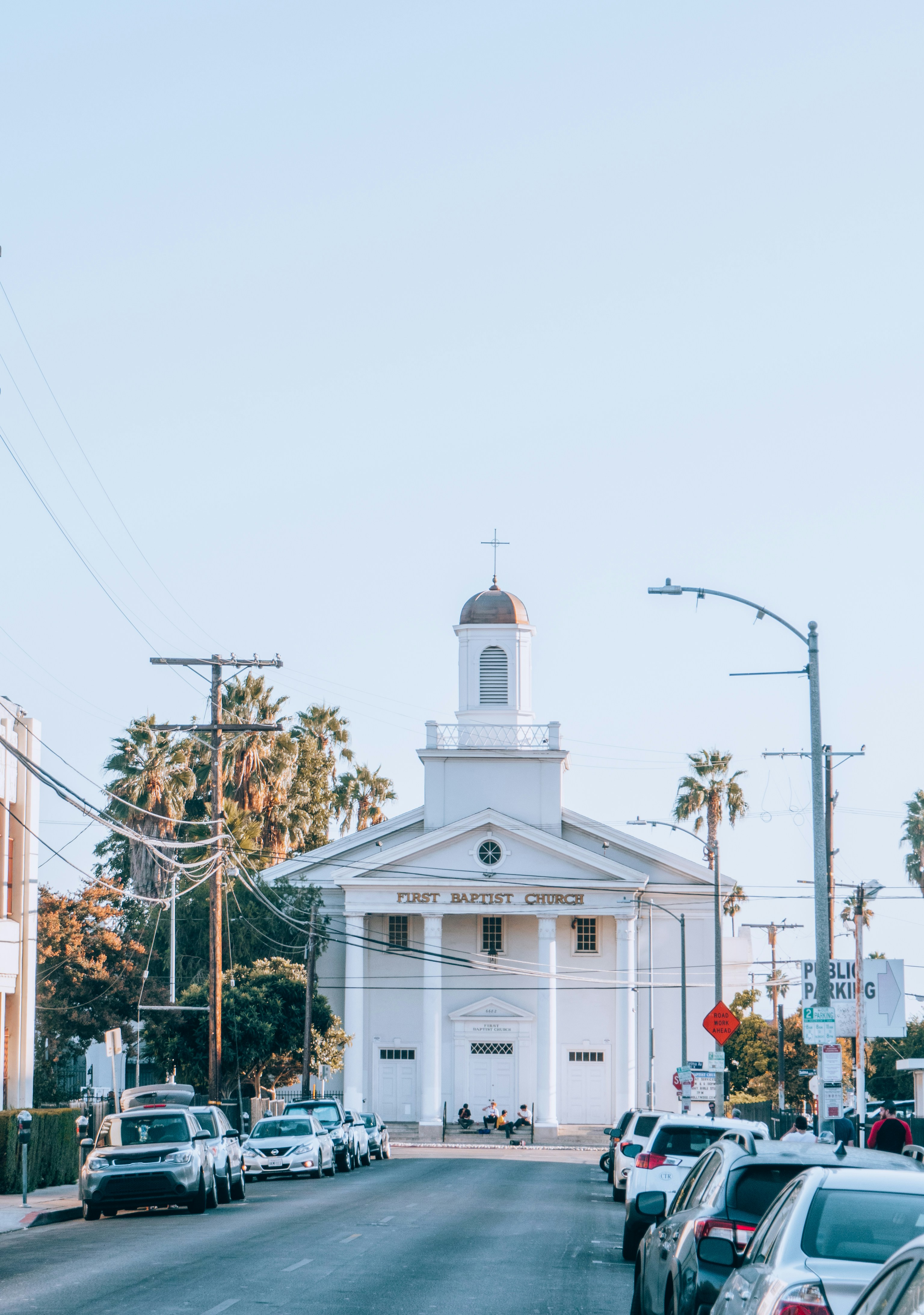
The New Church Down the Street: How Churches and Church Plants Can Love One Another

vlah-dumitru-qx7RXtIKpAE-unsplashYou think of how many church plants, unfortunately, often happen today. Maybe they happen just down the street of another church that agrees with them entirely in their theology. And you think, well, maybe we should have had a conversation before you started a church just down the street. Was this going to be a conversation? What’s going on here? (Caleb Morrell)

When I moved to Chattanooga, Tennessee in 2002, I spent the first six months of my tour there in church parsonage situated in Ringgold, Georgia. Driving from the church where I worked to the home where I lived I must have passed a dozen Baptist churches. Coming from Michigan, I was astounded at the number of Baptist churches in East Tennessee. Sort of like Bubba in Forest Gump, there were Southern Baptists, Fundamental Baptists, Independent Baptists, Missionary Baptists, and Primitive Baptists—not to mention all the Baptists who were ashamed to call themselves Baptist.

Speaking with only a slight sense of hyperbole, there was a Baptist Church on every street. And sometimes right across the street. I mentioned my living quarters above because on the road to my house there two Baptists churches—Salem Baptist and New Salem Baptist. The actual name of the church has been changed to protect the (not so) innocent parties.

Driving past those churches I always wondered what the backstory was? Was this a church plant, with a new method for evangelism or a worship style? Or more likely, was it a church split? A group from Salem Baptist decided that they knew better and so they formed a committee to start a new church. Yet, instead of finding a location down the road, they took up residence right across from the church.

Now, I don’t know what actually happened and it may not be anything like what I imagined, but even if this story was entirely like something that came from the mind of Joseph Bayly, it would caricature a real problem—churches begun without any consideration for their neighbors. Indeed, for all the healthy ways churches plant churches, there are also unhealthy church plants that actually undermine the testimony of the gospel in a given area.

As I mentioned a few weeks ago, I found myself in such a situation in 2015. And I am grateful to God that he prevented our band of eager church planters from starting something that have been born with a spirit of competition. Indeed, with the perspective of hindsight and from a number of recent conversations with pastors and aspiring church planters, I am increasingly convinced that too many church plants are begun in ways that compete with other local churches.

Yes, God loves to grow his church and to plant new churches even in places filled with churches. Yet, as Ecclesiastes 8:6 has said, there is a proper time and procedure for everything under heaven, and that includes planting a church. And so, in light of a recent conversation with Caleb Morrell on the importance of Baptist associations, I want to republish some of his remarks from our podcast and then offer four brief reflections on how church plants can love their neighbors by working together with other churches. Continue reading

A Primer on Elder-Led Congregationalism

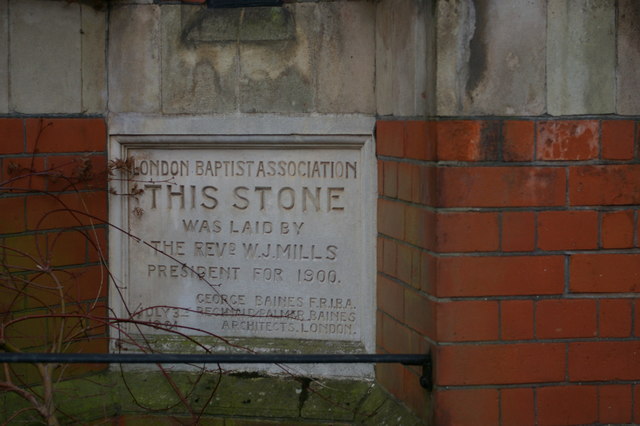
Foundation stone, Muswell Hill Baptist Church

Sometime in seminary, my ecclesiology class was tasked with defining a biblical view of church polity. Here is that paper, refined and updated. It argues for an unmistakably Baptist reading of the Bible, as it conjoins congregational authority with elder leadership.

*******

Should the church be congregational or should it be led by a plurality of elders?

This oft-debated question finds its difficulty in the fact that both approaches find substantial biblical support. So the question, “What does the Bible say,” does not sufficiently lead to a one-sided resolution. To answer this question, the first thing that must be seen is the asymmetry implicit in the question. Congregationalism pertains to authority. Plurality of elders concerns leadership. Together, it is vital to recognize that authority and leadership are not synonymous, and that, in fact, God has wisely designed authority and leadership to be distributed through the church, even as the church recognizes and submits to appointed elders.

Therefore, even though many Baptist churches elevate congregationalism over, and at the expense of, elder leadership (i.e., congregational democracies) and other Presbyterian churches elevate elders over the congregation (i.e., elder ruled), it is best to have congregational authority and elder leadership, or so I will argue. Continue reading

Who is in Charge? Two Competing Visions of Church Authority

pexels-photo-272254.jpeg

In recent years and hours, lots of discussion has been given to the subject of authority. Who has authority to close the Southern border? Who has authority to mandate vaccines? Who has authority to teach children about the birds and the bees? Who has authority to close churches or constrict their practices? And in the church, who has authority to rule the congregation (1 Tim. 5:17). Is it the congregation? The elders? One elder? The most vocal or influential members? Or some combination?

Who has authority?

Of all the books I have read on the subject, the one that is most promising (I’m still reading it) is David Innes’ book, Christ and the Kingdom of Men: Foundations for Political LifeIn a section on understanding differing spheres of authority, Innes describes authority in the church. He writes,

[C]hurch government has its authority from Christ. The apostles of Christ appointed the original elders in the first churches. The apostle Paul instructed his legate Titus to “appoint elders in every town” (Titus 1:5). They are ministers of Christ who must give an account to Christ (Heb. 13:17). In the first centuries of the Christian church, civil governments were pagan, as they are today in many lands where Christ has gathered his people, and so they could not have had an organizing or overseeing role in the formation of the churches. (32)

Underscoring the source of church authority coming from Christ, Innes turns to the way churches should not receive their authority from the state. “Over many centuries, churches have had to resist civil authorities’ attempts to exert control over church leadership” (32). Indeed, in our day this is a lesson we have had to relearn. As Western civilization has rejected Christ, other gods have filled the void. And we have already seen how the god of statism is rising to power.

At the same time, however, challenges between church and state are not the only place we have a conflict in authority. We also find difficulty in understanding how the church and the self are to be related. Interestingly, Innes includes the “individual person” in his list of spheres. He explains,

It is odd to think of each individual person as a sphere of authority, but there is a God-given authority that one has over oneself. God’s creation mandate for everyone without distinction of rank or role to exercise dominion in vice-regency communicated God’s moral expectation that people would govern themselves and their personal affairs in righteousness. Self-government at this level is the moral responsibility of every human being and thus the moral right of every adult. (30)

While we mostly think about authority at the level of institutions (e.g., family, church, state), self-governance, or what Scripture labels “self-control,” is a sphere of sovereignty. God has given each image-bearer a body, and those bodies can be used as instruments of righteousness or wickedness (Rom. 6:12–23), and thus we must learn to glorify God with our bodies (1 Cor. 6:20). Such glorification certainly includes sexual purity (1 Cor. 6:12–20), but it would also include the way we use our tongues (James 3), minds (Rom. 8:7; 12:1–2), shoulders (Ezek. 34:21), and fingers (see all the bodily features of sin in Romans 3:10–19). Long story short, we must learn to govern ourselves and to say no to the sinful impulses that rise up within us (James 1:13–15). Yet, this is exactly where the modern church is struggling. Continue reading

Why the Lord’s Supper Requires Baptism: A Typological Approach

religious artwork

Who can take the Lord’s Supper is a question of no little dispute among those who call themselves Baptist (yes, this is a Baptist blogpost). In my estimation, the best answer to the question of baptism and Lord’s Supper goes something like this:

Those who have undergone believer’s baptism (the initiation rite of the new covenant) are permitted to eat at the Lord’s Supper (the continuing rite of the new covenant).

In what follows, I will offer a biblical typology to explain why baptism should precede Lord’s Supper. Rising from the Old Testament, these symbols of the new covenant do not arise de novo from Jesus or apostles. Rather, as we appreciate the Old Testament pattern of water-crossing that leads to feasting in God’s presence, we will see why baptism must precede the Lord’s Supper.

In short, OT “baptisms” are types of the NT baptisms and the Passover is the chief type of the Lord’s Supper. To understand baptism and the Lord’s Supper requires understanding the symbolism of these OT events. But also, because these OT “water crossings” are paired with a meals in God’s presence (e.g., Passover), we see that baptism and Lord’s Supper should also be paired together. This is the basic argument and we will consider it below in four steps, giving primary attention to the way baptism and the Lord’s Supper are informed by the book of Joshua. Continue reading

Why Baptists Do Not Count Infant Baptisms: A Friendly Response to Joe Rigney

vishal-banik-JdMihDkP-vc-unsplashWhen it comes to pastors and theologians who stand strong on the Word, strong against the world, and strong in their wise dealings with complex issues, few compare to Joe Rigney. When it comes to contemporary theologians, therefore, I consider his writing some of the best.

When I visited Minneapolis a number of years ago, I had an enjoyable lunch with him and a few other faculty at Bethlehem College and Seminary. And when he took the reins to lead that school I rejoiced. I am thankful for Joe Rigney and will continue to read his works and point people to his writing.

Yet, for that very reason, when he writes something that not only stands against my theological convictions, but something that confuses some of the sheep in my congregation, it is necessary to reply. In what follows, I will offer a three-point engagement with Joe’s recent piece, “Do Infant Baptisms Count? Reconsidering Open Membership.” To be clear, I am not responding point by point to Joe Rigney, but offering three substantial arguments for rejecting open membership.

While Joe spells his Baptist identity with a lower case B, and I spell mine with a capital B, the point of difference between us is more than grammar. The issues raised by his article range from the local to universal church, from the nature of the new covenant to the membership of new covenant church, and how churches differing on baptism should relate to one another.

These are important matters which have spawned books, pamphlets, and shorter articles. In what follows I won’t offer a comprehensive reply to Joe’s arguments, but I will offer a substantial one. Again, I write this as a friend and admirer of Joe and his labors. But as a pastor and a seminary professor of a school that seeks to affirm the confessionalism of Presbyterians and Baptists, without muddying the waters between them, I offer this rejoinder. Continue reading

What Does Baptism Look Like? Seven Observations from John 3:22–36

baptism_of_st_paul_-_capela_palatina_-_palermo_-_italy_2015-2“Look, he is baptizing, and all are going to him!”

— John 3:26b —

In John 3 a dispute about baptism arose between the disciples of John the Baptist and a Jew. While unnamed, this Jew caused an existential crisis for the followers of John. So great is their concern about purification, baptism, and the rise of Jesus, they run to their teacher and point to his baptism. Verse 26 captures their concern: “Rabbi, he who was with you across the Jordan, to whom you bore witness—look, he is baptizing, and all are going to him.”

In this question about baptism, prompted by a dispute about purification, we find an analogue to modern debates about this biblical ordinance. Today, there are questions related to the mode, the subject, and the place. That is: Does sprinkling or pouring count as baptism? What about sprinkling a believer? Or immersing an infant? (See video below). Does a private baptism between friends qualify? And how should we understand the difference (or similarities) between the initiating rite of the old covenant (circumcision) and the initiating rite of the new covenant (water baptism)? All these questions and more need biblical answers.

[The Greek Orthodox remind us that baptizō means immersion, plunging, dipping].

Over the last few years, I have written multiple articles on baptism in the Bible and its pre-requisite for membership in the church. As an unashamed Baptist, who affirms the historical confessions of London, Philadelphia, New Hampshire, and Nashville, I will continue to write on the subject. Why? Because baptism continues to come up in conversation with visitors and others who are thinking about membership at our church.

With that in mind, I offer another exegetical take on baptism—one that comes from John’s Gospel and the dispute about baptism found therein. Following the imperative to “Look!” we will look at what John says about John’s baptism, Jesus’s baptism, and the conversation in John 3 about the new birth, baptism in the Spirit, and the practice of baptizing repentant believers. So, with this visual approach to John 3, I offer seven things we see about baptism. Here’s the list; explanations will follow.

  1. Baptism is performed in public with a group of witnesses.
  2. Baptism requires biblical discernment.
  3. Baptism is handled by Jesus’s disciples, not Jesus.
  4. Baptism is always by immersion.
  5. Baptism requires people to seek water.
  6. Baptism leads to disputations.
  7. Baptism requires humility.

Continue reading

Built on the Word: A Theological Vision for Ministry (Audio and Handouts)

Built on the Word

In February, our church joined with Redeeming Grace Church (Fairfax) and Grace Church (Gainesville) to host a seminar on doing ministry built on the word of God.

In an age when churches are experimenting with all sorts of new methods for doing ministry (and I’m not just talking about Zoom), it is our conviction that ministry should be built from floor to ceiling on the word of God. This two-day seminar sought to equip leaders in our respective churches by giving them an historical, theological, and practical guide for doing church ministry with God’s Word, all for the purpose of making disciples.

Here are the messages and handouts produced in that seminar. If building your ministry on the Word matters to you, these resources may be a help.

Introduction: How can we connect our faith and practice?

Session 1: What did we inherit? The Church: Universal, Local, Ancient, and Modern

Session 2: On what do we stand? Sola Scriptura and the Sufficiency of God’s Word

Session 3: What are we to do? Making Disciples Amidst the Idols of Our World

Soli Deo Gloria, ds

Photo Credit: Redeeming Grace Church

Blessed Are the Peacemakers: Six Old Testament Lessons for the New Testament Church

jonathan-farber-_lpQA9ox6IA-unsplash.jpgWhen the Western tribes of Israel heard that Reuben, Gad, and the half tribe of Manasseh built an altar near the Jordan River, they were ready to go to war (Josh. 22:10–12). This altar threatened God’s favor on Israel, and the obedient sons of Israel were ready to act. Fortunately, before they took up swords against their brothers, they sent a delegation to inquire about this altar.

This peace-keeping mission is what Joshua 22:10–34 describes, and in these verses we find a tremendous model for peace-making in the church today.  In what follows, we will consider six priorities for genuine reconciliation.

Six Priorities for Peace-Making 

First, peace requires a faithful (high) priest.

When the Western tribes learned of the altar, they gathered at Shiloh to make war. Only before proceeding on that path, they sent a priest by the name of Phinehas. Phinehas is well-known to us because of his actions in Numbers 25. There, he atoned for the sins of the people by taking a spear in his own hand and killing Zimri and Cozbi. This appeased God, ended the plague brought on by Israel’s sexual immorality, and proved Phinehas’s faithfulness as a priest.

Now, following his lead, the delegation of Israel went to inquire of their brothers. What becomes apparent in this peace negotiation is that these brothers acted in faith and did not sin against God or them. Thus, a faithful priest was necessary for making peace. Only now with the split between the tribes of Israel, peace is made by putting the sword down and not going to war. The lesson in this is that faithful priests knew how to divide clean and unclean (Lev. 10:11). Phinehas excellence, therefore, is proved by his ability to make this decision.

At the same time, it is vital to see that a priest is still needed to make peace. In the new covenant, Christ is the peace of his people, one who has made peace by his cross and one who preaches peace to those far and near (Eph. 2:14–17). Moreover, Jesus lives to intercede for his brothers (Heb. 7:25). Thus, the unity of the church is preserved by Christ and his priesthood.

Likewise, Jesus as our great high priest also teaches God’s people how to be priests to one another. As Matthew 5:9 says, those who make peace prove themselves to sons of God, which is to say, they prove themselves to be faithful priests in God’s household. (Faithful sonship was always the source of true priesthood). Today, if the church has any unity, it is because Christ is the one who is mediating the new covenant and praying effectively for his people to become peace-makers. Continue reading

Old Testament Instruction for the New Testament Church: 10 Things About Joshua 22

michel-porro-vfaFxFltAvA-unsplashWhen we think about finding help for practical matters in the church, 1 Corinthians and 1 Timothy are books that come to mind. However, Joshua should be added to the list of places we go to find help for practical ecclesiology. In this list of ten, we will see how Joshua 22 fits into the book of Joshua. And from its place in the book of Joshua, we will see at least five ways this chapter informs a variety of church matters.

1. Joshua 22 begins the fourth and last section of Joshua.

In Joshua there are three or four major sections, depending on how you organize the book. But however you arrange it, Joshua 22 begins a new section, one composed of three concluding assembles. As Dale Ralph Davis puts it,

Observe that each of these last three chapters begins when Joshua summons (Hebrew, qara’) Israel or some significant segment of it (22:1; 23:2; 24:1). Thus the book closes with three assemblies of the people of God. Remember that all this immediately follows the heavy theological text, 21:43-45, which emphatically underscores Yahweh’s fidelity to his promise.

By contrast, chapters 22–24 are preoccupied with the theme of Israel’s fidelity to Yahweh (22:5, 16, 18, 19, 25, 29, 31; 23:6, 8, 11; 24:14-15, 16, 18, 21, 23, 24).’ Hence the last three chapters constitute the writer’s major application: Israel must respond in kind to Yahweh’s unwavering faithfulness. Willing bondage [think: Paul’s use of the word doulos] to this faithful God is their only rational and proper response. The logic is that of the ‘therefore’ of Romans 12:1 as it follows the divine mercies of Romans 1-11. In principle it is the same as ‘love so amazing, so divine, demands my soul, my life, my all.’ (Joshua, 169–70)

Davis’s observation about these three assemblies is most helpful for establishing a link between Israel living in the land and God’s people living before God today. Thus, we can be sure that these chapters are meant to help churches walk together in covenant unity.

Continue reading

A City on a Hill: What the Levitical Cities Teach the Church About Glorifying God Together (Joshua 20–21)

joshua07

A City on a Hill: What the Levitical Cities Teach the Church About Glorifying God

In the Sermon on the Mount, Jesus called his followers a city on a hill (Matthew 5:14–16). This title has often been used to speak of America, as well as other institutions of moral influence. Yet, it is most appropriately applied to the church. This is seen throughout the New Testament (cf. 1 Peter 2), but we also find this idea in the Old Testament.

In this week’s sermon on Joshua 20–21, Israel’s role spreading God’s light to the nations is seen in the cities God established for refuge and instruction. In fact, by learning about the purposes the cities of refuge (Josh. 20) and Levitical cities (Josh. 21), we learn much about God’s purposes for his people. This has historical relevance for understanding the nation of Israel. But it also has theological application for Christ and his new covenant people.

You can listen to this sermon online. Discussion questions are additional resources are available below.

Soli Deo Gloria, ds Continue reading