
Both James Jordan and Alistair Roberts have made a case that the literary structures of Genesis 1 and Genesis 2 mirror one another.[1] As evidenced in Genesis 1:1–2:3, creation took place over the course of seven days—six days of work, one day of rest. Equally, Genesis 2:4–25 follows a similar pattern, as observed below, as does Genesis 3, which Jordan develops in his book Trees and Thorns: Studies in the First Four Chapters of Genesis.
If this reading is correct, then the first three chapters of Genesis give us three parallel events—three weeks that speak of the same creation week. To put it in temple terms, Genesis 1 gives us the creation of the macro-temple, the cosmos; Genesis 2 gives us the formation of the micro-temple, the garden; and Genesis 3 gives us the defilement of the garden which leads to the de-creation of the cosmos, what I might call the massacred-temple.
If this approach is correct, then it not only stresses the seven day pattern of creation, with each chapter following the same basic pattern (see below). But it also situates the first three chapters as following.
- Genesis 1 outlines the full, seven-day creation week (Gen. 1:1–2:3),
- Genesis 2 returns to Day 6 to detail how God created man at the beginning of the day and woman at the end of the day (Gen. 2:4–22),
- Genesis 2:23–25 develops the glory of God’s good creation, as the woman comes to the man when he awakes on Day 7. But it continues to watch that glory turn to shame, as the rest of Day 7 follows the tragic sin of humanity to believe the serpent, eat the fruit, and rebel against God. As a result, man’s first disobedience results in him being cut off from the Tree of Life (Gen. 3:1–24; cf. Rom. 5:12, 18–19).[2]
Following Jordan and Roberts, therefore, I offer the following seven day outline of Genesis 1–3. Let me know what you think and how it might be improved. At the end, I’ll share why reading these chapters in this way matters. Continue reading
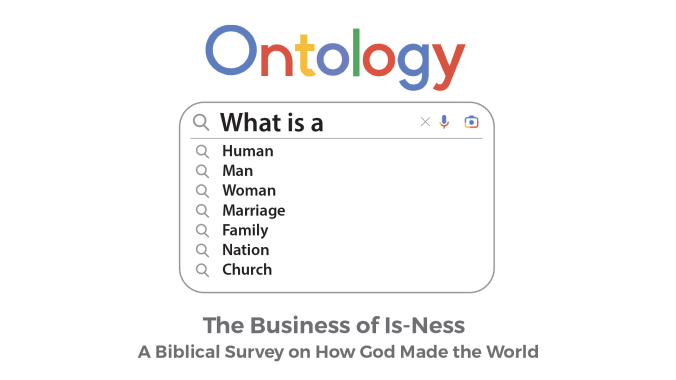 Since 2013, I have taught the doctrine of humanity a half a dozen times. And in each class, I have put this question on the final exam: What is the most important doctrine for the twenty-first century?
 The Lord has established his throne in the heavens, and his kingdom rules over all.
 One of the great questions about the opening chapters of Genesis is the relationship of the two creation accounts. Are Genesis 1 and Genesis 2 two different accounts? From two different sources? Or is there a rhyme and reason for the repetition and ostensible differences between the six days of creation in Genesis 1 and the formation of Adam and Eve in Genesis 2?
 Few places in Scripture are more important, more debated, or more theologically-rich than Genesis 1–11. As to their importance, they introduce the Bible to God and his purposes in the world; as to debate, they were polemical from the start, as Moses wrote these chapters to combat other creation stories in the ancient Near East; and as to theology, these eleven chapters introduce nearly every doctrine found in the rest of Scripture.
 A few years ago, Crossway Books began a series called Short Studies in Biblical Theology. These books are wonderful introductions to various topics on biblical theology. So far they have included,
 Earlier this year,
 Via Emmaus