The Enduring Goodness of Marriage: What the Gospel Has to Say to a Culture of Cohabitation

old-people-couple-together-connected.jpgWith his characteristic biblical insight and cultural engagement, Tim Keller’s book on marriage, The Meaning of Marriageis filled with wisdom and encouragement. Aimed at marrieds and singles considering marriage (and singles who have sworn off the institution), Keller provides a helpful look at God’s design for marriage.

Importantly, he spends the first chapter considering the state of marriage today. He recognizes the way in which marriage has been assailed by the culture, and he makes a cogent argument for the enduring goodness of marriage in a secular age.

It’s from this first chapter, I want to share a few quotations that reflect on the pain of marriage, the enduring goodness of marriage, the perversion of marriage (i.e., how redefined expectations for marriage have twisted God’s original design); and way the gospel brings hope and meaning to marriage.

If these quotes resonate with you, I encourage you to pick up Keller’s excellent book. Continue reading

Marriage: Counter-Cultural in Every Generation

louis-moncouyoux-3615There are many who have read Paul’s instructions to husbands and wives in Ephesians 5:22–33 as an accommodation, or even an appropriation, to the Greco-Roman culture. However, Clinton Arnold in his outstanding commentary on this section, shows why that cannot be true. Taking an extended look at “The Roles of Wives in Roman-Era Ephesus and Western Asia Minor” (pp. 372–79), Arnold shows why Paul’s words are radically counter-cultural—both in his day and in ours.


Writing to a church combatting spiritual powers, Paul is not adopting the idea of patriarchy and headship from the Roman culture. If anything, he is opposing an ancient form of feminism that saw women asserting greater independence. In particular, citing many primary sources, Arnold shows how growing wealth among women, coupled with positions of leadership and the rise of goddess cults all worked to create “freedom and opportunity for women,” which had the effect of creating competition between married men and women (376).

This “new Roman woman,” as Arnold calls it, shows why Paul’s words about marriage and the family in Ephesians are not simply a cultural accommodation. Rather, as he puts it,

Ephesians was thus written to a place and at a time where traditional Greek and Roman roles for women and wives were in a dynamic flux. It is no longer accurate to portray the social-cultural environment as oppressive for women, denying them opportunities for leadership in religious and civic institutions, and extending to them no places of involvement outside of the domestic sphere. Of course, these opportunities would not have been available to most of the peasant and populations. But the same opportunities would have been closed to peasant and slave men as well since their primary focus was on survival. (378)

This is a vast change from the way many have read Ephesians. But we can ask, what significance does this have for our reading of Ephesians? Continue reading

Washed by the Water of the Word: How Paul Applies Ezekiel’s Words on Marriage to Christ and the Church

geetanjal-khanna-81242.jpg

Husbands, love your wives, as Christ loved the church and gave himself up for her, that he might sanctify her, having cleansed her by the washing of water with the word, so that he might present the church to himself in splendor, without spot or wrinkle or any such thing, that she might be holy and without blemish.
— Ephesians 5:25–27 —

In his commentary on Ephesians, Clinton Arnold shows how Paul takes up the imagery and language of Ezekiel to explain the work of Christ in purifying his bride, the church. As Ezekiel 16 looks forward to a day when the God of Israel will redeem and purify his covenant people, it is important to see how Ezekiel’s prophecy is fulfilled by Christ and the church. Thankfully, Paul demonstrates how Christ’s purchase and purification of his bride gives us explicit textual evidence for that fulfillment.

Arnold picks up the way Paul has made those connections and helpfully shows us how the many passages describing God’s marriage with Israel (e.g., Isaiah 54:5; 58:8; 61:10; 62:5; Jeremiah 2:2; 3:1–10; Ezekiel 16; Hosea 2:19–20; 4:12; 5:4; 14:4) are picked up and applied to the bride of Christ composed of Jews and Gentiles. Here’s what he says, Continue reading

Learning to Love One Another: The Gospel, Racial Reconciliation, and Burden-Bearing (Galatians 1–6)

crawford-ifland-86286

Learning to Love One Another: The Gospel, Racial Reconciliation, and Burden-Bearing (Galatians 1–6)

In recent years, it’s been hard to miss our country’s rise in racial tensions. Or maybe we are just seeing what’s been there under the surface all along. Our country seems overwhelmed by all kinds of racialized sentiments. And in the church, Christ’s multi-ethnic bride continues to bear the scars of deep-seated racial division and hurt that goes back decades and centuries.

By contrast, the Bible presents a glorious vision of multi-ethnic worship, centered around the throne of God (see Revelation 5, 7, 21–22). And in Paul’s letters, there is a constant refrain for a diverse people to be unified in the work of Christ and the gift of the Spirit.  

On this point, this Sunday’s sermon focused on the gospel message in Galatians and how it relates to racial reconciliation. From Galatians’ six chapters, I drew out six gospel truths. In six points, we see that Galatians

  1. is all about the gospel;
  2. identifies a kind of division (in the church) that denies the gospel;
  3. proclaims a gospel that is international in scope and content;
  4. prioritizes faith as the fundamental community marker;
  5. teaches those who have been justified by faith alone to be passionate about justice;
  6. and calls the gospel community to seek justice in love, service, and burden-bearing to one another.

This sermon marks the second time I’ve preached on this subject. (The first was a biblical theology of race). As before, this subject is an incredibly heavy one, and one that still raises more questions than I have answers. That being said, the gospel of Jesus Christ is the answer that can give hope and help to the body of Christ bruised and broken by racism.

My prayer is that God would use this sermon as one small step to help our church grow as community compelled by the vision of Revelation and led by the directions of Galatians (and the rest of Scripture). May God bring healing to his church and may the power of gospel be see in multi-ethnic communities of faith. You can listen to the sermon online. Discussion questions and further resources are below.  Continue reading

Nine Spiritual Disciplines from Charles Octavius Boothe (1845–1924)

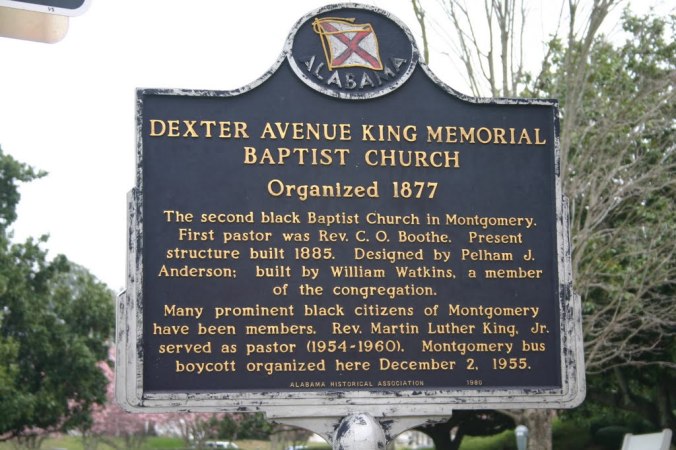
dexter avenueAs our church finishes up a month-long study on the spiritual disciplines—personal and public—I turn to Plain Theology for Plain People by Charles Octavius Boothe (1845–1924). In chapter 6, entitled “How Christians Should Live and Labor,” Boothe lists nine “spiritual disciplines” that should mark the life of the believer.

In what follows I will introduce the man and his work, as well as the nine spiritual disciplines that should mark every believers’ life. I encourage you, if you are looking for a short, readable book on doctrine that is heavy on Scripture and clear on doctrine, take up and read Boothe’s Plain Theology for Plain People. Continue reading

Abortion: The Witness of the Church throughout History

baby2

Scripture is clear on defending the life of the unborn, but so is church history. So, as we approach Sanctity of Life Sunday, here are a few quotes from church history. From the first century to the twenty-first century, care for orphans and the unborn is a priority of the church (see James 1:26–27).

(Many of these quotations listed below were collected from printed material from CARE-NET, a strategic ministry to women and children; other quotations come from Life News and Eternal Perspective Ministries). Continue reading

Don’t You Want to Thank *Someone*: A Thanksgiving Meditation

As we enter thanksgiving week, it is good to reflect on the nature of giving thanks. Many have observed praise is fundamental to what it means to be human, yet, not all praise honors God in a way he deserves. Therefore, we should consider how we might give thanks and give thanks in a way that makes God the object of our gratitude.

Ingratitude: The Arrhythmia of Man’s Heart

If we think about it, one of humanity’s greatest ‘sins’ is our quickness to complain and our slowness to give thanks. In the Old Testament, Israel was rebuked strongly because of their murmuring. And personally, it happens too often that my own heart moves towards complaint instead of contentment.

In fact, Romans 1:21 indicts all of us when Paul says that part of humanity’s idolatry stem’s from our unwillingness to honor God as God or to give thanks to him.

Sadly, ingratitude is the arrhythmia of every fallen heart. It can only be ‘reset’ by the new birth. When God gives us a new heart, he exchanges our thankless heart for a heart that longs to thank someone.

Indeed, when we are born again God gives us new impulses that beckon us to give thanks; and not just generic thanksgiving, but thanksgiving directed to the One who has given us every good and perfect gift. As we enter thanksgiving week, therefore, it’s good for us to consider the posture of our hearts.

One place to pursue such recalibration is Psalm 111. It is a powerful psalm of thanksgiving that praises God for his creation and his redemption. It calls us to worship him not based on the strength of our gratefulness but on the splendor of his grace. Consider Psalm 111’s words.

Praise the Lord! 
I will give thanks to the Lord with my whole heart,
in the company of the upright, in the congregation.
Great are the works of the Lord,
studied by all who delight in them.
Full of splendor and majesty is his work,
and his righteousness endures forever.
He has caused his wondrous works to be remembered;
the Lord is gracious and merciful.
He provides food for those who fear him;
he remembers his covenant forever.
He has shown his people the power of his works,
in giving them the inheritance of the nations.
The works of his hands are faithful and just;
all his precepts are trustworthy;
they are established forever and ever,
to be performed with faithfulness and uprightness.
He sent redemption to his people;
he has commanded his covenant forever.
Holy and awesome is his name!
The fear of the Lord is the beginning of wisdom;
all those who practice it have a good understanding.
His praise endures forever! Continue reading

What Does Unity in the Church Look Like? Ten Truths from Ephesians 4


deepal-pallav-suthar-198550

And he gave the apostles, the prophets, the evangelists, the shepherds and teachers, 12 to equip the saints for the work of ministry, for building up the body of Christ, 13 until we all attain to the unity of the faith and of the knowledge of the Son of God, to mature manhood, to the measure of the stature of the fullness of Christ, 14 so that we may no longer be children, tossed to and fro by the waves and carried about by every wind of doctrine, by human cunning, by craftiness in deceitful schemes. 15 Rather, speaking the truth in love, we are to grow up in every way into him who is the head, into Christ, 16 from whom the whole body, joined and held together by every joint with which it is equipped, when each part is working properly, makes the body grow so that it builds itself up in love.
— Ephesians 4:11–16 —

Few things are more important for growth as a Christian than learning how to walk in unity with others. And, at the same time, few things more confused than discussions about unity in the church today. Indeed, how many seek Christian unity without the foggiest idea of what Scripture says about the church, and thus they seek unity in the church with definitions and desires formed without the light of Scripture.

Still, unity in the church is a goal that biblical churches must pursue. Jesus prayed for it (John 17), and Jesus died for it (Ephesians 2). And thankfully, Scripture speaks of it in passages like Ephesians 4. Therefore, consider ten truths that we find in Ephesians about what church unity is and is not.

  1. Unity is a gift from God.
  2. Unity is maintained, not created by man.
  3. Unity grows over time.
  4. Unity is most opposed by pride and self-interest.
  5. Unity is a uniquely Christian adornment.
  6. Unity requires a doctrinal center – the gospel.
  7. Unity does not mean uniformity.
  8. Unity depends on grace and gifts.
  9. Unity grows when it is stretched, pressured, and even threatened.
  10. Unity glorifies God and attracts unbelievers.

Continue reading

Praying for the Inner Man: D. A. Carson on Ephesians 3:14–21

huy-phan-100866For this reason I bow my knees before the Father, from whom every family in heaven and on earth is named, that according to the riches of his glory he may grant you to be strengthened with power through his Spirit in your inner being, so that Christ may dwell in your hearts through faith
— Ephesians 3:14–17 —

When I preached through Paul’s prayers a few years ago, I read D.A. Carson’s A Call for Spiritual Reformation: Priorities from Paul and His PrayersIn that book, Carson recounts how we should think about Paul praying for the “inner man” (Ephesians 3:16). That section struck a deep nerve with me, and as I prepare to preach that passage this Sunday, I share it with you.

Most of us in the West have not suffered great persecution, but all of us are getting older. In fact, sometimes we can see in elderly folk something of the process that Paul has in mind. We all know senior saints who, as their physical strength is reduced, nevertheless become more and more steadfast and radiant. Their memories may be fading; their arthritis may be nearly unbearable; their ventures beyond their small rooms or apartments may be severely curtailed. But somehow they live as if they already have one foot in heaven. As their outer being weakens, their inner being runs from strength to strength. Conversely, we know elderly folk who, so far as we can tell, are not suffering from any serious organic decay, yet as old age weighs down on them they nevertheless become more and more bitter, caustic, demanding, spiteful, and introverted. It is almost as if the civilizing restraints imposed on them by cultural expectations are no longer adequate. In their youth, they had sufficient physical stamina to keep their inner being somewhat capped. Now, with reserves of energy diminishing, what they really are in heir inner being is comin out.

Even for those of us who are still some distance from being senior citizens, the restrictions and increasing limitations of the outer being make themselves felt. My body is not what it was twenty years ago. Every time I take a shower, a few more hairs disappear down the drain never to be seen again. I have arthritis in two or three joints; I have to watch my intake of calories; my reaction times are a little slower than they used to be; in a couple years I shall need reading glasses. And someday, if this old world lasts long enough, I should waste away, and my outer man will be laid to rest in a hole 6 feet deep. Yet inwardly, Hall insists, in the inner man, we Christians are being “renewed day by day.”

The Christians ultimate hope is for the resurrection body. But until we receive that gift, it is our inner being that is being strengthened by God’s power. In a culture where so many people are desperate for good health, but not demonstrably hungry for the transformation of the inner being, Christians are in urgent need of following Paul’s example and praying for displays of God’s Mighty power in the domain of our being that controls our character and prepares us for heaven. (184–85)

Few reflections on prayer or the spiritual life have arrested my attention like these words. Why? Because as a man still young in ministry and relatively young in my Christian walk (compared to those who have walked with Christ for 30, 40, an 80 years), I wonder, “Is my outward maturity more a mark of spiritual strength or a good memory? Do I obey the commands of God because faith motivates love, or because disobedience would impugn my reputation?” Continue reading

Ten Things Ephesians Teaches About Christ and his Church

onur-318364.jpg

So that through the church the manifold wisdom of God might now be made known to the rulers and authorities in the heavenly places, . . .
— Ephesians 3:10 —

The ESV Study Bible has a succinct list of ten ways Christ and his Church are related and described in the book of Ephesians (p. 2267). For anyone wanting to dig deeper into what Scripture says about God’s people, Christ’s body and bride, and the Holy Spirit’s temple, the book of Ephesians would be an important starting place. Keep an eye out for these verses (listed below) and you will gain great insight into how Paul understands the church for which Christ died and is now building.

Christ is the head of the church 1:22–23; 4:15; 5:23
Christ is the cornerstone of the church 2:20
Christ is the Savior and sanctifier of the church 5:23, 26–27
Christ gives the church ministry workers 4:11–16
Christ loved and sacrificed himself for the church 5:25
Christ nourishes and cherishes the church 5:29
the church and her members dwell and grow in Christ 2:21–22; 4:15
the church is a means through which God manifests his manifold wisdom 3:10
the church submits to Christ 5:24
the church is Christ’s body, and individual believers are members of his body 1:22–23; 3:6; 4:4, 16; 5:23, 30

Soli Deo Gloria, ds

Photo by Onur on Unsplash