Reading the Bible Better in 2019

podcastlogo

The law of the Lord is perfect, reviving the soul;
the testimony of the Lord is sure, making wise the simple;
the precepts of the Lord are right, rejoicing the heart;
the commandment of the Lord is pure, enlightening the eyes;
the fear of the Lord is clean, enduring forever;
the rules of the Lord are true, and righteous altogether.
More to be desired are they than gold, even much fine gold;
sweeter also than honey and drippings of the honeycomb.
Moreover, by them is your servant warned;
in keeping them there is great reward.
— Psalm 19:7–11 —

On the eve of 2019, I want to share a new podcast that our church will host in the new year. In conjunction with our church-wide Bible reading plan, which is based on Robert Murray McCheyne’s classic plan, we are going to offer a weekly podcast that answers questions from the Bible and helps us to read the Bible . . . . and read the Bible better.

If this blog has been helpful to you over the last few years, perhaps this podcast will also be of interest. My hope is to help our church and those who listen in to read Scripture more and better—which I might define as seeing Christ more clearly and more fully in all of Scripture. As Jesus taught his disciples, all the Scriptures point to him (Luke 24:27; John 5:39). Yet, often we can miss how Scripture points to Christ.

For some time, I have found the most helpful books and teachers are the ones who help me see more of Christ from the whole Bible. In this blog, I have sought to share their observations and some of my own with you. In recent months, I have written very little on this blog as I’ve been finishing up a manuscript on a biblical theology priesthood.

That manuscript will be finished, Lord willing, by the end of January. After that I hope to resume more writing here. Until then, and after, I pray this podcast will serve as a catalyst for conversations about Christ from all Scripture and will complement the biblical-theological writing found on this blog.

If you are interested in listening to this podcast, you can find a button on the right side of my website, a webpage on our church website, and (in time perhaps) we’ll be able to link this podcast to Apple or wherever you find your podcasts.

As the hours tick down in 2018, let me encourage you to make plans to read the Bible in 2019. If you don’t have a plan for reading, consider using McCheyne’s reading plan. If you do have a plan, let me encourage you to read the Bible in community—ideally, in your local church. And if this blog or podcast can be of help to you in reading the Bible and reading it with an eye to Christ, then let me know some of the questions you have as you read Scripture. In print or on air, I will seek to answer them, as we seek to know more of Christ together.

Indeed, God’s Word is an incredible gift to us. May we see it as the treasure it is and shape our lives to read it and read it better, so that our wet be changed by it and our triune God would receive the glory he deserves!

Soli Deo Gloria, ds

Bread and Wine at the Table of a Righteous King (A Meditation on the Lord’s Supper)

MelchizedekDear Church,

You have been invited to covenant meal—a table set in the midst of hostile enemies. Bread and wine are the food and drink of choice. The host is a righteous king who is lives in the holy city Jerusalem, and serves God Most High as a faithful priest.

When you look at your invitation, the RSVP calls you to renounce your idols and acknowledge the greatness of your host. This table, offered freely to you, is set for those who believe God’s promises and refuse to partner with the kings of this world. Indeed, this table does not communicate righteousness. Rather, it is for those who have been justified by faith in the promises of God Most High.

What is this invitation describing?

If you said, the Lord’s Supper, you’d be correct. And if you said Abram’s meal with Mechizedek, you’d also be right. But how can this be?  How can one description point to two events? The answer is that God ordained the Old Testament events of Genesis 14 to prepare the way for Jesus Christ and the covenant he sealed with his blood and celebrated on the night before his crucifixion.

Therefore, just as learning the history of Passover helps us appreciate and apply the Lords’ Supper today, so does learning the story of Melchizedek and his covenant meal. Continue reading

A Kingdom of Priests: Washed, Worshiping, Working, and Witnessing (Exodus 19:6; 1 Peter 2:9)

priestcolorA Kingdom of Priests: Washed, Worshiping, Working, and Witnessing (Exodus 19:6; 1 Peter 2:9)

Are you a royal priest? How do you know? What is a kingdom of priests? And how does that really apply today? Is this title for individuals? Or should it be a community identity?

Many questions swirl around the biblical idea of priesthood. And on Sunday we considered Peter’s words to the church: “You are a royal priesthood” (1 Peter 2:9). In examining his words, we learned that they go back to Exodus 19:6 and come in the context of worship on the mountain God.

By examining Exodus 19:6, therefore, in its original context and comparing it to 1 Peter 2, we were able to learn how God makes a priestly people, what a kingdom of priests do, and how this title of royal priesthood applies to us today.

You can listen to the sermon online. Discussion questions and additional resources can be found below. Continue reading

You Were Made for This: An Introduction to the Priesthood (and Yourself)

priestcolor“You were made for this!”

This phrase seems to be thrown around quite a bit these days: Sports commentators talk this way about athletes; teachers about pupils; mentors about those they coach. In short, it is a way of speaking that comes from a recognized “authority” on someone who is ascending in their field. It is language meant to boost esteem and put everyone on alert, that the next star is rising.

In our celebrity-crazed culture, everyone wants to be special. Indeed “special” is the carrot that has motivated so many to aspire to greatness. I’ve felt this pull and have thanked God that my dreams of athletic glory were mercifully cut short. Still, the hunger for this kind of glory remains.

And it remains with such a strong pull because we were made for glory! Not just some of us, but all of us were made to enjoy and exhibit the glory of God. And thus, until we discover the true source of glory, we will chase glory in vain. Therefore, we must see what Scripture says about the glory of God.   Continue reading

Discipleship and the Church: 12 Quotes from Mark Dever’s Book on Discipling

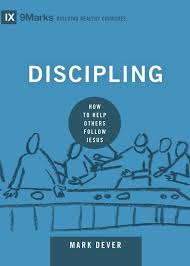
discDiscipling: How to Help Others Follow Jesus by Mark Dever is one of the most practical books on discipling I’ve read on the subject. And the reason why it is so practical is its unrelenting focus on the local church.

While many books on discipleship talk about how Jesus discipled others, or how we can make disciples, Discipling sets discipleship in the context of the local church. More than how-to book for individuals, it persuasively argues that the church is theplace for discipleship. In fact, only as churches disciple will they grow in vitality. And only as discipling takes place in the church will disciples grow in the place designed by the Lord.

Indeed, because this focus on the church is often missed in discussions about discipleship, I would highly commend anyone who cares about the church or the growth of Christians to read this book. This week, our church men’s group will be discussing its contents, and in preparation for that, let me share a dozen or so quotations from Discipling. These quotes highlight the ecclesial nature of discipleship found in Mark Dever’s book, and hopefully they both capture the shape of his argument and whet your appetite to read the book. Continue reading

Salt and Light: What Y’All Are, When You Are in Christ (Matthew 5:13–16)

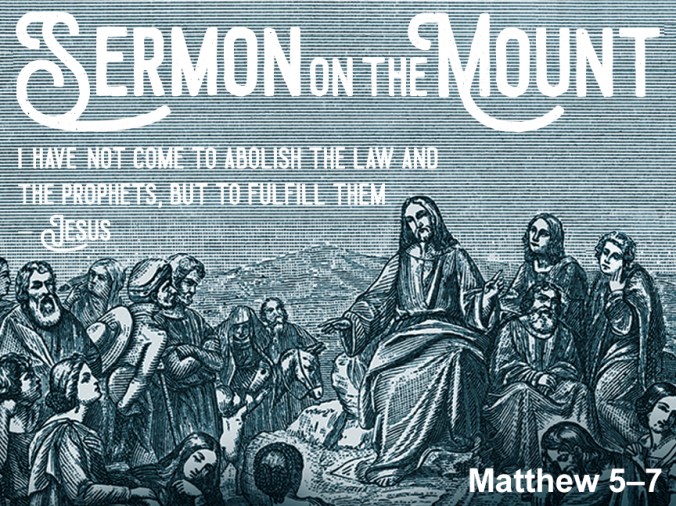
sermon05Salt and Light: What Y’All Are, When You Are in Christ (Matthew 5:13–16)

This little light of mine, I’m goin’ let it shine, let it shine, let it shine.

If you have been around church for any length of time, you’ve probably heard this children’s song. It takes it wording from this week’s passage, Matthew 5:13–16, where Jesus tells his disciples that they are the salt of the earth and the light of the world.

In truth, this is an important passage for understanding who we are. But if we take our cues from this children’s song alone, we might think that Jesus calls us as individuals to be salt packets or lone candlesticks. Yet, the language is clearly addressed to the community of disciples who are following Christ together. And therefore the application is not for individuals, but for the whole community of Christ.

In this week’s sermon I looked at what it means for the church to be Salt and Light. And what we discovered is how Jesus intends his community of faith to be permanent citizens of his kingdom who display covenant faithfulness to his Father in heaven. Such an identity stands in continuity with the Old Testament and against the world around us.

You can listen to the sermon online, Discussion questions are below, as are a list of additional resources. Continue reading

A Hole in Our Holy Temple? Toward a Whole Bible Vision of God’s Dwelling Place

david-rodrigo-336783-unsplash.jpgThe MacArthur Study Bible is a treasure trove for commentary on the Bible. Many weeks in preparation for preaching I look at its notes, and profit from its historical, grammatical, and theological observations. This week, however, as I read its commentary on Haggai, I couldn’t help but notice some biblical data missing from a table on the temples in the Bible.

While not expecting comprehensive commentary in a study Bible, I was puzzled by the way the dispensational theology of the editors may have led them to excise some key biblical data. For those familiar with Simeon Trust, this is a classic example of the framework running over the text—in this case, the text is the whole Bible.

From the looks of it, this otherwise helpful table on the temples in the Bible—well, except for the dispensational stuff, again—has left some significant holes in the Holy Temple. In other words, as the following chart defines the terms, a temple must be “a place of worship, a sacred or holy space built primarily for the national worship of God” (italics mine).

Italicized are two words/ideas that encapsulate the problem. Are temples only built for national worship? What about the heavenly temple where God abides and angels and all nations worship God? Also, must a temple be built with physical materials? What about Jesus’s words in John 2, where he said that this temple would be torn down and he would raise it up in three days? Does built apply to flesh and blood?

What’s missing in this chart are key elements of a biblical theology of the temple, which touches on so many other elements of Christology, ecclesiology, and eschatology. Moreover, even within the chart the definition at bottom does not hold up for all the data given.

So, to fill in the holes, I’ve modified the chart below, explained the distortions in this table, and outlined why five additions should be included in any temple. From this modified chart, we do get a more complete sense of all the temples in the Bible, although I’m still not convinced about the two temples associated with the Millennium. But I’ll save that for another day.

For now, let’s consider all the temples in the Bible. If you can think of another one, please let me know. Continue reading

Fire in the Soul: A Few Reflections from Together for the Gospel 2018

t4g.pngFor the last ten years, God has kindly provided me a season of refreshing every other April in the city of Louisville through a gathering known as Together for the Gospel. When I began going, I lived in that city as I studied at Southern Seminary. In 2010 our family moved fifty miles north to Southern Indiana. And in 2010, 2012, and 2014 I made the hour drive to attend the conference (Living in Northern Virginia, I now find it hard to believe you go 50-miles in under an hour). Twice in those years I drove that distance by myself; soon to see many friends, but alone in my participation from my church.

Like many who attended that conference I rejoiced in the time together, but also lamented the lack of interest from my church.

Fast forward to this year, and I stand amazed at God’s kindness in letting me worship God with 12,000+ people from all over the world and with 20 people from our own church. For three days, it was a joy to hear messages from Mark Dever, H.B. CharlesLigon Duncan, Matt Chandler, and others, but what was most encouraging—most amazing to me!—was sitting in Section 210 with 20 brothers from Occoquan Bible Church. As David sang, “the lines have fallen for me in pleasant places” (Psalm 16:5).

For this last week at T4G, I praise God for his kindness in surrounding me with so many like-minded brothers in Christ. I marvel that 20 men from age 16 to 60-something would be willing to make a 10-hour drive to spend 3 days worshiping God. Little could I have imagined such a fellowship a few years ago, which heightens all the more my anticipation for how God might use the seeds sown last week in the lives of our church.

Here is a sampling of the encouragement we received last week from some of the brothers who went from our church.  Continue reading

Red Carpet Christianity: A Summary and Conclusion to the Book of Ephesians

more-than-we-can-imagine_Red Carpet Christianity (Ephesians 6:21–24)

Since September our church has studied the book of Ephesians. This week, we finished the sermon series with a summary and reflection on Paul’s letter. In particular, I argued that the gospel creates communities of faith that learn how to walk together in love. It’s this love that displays the wisdom of God to the world and that builds up the individual Christian.

To turn it the other way, Ephesians teaches us that individuals need gospel communities (i.e., local churches) to grow in grace and truth. We need one another to grow up in Christ and we need others who model for us what it means to walk in wisdom. This is what we find in Ephesians 5–6, models of godliness in various situations in life.

Still, because the ideals of Ephesians 5–6 are not always found in our homes and workplaces, we also need Christians who have faithfully applied the lines of Scripture to difficult situations. Hence, Christians are built up when they consider the lives of other saints and seek to imitate their faith (Hebrews 13:7). This is a main point in this sermon and one that unites all that we have seen in Paul’s glorious letter to the Ephesians.

You can listen to the sermon online. Information about the individuals mentioned in the sermon can be found below, as well as links to all the previous sermons in this series. Continue reading

Not Quite the End: Five Pastoral Lessons from the End of Ephesians

jakob-owens-298335-unsplashI love the end of Paul’s letters. Why? Because there is so much missions-mindedness in them. For instance, in Romans 16, Paul lists a few dozen of his gospel associates. In Titus 3 he shows how he is making plans for the gospel to go throughout the Mediterranean. And in Colossians 4, he is again speaking of the laborers who are both faithful and dangerous.

This week our church finishes up the book of Ephesians, and again Paul is demonstrating the way that he scheming for the gospel’s advance and shepherding the church in Ephesus he knows and loves. Though the content of Ephesians 6:21–24 is considerably less than other letters, we can see that his closing words do more than just conform to the epistolary conventions of his day.

In fact, there are at least five ways Paul’s closing words in Ephesians 6:21–24 display his pastoral heart. Continue reading