
What is an Election Sermon? An Example and An Argument

On Sunday I preached an election sermon in two parts. Expounding Psalm 2, I considered four vital truths about God’s sovereignty from God’s promise to give his son the nations, and in response I outlined five practical steps to exercising our political stewardship.

In this sermon, I did not endorse a candidate or commend a singular church approved voting guide, but I did name names and identify a vote for Democrats as a sin. But more than just stressing the importance of Tuesday’s election, I attempted to show how a steadfast hope in Christ’s Lordship leads to a life of good works, even political good works such as voting.

And so, I offer that sermon here as one fallible example of an election sermon, followed by an email (now updated) I sent to our church explaining the background of election sermons and why they matter today. Indeed, as I noted in my Saturday blogpost, I have learned a lot about preaching and politics since 2016, and I offer this example and argument for an election sermon as help to any others who are taking the same path.

Sovereignty & Stewardship: An Election Sermon in Two Parts

God’s Sovereignty in Psalm 2

  1. Enrages the Nations (vv. 1–3)
  2. Rules over the Nations (vv. 4–6)
  3. Rewards the Son with the Kingdom (vv. 7–9)
  4. Requires Rulers to Kiss the Son (vv. 10–12)

Our Political Stewardship Today

  1. Think Clearly
  2. Speak Truthfully
  3. Vote Righteously
  4. Pray Earnestly
  5. Gather Faithfully

All told, in these nine marks of an election sermon, I sought to exhort our congregation to trust God and to act accordingly. Here is the sermon.

The Case for Preaching An Election Sermon

Continue reading

Guard the Flock and Contend for the Faith: An Introduction to 2 Peter and Jude

This summer, when the Southern Baptist Convention met in Indianapolis, Daily Wire reporter, Megan Basham, spoke to a packed room of 1000 people. In her speech, which you can now find online, she revealed various ways that pastors, churches, and other ministries have been targeted by well-funded political activists.

More recently, Megan’s book, Shepherds for Sale: How Evangelical Leaders Traded the Truth for a Leftist Agenda, became a New York Times Bestseller, as it uncovers multiple instances of evangelicals compromising their Christian commitment to the truth to have a place at the world’s table.

In eight chapters, she highlights how false teaching has been brought into the church. These issues include making climate change a Christian mission, opening borders to permit illegal immigration, diluting the pro-life movement, hijacking Christian media, employing the church to promote COVID protocols, preaching Critical Race Theory, refusing to call homosexuality a sin, and weaponizing the claims of sexual abuse.

Sadly, these eight subjects are not just matters that we find outside the church. All too often, they have been brought into the church, and they have been brought into the church by otherwise faithful pastors. Megan’s book highlights these compromises, documents their sources, and calls on faithful Christians to stand against these progressive trends.

Not surprisingly, her book has book has received a great deal of pushback. Yet, what is surprising is how evangelical leaders, including popular authors and one former SBC president, instead of admitting errors have doubled-down and repudiated Megan’s claims. It appears repentance is hard to come by these days, even among those who preach the gospel.

For my part, I have appreciated Megan’s book because it resonates with what I have seen up close and personal. I can count close to ten individuals named in this book who I know personally. And her reporting puts one place what I have seen over the last decade—once faithful friends compromising with the world in small or great ways. To give one example, my former Sunday School teacher, the Dean of the Theology School at Southern Seminary, and the man who signed both of my seminary diplomas is now partnering with an organization (Evangelicals for a Diverse Democracy) that is sponsored by an Interfaith organization led by an American Muslim. If that does not evidence Christianity astray, I don’t know what does.

Long story short, the weakness of the church in America today has not happened by accident alone. It is has also been planned by outside agitators who are looking for Christians willing to sell their birthright for a bowl of stew (Gen. 25:29–34). And sadly, many evangelical leaders have done just that. Megan’s book chronicles the last decade to show how this has happened, and Christ Over All recently sat down with her to discuss her book and why it matters for local churches.

I would encourage you to listen to our podcast and then, if time and interest allows, read (or listen) to her book and pray for the church in America. Every month, we gather on the third Wednesday to pray and one of repeated prayers is for revival to come to America. Yet, such revival will not come until repentance is led by church leaders. Judgment, Peter says, begins with the household of God (1 Peter 4:17). And to be sure, the Spirit, in order to build an unshakeable kingdom (Heb. 12:25–29), is shaking the church in America today.

So, let us pray that he grants us grace and pleas for mercy (Zech. 12:10), even as God exposes many faults in his churches. Today, as in every generation, churches need pruning. And so, let us not despise the discipline of the Lord, but let us trust him and see his lovingkindness in it. Continue reading

Wide are God’s Mercies: Giving Public Praise to Our Lord for His Ongoing Work at Our Church

nathan-dumlao-KYiGu8qqEcM-unsplashMy companion stretched out his hand against his friends; he violated his covenant. 21 His speech was smooth as butter, yet war was in his heart; his words were softer than oil, yet they were drawn swords. 22 Cast your burden on the Lord, and he will sustain you; he will never permit the righteous to be moved.
– Psalm 55:20–22 –

Recently, I received an email that brought to mind a dozen or so events from the last ten years. The email was intended to lay charges against our church, myself, and my fellow elders. And, in a world that offers multiple perspectives, those accusations are certainly one interpretation. However, as we learn from Proverbs 18:17, “The one who states his case first seems right, until the other comes and examines him.”

Today, I have no interest in examining the charges made. They have been examined often over the last six months and before, but I do have an interest in giving thanks to God for the charges that have been made and for the events they recall. For in fact, all of things that were brought to light are, from another angle, testimonies of God’s grace. And thus, I want to give public praise to God for all the ways that his mercies have been made new over the last decade.

When Paul defended himself in 2 Corinthians against the charges of the super-apostles, he boasted in his weaknesses. In what follows, I will do much of the same. But more, I will boast in the kind and loving work of God in a local church that was once featured negatively in a book by Nancy Pearcey.

As with all local churches, ours is made up of members who have feet of clay. And yet, with clay feet we are learning to walk with our Lord, and looking back on the last three decades, God has demonstrated his mercy and grace again and again. And for that reality, I am profoundly grateful. And I share these ten reflections as a testimony to the wideness of God’s of God’s past mercies, which funds the promise of future grace.

Continue reading

The New Church Down the Street: How Churches and Church Plants Can Love One Another

vlah-dumitru-qx7RXtIKpAE-unsplashYou think of how many church plants, unfortunately, often happen today. Maybe they happen just down the street of another church that agrees with them entirely in their theology. And you think, well, maybe we should have had a conversation before you started a church just down the street. Was this going to be a conversation? What’s going on here? (Caleb Morrell)
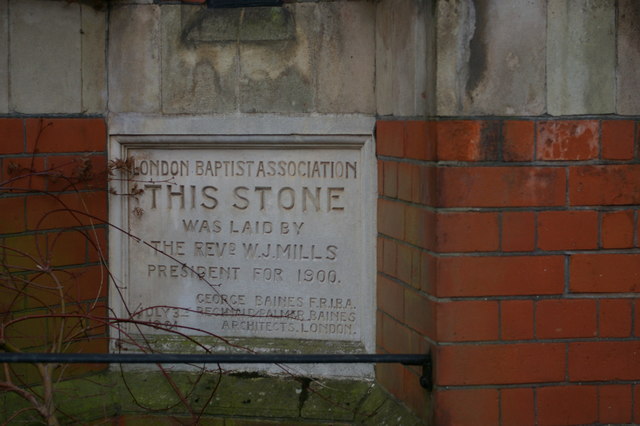

When I moved to Chattanooga, Tennessee in 2002, I spent the first six months of my tour there in church parsonage situated in Ringgold, Georgia. Driving from the church where I worked to the home where I lived I must have passed a dozen Baptist churches. Coming from Michigan, I was astounded at the number of Baptist churches in East Tennessee. Sort of like Bubba in Forest Gump, there were Southern Baptists, Fundamental Baptists, Independent Baptists, Missionary Baptists, and Primitive Baptists—not to mention all the Baptists who were ashamed to call themselves Baptist.

Speaking with only a slight sense of hyperbole, there was a Baptist Church on every street. And sometimes right across the street. I mentioned my living quarters above because on the road to my house there two Baptists churches—Salem Baptist and New Salem Baptist. The actual name of the church has been changed to protect the (not so) innocent parties.

Driving past those churches I always wondered what the backstory was? Was this a church plant, with a new method for evangelism or a worship style? Or more likely, was it a church split? A group from Salem Baptist decided that they knew better and so they formed a committee to start a new church. Yet, instead of finding a location down the road, they took up residence right across from the church.

Now, I don’t know what actually happened and it may not be anything like what I imagined, but even if this story was entirely like something that came from the mind of Joseph Bayly, it would caricature a real problem—churches begun without any consideration for their neighbors. Indeed, for all the healthy ways churches plant churches, there are also unhealthy church plants that actually undermine the testimony of the gospel in a given area.

As I mentioned a few weeks ago, I found myself in such a situation in 2015. And I am grateful to God that he prevented our band of eager church planters from starting something that have been born with a spirit of competition. Indeed, with the perspective of hindsight and from a number of recent conversations with pastors and aspiring church planters, I am increasingly convinced that too many church plants are begun in ways that compete with other local churches.

Yes, God loves to grow his church and to plant new churches even in places filled with churches. Yet, as Ecclesiastes 8:6 has said, there is a proper time and procedure for everything under heaven, and that includes planting a church. And so, in light of a recent conversation with Caleb Morrell on the importance of Baptist associations, I want to republish some of his remarks from our podcast and then offer four brief reflections on how church plants can love their neighbors by working together with other churches. Continue reading

A Primer on Elder-Led Congregationalism

Foundation stone, Muswell Hill Baptist Church

Sometime in seminary, my ecclesiology class was tasked with defining a biblical view of church polity. Here is that paper, refined and updated. It argues for an unmistakably Baptist reading of the Bible, as it conjoins congregational authority with elder leadership.

*******

Should the church be congregational or should it be led by a plurality of elders?

This oft-debated question finds its difficulty in the fact that both approaches find substantial biblical support. So the question, “What does the Bible say,” does not sufficiently lead to a one-sided resolution. To answer this question, the first thing that must be seen is the asymmetry implicit in the question. Congregationalism pertains to authority. Plurality of elders concerns leadership. Together, it is vital to recognize that authority and leadership are not synonymous, and that, in fact, God has wisely designed authority and leadership to be distributed through the church, even as the church recognizes and submits to appointed elders.

Therefore, even though many Baptist churches elevate congregationalism over, and at the expense of, elder leadership (i.e., congregational democracies) and other Presbyterian churches elevate elders over the congregation (i.e., elder ruled), it is best to have congregational authority and elder leadership, or so I will argue. Continue reading

A Dangerous Calling (pt. 4): Embracing Obscurity and Seeking a Received Ministry

young shepherd leading herd

So far, in this practical exposition of 1 Kings 1–2, I have made four points concerning seeking the kingdom of God righteously and serving the Lord wisely. Those four points include

  1. We should not seek positions in ministry; we should seek the righteousness to receive such a place of service. Instead, . . .
  2. We should abide by the word, and wait for an invitation to serve.
  3. When kingdom-seekers exalt themselves, their ambition follows a discernible pattern.
  4. When you see false ‘kings’ exalting themselves, humble yourself and seek the true King.

And now, I want to consider a fifth point, namely, that

5. Until the Lord calls us to serve him, we should embrace obscurity and wait upon the Lord.

More completely, we should serve the Lord where he plants us and beware of pining for something larger, greater, or more visible. Instead, we should master the imperatives of the Bible, be mastered by the truths of the Bible, and grow in a knowledge of our Master, the Lord Jesus Christ. Indeed, there is no better way to prepare for ministry than humbly submitting to the Lord and learning to wait on him. This is something we all must learn, as the Lord matures us in Christ and prepares us for ministry. Continue reading

So You Want to Start a Church: Four Words to Impassioned Church Planters

ian-schneider-TamMbr4okv4-unsplashNow Barnabas wanted to take with them John called Mark. But Paul thought best not to take with them one who had withdrawn from them in Pamphylia and had not gone with them to the work. And there arose a sharp disagreement, so that they separated from each other. Barnabas took Mark with him and sailed away to Cyprus, . . .
– Acts 15:37–39 –

In my computer files, I have a folder titled “New Covenant Baptist.” And within its contents, I have a handful of articles, agendas, and ideas dating back to April and May 2015. In those uncertain months, I gathered with a handful of earnest Christians who had just decided to leave the church where I pastored.

For nearly six years I served as the senior pastor of a church in small town Indiana. But for reasons I have shared elsewhere, my doctrinal convictions did not find a happy home in that assembly of the saints. Moreover, as I look back, there were elements of my ministerial passions that did not make my service a good fit. Almost a decade later, I am grateful for the time I spent at that church, and for the relationships the emerged from that season. All the same, I recognize that their new pastor is a much better fit.

This is how ministry goes and how churches grow.

Just as God planted a garden in Eden, so he plants churches all over the world, and in these churches, he guards and grows his saints. Sometimes, those branches abide in Christ and in a specific local church for generations. But sometimes, he uproots the Christian and grafts him or her into another garden (i.e., another local church). This is true for members, as well as pastors. And it is all part of God’s wise plan to mature his saints.

When Sharp Disagreements Lead to Church Plants

At the same time, this seasonal change is not always as easy as seeds blown on the wind,  finding fertile soil, and beginning to bear fruit. No, as the story of Paul and Barnabas illustrates (Acts 15:36–41), there are often painful separations that divide genuine believers. And in 2015, that is what happened. And in response, a handful of earnest Christians began to meet and pray and talk about the need for starting a new church—one that, in their mind, would be better and more biblical.

At that time, those of earnest Christian were looking for a church that could not be found in the town we lived. And so we began asking the Lord if we should start a new church, and along the way we asked other questions, too. Are there churches in our area that preach the gospel? That practice biblical membership? That have a plurality of elders? Are there churches that would help us plant, or, would this be a solitary effort? And most importantly, what are we, under God, hoping to create? And, what makes this church different?

Looking at my notes, we didn’t ask two critical questions: How would this church impact other local churches? And how might our recent departure from another church misshape the planting of this church? More on that below.

More introspectively and missionally, we sought to take an honest look at what was motivating us. And so we discussed things like sources of influence, books/ministries that shaped our thoughts, and the priorities that would shape this church. In short, we began to consider the possibility of covenanting together to plant a church in, what we believed at the time, was an area bereft of faithful churches. Whether our assessment was correct or not, the Lord clearly had other intentions, and within a couple months, we did not start a new church.

Nevertheless, I believe there are at least four lessons that can be learned from our consideration of starting a church at a time. When pain fueled our passion for a new church, it caused us to miss a number of critical aspects of church planting. And so, I share those here for those considering a church plant that comes on the heels of a sharp disagreement. Continue reading

A Dangerous Calling (pt. 3): Humble Yourself and Seek the True King

timothy-eberly-wnrxQGBhbh8-unsplash

Be still before the Lord and wait patiently for him;
fret not yourself over the one who prospers in his way,
over the man who carries out evil devices!
— Psalm 37:7 —

But seek first the kingdom of God and his righteousness,
and all these things will be added to you.
— Matthew 6:33 —

When I was in college, ministry became an idol. I had come to faith when I was 17, at a time when the kings of the court (Magic, Bird, Jordan, et al) were my gods. In college, those kings were replaced by the King of Kings, and Matthew 6:33 became my guiding light. To this day, seeking first Christ, his kingdom, and his righteousness, is the theme of my song. And yet to seek him truly, the Lord had to crucify many layers of ambition in my own heart. To various degrees, he had to do such work during my twenties, my thirties, and still today.

Encouragingly, I have learned along the way that God does this with all his saints. For Moses it was 40 years in the wilderness; before him Joseph rotted in a jail cell for thirteen years before his service as vice-regent in Egypt; for David it was years being chased by Saul that prepared him for the throne; and for the other Saul it was fourteen years before he began his missionary work. All in all, there is a pattern in Scripture of men waiting years before arriving at their appointed place. Just the same in the church, many fruitful saints have gone through years of barrenness, pruning, or pain before God planted them in the place of their greatest fruitfulness. And why would we think God has changed his methods with us?

So, when I come to the subject of seeking ministry, I am not unbiased. I have seen how God uses decades of obscure service to prepare men for faithfulness in the light. Equally, he has thwarted the vain efforts of earnest Christians in order to prepare saints the ministry that God wanted to give them.

And thus, in Scripture and church history, there is ample evidence for the way the Lord uses time to replace ungodly motivations for ministry with godly ones. In my own life this is certainly true, and I have seen it up close in the lives of others, too. But for today, I want to return to Adonijah and another lesson we can learn from his life. For review, here are the first three lessons, outlined in two parts of this series (one and two).

  1. We should not seek positions in ministry; we should seek the righteousness to receive such a place of service. Instead, . . .
  2. We should abide by the word, and wait for an invitation to serve.
  3. When kingdom-seekers exalt themselves, their ambition follows a discernible pattern.

And now, here is a fourth lesson that relates to those who see others exalting themselves falsely.

  1. When you see false ‘kings’ exalting themselves, humble yourself and seek the true King.

Continue reading

Forgive One Another: A Simple Introduction to a Challenging Command

winding road warning sign near the forest

Forgive. One. Another.

Those three words are easy to say; less easy to understand; and sometimes nearly impossible to practice. Truly, for as simple as forgiveness should be, seeking and receiving forgiveness is often the things that brings us to our knees.

Who knew that sins forgiven in heaven could be so difficult to forgive on earth?

Yet, that is often the case. Forgiveness is often a misunderstood doctrine, as well as a misapplied practice. Therefore, Christians who seek forgiveness, demand forgiveness, or seek to help others forgive, often find that the Christian practice of peace-making is more difficult than they might first imagine.

In response, genuine believers may grow frustrated—with themselves, with others, with God, or with the church. How can the cross of Christ not have its full effect? It seems so simple.

And yet, I might offer a different perspective. Continue reading

Who is in Charge? Two Competing Visions of Church Authority

pexels-photo-272254.jpeg

In recent years and hours, lots of discussion has been given to the subject of authority. Who has authority to close the Southern border? Who has authority to mandate vaccines? Who has authority to teach children about the birds and the bees? Who has authority to close churches or constrict their practices? And in the church, who has authority to rule the congregation (1 Tim. 5:17). Is it the congregation? The elders? One elder? The most vocal or influential members? Or some combination?

Who has authority?

Of all the books I have read on the subject, the one that is most promising (I’m still reading it) is David Innes’ book, Christ and the Kingdom of Men: Foundations for Political LifeIn a section on understanding differing spheres of authority, Innes describes authority in the church. He writes,

[C]hurch government has its authority from Christ. The apostles of Christ appointed the original elders in the first churches. The apostle Paul instructed his legate Titus to “appoint elders in every town” (Titus 1:5). They are ministers of Christ who must give an account to Christ (Heb. 13:17). In the first centuries of the Christian church, civil governments were pagan, as they are today in many lands where Christ has gathered his people, and so they could not have had an organizing or overseeing role in the formation of the churches. (32)

Underscoring the source of church authority coming from Christ, Innes turns to the way churches should not receive their authority from the state. “Over many centuries, churches have had to resist civil authorities’ attempts to exert control over church leadership” (32). Indeed, in our day this is a lesson we have had to relearn. As Western civilization has rejected Christ, other gods have filled the void. And we have already seen how the god of statism is rising to power.

At the same time, however, challenges between church and state are not the only place we have a conflict in authority. We also find difficulty in understanding how the church and the self are to be related. Interestingly, Innes includes the “individual person” in his list of spheres. He explains,

It is odd to think of each individual person as a sphere of authority, but there is a God-given authority that one has over oneself. God’s creation mandate for everyone without distinction of rank or role to exercise dominion in vice-regency communicated God’s moral expectation that people would govern themselves and their personal affairs in righteousness. Self-government at this level is the moral responsibility of every human being and thus the moral right of every adult. (30)

While we mostly think about authority at the level of institutions (e.g., family, church, state), self-governance, or what Scripture labels “self-control,” is a sphere of sovereignty. God has given each image-bearer a body, and those bodies can be used as instruments of righteousness or wickedness (Rom. 6:12–23), and thus we must learn to glorify God with our bodies (1 Cor. 6:20). Such glorification certainly includes sexual purity (1 Cor. 6:12–20), but it would also include the way we use our tongues (James 3), minds (Rom. 8:7; 12:1–2), shoulders (Ezek. 34:21), and fingers (see all the bodily features of sin in Romans 3:10–19). Long story short, we must learn to govern ourselves and to say no to the sinful impulses that rise up within us (James 1:13–15). Yet, this is exactly where the modern church is struggling. Continue reading