The Hill of Eden: Seeing the Topography of Genesis 2–4

mountainous valley with evergreen forest against misty sky

In recent weeks, my sermons on Genesis 3–4 have made much of the fact that the Garden of Eden is found on a mountain. In recounting the drama of Adam, Eve, the Serpent, and the Lord (Genesis 3), as well as Cain and Abel (Genesis 4), I have argued that the topography of Eden plays an important role. For example, when Cain’s face was downcast (Gen. 4:5), I have argued that he is looking down the mountain and away from God. Equally, when God told Cain to look for the sin offering, lying at the door of the Garden, he was calling him to look up the mountain from where his help would come (cf. Psalm 121).

Long story short, the theme of mountains in the Bible cannot be underestimated. Just this morning, I was pondering the way mountains play a role in Matthew (cp. Matt. 4:8; 17:1; 28:16). Maybe I’ll write something on that soon. For now, however I want to help studious Bible readers to see how Genesis 2–4 should be read with topography in mind.

So, in nine strokes, I will attempt to demonstrate why I believe Scripture presents Eden as a mountain sanctuary, and also why this matters for understanding the events of Genesis 2–4 and beyond.

First, the Bible explicitly calls Eden the Mountain of God.

In Ezekiel 28, the Lord addresses the King of Tyre, and in his oracle of judgment, the Lord identifies the wicked king with Adam in priestly garments. In vv. 13–14 he writes,

You were in Eden, the garden of God; every precious stone was your covering, sardius, topaz, and diamond, beryl, onyx, and jasper, sapphire, emerald, and carbuncle; and crafted in gold were your settings and your engravings. On the day that you were created they were prepared. 14 You were an anointed guardian cherub. I placed you; you were on the holy mountain of God; in the midst of the stones of fire you walked. . . .

He continues in verse 16, saying, “so I cast you as a profane thing from the mountain of God, and I destroyed you, O guardian cherub, from the midst of the stones of fire.”

Now, there is debate about who this figure is. Who did God cast down from the mountain? Is it a reference to Adam or to one of the guardian cherubs? That’s a good question, and I generally follow the line of thinking offered by the NET translation.[1] But for now, that question is not the point.

The point at issue is that Ezekiel makes it unmistakable: the Garden of Eden resides on a mountain. And the Prophet of Israel understood it this way because Genesis 2 makes it evident that the Garden stands below the spring of living water (at the top of the mountain) and above the fields, which enjoy the water of four rivers. Continue reading
How Fellowship Works: Cain, the Cross, and the Command to Love One Another

UnknownHow Fellowship Works: Cain, the Cross, and the Command to Love One Another (A Sermon on 1 John 3:11–18)

Love. One. Another. If you type those three words into your search engine, you’ll find a dozen references.

The first two are found in John 13:34–35, when Jesus tells his disciples to love one another, just as he has loved them.  Next, “love one another” repeats in John 15:12 and 17, as Jesus connects the love of God with the love of God’s children.

Paul uses these same three words, when he says in Romans 12:10, “Love one another with brotherly affection.” And Peter echoes Paul’s brotherly instruction in 1 Peter 1:22, when he says, “Having purified your souls by your obedience to the truth for a sincere brotherly love, love one another earnestly from a pure heart.”

Those are the first six uses of “love one another.” Then the last six are found in John’s Epistles. One is found in 2 John 5 and five in 1 John 3–4 (1 John 3:11, 23; 4:7, 8, 12).

From this basic survey, then, we can conclude two things. First, the command to love one another is always a command to members of one body (Rom. 12:5) to love one another with brotherly affection. This command is not an abstract instruction for individuals to do loving things. It is a mutual command for the body of Christ to love those in Christ.

That’s the first thing. The second thing is that the passage that most fully details how to love one another is 1 John 3–4. And yesterday, as I preached again on the theme of fellowship, I looked at three things.

  1. The Command to Love One Another is a command fulfilled in the body of Christ.
  2. The Command to Love One Another is a command that rejects the violent competition of Cain.
  3. The Command to Love One Another is a command that finds life in the cross of Christ.

In short, to love another as God commands we must reject the spirit of Cain’s violent competition and embrace Christ and his willingness to put others ahead of himself. This is the key to abiding fellowship with God and one another. And yesterday, this is what I tried to show from 1 John 3:11–18. You can find that sermon here.

Check back later this week too, as I share parts 2 and 3 of “A Dangerous Calling: Two Ways to Seek Ministry.”

Soli Deo Gloria, ds

‘Sin Crouching at the Door’ or ‘A Sin Offering at the Gate’: Michael Morales on Genesis 4:7

morales

If you do well, will you not be accepted?
And if you do not do well, sin is crouching at the door.
Its desire is contrary to you, but you must rule over it.”
— Genesis 4:7 —

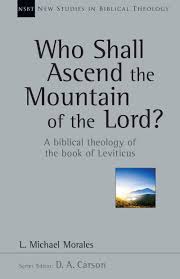
In one of the best books I read last year—a biblical theology of Leviticus—Michael Morales (Who Shall Ascend the Mountain of the Lord?offers an alternative reading to Genesis 4:7. Actually, he recalls a traditional reading found in commentators like Adam Clarke (1762–1832), Adoniram Judson (1788–1850), Young’s Literal Translation (1862), Jamieson, Fausset, and Brown (1877), and Matthew Henry (1662–1714) (p. 57n51).

Commenting on the way sin crouches at the door, he argues that the language could also be render “sin offering,” and that there is good reason for seeing the door, or gate, is the place where the sons of Adam brought their sin offerings—or, should have brought their sin offerings.

I appreciate this interpretation as it pays careful attention to the cultic themes of Genesis (i.e., temple, sacrifice, priesthood) and the way it explains in more objective terms why Cain’s offering is rejected and Abel’s is accepted. The reason? The former rejected God’s Word and Gods’ way; he brought a sacrifice of his own choosing, rather than the sin offering which God prescribed. Meanwhile, Abel brought a offering which responded to God’s Word in faith and sought atonement for his sin.

Read in the context of Moses’s five books, this seems like a superior interpretation, as Morales explains further. Continue reading

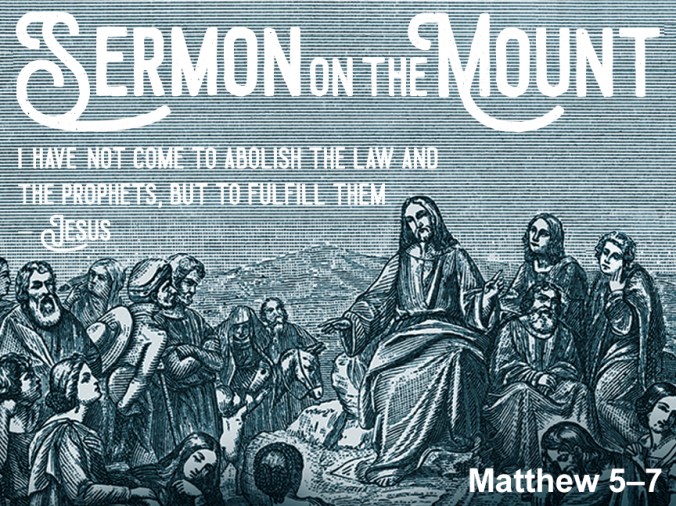
Razing Cain: How Christ Crucifies a Heart of Anger (Matthew 5:21–26)

sermon05Razing Cain: How Christ Crucifies a Heart of Anger

This Sunday we looked at Matthew 5:21–26, where we saw the first of six lessons Jesus gives us about the law of Moses applied to his new covenant disciples.

Interpreting the sixth commandment, “Do not murder” (Exod 20:13; Deut 5:17), Jesus stressed the importance of making peace with those whom we have sinned against. In Sunday’s sermon we looked briefly at how Jesus applied Moses Words, but more importantly we considered a multitude of applications found in Jesus Words.

You can listen to the sermon online. Discussion questions and additional resources are listed below. Continue reading