 The Lord passed before him and proclaimed, “The Lord, the Lord, a God merciful and gracious, slow to anger, and abounding in steadfast love and faithfulness, 7 keeping steadfast love for thousands, forgiving iniquity and transgression and sin, but who will by no means clear the guilty, visiting the iniquity of the fathers on the children and the children’s children, to the third and the fourth generation.”
— Exodus 34:6–7 —
Exodus 34:6–7 is one of the most important passages in the Bible. It’s also one of the more problematic. For how can God be gracious and compassionate, slow to anger and quick to forgive but also unwilling to forgive the guilty (“who will by no means clear the guilty, visiting the iniquity of the fathers on the children and the children’s children . . .”)? Doesn’t God’s self-revelation contain, at its heart, a significant contradiction?
Some have thought so, even solving the dilemma by debating the compositional history of Exodus 34, or denying its literary unity (see Ross Blackburn, The God Who Makes Himself Known, 155). But for those who read Exodus as God’s inspired Word, such critical workarounds don’t work. Thus, we must consider how God’s mercy and justice are not two opposing attributes that bring conflict into God’s character. Instead, they are two aspects of God’s undivided holy nature, which reveal themselves perfectly in God’s relationship with his creation.
On this subject Ross Blackburn has been helpful as he reads Exodus 34 in light of the whole canon, with special attention to Exodus 20:5–6. Following Blackburn’s canonical exegesis, we can press deeper into the nature of God’s holy character and then work forward in redemptive history to see how Exodus 34:6–7 informs God’s mercy and justice in places like Jonah 3–4 and Nahum 1, where Exodus 34 is in both books but in different ways towards the people of Nineveh. Continue reading
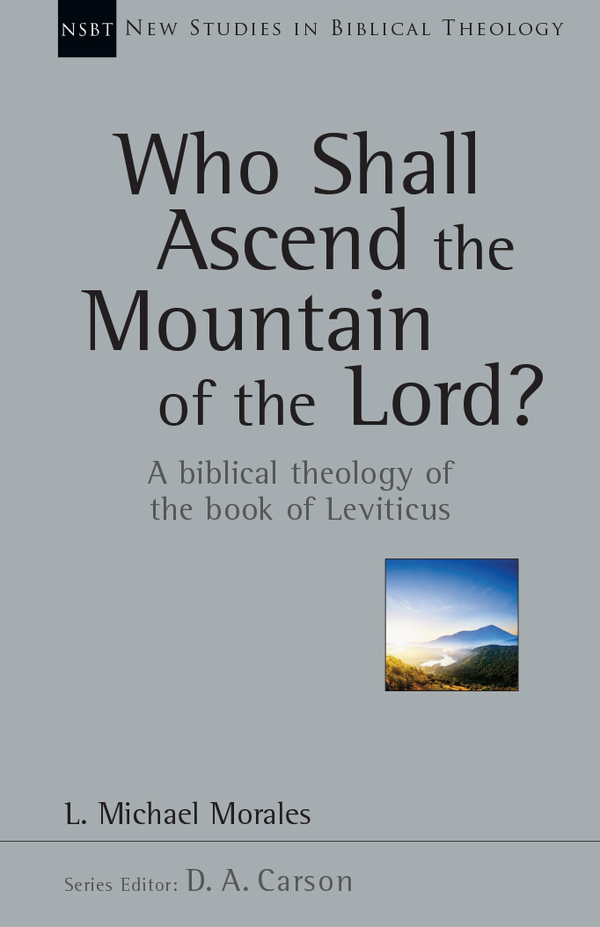 What has been the best book you have read in 2018? For me, it has been a 300+ page study on Leviticus. Yes, Leviticus!
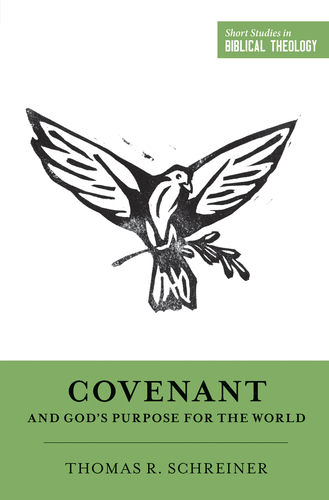 In his short study on biblical covenants,
 This year I am reading through the works of Princeton theologian B.B. Warfield. As I find various important points or quotes, I’ll try to put them up here. Today I offer this first quotation that pertains to the task of systematic theology and its relation to exegesis and biblical theology.
 Among biblical theologians, Graeme Goldsworthy is a well-respected scholar with great passion for Christ and his church. His works on the
 In his excellent book on the Trinity, Fred Sanders makes a number of key observations related to seeing (and not seeing) the Trinity in the Old Testament. (This subject takes up the whole of chapter 8 in
  should not begin with the Old Testament. Because the doctrine is revealed in the historical events of the Incarnation and Pentecost, not the propositions of the text, we must begin with the events recorded in the New Testament, not the hints contained in the Old. Sanders rightly corrects strictly chronological approaches to the Trinity: “The root idea of revelation is not verbal announcement but the unveiling or disclosing of something that has been present, though concealed. . . . The triunity of God was revealed when the persons of the Trinity became present among us in a new way, showing up in person and becoming the object of our human observation” (40).
 And God blessed them. And God said to them, “Be fruitful and multiply and fill the earth and subdue it, and have dominion over the fish of the sea and over the birds of the heavens and over every living thing that moves on the earth.
 Chiasms are the beeessstt!
 Via Emmaus