 “The fear of the Lord is the beginning of wisdom.”
– Proverbs 1:7 –
“The fear of the Author is the beginning of literary understanding”
– Kevin Vanhoozer[1] –
This morning, I have the privilege of beginning a series of “studies” on hermeneutics and biblical interpretation among the men at my church. The title I’ve chosen is “Toward Doxology and Discipleship: Presuppositions and Principles for a Trinitarian Reading of Scripture.”
Influenced by the work of Kevin Vanhoozer, my aim is to lay out three presuppositions in the next three months concerning the three horizons of communications—author, text, and recipient(s). By taking a trinitarian approach—where we see the Father as speaker, the Son as the content of Scripture, and the Spirit as the One who enables people to rightly receive understand God’s speech—can are ready to rightly read Scripture.
Only after this triad of communicative presuppositions, can we employ biblical principles that cohere with God’s inspired Word. That’s the goal of the next three studies, where I hope to outline the three horizons of the biblical text to show how every interpreter of of the Bible must do justice to the textual, covenantal, and canonical horizons (so Edmund Clowney, Richard Lints, etc.). Only by reading texts with respect to grammar and history, covenantal or epochal placement in the Bible, and the final revelation of Christ in God’s canon can we fully appreciated all Scripture has to say to us, indeed what God is speaking to us even today (see Hebrews 3:7).
If you are interested, I’ve included my notes for this week and listed below my ten concluding “axioms” that show the cash value of starting with the doctrine of God, and more specifically why bringing his Authorship to the forefront is imperative for good hermeneutics. If hermeneutics is “your thing,” or if it is not, I’d love your feedback. Continue reading
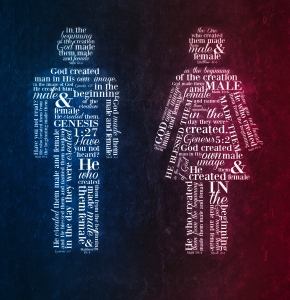 In Evangelical Feminism and Biblical Truth (EFBT) Wayne Grudem is at his complementarian finest as he explains from Genesis why God created men and women equal yet distinct. While egalitarians argue the fall caused gender distinctions and that Christ’s redemption erased them (as explained in their reading of Galatians 3:28), Grudem shows how God created men and women with beautiful distinction from the beginning.

 What is our aim in preaching? What should it be?
 Where should we eat? What should we eat? Where’s the best place to eat?
 Via Emmaus