
Getting Into 1 Chronicles without Getting Stuck: Or, How to Read a Genealogy

woman in red t shirt looking at her laptop

“Just skip the first 9 chapters in 1 Chronicles and start in chapter 10.”

This is something I’ve both said and done. And yet in this post, I want to return to 1 Chronicles 1–9 to show you how important these chapters are for understanding Chronicles and the theme of royal priesthood in the Bible.

For those reading the Bible for the first time or the fiftieth time, the likelihood of reading 1 Chronicles 1–9 with profit is challenging, to say the least. Yes, these chapters do include the cottage industry known as Jabez’s Prayer (1 Chr. 4:9–10). But appeals to that blessed man, whose name means pain—probably a prophecy for the way his life would be misused by 20th C. Christians—only confirms how hard it is to read these chapters with anything but the most general profit—i.e., God is Lord of history. (For a proper interpretation of Jabez’s prayer, read this).

Our approach to 1 Chronicles 1–9 changes, however, when we discover (1) the structure of this passage and (2) its purpose in the book of 1–2 Chronicles. Assisting in both of these endeavors, James T. Sparks has written The Chronicler’s Genealogies: Towards an Understanding of 1 Chronicles 1–9.

In Sparks’ research, he argues for the intentional placement of this genealogy and how it works in this book. After correcting a few modern errors on reading genealogies (check back for a post on that point), Sparks identifies a chiastic structure in these nine chapters that focuses on the cultic personnel (i.e., the priests). Continue reading

Seeking the Kingdom of God with the Church of Jesus Christ

three kings figurines

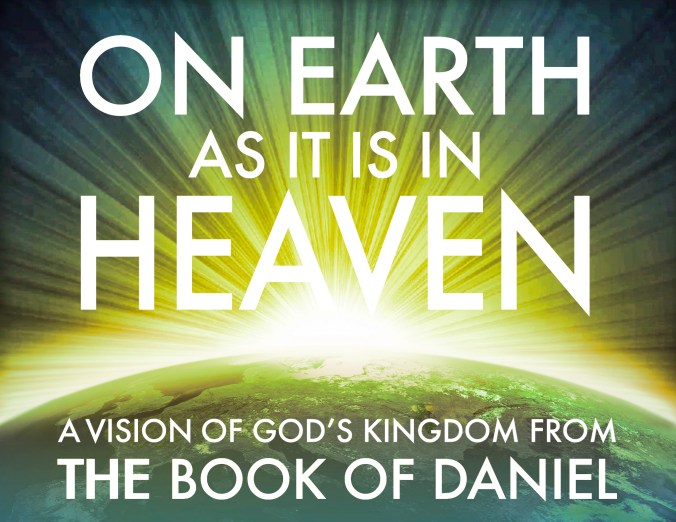
Is the kingdom of God present or future? Is it now or not yet? Could it in any way be both? If so, how? These are important questions for anyone who has read the Bible, and for anyone who is studying the book of Daniel—a book that speaks of God’s kingdom throughout.

In evangelical circles the question of God’s Kingdom has been answered for the last half-century with a view called “inaugurated eschatology.” This view affirms Christ’s present royal position as seated at God’s right hand (Psalm 110), even as he rules the church by way of his Spirit (Matthew 28:20; John 16:7; Ephesians 1:21–23). At the same time, his kingdom has not been yet consummated, and the people who have believed the good news of the kingdom await the day when he will return to establish his rule on the earth.

Among the many names who have advocated this position, few are more important than George Eldon Ladd, the late New Testament professor from Fuller Seminary. During the middle decades of the twentieth century, his books on the kingdom of God engaged Dispensationalism and Covenant Theology alike. And in each, he provided a rich biblical exposition on the subject.

Ladd maintained that the kingdom of God is found in Christ’s reign more than the location of his rule (i.e., his realm).[1] He understood the kingdom as a future reality, but one that had broken into the present. Against a view of the kingdom of God as spiritualized in the individual—a view based on a poor translation of Luke 17:21 (“the kingdom of God is within you,” KJV; rather than “the kingdom of God is in the midst of you,” ESV)—Ladd centered the presence of Christ’s kingdom in the church, without confusing the church with the kingdom. In this way, Ladd opposed both the replacement theology of Covenant Theology and the radical division of God’s people (Israel vs. Church) in some forms of Dispensationalism.

Today, Ladd’s work remains invaluable for students of eschatology. Indeed, those who are unfamiliar with him or inaugurated eschatology, in general, are missing some of the best exegetical research on the kingdom of God for the last two generations. While certainly fallible—as Ladd’s biography shows—his studies have been a major catalyst in evangelical theology.

In what follows, I will offer a summary of five points from a chapter entitled “The Kingdom and the Church” in his A Theology of the New Testament.[2]. In these five points, he shows how the Kingdom of God does and does not relate to the Church of Jesus Christ. As we consider the kingdom of God throughout the book of Daniel, these basic points of theology can help us from going astray from Christ and God’s plan to unify all things in him (Eph. 1:10). Continue reading

An Invitation to the Book of Daniel: Neither Diet Plans, Nor Date-Setting, Nor Dares to Be Like Daniel, But Dreams, Dominion, and Resurrection from the Dead

daniel05What is Daniel about?

There are lots of answers to this question, but not all of them are equal. Like so many books of the Bible, Daniel is often “used” more than “read.” And when readers “use” Daniel they come up with diet plans, end-times dating schemes, and moralistic teachings devoid of gospel power. To be sure, Daniel does talk about food, future events, and bold faithfulness, but until we understand that Daniel is a book about God and the arrival of his eternal kingdom, we will miss much of the message.

So again, what is Daniel about? Let me answer that in six ways—three negative, three positive. Continue reading

Getting into Daniel: Five Notes on Daniel 1

daniel05This month our church begins a new sermon series on the book of Daniel and Daniel is also the book of the month for the Via Emmaus Bible Reading Plan. With both of those things in mind, I will begin today to post a few notes from each chapter in Daniel, starting with Daniel 1. As with the notes I wrote for Joshua, these notes will primarily be theological in orientation. Yet, because good theology depends on good grammatical and historical observations, they will also tap into various literary issues in the book of Daniel.

As we read /preach through Daniel, if there are observations or questions you have, please leave them in the comments. For now, here are five introductory notes on Daniel 1. There will be more to come.

Five Note on Daniel 1

1. Daniel highlights Israel’s captivity and release.

1In the third year of the reign of Jehoiakim king of Judah, Nebuchadnezzar king of Babylon came to Jerusalem and besieged it. . . . 21And Daniel was there until the first year of King Cyrus. (1:1, 21)

Daniel 1 begins in 605 BC, when Nebuchadnezzar first raids Jerusalem and plunders the temple and takes the leaders from the royal family (see vv. 1–3). Daniel 1 ends in 539 BC, with a mention of the first year of Cyrus (v. 21), king of Persia (6:28). Cyrus would eventually grant Israel the right to return to Jerusalem and rebuild the temple (see Isaiah 44:28; 45:1ff.). In Daniel 10:1, he is mentioned again in association with Daniel’s vision.

It is noteworthy that Daniel 1 includes Daniel’s entrance and exit from Babylon. The former sets the context for the whole book—God’s people in exile in Babylon. The latter flashes a light of hope, that the exiles will be released from bondage. Captivity is not the final word for Israel, and the inclusion of Cyrus in the first chapter speaks to that. The mention of Cyrus’s also indicates that the book is written after the exile and after Cyrus sends Israel back to Jerusalem. Continue reading

Oppression and Slavery Under God’s Sovereignty: Five (dis)Comforting Truths from Psalm 105

Maybe you have had an experience like this: While walking or driving somewhere, you suddenly realize that the beauty of the scenery around you is littered with complex moral issues. If you visit Mount Vernon or Monticello, you are struck by the beauty of both presidential homes. Yet, in learning the history, you are also confronted with the fact that both plantations depended on slave labor. Likewise, if you celebrate the Civil Rights victories of the 1960s, you must consider that many of the programs implemented to help blacks during that era have done more harm than good.

Something similar occurs in Psalm 105, only the findings there are not based upon fallible interpretations of history. In Psalm 105, we have the inspired and inerrant Word of God. And strikingly in these 45 verses, we find multiple, morally-complex statements. Some of these issues concern oppression (v. 14), others talk of slavery (v. 17), but in every case, God is praised for his sovereign actions in history.

Indeed, for all the beautiful comfort that Psalm 105 brings, for it is a Psalm that speaks of God’s faithfulness in leading his people from Abraham to Moses, it also introduces many complexities in God’s sovereignty over the nations. Yet, instead of impugning God with error or wrong-doing, a rightful understanding of Psalm 105 actually helps us to know who God is, how he works in the world, and how we can better understand our own morally-complicated history. To that end, let’s look at Psalm 105 and its discomforting truths which in time lead to a greater confidence in God.

1. God can and does stop oppression.

While the history of our fallen world knows no period when or where oppression has been absent, it is clear from Scripture that when God intends to prevent oppression and overturn slavery, he can. In Psalm 105, the Psalmist reflects on God’s care for Abraham, when the patriarch and his children had no land to call their own (vv. 12–15). As they sojourned among warring nations (see Genesis 14), Psalm 105:14 says that God “allowed no one to oppress them; he rebuked kings on their account, saying, ‘Touch not my anointed ones, do my prophets no harm!'”  Continue reading

What About Dreams? A Biblical and Pastoral Consideration

illuminated neon sign

Photo by Nadi Lindsay on Pexels.com

In the Bible, we come across a number of places where dreams play a role in advancing the story of God’s people. For instance,

  • In Genesis 20 God protected Abimelech, king of Gerar, from sleeping with Sarah by means of a dream.
  • In Genesis 28 God met Jacob in a dream, revealing to him his presence in the land of Canaan.
  • In Genesis 31 the Angel of God told Jacob to leave Laban and return to Canaan.
  • In Genesis 37 Joseph has multiple dreams that foretell his future rise to power; in Genesis 40 Joseph interprets the dreams of the cupbearer and the baker; and in Genesis 41 he interprets the dreams of Pharaoh.

In reading these dream accounts, the thoughtful reader may ask—Does God still speak through dreams today? Indeed, throughout the Scripture we find God leading his people with dreams. And today, we hear rumbles that Muslims and others are coming to faith in Christ by dreams.

Put this altogether and we might wonder, what should we think of dreams—in the Bible and today? The answer requires nuance, a full look at Scripture, and especially attention to the changes between the old covenant and the new. Yet, when we keep an eye on all those factors, we can give an open-handed answer to this question. Continue reading

A Purple Haze: Looking More Carefully at ‘Social Justice’

alexandru-bogdan-ghita-javr3cmXbSE-unsplashYou keep using that word . . .
I do not think it means what you think it means.
— Inigo Montoya —

Have you ever used a word in a sentence, only to discover that the meaning of that word is not exactly what you thought it was? I have. And I’ve had to go back and rewrite the sentence, or admit on the spot, that I misspoke.

I would propose that the term “social justice” is such a word. It is used a lot today, by lots of different types of people. I am sure I’ve used it. Yet, as we seek to define to what it is, we quickly learn that like Clark Griswold’s Christmas turkey, social justice looks great on the outside, but doesn’t contain much meat when we cut into the bird.

Here are five quotations about the haziness, dare I say the meaninglessness, of the term “social justice.” I have tried to capture each quotation in a sentence. And at the end, I’ve included something of a takeaway on the subject—namely, that social justice is not as helpful or value neutral as its contentless definition may first appear.

I am sure you have had some run in with social justice, and I’d love to hear your thoughts and questions. Feel free to add a quote, a question, or comment in the comments section. Continue reading

Social Justice 101: 12 Scriptures, 7 Proposals, and 3 Appreciations from *What is the Mission of the Church?*

nathan-lemon-FBiKcUw_sQw-unsplashIn What is the Mission of the Church?Kevin DeYoung and Greg Gilbert provide two chapters on social justice. The first examines twelve passages often used to support social justice with biblical texts. The second chapter synthesizes their exegetical findings. Under seven “proposals” they offer a helpful introduction to the topic of justice, so often labeled “social justice.”

In what follows, I will share their twelve Scriptures and seven points. Then I will offer three words of appreciation and application from What is the Mission of the Church?

Twelve Scriptures Related to Social Justice

Continue reading

25 Exegetical Truths about Justice: A Summary from Psalms 97–101

cloud05Over the last five weeks, I have been outlining an approach to righteousness and justice that stands on an exegetical study of Psalms 97–101. In what follows I will summarize those studies and show the way righteous justice is . . .

  • found in God’s kingdom,
  • communicated by his justification of sinners,
  • mediated from heaven to earth through his royal priests,
  • triumphant over all sin and unrighteousness, and
  • established in his household.

As I have stated many times, the order of God’s righteousness and justice is important. And here is summary of the steps that we find in Psalms 97–101. Continue reading

From Personal Righteousness to Public Justice (pt. 2): Five More Truths from Psalm 101

cloud05Yesterday, I began to walk through Psalm 101, observing the ways that verses 1–4 teach us about personal righteousness. Today, we will return to that psalm in order to see what verses 5–8 tell us about public justice. As I defined it in my sermon on Psalm 101, public justice can be defined as actions that promote the well-being of others, based upon the righteousness of God. 

The two words “promote” and “based upon” are where the action is in this definition. As I explained yesterday, personal righteousness is necessary for justice to endure, thus explaining how I understand the relationship between God’s righteousness and justice. Today, I will explain what it means to promote the well-being of others. As Kevin DeYoung and Greg Gilbert (The Mission of the Church) note, there are times when the word justice, and “social justice” especially, are unhelpful. One reason is that acts of charity might be better described in terms of compassion and loving opportunities for service rather than justice and moral responsibilities to correct the world’s problems.

I agree. Yet, when defined appropriately—in terms of impartial processes and not equivalent outcomes—I do believe it is possible to speak of justice in terms of promoting the well-being of others, in the sense that justice protects the vulnerable, assists the needy, and looks for ways to improve opportunities for others to enjoy God’s blessings—especially eternal blessings.

In what follows, I will attempt to show what public justice looks like, as we consider five truths from Psalm 101. But first let me summarize all that we have discovered about God’s justice in Psalms 97–101. Continue reading