The Covenants with Abraham and Israel: One or Two?

mick-haupt-eQ2Z9ay9Wws-unsplash.jpgIn his commentary on Deuteronomy, Daniel Block considers the relationship between God’s covenant with Abraham and his covenant with Israel. Entitled “the covenant with your forefathers” in Deuteronomy 4:31, he asks whether this is a reference to God’s covenant with Abraham, Isaac, and Jacob (cf. Exod 2:24; 6:4; Lev 26:4)? Or a reference to the covenant God made with Israel at Horeb (Deut 4:13)? Or is it somehow a reference to both?
In eight points, Block shows why it is best to see these two covenants as organically related. Instead of singularly referring to the covenant with Abraham or the covenant at Horeb, he explains that God’s covenant with Israel continues the covenant with Abraham. Adding legislation to the original covenant with Abraham, it extends the promises to Abraham and adds national stipulations for Abraham’s offspring. In this way, Block helps us read Moses on his own terms and to see how the biblical covenants relate to one another. Here’s how Block explains it: Continue reading

Herman Bavinck on the Importance and Difference between Dogmatics and Ethics

bavinck.jpegWhat is theology? And what is it good for? These are questions Christians ask and theologians attempt to answer. In his various works on theology, Kevin Vanhoozer has attempted to explain doctrine in terms of drama (e.g., The Drama of Doctrine). More recently, he has argued for the place of doctrine and drama in the making of disciples (e.g., Hearers and Doers: A Pastor’s Guide to Making Disciples Through Scripture and Doctrine). In Pilgrim TheologyMichael Horton makes the same point—doctrine summarizes the drama, directs doxology, and instructs disciples.
In short, some of the best theologians today know that theology is for living, doctrine is for discipleship, and everything is for worship. Still, theology (truth about God) is not to be confused with discipleship (walking in truth). To say it differently, there is a place for theology and ethics. And recently, I was reminded (or instructed more fully) how these two disciplines are related to one another, but also different.

In the editorial introduction to the first volume of Herman Bavinck’s recently published Reformed Ethicswe find how this great theologian for the Netherlands distinguished theology and ethics. First, in Reformed Dogmatics, he states,

Dogmatics describes the deeds of God done for, to, and in human beings; ethics describes what renewed human beings now do on the basis of and in the strength of those divine deeds. In dogmatics human beings are passive; they receive and believe; in ethics they are themselves active agents. In dogmatics, the articles of faith are treated; in ethics, the precepts of the decalogue. In the former, that which concerns faith is dealt with; in the latter, that which concerns love, obedience, and good works. Dogmatics sets forth what God is and does for human beings and causes them to know God as their Creator, Redeemer, and Sanctifier; ethics sets forth what human beings are and do for God now; how, with everything they are and have, with intellect and will and all their strength, they devote themselves to God out of gratitude and love. Dogmatics is the system of the knowledge of God; ethics is that of the service of God. (xxv–xxvi, Reformed Dogmatics 1:58) Continue reading

Revealed Worship (Deuteronomy 4:1–14)

bythebook04Revealed Worship (Deuteronomy 4:1–14)

On Sunday we began a new sermon series considering what Scripture teaches about worship. Over the summer we will learn from Moses, David, and Paul, but this first Sunday we began by hearing what Moses said about God’s pattern for worship at Sinai.

While our worship is not at Mount Sinai, but Mount Zion (Hebrews 12:22–24), the pattern of worship revealed to Israel teaches us about the worship God desires for those who have been saved by Christ. From the revealed worship at Sinai, we begin to see what God has in store for his church.

This week’s sermon considers this “revealed worship” and what it means for us today. You can listen online. Below are response questions and additional resources for studying what Scripture says about worship. Continue reading

Ten Things About Deuteronomy 4:1–14

10 thingsIn preparation for Sunday’s sermon on worship, here are ten observations from Deuteronomy 4:1–14.
1. Deuteronomy 4 is the last chapter of Deuteronomy’s covenantal introduction.

In Deuteronomy Moses follows (and reformulates) a covenant structure identifiable by anyone living in the ancient Near East. Just as covenants made between kings and their servants (i.e., Suzerains and their vassals) followed a standardized pattern, so does the book of Moses.

Ancient Near Eastern Suzerainty Treaty[1] Deuteronomy as a Covenant Document
Preamble (“These are the words . . .”) Preamble (1:1–5): “These are the words of Moses addressed to all Israel . . .”
Historical Prologue: a survey of the relational history between covenant partners Historical Prologue (1:6–4:49)
General Stipulations General Stipulations (ch. 5–11): general commands to love, serve, fear Yahweh
Specific Stipulations Specific Stipulations (ch. 12–26): an exposition of the Ten Words
Divine Witnesses: various deities called to witness the treaty Blessings and Curses (ch. 27–28)
Blessings and Curses: relating respectively to the maintenance of breach of the covenant Divine Witnesses (see 30:19; 31:19; 32:1–43)

From this outline, we see where Deuteronomy 4 is situated. It is the final word of the covenantal introduction (i.e., the historical prologue). Moreover, in a way that deviates from the classical ANE treaty formula, it adds covenantal instructions that anticipate the next sections—namely, the general and special stipulations given in chapters 5–26. Continue reading

Worship By the Book: Or, Why Sincerity Is Insufficient for True Worship

bythebook04In his illuminating book, A Secular Age (summarized here), Charles Taylor argued the unbelief handed down to us from the Enlightenment, coupled with new religious expressions in the 19th century, and accelerated by the sexual revolution of the “Sixties,” has resulted in many and competing spiritual longings that live somewhere between belief and unbelief.

In short, we are living in an “age of authenticity,” where expressive individualism seeks to satisfy personal appetites in quasi-spiritual ways. On one hand, our age eschews organized religion and the constraints of any spiritual authority—be it a codified text or clerical leaders. Whereas faith in the divine was nearly impossible at the Middle Ages, in our day unbelief is becoming increasingly normative. On the other hand, our age is not satisfied with nihilistic unbelief. Spirituality abounds, even when such spiritual longings and beliefs are left undefined. In short,

People are increasingly looking for a life of greater immediacy, spontaneity and spiritual depth than can be provided for them in the immanent order of unbelief, while on the other hand many do not find the authenticity and wholeness that they desire in the established (mobilised) forms of religion. (From a summary of A Secular Age)

In this space, individuals and affinity groups continue to create new ways of spiritual living and corporate (read: customized) worship. As a result, it is hardly surprising that sincerity, not truth, is considered to be the greatest good for worship today. What defines spiritual worship is an interior experience, not conformity to a moral standard or faithfulness to God’s revealed will.

How far we have fallen! Even in the church, where people and pastors know and want to know God (or do they?), this all-consuming desire for spiritual authenticity authorizes worship leaders to invent new ways of worship. Yet, when we go back to the Bible, we learn that sincerity is never enough for true worship. Rather, worship that pleases God is patterned after God’s revelation itself. And we who long to worship God in Spirit and Truth must learn again from God how he wants to be worshiped. Continue reading

Hope, Help, and Holding Fast: Storing Up Future Treasure with Present Riches (1 Timothy 6:17–21)

livingchurch

Hope, Help, and Holding Fast: Storing Up Future Treasure with Present Riches (1 Timothy 6:17–21)

On Sunday we finished the book of 1 Timothy. Since February, we have enjoyed learning about what it means to be a church made alive by Christ and directed by his Spirit. As we finished the series, we reminded ourselves what this whole letter was about and why Paul finished his words with one last word to the rich (6:17–19) and one final admonition to Timothy (6:20–21).

Whether you consider yourself rich or not, and whether you are in ministry or not, these final words of 1 Timothy give great wisdom on how to store up your treasure in heaven and guard the gospel of Jesus Christ.

You can listen to the sermon online. Response questions can be found below, as well as a list of all the sermons preached in this series.

Soli Deo Gloria, ds Continue reading

Glorifying God in the Grind of Life

christ.jpegQ. What is the chief end of man?
A. To glorify God and know him forever.
— Westminster Shorter Catechism, Question 1 —

There is nothing more important than knowing why you exist. And nothing provides a better answer than this: You were created to glorify God.

Speaking to the people he was redeeming from the nations, God says in Isaiah 43:6–7,

I will say to the north, Give up, and to the south, Do not withhold; bring my sons from afar and my daughters from the end of the earth, everyone who is called by my name, whom I created for my glory, whom I formed and made.”

Speaking of the purpose of redemption, Paul says a millenia later that God predestined, called, and justified his people, so that he could glorify them (Rom 8:29–30). While God does not give his glory to another (Isa 42:8; 48:11); he does all things for his glory, including making mankind in his image to reflect his glory to the world.

Indeed, Habakkuk 2:14, echoing Numbers 14:21 and Isaiah 6:3, says, “For the earth will be filled with the knowledge of the glory of the Lord as the waters cover the sea.” Indeed creation exists as a canvas for God’s glory and mankind exists to know, enjoy, and magnify God’s glory.

It is impossible to read the Bible for any length of time without running into this theme. And it is equally impossible to find our purpose or God’s purpose for us, without attending to this lofty ideal. Yet, because it is lofty, the idea of God’s glory may seem unreachable or mysterious. What does it mean to live for God’s glory, or Paul puts it in 1 Corinthians 10:31—to eat, and drink, and do all things for the glory of God?

That’s the question I will be trying to answer tonight as our college and career ministry kicks off it’s first meeting. In the coming weeks, our church will host a college and career gathering at 7:00pm on the second and fourth Wednesday of the month. The goal is to equip Christians, explore topics of faith for Christians and non-Christians, and to provide a place of mid-week fellowship for those in this seasons of life.

Because the glory of God is so central to life—and also so enigmatic—we will spend our summer thinking about how the glory of God presses into all areas of life. Indeed, we will not fully comprehend God’s glory in our earthly life, nor in eternity—where we will always be experiencing more of his glory—always satisfied and seeking more.

That said, here’s a part of tonight’s lesson, plus a list of future topics we’ll consider. Continue reading

Fighting the Good Fight of the Faith by Following the Good Lord and Fixing Our Eyes on the Invisible God (1 Timothy 6:11–16)

livingchurchFighting the Good Fight of the Faith (1 Timothy 6:11–16)

Flee wickedness. Pursue righteousness. Fight the Good Fight. Take Hold of Eternal Life.

These are the commands that Paul gives Timothy as he finishes his letter to his true son in the faith. They are good for us today too. Scripture calls us to run from sin and race towards Christ. But how? What will motivate us, strengthen us, and enable us to finish our race?

On Sunday I answered these questions from what Paul said to Timothy in 1 Timothy 6:11–16. Consistent with Paul’s words of encouragement, the apostle never said  “just do it.” He always gave Christ-centered motivations and God-directed visions to help the followers of Christ run their race with perseverance. Sunday’s sermon focuses on the same thing, encouraging us to read this glorious passage “backwards” in order to let the glory of God strengthen our godliness.

You can listen to the sermon online. Response questions and additional resources can be found below. Continue reading

Getting Our Deacons in a Row: A Collection of Resources

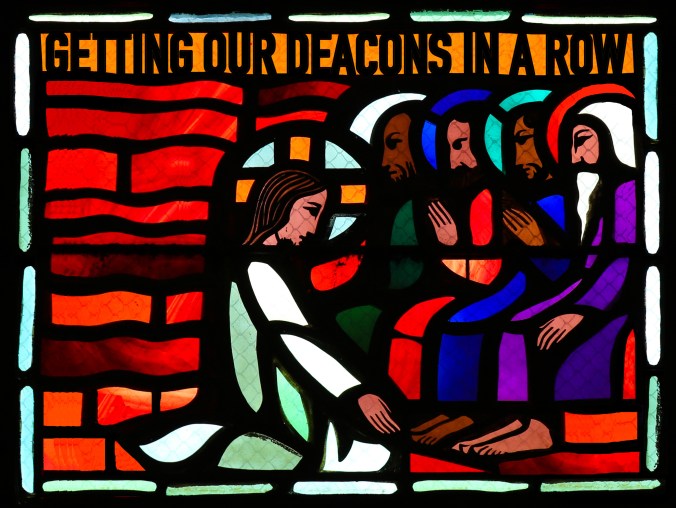
deacons02.jpgDuring the month of June, our church has been thinking about deacons during our Sunday School hour. And to help collate some of the documents and data presented, I’m putting them up here. (I’m also sharing them because the Internet at our church is down — Sigh!).

When our study of deacons is done, I’ll come back and put up all the sermons, lessons, additional resources, and documents.

Sermons

Sunday School Lessons

Audio

Documents

Additional Documents

Forthcoming

Soli Deo Gloria, ds

Ten Truths About the Hidden God Who Reveals Himself

cloudsIn evangelical theology, the doctrine of God’s revelation is primary. Man does not ascend into the heavens, nor pull God down to earth (Romans 10:5–17). Rather, we find in creation and in Scripture that God has spoken and that he is a speaking God (Psalm 19). That said, there is a corollary doctrine that must be remembered—the doctrine of God’s hiddenness.

God is not only a speaking God; he is also a hidden God (Isaiah 45:14). Because of the Fall, every child of Adam and Eve is born outside of Eden and estranged from the God who speaks. To say it differently, while Adam was put in the Garden of Eden to enjoy communion with God, sin made it impossible for man to have immediate access to God. Therefore, in this age, God remains hidden to those in Adam (Rom 5:12–21) and invisible to those who know him, as well (1 Tim 6:16). Accordingly, as much as we consider the doctrine of God’s revelation, we must realize—and stand amazed—that his revelation comes from a position of hiddenness that is equally biblical.

Tracing out a biblical doctrine of hiddenness, A. Oepke and R. Meyer in the Theological Dictionary of the New Testament, provide a thorough-going survey of God’s hiddenness in the Old Testament. Though giving too much credit to the place of mystery religions, which trade in the currency of hiddenness, and employing a higher-critical approach to the Old Testament, they provide a fruitful study understanding the God who hides himself from sinful man.

Therefore, in what follows, I summarize their findings and highlight ten truths about God’s hiddenness and revelation. These ten points are found in their article on the cluster of New Testament words for “hidden” (κρύπτω, ἀποκρύπτω, κρυπτός, κρυφαῖος, κρυφῇ, κρύπτη, ἀπόκρυφος). The general flow of thought and the block quotations all come from their article.[1] Some of the Scripture passages listed below are cited in their work, others have been added in order to flesh out the doctrine of God’s revelation. Continue reading