The Need for Expositional Preaching (pt. 3): Jesus was an Expositor

james-coleman-9S5FNcs_qPw-unsplash.jpgThe Old Testament is the not the only place where we find expositional preaching. Jesus himself preached expositionally. In fact, he was more than an expositional preacher, according to John John 1:18 he literally ‘exegeted’ the Father, meaning that he explained, exposed, and revealed the character of God in his very life and person.

As the Word Incarnate, Jesus perfectly revealed God. And as the Prophet like Moses (Acts 3:22–26), he handled the Word of God with skill and authority (cf. Matthew 7:29). For these reasons, we should be listen to what Jesus said (Matthew 17:5; cf. Deuteronomy 18:15) and follow him. And learning from him how to read and interpret Scripture, we should see what kind of expositional preacher he was.

Jesus Was an Expositional Preacher

Jesus carried on a ministry of exposition before and after his death and resurrection. For instance, in the Sermon on the Mount, Jesus repeatedly quoted the Old Testament and provided a more accurate interpretation and deeper application by showing how the Law was fulfilled in the new covenant he was bringing.

In full agreement with his opponents that God’s word was divinely inspired, Jesus taught as one with authority (Matthew 7:29). Interestingly, with absolute authority, he did not create his own sermons; he repeatedly put himself under the word of God (cf. Gal 4:4) and interpreted how he himself fulfilled the Old Testament. (We might even find a similar pattern in the way the Father used Genesis 22, Psalm 2, and Isaiah 42 to identity Jesus as his beloved Son at Jesus’s baptism). Continue reading

The Need for Expositional Preaching (pt. 2): A Biblical and Theological Defense

job.jpegWhy is biblical exposition necessary?

The simple answer is that the health of the church depends on the regular reading and preaching of God’s Word. This claim can be supported by church history, but it can also be seen in Scripture itself. And in Scripture, expositional preaching is supported by both the doctrine of God’s Word and the practice of God’s people.

Today I will add to the blogpost from yesterday and consider the doctrine of Scripture and the practice in the Old Testament. Next week I will come back and consider the practice of Jesus and the apostles.

A Short Doctrine of Scripture

First, as to doctrine, the belief that God’s Word is powerful is seen in the way that God’s created the light by his word (Gen 1:3); he upholds the universe with his word (Heb 1:3); and he raises the dead to life with his word (Ezekiel 37; John 11). Understanding the power of God’s Word, faithful preachers must labor to expound God’s Word and not their own. The goal of preaching is not arranging Bible verses around their own words, ideas, or outlines, but highlighting what God has already spoken. Continue reading

The Need for Expositional Preaching (part 1)

james-coleman-tcGU1VaCtDw-unsplash.jpgIt has been said, “There is no genuinely good preaching except exposition.” Such serious words require us to consider what expositional preaching is and why it is so important that preachers commit themselves to this kind of preaching.

In an attempt to answer that question, this is the first in a four-part series on biblical exposition. It is an update from a previous blog series I wrote when I pastored in Indiana. It relates to this week’s sermon on Deuteronomy 4:32–40 and it attempts to show why our church is committed to biblical exposition.

If you have never heard of expositional preaching, I hope this might be a helpful introduction and biblical apologia. If you are already convinced that biblical exposition is the best form of preaching Scripture, I pray this short series might help give you something to share with others who are less persuaded.

Today I will start with defining biblical exposition. In the following days I will make a biblical theological argument for the practice. Along the way, feel free to share your feedback and/or why you are committed (or not) to biblical exposition.

What is Biblical Exposition?

In short, expositional preaching is the kind of preaching that makes the main point of the biblical text the main point of the sermon. Mark Dever defines it this way: “An expositional sermon is a sermon that takes the main point of a passage of Scripture [and] makes it the main point of the sermon, and applies it to life today.” Therefore, he continues, it does not mean that exposition is narrowly focused on one or two verses; expositional preaching can have small, medium, or large sections of Scripture (i.e., one verse or one book). An expositional sermon need not be lifeless, boring, or overly technical. Surely many “expositors” are dull or have preached overly technical messages, but those examples simply illustrate bad exposition, not true exposition.

Expositional preaching demands the preacher know the Word he is preaching and the Word as it was originally intended by the biblical author. Such a method defends the congregation from hearing a small sampling of “hobby horse” sermons, and it enables (and even demands) the pastor and the church to move through the whole counsel of God. In the life of a congregation, only expositional preaching will expose a Christian to all the doctrines of the Bible presented in their original contexts, along with their original applications to life.

Expositional preaching stands in opposition to a number of other popular, but less powerful forms of preaching: topical, (auto)biographical, felt needs, etc. Over time expositional sermons demonstrate how one ought to interpret the Bible; they communicate doctrine with application to life; and they ground the life of the believer in the Word of God, not the personality of the preacher or the most recent psychological fad.

For all these reasons and more, we find a strong reason for committing to biblical exposition. Still, is this the way commended in Scripture? And if so, why has it fallen out of fashion in many pulpits today? What follows will answer the latter question; tomorrow we’ll begin considering where Scripture models biblical exposition. Continue reading

Ten Things About Deuteronomy 4:32–40: Or, What It Means for God to Speak from the Midst of the Fire

10 thingsIn preparation for Sunday’s sermon on expositional preaching, here are ten observations from Deuteronomy 4:32–40.

1. Future hope (vv. 25–31) is based on God’s past actions (vv. 32–39).

Grammatically, verse 32 begins with the word “for” (ki). This opening word reveals the relationship between verse 32 and what comes before it. Previously, verses 25–31 explained the future mercies of God—what Yahweh promised to do to restore his people (vv. 29–31). Verse 32 explains why Israel can have confidence in this future grace. Because God saved Israel from Egypt with omnipotent power, so we can trust he will act in power again to restore his people in the future. In short, Israel’s future hope (and our hope) stand on the powerful working of God’s grace in the past.

2. Covenant obedience (v. 40) is also the past actions of God (vv. 32–39).

On the other side of verses 32–39, we find another implied reason for action. Covenant obedience (“keeping his statues and rules”) is motivated by the redemption of God from Egypt and the revelation of God’s word at Sinai. In short, just as God’s previous works of salvation strengthen our future confidence in God, they also call for faithfulness. Continue reading

The Last Days: What Moses Teaches Us About End Times

time.jpegWhat are the “last days”? When are the “last days”? Are we now living in the “last days”?
These are questions that students of prophecy like to ask. They are also questions that are often answered by looking to current events, world crises, and various “signs of the times.” Yet, what if the “last days” are actually something that began 2,000 years ago (see Heb. 1:2)? What if the Bible actually begins speaking about the last days in the first book of the Bible? And what if most of the events associated with last days find explicit fulfillment in the events of the New Testament?

While not denying the blessed hope of Christ’s return, students of the Bible must consider how the Bible develops its own terminology. And if “last days” are a technical term in the New Testament, we do well to consider where does that language come from and how should be understand the Bible on its own terms.

On this question, G. K. Beale’s A New Testament Biblical Theology is immensely helpful. In the third and fourth chapters, he surveys the Bible to show how the Bible introduces, develops, and fulfills the language of “latter days.” In what follows, I will outline some of his thoughts on the use of “latter days” in Moses. I’ll also add a few observations of my own. And in the weeks ahead I’ll circle back to trace the rest of the biblical theology through the Old Testament into the New Testament. So stay tuned. But today, we’ll consider what Moses says about last days Continue reading

Gathered Worship: Why Your Soul Needs the Body of Christ (Deuteronomy 4:9–31)

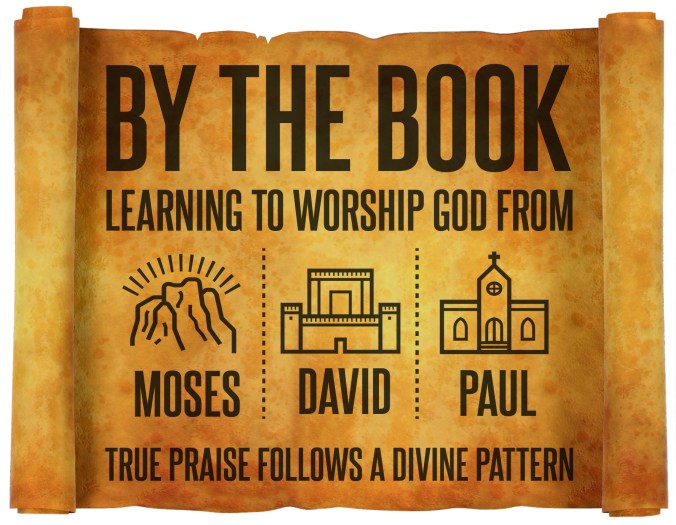
bythebook04

Gathered Worship: Why Your Soul Needs the Body of Christ (Deuteronomy 4:9–31)

As we took another look at worship this Sunday, we focused on the covenantal history outlined by Moses in Deuteronomy 4. In these verses, Moses directed Israel to remember the covenant God made with them, to guard themselves from idolatry, and to take comfort in Yahweh’s ongoing faithfulness.

While there are many differences between Israel on the Plains of Moab and the people of God today, there are similarities too. And by learning the pattern of worship—in particular, gathered worship—we will see what the Spirit teaches us about our identity in Christ and how gathering for worship plays a crucial role in our lives.

You can listen to the sermon online. Response questions and additional resources are listed below.

Continue reading

On Earth as It Is in Heaven: Seeking a Biblical Pattern for Worship

worship.jpegIf Scripture stands against our natural and cultural bent towards innovative worship, it also provides a biblical pattern for the kind of worship God requires. Last week I considered the first problem—namely, the problem(s) with man-made worship. This week, I want to show how a pattern of worship repeats throughout the Bible.

Actually, Jonathan Gibson has provided this biblical-theological survey already. In his chapter “Worship On Earth as It Is in Heaven,” in Reformation Worshiphe traces a basic pattern of worship from Genesis to Revelation. In what follows, I’ll employ some of his findings to help us see what “biblical” worship looks like.

Worship in Eden: The Basic Pattern

The basic pattern of worship begins even before the Fall. In Genesis 2:15–17 Adam is commanded to “serve” and “guard” in the garden-temple of Eden. These verbs are used later to speak of the priestly service of Levites. From the light of later revelation, we can see worship is not something that emerged after redemption. It was the reason why God made humanity in the first place.

And thus, Jonathan Gibson lists the basic elements of worship like this:

  • Call to Worship (through God’s Word)
  • Response (by faith and obedience, love and devotion)
  • Fellowship meal (union and communion with God)

Reflecting on this prelapsarian (i.e., before the Fall) worship, he states,

Adam was commanded to fast from one tree in order that he might feast at another three, and thus enjoy consummate union and communion with God—everlasting life. And so, for Adam and all his descendants, a liturgy was fixed, stitched into the very order and fabric of human life on earth: call–response–meal. (4) Continue reading

Ten Things About Deuteronomy 4:9–31: Or, What Moses Says to Us About Gathered Worship and Jesus Christ

10 thingsIn preparation for Sunday’s sermon on worship, here are ten observations from Deuteronomy 4:9–31.

1. The middle section of Deuteronomy 4 can be divided into three time-plotted windows.

The first window looks back to the gathering of Israel at Horeb (4:9–14). The second window looks at the people present before Moses. It warns Israel to remember their covenant and not worship idols (4:15–24). Then, te third window looks to the future, to a day when Israel will be scattered because of sin; it also offers hope and the promise of Israel’s restoration because of God’s mercy (4:25–31). From this chronological presentation, Moses shows how the covenant with Israel extends from past to present and from his present to future.

2. The main point of each section is related: Guard your heart!

In verses 9–14 Moses says (twice!), Guard your heart by remembering the covenant made at Mount Horeb. The double command of guarding is seen in verse 9, when Moses says, “Only take care (šmr), and keep (šmr) your soul diligently, . . . ”

Next, verses 15–24 repeat the focus on guarding as Moses exhorts, “Therefore watch (šmr) yourselves very carefully.” In this section, the warning moves to the present, as he urges Israel to guard their hearts from idolatry by remembering who they are—a people redeemed by Yahweh (v. 20).

Last, verses 25–31 foretells a time when Israel will forget God and break their covenant. In other words, they will fail to guard their hearts. Nevertheless, in their failure, God will remain faithful. And Moses promises Yahweh will guard Israel’s future by remembering “his covenant” (v. 13) . As verse 31 states, “For the LORD your God is a merciful God. He will not leave you or destroy you or forget the covenant with your fathers that he swore to them.”

From this reading, we can see how “guarding” is a theme that runs throughout Deuteronomy 4. Continue reading

The Covenants with Abraham and Israel: One or Two?

mick-haupt-eQ2Z9ay9Wws-unsplash.jpgIn his commentary on Deuteronomy, Daniel Block considers the relationship between God’s covenant with Abraham and his covenant with Israel. Entitled “the covenant with your forefathers” in Deuteronomy 4:31, he asks whether this is a reference to God’s covenant with Abraham, Isaac, and Jacob (cf. Exod 2:24; 6:4; Lev 26:4)? Or a reference to the covenant God made with Israel at Horeb (Deut 4:13)? Or is it somehow a reference to both?

In eight points, Block shows why it is best to see these two covenants as organically related. Instead of singularly referring to the covenant with Abraham or the covenant at Horeb, he explains that God’s covenant with Israel continues the covenant with Abraham. Adding legislation to the original covenant with Abraham, it extends the promises to Abraham and adds national stipulations for Abraham’s offspring. In this way, Block helps us read Moses on his own terms and to see how the biblical covenants relate to one another. Here’s how Block explains it: Continue reading

Herman Bavinck on the Importance and Difference between Dogmatics and Ethics

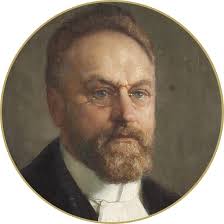
bavinck.jpegWhat is theology? And what is it good for? These are questions Christians ask and theologians attempt to answer. In his various works on theology, Kevin Vanhoozer has attempted to explain doctrine in terms of drama (e.g., The Drama of Doctrine). More recently, he has argued for the place of doctrine and drama in the making of disciples (e.g., Hearers and Doers: A Pastor’s Guide to Making Disciples Through Scripture and Doctrine). In Pilgrim TheologyMichael Horton makes the same point—doctrine summarizes the drama, directs doxology, and instructs disciples.

In short, some of the best theologians today know that theology is for living, doctrine is for discipleship, and everything is for worship. Still, theology (truth about God) is not to be confused with discipleship (walking in truth). To say it differently, there is a place for theology and ethics. And recently, I was reminded (or instructed more fully) how these two disciplines are related to one another, but also different.

In the editorial introduction to the first volume of Herman Bavinck’s recently published Reformed Ethicswe find how this great theologian for the Netherlands distinguished theology and ethics. First, in Reformed Dogmatics, he states,

Dogmatics describes the deeds of God done for, to, and in human beings; ethics describes what renewed human beings now do on the basis of and in the strength of those divine deeds. In dogmatics human beings are passive; they receive and believe; in ethics they are themselves active agents. In dogmatics, the articles of faith are treated; in ethics, the precepts of the decalogue. In the former, that which concerns faith is dealt with; in the latter, that which concerns love, obedience, and good works. Dogmatics sets forth what God is and does for human beings and causes them to know God as their Creator, Redeemer, and Sanctifier; ethics sets forth what human beings are and do for God now; how, with everything they are and have, with intellect and will and all their strength, they devote themselves to God out of gratitude and love. Dogmatics is the system of the knowledge of God; ethics is that of the service of God. (xxv–xxvi, Reformed Dogmatics 1:58) Continue reading