Words of Wisdom to Those (Still) Waiting to Be Wed (1 Corinthians 7:25–40)

sermon photo

“Words of wisdom” may be the best way to describe Paul’s counsel concerning singleness in 1 Corinthians 7:25–40. Instead of comprehensive or absolute rules about marriage and singleness, he offers five portraits of marriage for singles and married couples to consider. In these portraits the Spirit-filled man or woman (see 1 Corinthian 2:14–16) can discern how to apply God’s Word to his or her life.

While others (see below) have been more comprehensive in treating the subject of singleness, my sermon sought to follow Paul’s train of thought and apply his words to singles, especially those contemplating marriage.  In all, there are lots of technical question in 1 Corinthians 7, but the singular message is clear: Whether married or single, do all things to the glory of God, leveraging your position in life to know Christ and make him known. This is what it means to walk in wisdom, whatever your vocation.

You can listen to the audio from Sunday’s message or read the sermon notes here. For those who want to go deeper, there are discussion questions below and links to a few other resources (articles, sermons, books) on 1 Corinthians 7 and the topic of singleness. Continue reading

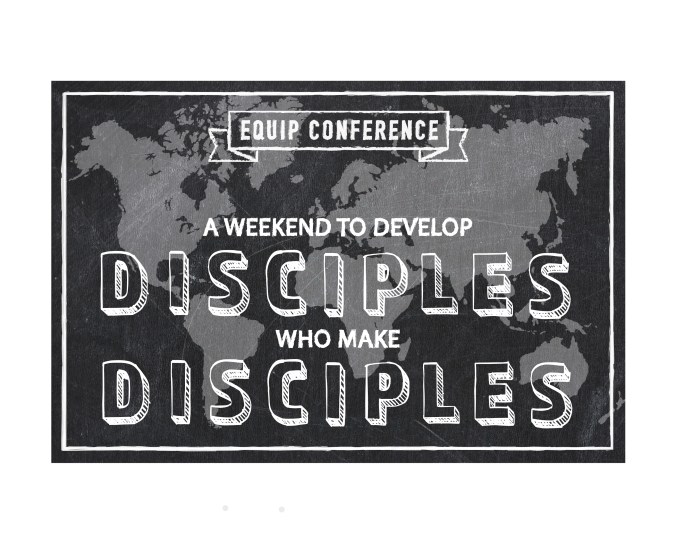
Are You Equipped? Announcing OBC’s EQUIP Conference (Sept 23–25)

equip . . . to equip the saints for the work of ministry,

for building up the body of Christ . . .”– Ephesians 4:12 –

In the 1980s edutainment games were coming of age and infiltrating American schools. Leading the way was a game called Oregon Trail. Perhaps you remember playing the game, shooting Buffalo, fording rivers, and fighting off dysentery. In truth, for most 20th and 21st century children such rugged adventures are things of the past, experienced only in pixels and museums.

In our modern world, it can seem that such explorations ended generations ago. Like our entertainment-oriented education strategies, our world tells children and adults that free time is best spent playing, gaming, or escaping the hard edges of life by conjuring up some fantasy world.

The Bible, however, confronts us with a different reality, one far more adventurous and exciting than anything created by Pixar, Pokemon, or a Carnival pleasure cruise. It calls us to scour the earth, making disciples from every nation teaching them to obey all that God has commanded us.

This is God’s great calling—to follow Christ as eager disciples and lead others to know him through our various stations of life. This is why God made us (to glorify him); this is humanity’s greatest task (to increase his glory by multiplying children who reflect his image). This was Jesus’ final word, to follow him in the world’s greatest commission (Matthew 28:18–20).

But how? Continue reading

What is the Kingdom of God Like?

kingdomIf there is one chapter in the Bible which best describes the kingdom of heaven (in other places, the “kingdom of God”), Matthew 13 is it.

Through seven parables, Jesus spoke to the crowds who came to see him (v. 1). In these parables, he laid out aspects of the kingdom that were both hidden and revealed, spiritual and physical, contested and certain, already and not yet. In short, by looking briefly at each parable we can get a list of the kingdom’s characteristics. Then, as we look at all the parables together, we are positioned to answer the question: What is the kingdom of God like?

What follows are five observations from individual parables (some are taken together), and two larger observations taken from the whole of Matthew 13.

The Kingdom of God Is . . .

. . . Mysterious

Perhaps it would be better to say the kingdom is hidden and revealed. For this is what mysterion means in the Bible. Beginning with Daniel 2, the word “mystery” speaks of a kingdom reality that was once hidden but now revealed. Continue reading

Seven Truths about the Doctrine of Vocation

vocation In 1 Corinthians 7:17–24 Paul speaks of our calling before God. In all of his writings, this may be one that most directly deals with the doctrine of vocation. On Sunday, we will consider this subject at length. In preparation, here are seven truths that relate to “vocation” and our calling to live for and before God in all we say and do.

1. Your vocation begins with the Lord’s calling unto salvation.

Made in the image of God, there’s a sense in which everyone has a “vocation.” The world’s bounty is not cultivated by Christians alone. God has blessed the world with the lives and services of many non-Christians.

That being said, only Christians can pursue their work for the glory of God. Only Christians can give thanks to God and pursue their vocations motivated by God’s love. In this way, a true vocation stands in continuity with one’s calling to Christ. The Father effectually calls his children and then assigns them to do good works.

Ephesians 2:10 says that believers are “created in Christ for good works, prepared beforehand, that we should walk in them.” Likewise, 1 Corinthians 7 defines our assignment in life by God’s effectual calling. In 1 Corinthians 7:17, 20, 24, Paul tells the Corinthians to abide in their earthly status and serve God, not worrying about changing their position. In truth, this way of thinking (and living) can only be achieved by those who have the Spirit of God. Therefore, the Christian homemaker or construction worker are animated by the same principle—God’s effectual call (re)defines your earthly occupation. Continue reading

Answering the Call: Toward a Biblical View of Vocation (1 Corinthians 7:17–24)

sermon photo

Eight times in eight verses the apostle Paul speaks to the Corinthians about understanding their various vocations in light of God’s effectual “call.” These instructions about one’s calling before God broaden Paul’s focus in chapter 7 from marriage, singleness, and sexuality to matters concerning circumcision (Jew vs. Gentile) and slavery (bondservant and free).

All in all, Paul’s heavy emphasis on the Christians upward call in Christ make these verses a cornerstone for understanding our earthly labors at home, in the marketplace, or the church. You can listen to the audio from Sunday’s message (shortly) or peruse the sermon notes here. For those who want to go deeper, there are discussion questions below and links to a few other resources on the doctrine of vocation. Continue reading

God at Work: Learning About the Doctrine of Vocation from Gene Veith (and Martin Luther)

work“Vocation” is a word that comes from the Latin word for “calling” (vocare). In modern vernacular it often is an unimpressive synonym for work, i.e.,  vocational training. However, in Scripture, the word is filled with significance, even dignity. God calls us to himself, out of darkness and death, into the life and love of his beloved Son. Therefore, Christians must understand “vocation” not as a mundane description of work, but rather a dignified “calling” to serve God and the creatures who bear his image. Truly, to ignore or minimize this vocation is to miss a significant facet of the Christian life.

When the Reformers like Martin Luther threw off the shackles of Rome, they restored the doctrine of justification by faith alone. However, contesting the clergy-laity divide, they also esteemed the priesthood of all believers and the doctrine of vocation. In fact, in church history any study of vocation must consider his writings, for he wrote so much and so well about this doctrine.

workTaking this into consideration, Gene Veith an evangelical Lutheran has captured much of Luther’s doctrine, make that the biblical doctrine, in his excellent book God at Work: Your Vocation in All of Life. Introducing his topic, he writes, “When God blesses us, He almost always does it through other people” (14). This, in a sentence, is the doctrine of vocation. Or more exactly, this is the fruit of the gift of vocation.

In what follows I’ve traced the themes of his book and encapsulated a number of his best quotes. I hope it piques your interest in this topic, even as it paints a picture of why vocation is so important for the Christian.  Continue reading

Discipleship in the Local Church: What Has Preaching to Do With Discipleship?

discipleshipDiscipleship programs.

Discipleship pastors.

Discipleship pressure.

Following Jesus means obeying the Great Commission, with its command to make disciples of all the nations. But what does that mean? And how do we do it?

In a few other posts I’ve answered what it means to be a disciple and who makes disciples. But today, I want to begin to address the question: How do we disciple?

A Brief Introduction

Many helpful books have been written on discipleship. My (old) favorite is Robert Coleman’s Master Plan of Evangelismmy (new) favorite might be Discipling: How to Help Others Follow Jesus by Mark Dever. Both are simple reads. The former tracing Jesus’ pattern of discipleship; the latter giving practical instructions on “helping others follow Jesus,” which is Dever’s simple definition of discipling. If you have never read a book on discipleship, I’d recommend you pick up one of these two—then read the other.

In the meantime, let’s try to put a few how-to’s in place, with or without any prerequisite reading. Without limiting or listing the number of ways discipleship can be carried out, here are three ways we might conceive of discipleship. Continue reading

‘Married for God, Divorced for Good?’ (1 Corinthians 7:10–16)

sermon photoFirst Corinthians 7:10–16 brings us to one of the most heart-wrenching passages in Scripture. As it deals with marriage, divorce, and remarriage, it gives counsel to Christian marriages (vv. 10–11) and “mixed marriage” (vv. 12–16) that are looking into the teeth of divorce. In the context of a horribly sad week (#AltonSterling, #PhilandoCastille, and #DallasPoliceShooting), I bookended this sermon with the gospel truth that God comforts those who are broken by sin. My prayer is that as God’s truth is declared, it brings clarity and comfort.

You can listen to the audio from Sunday’s message or peruse the sermon notes here. For those who want to go deeper, there are discussion questions below and resources explaining the Majority and Minority position on divorce and remarriage. Continue reading

On Religious Liberty and the Freedom to Worship

declaration

But seek the welfare of the city where I have sent you into exile, and pray to the Lord on its behalf, for in its welfare you will find your welfare.
— Jeremiah 29:7 —

Today marks the 240th anniversary of the signing of the Declaration of Independence—a day that marks the birth of our nation and reminds us of the wonderful liberties we have in America. In celebration our family read that founding declaration this morning and praised God for placing us in this country.

At the same time, though, my praise is mixed with pain and petition.

America is not what it was when it was founded. In many wonderful ways the liberties that were not afforded to all men have been extended. But in other less admirable ways, the liberties constituent in the Declaration, Constitution, and Bill of Rights have devolved into a libertine version of hyper-individualism. (On this point listen Albert Mohler’s recent discussion with Yuval Levin). Whereas rights were once understood to be endowed by our creator, rights have become things which men can create or castrate as they—or the Supreme Court–wish.

One of the greatest differences the founders vision of liberty and today’s is found in the increasing distinction between the “freedom of worship” and the “freedom of religion.” The former is the freedom of personal belief and private religious assembly; the latter is the constitutional right—the very first right—which says in the Bill of Rights: “Congress shall make no law respecting an establishment of religion, or prohibiting the free exercise thereof; . . .”

In our day, the change in language to “freedom of worship” is altering the understanding of this first amendment right, and with societal pressure Christians are being forced to mute their beliefs—especially with regards to marriage, sex, and lifestyle choices (a clever euphemism in and of itself). For that reason, on this day of liberty I am both grateful and grieved.

But perhaps, as a pastor, I am most concerned about the way some Christians and Christian leaders celebrate the Fourth of July without voicing any concern for these changes. Can we watch fireworks, grill hotdogs, and eat apple pie, assuming all is well? I think not. As Os Guiness (A Free People’s Suicide: Sustainable Freedom and America’ Future) and Eric Metaxas (If You Can Keep It: The Forgotten Promise of America’s Liberty) have observed, America’s liberty is under threat from within. And therefore, this holiday leads me in two directions regarding religious liberty and the freedom to worship. Continue reading

From Capital Punishment to Christ’s Propitiation: What Leviticus 20:13 Means for Christians Today


orlando-tragedy

In the wake of the Orlando shooting, our summer intern (Timothy Cox) and I drew up a biblical response for our church. Our hopes were to clarify the differences between the Bible and the teachings of Islam. Although one Bible verse (Leviticus 20:13), taken out of context, calls for the death of gays and lesbians, Christians should never accept this as a blanket endorsement for the violence we witnessed in Orlando. Rather, Christians must defend the poor and oppressed without running roughshod over the Bible. The fulfillment of the law is love (Romans 13:8), and thus as the sacrificial love of Christ constrains us to share the gospel of grace and truth with a lost and dying world, so it compels us to rightly interpret Scripture so that we may be ready to give an answer for the hope that we have in the gospel. That was the intention behind this article. 

May God use these words to clarify what Scripture does and does not teach about capital punishment, so that Christians would love *all* their neighbors. And may all our neighbors know the propitiating love of God promised in the Law and fulfilled in Christ.

**********

In this is love, not that we have loved God but that he loved us
and sent his Son to be the propitiation for our sins.
— 1 John 4:10 —

In the aftermath of the Orlando massacre, where 49 people were killed and over 50 injured at a gay night club, Christians weep for the loss of life and are left wondering what to say or do. On social media, trending topics have included gun control, terrorism, homophobia and Islamic extremism. In light of the terrorist’s professed allegiance to ISIS and other radical Islamic groups, it is especially important for Christians to distinguish between the Quran’s teaching on homosexuality and the Bible’s. Now, more than ever, it is important we convey gospel-centered compassion, even as we hold firm to biblical truth.

In order to do that, we must look at Leviticus 20:13:

“If a man lies with a male as with a woman, both of them have committed an abomination; they shall surely be put to death.”

Read by itself, this passage may seem to catch Bible-believing Christians red-handed with a verse that proves their Bible needs to be updated or abandoned. However, because the Bible is not a collection of individual sayings; Leviticus 20:13 must be read in light of its historical and covenantal context. Indeed, only a whole-Bible theology of sexual ethics and capital punishment can rightly explain this verse.

With this in mind, we will show why this verse does not permit violence against homosexuals, and why the Bible is fundamentally different than the Quran and Islam’s other holy books, which do endorse violence towards the LGBT community. In actuality, the command for capital punishment in Leviticus 20:13 becomes a pathway to Christ’s substitutionary death, not a harbinger of hate. Continue reading