Sovereignty, Satire, and Second Chances: An Introduction to the Book of Jonah

jonah04For being only four chapters and 48 verses, the book of Jonah demands a lot from its readers. In the original language, it becomes clear how well-crafted the book is. In four chapters, there are at least four chiasms that organize the book, and on the whole, Jonah is a literary masterpiece. At the same time, the book is best understand in combination with the rest of the Minor Prophets—consider the way Jonah’s rebellion mirrors that of Edom in Obadiah, or the way the king of Nineveh preaches Joel 2:12–14 (see Jonah 3:6–9).

Still, if Jonah demands a lot from its readers, it gives even more. In its four scenes, it gives its readers an incredible vision of God, his grace, his power, and his purpose among the nations. In other words, in the rebellion of Jonah, a (false) prophet of the Lord, we find much about God’s grace.

Over the next two months, our church will be spending ample time in this book, along with a few other Minor Prophets. So in this post, let me introduce a few themes we will see again and again—namely, God’s sovereignty, the book of Jonah’s satire, and the promise of second chances for sinners who repent and turn to God. Continue reading

Behold *the Man*: B.B. Warfield on the Perfection of Christ

raphael-nogueira-519766-unsplashWhat a straightedge is to a carpenter’s board, Jesus is to the human soul.
— Fred Zaspel —

In his summary of B.B. Warfield’s theology, Fred Zaspel observes the unique way Warfield presents the humanity of Jesus Christ. Instead of just showing the weaknesses and limitations of Christ, he portrayed our Lord as fully and wonderfully human. In other words, while defending the full deity of Christ, he also insisted on capturing the full and glorious humanity of Christ. Jesus came to identify himself with fallen humanity, yet in himself he was humanity par excellence. Jesus was the perfect man and an image of what mankind was supposed to be and, amazingly, what humanity will be once again, when we see our resurrected Lord.

To get a sense of what Warfield’s view of Christ’s humanity consider these three truths, accompanied by Warfield quotations. Continue reading

The Good and the Bad of Brevard Childs’s Canonical Criticism

chilsdIn his book Introduction to the Old Testament as Scripture, Brevard Child’s explains his approach to canonical criticism, a term he does not like (82), but one that generally describes his approach to interpreting Scripture in its final form. Among critical scholars, i.e., those who employed historical-critical methods of interpretation, Childs championed a new (and better) approach to the Bible.

Instead of looking for the sources behind the text (e.g., Julius Wellhausen) or certain forms in the text (e.g., Herman Gunkel), or traditions running through the text (e.g., Gerhard Von Rad), Childs advocated an approach to the Bible which studied the final form of the text. In the academy, this approach turned the corner towards studying the unity of the Bible and not just its diversity. His work spurred on others to read the Bible canonically, and his labors helped turn the corner towards what is known today as TIS, the theological interpretation of Scripture.

Therefore, its worth considering what he said on the subject of reading the Bible in its canonical form. From his chapter on “Canonical Criticism,” here are a few insightful quotations, listed under five summary statements.

(Spoiler Alert: At the end, I’ll outline a few reasons why Childs approach may not be helpful as some think.) Continue reading

How the Trinity Shines Light on Difficult Doctrines

light.jpegFree will.

The doctrine of election.

The New Testament use of the Old.

The problem of evil.

These are just a few of the most complex issues we face when we read the Bible and formulate doctrine. They are debated by well-meaning and biblically-committed Christians, and often they leave us perplexed, if not flummoxed, at how to understand them and apply them to life.

Certainly, there are mysteries related to each of these doctrines, but in God’s revealed word, we still find ample evidence for explaining them as Scripture teaches. That said, I believe it is impossible to understand any of these doctrines rightly without a self-conscious awareness of how they all relate to the nature of God as Father, Son, and Holy Spirit. Or, to put it the other way, how a robust doctrine of the Trinity sheds light on these doctrines that relate God to his world and his Word. Let me try to illustrate. Continue reading

The Putrefied Priesthood of Jesus’ Day, or Why Mark’s Gospel Calls for a New Priest

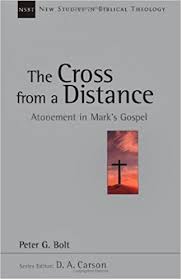
karsten-wurth-inf1783-65075-unsplash.jpgIn his excellent book The Cross from a Distance: Atonement in Mark’s Gospel, Peter Bolt shows how religion in Jesus day had soured. In one footnote, he surveys the whole Gospel to show repeated instances of religion gone bad.

I share the note in full because it helps us to see what false religion looks like, what Jesus had to contend against in his day, and what we should avoid as new creatures in Christ. As Bolt puts it, “Mark exposes religion as having multiple faults.” He then lists more than fifteen different evidences of priestly malpractice:cross Continue reading

“All the Father Has Given Me”: Election and Evangelism in the Gospel of John

anthony-garand-498443-unsplashJesus said to them, “I am the bread of life; whoever comes to me shall not hunger, and whoever believes in me shall never thirst. But I said to you that you have seen me and yet do not believe. All that the Father gives me will come to me, and whoever comes to me I will never cast out.

— John 6:35–37 —

If the book of John is the most evangelistic Gospel—or at least, if it is the one most often lifted from the canon and given as an evangelistic tract—it is also the Gospel with the greatest emphasis on God’s sovereignty to open blind eyes to the person and work of Christ. For instance, the whole message of the man born blind (John 9) identifies the way God intended his blindness for his glory. That is, through his blindness, God would glorify his Son in the miracle of healing, such that the healing miracle revealed the blindness of the Pharisees and the promise sight for the blind.

In fact, throughout John’s Gospel we find instances of those in the dark coming into light, and the supposed enlightened ones (think Nicodemus) proving their darkness. These themes of light and darkness highlight the sovereignty of God who both creates light and darkness (see Isaiah 45:7). Still, the most evident examples of God’s sovereignty in John’s Gospel relate to the way he grants life  and salvation to one group of people, but not another. Indeed, for all the places John invites readers to believe in Christ, he equally insists that no one can come, believe, or receive the gift of salvation unless God sovereignly enables them. Continue reading

“Whatever You Ask in Prayer”: A Christ-Centered Re-Reading of a Commonly Misused Verse

rob-bye-103200-unsplash“And whatever you ask in prayer, you will receive, if you have faith.”

— Matthew 21:22 —

Therefore I tell you, whatever you ask in prayer,
believe that you have received it, and it will be yours.
— Mark 11:24 —

In my high school year book, my senior quote was from Jesus: “Therefore I tell you, whatever you ask in prayer, believe that you have received it, and it will be yours.” Young in my faith but zealous, I was learning how to follow Christ and this verse seemed to be an appropriate way to express my devotion. Not to mention, it marked something of my eighteen-year-old theology: If I put my mind to it, Jesus could do anything.

In subsequent years, I’ve seen that my introduction to Christ came through various shades of moralistic, therapeutic deism with splashes of the Bible mixed in. I believed in God, the Bible, the historical death and resurrection, and my need for salvation, but I really didn’t understand the logic of the gospel—even though I believed in Christ crucified.

I believe God, in his unspeakable kindness, used a psychologically-slanted message of salvation to create in me a simple trust in Jesus. In a way that only a sovereign God could design, he planted the truth of Christ’s preciousness in my heart, even if it would take some time to see the darker lines of the gospel—namely God’s absolute holiness, my absolute need for atonement, and that faith included a dying to self and living for his glory (in a word, repentance is part of saving faith).

For me, college served as a crash course in theology, where the doctrines of grace began to redraw my earlier understanding of Christ and salvation. But before college, I believed Christ came to save me from hell and to help me fulfill my life’s purposes. After all I had found verses that said as much—Matthew 21:22 and Mark 11:24 being prime examples.

So, in my misguided zeal, I quoted Mark 11:24, a verse that I think many people misunderstand. Continue reading

Paul, Slaves, and the Church: How the Gospel Creates a People Passionate for Love and Justice

museum of the bible

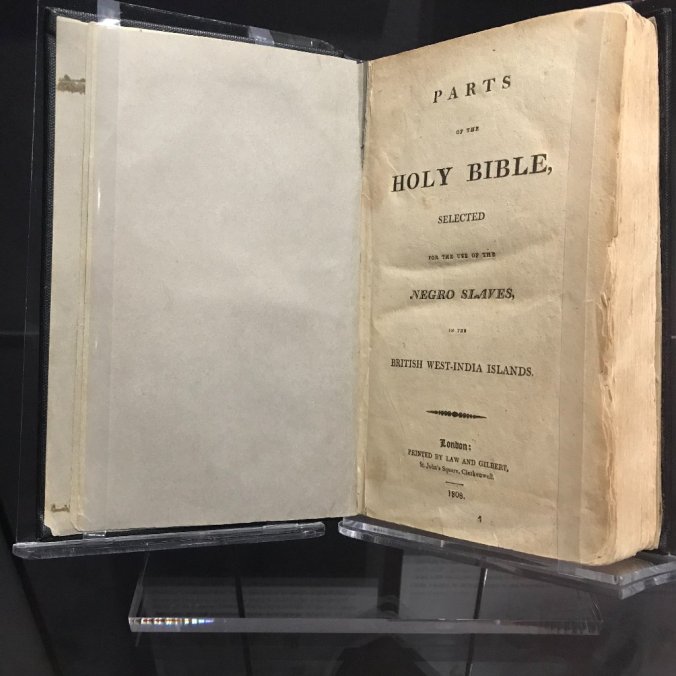
In Washington, D.C. the Museum of the Bible has an exhibit tracing the impact of the Bible on slavery, and the impact of slavery on the Bible. Tragically, as the artifact above reveals, slave holders invited God’s judgment on themselves (see Revelation 22:19), in order to control their slaves and defend their institution of slavery.

In another exhibit, Ephesians 6:5 (“Slaves/Bondservants, obey your earthly masters with fear and trembling, with a sincere heart, as you would Christ”)  is cited as one verse among many that were used out of context to control God-fearing slaves. In reading this verse by itself, you can see how it could be misused to do horrendous damage. But how should we understand this verse? Did Paul condone slavery? Are his words to be ignored, rejected, or attributed to some cultural blindness of his day? Why didn’t he speak against slavery?

To be sure, questions like these need answering. But denying the veracity of God’s Word, as some like to do, is not the answer. Rather, we need to understand Paul’s words in their historical context and how his commitment to the gospel both liberated individuals from slavery to sin/death/hell and, in time, led to emancipation for slaves across the Mediterranean.

To get at his historical context, lets consider two questions:

  1. What did slavery look like in first century Ephesus?
  2. What did Paul think of slavery?

By getting a handle on these two questions, it will help us understand Paul’s words and how his witness shows how far pro-slavery Christians deviated from God and his Word. At the same time, by considering Paul’s unswerving commitment to the gospel, we will see how that message (alone) forms a foundation for all genuine pursuits of love and injustice, liberty and emancipation. Indeed, by understanding more clearly the way the gospel works, we can see more clearly the wisdom of God, the goodness of Paul’s words, and the reason why he, as God’s chosen apostle, addressed slaves and their masters as members of Christ’ church, rather than a class of people suffering under an unjust system. Continue reading

Serving Two Masters: Does Ephesians 6:5 Contradict Matthew 6:24?

aaron-burden-300808-unsplash

No one can serve two masters, for either he will hate the one and love the other, or he will be devoted to the one and despise the other. You cannot serve God and money.
— Matthew 6:24 —

Bondservants, obey your earthly masters with fear and trembling, with a sincere heart, as you would Christ, not by the way of eye-service, as people-pleasers, but as bondservants of Christ, doing the will of God from the heart, . . .
— Ephesians 6:5–6 —

Ephesians 6:5–9 calls “slaves” to obey their earthly masters, which at first sounds like it contradicts Jesus words in Matthew 6:24, where our Lord states that men are not to be divided in their allegiance and service—you can either serve God or money.

A careful reader may ask, Does Paul’s instructions contradict Jesus’ words? Or does he help the worker go further in understanding how our primary allegiance to Christ leads to improved service to earthly masters?

I believe it is the latter.  And on that point, Wolfgang Musculus, a sixteenth-century pastor-theologian, answers well: Continue reading

Reading Proverbs Wisely

samantha-sophia-34200.jpgIn Proverbs the ideas of wisdom, righteousness, and reward are prevalent. And as I highlighted here and here, these three ideas are developed together under the old covenant. Therefore, they cannot be directly applied to the new covenant believer—at least, not without showing how they apply to us in Christ. That said, they are important for understanding the righteousness of Christ and the way in which we are to follow him when, by the Spirit, we walk by faith.

In what follows I want to consider how to read the Proverbs wisely by holding the old covenant and new covenant together as we read Proverbs. In this approach to the Proverbs, we see the covenantal context of Proverbs relates to Christ and the whole counsel of Scripture. In other words, by holding these biblical realities together, we begin see how the wisdom of the old covenant called for God’s people to enjoy God’s gracious promises through wisely applying the law of Moses. However, for us, because we do not live under Moses, we learn how to apply them in Christ. Graphically, we might illustrate the difference like this:

Old Covenant

Law >> Wisdom >> Righteousness >> Reward (=Inheritance) . . . [Gospel]

New Covenant

Gospel >> Faith  >> Reward (=Inheritance) >> Law >> Wisdom >> Righteousness**

** Righteousness defined as a progressive growth in righteousness (i.e. sanctification) as the believer exercises faith in God’s Word, demonstrated in love and justice.

With this framework in place, we can see that the wisdom of the Proverbs still has a vital place in the life of a Christian. But it is not a pathway to salvation or blessing, as some prosperity preachers wrongly apply the proverbs. Neither are the Proverbs timeless principles that promise material blessing today; they are instead enduring principles that teach the child of God how to walk in the light of Christ.

In truth, by living out the Proverbs, we are often protected from many earthly trials and find greater earthly success. However, such proverbial fruit is all the more reason to be careful with Proverbs. Why? Because earthly fruit through a Provers-centered life does not mean that we can read Proverbs as a certified manual for ensuring material blessing. In fact, there are hints in the Proverbs that righteousness is itself a reward: “Better is a little with righteousness than great revenues with injustice” (16:8).

In the end, we should read Proverbs regularly, but  we must read them wisely. And to help us read wisely, let’s consider how Proverbs speaks of righteousness and how we might apply its words in and through Christ today. Continue reading