 How do we put the Minor Prophets together?
That has a been a topic of discussion on this blog and at our church over the last few months. As we’ve preached Jonah, Nahum, and (now) Haggai, we’ve paid careful attention the literary structure of the Twelve. With help from Paul House and David Peterson and Jim Hamilton, we’ve considered how the Twelve is put together and how that arrangement influences our reading and interpretation.
Today, we continue that study with a few qualifications and theological considerations from Richard A. Fuhr and Gary Yates. In their recent book, The Message of the Twelve, these two Liberty professors provide a reading of the Minor Prophets that finds unity in the “theological message . . . that emerges when these books are read as a collective whole” (42). In this approach, they engage with the differences between the Hebrew Bible (i.e., the Masoretic Text) and the Septuagint (LXX), the chronology of the books, the catchwords that may contribute to their order, and the overall theological message that unites these books. While more reserved in their approach than Paul House and his plot line reading of the Twelve, their theological approach helps identify some key themes in the book.
In order, we will consider some of their observations, which help us read the Minor Prophets as a theological whole. Continue reading
 In discussions about salvation and interpretation of the Old Testament, two related questions are often asked.
 It has been said that on the cross God’s wrath and mercy meet. Indeed, on the cross the full revelation of God’s undivided attributes are manifested. As just and justifier, Jesus receives in his body the full outpouring of God’s wrath. Yet, as God Incarnate, he simultaneously displays the love of God, as 1 John 3:16 states, “By this we know love, that he laid down his life for us, and we ought to lay down our lives for the brothers.” Accordingly, all other moral attributes (e.g., truthfulness, justice, goodness, mercy, peace, righteousness) are revealed in perfect proportion.
 The Lord passed before him and proclaimed, “The Lord, the Lord, a God merciful and gracious, slow to anger, and abounding in steadfast love and faithfulness,
  Writing about the misguided disinterest many generations of Christians have had towards the Minor Prophets, Thomas McComiskey states,
 It is striking the way Jonah 2 employs language from the Psalms. For those familiar with the Hebrew Psalter, it would be difficult to hear Jonah’s prayer of thanksgiving without reflecting on other inspired Psalms. Just as songs which recycle older lyrics or melodies remind us of previous songs, so Jonah’s prayer should bring to our memory many lines in the Psalter.
 . . . they crucified him . . .
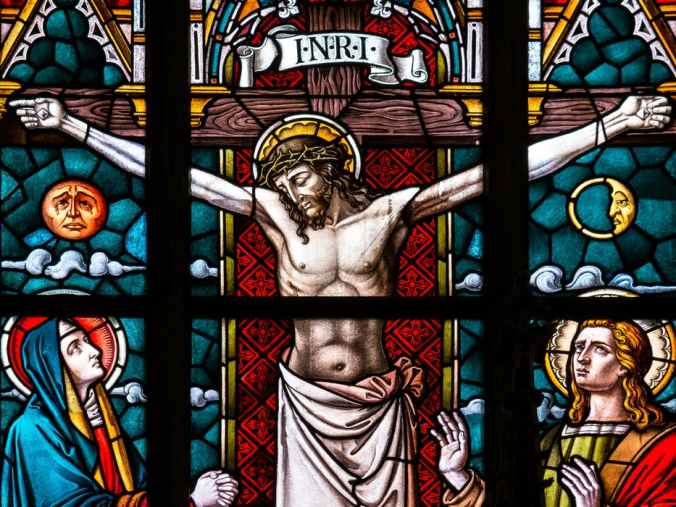 As we prepare for Good Friday and Resurrection Sunday, consider this meditation from
  What has been the best book you have read in 2018? For me, it has been a 300+ page study on Leviticus. Yes, Leviticus!
 At the end of 2 Peter 3:18 Peter prays that the church might grow in grace and knowledge. Truly, when that happens Christians not only learn truths about God, they come to know God and share his character through studied communion with him. Likewise, in becoming like our heavenly Father we learn what is most important to God, and how, in our fallen world, can and should give grace to people who do not perceive as we do (rightly or wrongly) what is most important.
 Via Emmaus