Twelve Ways to Order Your Week by the Son (Part 2)

Last week, in application of a recent sermon, I outlined six ways to set your watch by the Son. In order, these included.


  1. Start your day with God.
  2. Consume God’s Word on the way and make plans to feed on his faithfulness.
  3. Pray without ceasing.
  4. Make a midweek gathering a priority.
  5. Preserve and protect the altar.
  6. Make space in your calendar to meet with other Christians.

By and large, these six orientations were given as guides for making the most of the time between the time you gather for worship on the Lord’s Day. Today, I am adding six more ‘Helio’-centric orientations. Here they are.

  1. Enter the darkness of the city with the light of Christ.
  2. Lead others (family, friends, peers, strangers) to the altar of God on the Lord’s Day.
  3. When home (on Sundays), look for ways to bless the people who gather at your altar.
  4. When traveling (on Sundays), look for other faithful altars to visit and encourage.
  5. When sick (on Sundays), lament your absence.
  6. In each season, solidify your schedule and guard your time with God.

As you can tell, four of these orientations are directly related to the Lord’s Day (8–11). And three of them are directed to ways to make the best use of the Lord’s Day (9–11). In all, I hope these 12 orientations help you reflect on the best ways to order your week in a way that is centered on Christ. For a further reflection on these twelve points, you can listen to my Sunday School lesson.

Continue reading

On Earth, As It Is in Heaven: Making Plans That Please the Lord

Welcome to Quitter’s Day.

Until this week, I didn’t even know that such a day existed. Sure, I was familiar with the fact that the gym seems a lot less crowded by the end of January. But I didn’t know that we coronated the breaking of New Year’s resolution with an unofficial holiday. But some do, and today USA Today even ran a brief article on it.

Apparently, the Second Friday of the new year is dubbed Quitter’s Day because of the way that so many plans have been broken in the new year. To speak personally, my own Bible reading plans were thrown off yesterday because an early morning meeting took the place of my typical morning devotion. Yet, today I picked up the plan again, read yesterday’s Psalm (and todays), and continued in my reading in Matthew. Such is life.

If we are going to make progress in the world, we must make plans and keep them. And I suspect that everyone who makes and breaks a new year’s resolution to eat better, work out more, or spend less money—these are the Big 3, apparently—still maintains other plans. It’s not possible to finish a degree, order a home, build a career, or lead a team without making and keeping plans. Yes, some of us are better than others at making plans and keeping them, but part of being human is to order our steps for the purpose of accomplishing a goal.

In Proverbs, there are many such passages that describe this way of planning. Consider a few. In Proverbs 15:22, we learn that “without counsel plans fail, but with many advisers they succeed.” More positively, Proverbs 20:18 says, “Plans are established by counsel; by wise guidance wage war.” Later in Luke 14:31–33, Jesus will say something similar. When discussing what it takes to follow him, our Lord compared discipleship to kingship and the need to count the cost before engaging in war. Truly, planning is what kings do. And because humanity is given the task of ruling over the world, planning is part of what it means to be human.

Think about it. Before God made the world, he made a plan. And that plan included the “foundation of the world” (John 17), the storyline of history (Eph. 1:11; Rev. 13:8; 17:8), the cross of Christ (1 Pet. 1:20; cf. Acts 2:23; 4:27–28), and the election of every of sinner who would come to faith in Christ (Acts 13:48; Rom. 9:22–23). Indeed, the kingdom of God was not an after-thought in God’s mind; it was the reason why God created the world in the first place (Matt. 25:34). Though in time redemption came after creation, in the mind of God redemption in Christ came first. And thus, the world God made is filled with order, and if we are going to be like our Creator, we must order our days too. But how? Continue reading

Wide are God’s Mercies: Giving Public Praise to Our Lord for His Ongoing Work at Our Church

nathan-dumlao-KYiGu8qqEcM-unsplashMy companion stretched out his hand against his friends; he violated his covenant. 21 His speech was smooth as butter, yet war was in his heart; his words were softer than oil, yet they were drawn swords. 22 Cast your burden on the Lord, and he will sustain you; he will never permit the righteous to be moved.

– Psalm 55:20–22 –

Recently, I received an email that brought to mind a dozen or so events from the last ten years. The email was intended to lay charges against our church, myself, and my fellow elders. And, in a world that offers multiple perspectives, those accusations are certainly one interpretation. However, as we learn from Proverbs 18:17, “The one who states his case first seems right, until the other comes and examines him.”

Today, I have no interest in examining the charges made. They have been examined often over the last six months and before, but I do have an interest in giving thanks to God for the charges that have been made and for the events they recall. For in fact, all of things that were brought to light are, from another angle, testimonies of God’s grace. And thus, I want to give public praise to God for all the ways that his mercies have been made new over the last decade.

When Paul defended himself in 2 Corinthians against the charges of the super-apostles, he boasted in his weaknesses. In what follows, I will do much of the same. But more, I will boast in the kind and loving work of God in a local church that was once featured negatively in a book by Nancy Pearcey.

As with all local churches, ours is made up of members who have feet of clay. And yet, with clay feet we are learning to walk with our Lord, and looking back on the last three decades, God has demonstrated his mercy and grace again and again. And for that reality, I am profoundly grateful. And I share these ten reflections as a testimony to the wideness of God’s of God’s past mercies, which funds the promise of future grace.

Continue reading

The Sons of God: Three Interpretations of Genesis 6:1–4

luigi-boccardo-OGSbrFW_dos-unsplashFigment. Absurd. Gross.

These are but three of the names John Calvin calls the position I hold on Genesis 6. And while, he doesn’t employ his most common insult (stupid!), I am sure he would have little trouble applying that label to the view that angels had sexual relations with women, such that the Nephilim (or giants) were the resultant offspring.

For indeed, when considering who the sons of God were in Genesis 6, he excoriates the ancient view that believed the sons of God (=angels) came from heaven to consort with the daughters of man. He writes in his commentary on Genesis 6, “That ancient figment, concerning the intercourse of angels with women, is abundantly refuted by its own absurdity; and it is surprising that learned men should formerly have been fascinated by ravings so gross and prodigious [strange or unusual].” [1]

Following this view, he adds another, namely, the idea that the sons of God were royal sons and the daughters of men were commoners. The problem in this case was the way that the nobility chased the commoners, resulting in offspring of mixed hereditary stock.[2] On this second view, whom he assigns to the “Chaldean paraphrast” (i.e., the Babylonian Talmud), we can agree that this interpretation fails to follow the terms of Scripture. (Yet, it is not far from another view that will be referenced below.)

In contrast to both views, Calvin then offers his—the idea that has become popular among so many evangelicals today. He sees the sons of God as the male heirs of Seth and the daughters of man as the female offspring of Cain. While Calvin frames this division in theological terms (i.e., the sons being chosen by grace and the daughters being left in their common condition), his reading is purely human, and wreaks nothing of gross absurdity.[3] Or, so he believes.

Historically, his view, which goes back to Augustine and before that to Julius Africanus (c. 160–240), can be summarized under the title of the Sethite position, while my position, which goes back to the Jewish interpreters of the Second Temple period might be titled the Fallen Angel position. Additionally, there is the view that understands the sons of God in royal terms, but not like that described by Calvin, what I’ll label the Kings of the Earth position.

In what follows, I want to lay out these three positions and begin to explain why I believe Calvin’s mockery of this position is wrong. As always, it is not a light thing to disagree with such an eminent theologian, but as a Baptist, Calvin’s insults don’t bother me. I’ve disagreed with him before, and here I will do so again. I will argue that his Sethite view is reasonable, but not ultimately persuasive. Better, we should read Genesis 6 in the context of the whole Bible, and when we do we will discover the fact that the angels of heaven left their proper abode, consorted with human women, and thus invited the judgment of God which led to the cosmic flood. Continue reading

What Should We Do With 1 Enoch? A Biblical Approach to Extra-Biblical Literature

konrad-hofmann-XFEqU_bf5nA-unsplashIn Genesis 6 we find the curious introduction to a group of people (?) called the Nephilim. In verse 4, the ESV reads, “The Nephilim were on the earth in those days, and also afterward, when the sons of God came in to the daughters of man and they bore children to them. These were the mighty men who were of old, the men of renown.”

Thus concludes one of the strangest passages in all the Bible. For centuries, the four verses that begin Genesis 6 have occasioned debate on whom the Nephilim are, who the sons of God are, who the daughters of man are, who the mighty men of old were, the men of renown, and how these characters all fit together. Are these all descriptions of human beings, sons and daughters of Adam? Or, is something more nefarious afoot? Are the sons of God fallen angels? And if so, who are their offspring?

To these questions and more, I will attempt to give an answer in this post and three more to come. Below, I will consider what it means for Christians to use extra-biblical sources, and how we can properly benefit from reading 1 Enoch. In the next post, I will lay out the options for reading Genesis 6, and explain the strengths and weaknesses of various positions. Then third, I will make a canonical argument for understanding the sons of God as fallen angels and the Nephilim/mighty men as giants. Fourth, I will draw some theological conclusions related to Genesis 6 but also to Christ and his rule over the cosmos. Continue reading

With Genuine Repentance Comes Pardon: John Calvin on How to Seek and Grant Forgiveness

alex-shute-b7QwXDDEwv8-unsplashThen Peter came up and said to him,
“Lord, how often will my brother sin against me,
and I forgive him? As many as seven times?”
Jesus said to him, “I do not say to you seven times,
but seventy-seven times.
– Matthew 18:21–22 –

What happens when someone asks for forgiveness, but all outward signs indicate anything but a willing spirit? Is the offended party obligated to grant forgiveness the moment the offender says, “Will you forgive me,” or does it depend? If forgiveness depends on repentance, as Jesus says in Luke 17:3, just how much fruit is requisite for such repentance to be deemed genuine?

To put it into actual situations: Does the offended child whose sibling is forced to say “I’m sorry” have to mechanically say, “I forgive you”? Or to take it one step further, does the parent need to discipline the hesitating child for not offering forgiveness immediately?

What about the Christian family of a victim of violent crime, do they need to automatically grant forgiveness when the judge forces the criminal to issue an apology? Or are they permitted to consider the sincerity of the apology? Equally, should Christians forgive terrorists, who go to their deaths spewing hatred against their victims?

Or more basically, when pastors mediate conflict in the church, what is the proper response to a church member whose longstanding self-justification is suddenly reversed? Does the offended party need to issue an immediate grant of forgiveness? Or does the newfound repentance need time to settle? Equally, if the member will not forgive when repentance is genuine, what must be done then?

Fortunately, we are not the first generation to wrestle through such questions. And most recently, I came across an incredibly illuminating passage from John Calvin on Jesus’s teachings on forgiveness and repentance. Ever pastoral, Calvin provides some important qualifications for offering forgiveness, granting forgiveness, and even withholding forgiveness until repentance is deemed genuine.

Strikingly, Calvin does not suffer from our modern captivity to making others feel affirmed. Instead, he affirms the need to offer forgiveness to any and all who ask. But wisely, he also cautions Christians from mistakenly granting forgiveness prematurely. In his comments on Jesus’s teaching on forgiveness, he rightly urges Christians to extend grace in the same way they received grace. But also, he holds the line on repentance, stressing the importance of making sure repentance is genuine.

Having recently thought quite a bit about this very point, I offer six reflections on Calvin’s views on forgiveness, repentance, and reconciliation. I have added his full comment at the bottom. Continue reading

The Hill of Eden: Seeing the Topography of Genesis 2–4

mountainous valley with evergreen forest against misty sky

In recent weeks, my sermons on Genesis 3–4 have made much of the fact that the Garden of Eden is found on a mountain. In recounting the drama of Adam, Eve, the Serpent, and the Lord (Genesis 3), as well as Cain and Abel (Genesis 4), I have argued that the topography of Eden plays an important role. For example, when Cain’s face was downcast (Gen. 4:5), I have argued that he is looking down the mountain and away from God. Equally, when God told Cain to look for the sin offering, lying at the door of the Garden, he was calling him to look up the mountain from where his help would come (cf. Psalm 121).

Long story short, the theme of mountains in the Bible cannot be underestimated. Just this morning, I was pondering the way mountains play a role in Matthew (cp. Matt. 4:8; 17:1; 28:16). Maybe I’ll write something on that soon. For now, however I want to help studious Bible readers to see how Genesis 2–4 should be read with topography in mind.

So, in nine strokes, I will attempt to demonstrate why I believe Scripture presents Eden as a mountain sanctuary, and also why this matters for understanding the events of Genesis 2–4 and beyond.

First, the Bible explicitly calls Eden the Mountain of God.

In Ezekiel 28, the Lord addresses the King of Tyre, and in his oracle of judgment, the Lord identifies the wicked king with Adam in priestly garments. In vv. 13–14 he writes,

You were in Eden, the garden of God; every precious stone was your covering, sardius, topaz, and diamond, beryl, onyx, and jasper, sapphire, emerald, and carbuncle; and crafted in gold were your settings and your engravings. On the day that you were created they were prepared. 14 You were an anointed guardian cherub. I placed you; you were on the holy mountain of God; in the midst of the stones of fire you walked. . . .

He continues in verse 16, saying, “so I cast you as a profane thing from the mountain of God, and I destroyed you, O guardian cherub, from the midst of the stones of fire.”

Now, there is debate about who this figure is. Who did God cast down from the mountain? Is it a reference to Adam or to one of the guardian cherubs? That’s a good question, and I generally follow the line of thinking offered by the NET translation.[1] But for now, that question is not the point.

The point at issue is that Ezekiel makes it unmistakable: the Garden of Eden resides on a mountain. And the Prophet of Israel understood it this way because Genesis 2 makes it evident that the Garden stands below the spring of living water (at the top of the mountain) and above the fields, which enjoy the water of four rivers. Continue reading

What Happened on Holy Saturday? A Few Reflections on Matthew 27:52–53

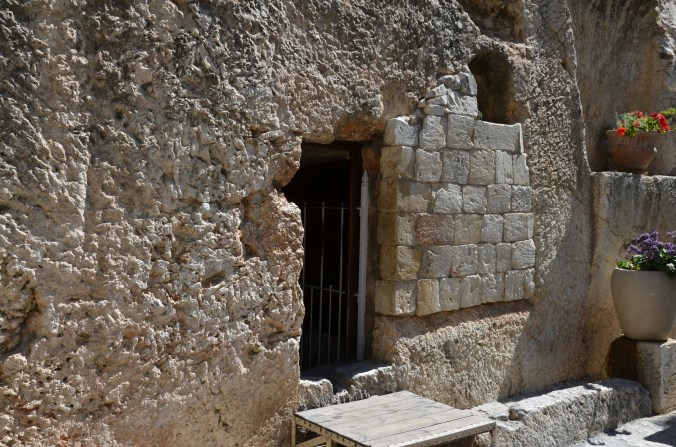
jonny-gios-TZ50uMfAK3E-unsplash

The tombs also were opened. And many bodies of the saints who had fallen asleep were raised,
and coming out of the tombs after his resurrection they went into the holy city and appeared to many.

— Matthew 27:52–53 —

What happened on Holy Saturday, the day situated between Good Friday and Resurrection Sunday? That is a good question that my fellow elder, Jared Bridges, has answered at the Washington Stand. And in his article, he takes a “topside” view—what was happening in Jerusalem on the day between Jesus’s cross and resurrection.

But there is another answer that needs to be considered, an answer that takes us below the surface, if you will. On Holy Saturday, while Jesus’s body rested in the grave, Jesus’s soul pronounced his victory over the spirits in prison (1 Pet. 3:19). That is to say, that when Jesus died, his body and soul were torn asunder, just like the temple veil (see Luke 23:44–46). As his body hung lifeless on the cross, soon to be buried, his soul, like all human souls, departed and went to realm of the dead, the place known as sheol in Hebrew or hades in Greek.

Importantly, sheol (or hades in Greek) is not the same thing as Hell (Gehenna), the place of eternal torment for the damned. Indicating their difference, hades gave up the dead to the lake of fire (i.e., hell) in Revelation 20:14. This means, Jesus did not go to “hell” after he died. But he did go to sheol, the realm of the dead. Often, we miss this fact, and missing what Jesus did in sheol, we miss the impact of Christ’s cross on the cosmos. Continue reading

A Primer on Elder-Led Congregationalism

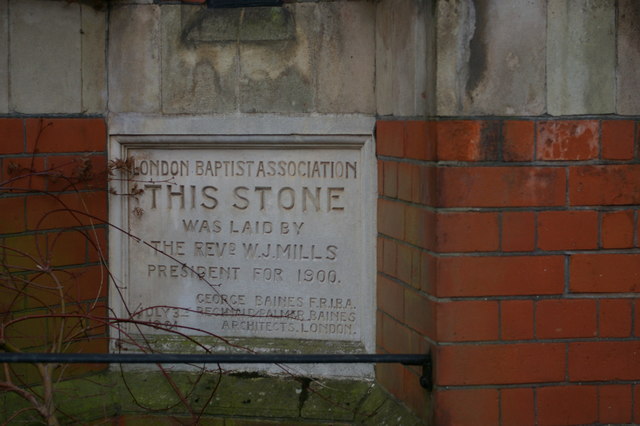
Foundation stone, Muswell Hill Baptist Church

Sometime in seminary, my ecclesiology class was tasked with defining a biblical view of church polity. Here is that paper, refined and updated. It argues for an unmistakably Baptist reading of the Bible, as it conjoins congregational authority with elder leadership.

*******

Should the church be congregational or should it be led by a plurality of elders?

This oft-debated question finds its difficulty in the fact that both approaches find substantial biblical support. So the question, “What does the Bible say,” does not sufficiently lead to a one-sided resolution. To answer this question, the first thing that must be seen is the asymmetry implicit in the question. Congregationalism pertains to authority. Plurality of elders concerns leadership. Together, it is vital to recognize that authority and leadership are not synonymous, and that, in fact, God has wisely designed authority and leadership to be distributed through the church, even as the church recognizes and submits to appointed elders.

Therefore, even though many Baptist churches elevate congregationalism over, and at the expense of, elder leadership (i.e., congregational democracies) and other Presbyterian churches elevate elders over the congregation (i.e., elder ruled), it is best to have congregational authority and elder leadership, or so I will argue. Continue reading

A Consolation in the Curse: Reading Genesis 3:16b as Good News

silhouette of newly wedded couple

Somewhere below the rim of the Grand Canyon, at some time during the week I spent rafting there last summer, I heard an interpretation of Genesis 3:16 that didn’t sound right. Sitting down each evening to discuss the age of the earth, the creation of all things, and the text Genesis, Bill Barrick (professor emeritus at Master’s Seminary) made the off-hand comment at some point that “The curse upon the woman in Genesis 3:16 was good, actually.”

What?!?

If you are like me, the idea of calling a curse ‘good’ is on par with calling the blessing of marriage ‘evil.’ In our modern world, defining marriage as being between one man and woman has been called evil, because it is hateful to the LGBT+ community and anyone else who doesn’t feel committed to a Christian view of sexuality. For years now, we who live in America have been in a struggle to define good and evil. Proclaiming themselves to be wise, the world has become enslaved to one folly after another. And so, as Christians, we are on guard for any interpretation that might confuse the categories of good and evil. And rightly so!

Hearing this new interpretation of a familiar passage (Genesis 3:16), therefore, was confusing and not a little shocking! And yet, the more that I have looked at this verse, the more I am convinced that Dr. Barrick is correct: Genesis 3:16b is a gracious consolation granted to the woman. Instead of reading this verse as one that enjoins opposition, competition, or even enmity at the heart of marriage, it seems better to see God’s word to the woman as a genuine kindness. Marriage is not a common curse, but a common grace.

This is what I argued in my sermon on Sunday, and in what follows, I want to show from Scripture why Genesis 3:16b is best rendered positively, not negatively. That is to say, while most interpreters offer a negative reading of the verse—either stating that God subordinated the woman to the man at this point (egalitarianism) or that he exacerbated the fallen condition of men and women (complementarianism)—I will be arguing from a generally complementarian position that this verse should be read positively as God granting protection to the woman, even after she rejected and ignored the protection of the man when she encountered the serpent (Gen. 3:1–6).[1]

My position does not deny the way that men can abuse their authority and use their strength to harm those under their charge; nor will it deny that women can refuse to submit to their husbands or embrace the all-wise autonomy offered by the serpent. Both of those realities threaten marriage today. Nevertheless, as I will attempt to show, the nature of marriage after the fall is a place of consolation, protection, and natural goodness. Instead of being a place of natural conflict, should be seen as a place of natural comfort. Yes, sin still destroys the world and every marriage it ensnares, but importantly the nature of marriage is one of common grace. And that is what is at stake in this question of interpretation.

To maintain the goodness of marriage as an institution requires seeing the woman’s desire for her husband as an intrinsic good, as well as the man’s responsibility to rule over her. Today, such a reading is difficult to accept—not only because it flies in the face of a century of feminist ideology, but also because translations like the ESV suggest a negative reading of Genesis 3:16. Put differently, if we are going to rightly understand the consolation of God’s word to the woman in this verse, we must go back to the passage and to see what is there. And in particular, we need to see how a proper reading of Genesis 3:16 depends upon a proper interpretation of Genesis 4:7.

In what follows, then, my aim is to demonstrate why a positive reading of Genesis 3:16 is the best option, based on a comparison of Genesis 3:16 and Genesis 4:7. As multiple authors have attested, how one reads Genesis 4:7 will be determinative for our reading of Genesis 3:16. Knowing that, I will spend a great deal of time addressing the latter text, showing why “desire” (tesuqah) and “rule” (mashal), the two overlapping words, are best seen positively in Genesis 4:7, not negatively. From there, we can see how the dominoes fall. If Genesis 4:7 is positive not negative, then it follows that Genesis 3:16b is also positive, which best corresponds to the literary structure of Genesis 3:14–19 and the emerging theology of marriage as an institution of common grace.

So, that’s my argument, and it will proceed in five parts.

  1. I will show three common positions related to Genesis 3:16b.[2]
  2. I will consider how Genesis 4:7 should be read as a “sin offering” provided by God not some personification of “sin” crouching at the door waiting. From this, I will show how the words “desire” and “rule” are good in Genesis 4:7.
  3. I will introduce two authors who provide a positive reading.
  4. I will outline the text itself and attempt to provide a better reading.
  5. I will explain the cash value of this reading.

Continue reading