The Need for Expositional Preaching (pt. 2): A Biblical and Theological Defense

job.jpegWhy is biblical exposition necessary?

The simple answer is that the health of the church depends on the regular reading and preaching of God’s Word. This claim can be supported by church history, but it can also be seen in Scripture itself. And in Scripture, expositional preaching is supported by both the doctrine of God’s Word and the practice of God’s people.

Today I will add to the blogpost from yesterday and consider the doctrine of Scripture and the practice in the Old Testament. Next week I will come back and consider the practice of Jesus and the apostles.

A Short Doctrine of Scripture

First, as to doctrine, the belief that God’s Word is powerful is seen in the way that God’s created the light by his word (Gen 1:3); he upholds the universe with his word (Heb 1:3); and he raises the dead to life with his word (Ezekiel 37; John 11). Understanding the power of God’s Word, faithful preachers must labor to expound God’s Word and not their own. The goal of preaching is not arranging Bible verses around their own words, ideas, or outlines, but highlighting what God has already spoken. Continue reading

Gathered Worship: Why Your Soul Needs the Body of Christ (Deuteronomy 4:9–31)

bythebook04

Gathered Worship: Why Your Soul Needs the Body of Christ (Deuteronomy 4:9–31)

As we took another look at worship this Sunday, we focused on the covenantal history outlined by Moses in Deuteronomy 4. In these verses, Moses directed Israel to remember the covenant God made with them, to guard themselves from idolatry, and to take comfort in Yahweh’s ongoing faithfulness.

While there are many differences between Israel on the Plains of Moab and the people of God today, there are similarities too. And by learning the pattern of worship—in particular, gathered worship—we will see what the Spirit teaches us about our identity in Christ and how gathering for worship plays a crucial role in our lives.

You can listen to the sermon online. Response questions and additional resources are listed below.

Continue reading

Revealed Worship (Deuteronomy 4:1–14)

bythebook04Revealed Worship (Deuteronomy 4:1–14)

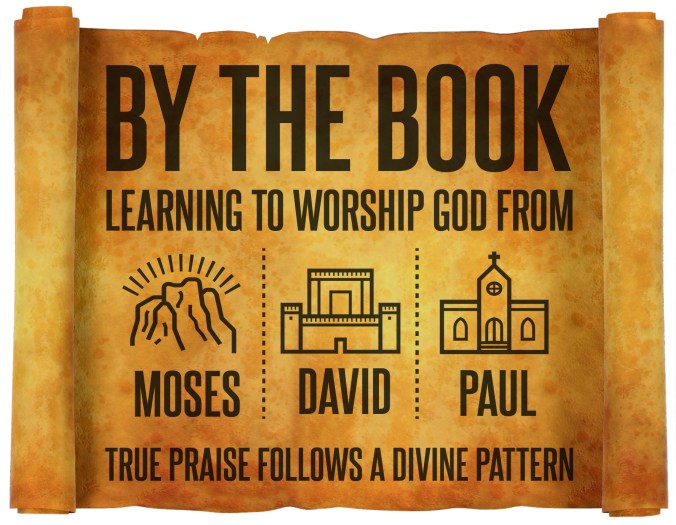
On Sunday we began a new sermon series considering what Scripture teaches about worship. Over the summer we will learn from Moses, David, and Paul, but this first Sunday we began by hearing what Moses said about God’s pattern for worship at Sinai.

While our worship is not at Mount Sinai, but Mount Zion (Hebrews 12:22–24), the pattern of worship revealed to Israel teaches us about the worship God desires for those who have been saved by Christ. From the revealed worship at Sinai, we begin to see what God has in store for his church.

This week’s sermon considers this “revealed worship” and what it means for us today. You can listen online. Below are response questions and additional resources for studying what Scripture says about worship. Continue reading

Ten Things About Deuteronomy 4:1–14

10 thingsIn preparation for Sunday’s sermon on worship, here are ten observations from Deuteronomy 4:1–14.

1. Deuteronomy 4 is the last chapter of Deuteronomy’s covenantal introduction.

In Deuteronomy Moses follows (and reformulates) a covenant structure identifiable by anyone living in the ancient Near East. Just as covenants made between kings and their servants (i.e., Suzerains and their vassals) followed a standardized pattern, so does the book of Moses.

Ancient Near Eastern Suzerainty Treaty[1] Deuteronomy as a Covenant Document
Preamble (“These are the words . . .”) Preamble (1:1–5): “These are the words of Moses addressed to all Israel . . .”
Historical Prologue: a survey of the relational history between covenant partners Historical Prologue (1:6–4:49)
General Stipulations General Stipulations (ch. 5–11): general commands to love, serve, fear Yahweh
Specific Stipulations Specific Stipulations (ch. 12–26): an exposition of the Ten Words
Divine Witnesses: various deities called to witness the treaty Blessings and Curses (ch. 27–28)
Blessings and Curses: relating respectively to the maintenance of breach of the covenant Divine Witnesses (see 30:19; 31:19; 32:1–43)

From this outline, we see where Deuteronomy 4 is situated. It is the final word of the covenantal introduction (i.e., the historical prologue). Moreover, in a way that deviates from the classical ANE treaty formula, it adds covenantal instructions that anticipate the next sections—namely, the general and special stipulations given in chapters 5–26. Continue reading

Hope, Help, and Holding Fast: Storing Up Future Treasure with Present Riches (1 Timothy 6:17–21)

livingchurch

Hope, Help, and Holding Fast: Storing Up Future Treasure with Present Riches (1 Timothy 6:17–21)

On Sunday we finished the book of 1 Timothy. Since February, we have enjoyed learning about what it means to be a church made alive by Christ and directed by his Spirit. As we finished the series, we reminded ourselves what this whole letter was about and why Paul finished his words with one last word to the rich (6:17–19) and one final admonition to Timothy (6:20–21).

Whether you consider yourself rich or not, and whether you are in ministry or not, these final words of 1 Timothy give great wisdom on how to store up your treasure in heaven and guard the gospel of Jesus Christ.

You can listen to the sermon online. Response questions can be found below, as well as a list of all the sermons preached in this series.

Soli Deo Gloria, ds Continue reading

Fighting the Good Fight of the Faith by Following the Good Lord and Fixing Our Eyes on the Invisible God (1 Timothy 6:11–16)

livingchurchFighting the Good Fight of the Faith (1 Timothy 6:11–16)

Flee wickedness. Pursue righteousness. Fight the Good Fight. Take Hold of Eternal Life.

These are the commands that Paul gives Timothy as he finishes his letter to his true son in the faith. They are good for us today too. Scripture calls us to run from sin and race towards Christ. But how? What will motivate us, strengthen us, and enable us to finish our race?

On Sunday I answered these questions from what Paul said to Timothy in 1 Timothy 6:11–16. Consistent with Paul’s words of encouragement, the apostle never said  “just do it.” He always gave Christ-centered motivations and God-directed visions to help the followers of Christ run their race with perseverance. Sunday’s sermon focuses on the same thing, encouraging us to read this glorious passage “backwards” in order to let the glory of God strengthen our godliness.

You can listen to the sermon online. Response questions and additional resources can be found below. Continue reading

Two Ways to Crave: Quarreling for More vs. Contentment in Christ (1 Timothy 6:2b–10)

livingchurchTwo Ways to Crave: Quarreling for More vs. Contentment in Christ (1 Timothy 6:2b–10)

A. W. Tozer once said that what you think about when you think about God is the most important thing about you.

In his statement, this Chicago pastor captured the way our thinking drives our living. If we could only order our thinking about God and everything else rightly, we would be headed in a good direction. The problem is that we are not just “thinking-things,” we are “loving-things.” And often our thoughts are not driven by external facts but by internal longings. As Paul says in Ephesians 4:18, ignorance comes from the hardness of our hearts, not the absence of information.

Addressing this internal desire again in 1 Timothy 6, Paul unveils two motivations for seeking Christ—one that leads to contentment and life, one that leads to endless craving and death. How shocking (and scary): it is possible to seek Christ in a deadly way.

On Sunday, we considered Paul’s words and what they say to us about our inner longings. From 1 Timothy 6:2b–10, we saw Paul contrast two ways of godliness, and how this spurs us on to find contentment in Christ and not in the material gains that we might seek from Christ.

You can listen to the sermon online. Response questions can be found below. Continue reading

Start With *Why*: Working for God’s Glory, the Gospel, and Christ’s Church (1 Timothy 6:1–2)

livingchurch

Start With WHY: Working for God’s Glory, the Gospel, and Christ’s Church (Sermon Audio)

More than what, more than how . . . but why you do what you do will ultimately determine the success of your “doings.”

This sort of thinking has been championed recently by various thought leaders, but the principle goes back to the Bible itself. God does not just look at the outward appearance, he looks at the heart (1 Samuel 16:7). Moreover, the command to circumcise your heart (Deuteronomy 10:16), was followed up with a promise that God would circumcise the heart (Deuteronomy 30:6), thus trading out the heart of stone for a believing heart of flesh (Ezekiel 36:26–27). In short, God’s work of salvation has always targeted the heart and why we do what we do.

And in this week’s sermon, we saw that Paul’s message to servants focuses on the same truth. Instead of giving a laundry lists of “how’s” or “what’s” for servants (or modern day employees) to follow, he gives three reasons why we should persevere in doing good work.

You can listen to the sermon online. Response questions can be found below.

** In preparation for the message, please consider reading about Paul, slaves, and the church or listening to the sermon on Ephesians 6:5–9. It will provide a necessary backdrop for understanding Paul’s words to Timothy.

Soli Deo Gloria, ds Continue reading

From the Gospel to Good Works: A Church’s How-To Manual for Elders (1 Timothy 5:17–25)

livingchurch

From the Gospel to Good Works: A Church’s How-To Manual for Elders (1 Timothy 5:17–25)

What are you supposed to do in church? What are elders supposed to do in church?
And how do elders and members work together in the church?

On Sunday I answered these questions with six “how-to’s” from 1 Timothy 5:17–25. In this section to Timothy about elders, Paul gives inspired counsel for providing for how to honor elders, protect elders, rebuke (sinning) elders, and appoint elders—to name a few things Paul says.

You can hear the whole sermon online. Response questions and additional resources about elders and churches are below. Continue reading

Wise Mercy Means Supporting Tabitha, Correcting Delilah, and Encouraging Mary (1 Timothy 5:9–16)

livingchurch

Wise Mercy Means Supporting Tabitha, Correcting Delilah, and Encouraging Mary (1 Timothy 5:9–16)

Why does Paul spend so much time on widows? In a letter with 113 verses, 16 of them (more than 10% of the letter) are dedicated to widows. Does Paul have a special ministry project for these women? Or is there something more central to the gospel here?

On Sunday, I answered those questions and attempted to show why care for these widows was so important to Paul. In particular, we saw how Paul’s discussion about widows is deeply connected to his concern for the gospel in Ephesus. Also, we saw how Paul’s gospel-centeredness teaches us to assess many matters in church and life today.

You can listen to the sermon online. Response questions are below, as are a couple important resources to seeing how the letter of 1 Timothy helps us understand these challenging verses.

Soli Deo Gloria, ds Continue reading