Two Truths For Troubled Times: A Meditation on Psalm 46

battle

Come, behold the works of the Lord,
how he has brought desolations on the earth.
He makes wars cease to the end of the earth;
he breaks the bow and shatters the spear;
he burns the chariots with fire.
10  “Be still, and know that I am God.
I will be exalted among the nations,
I will be exalted in the earth!”
11  The Lord of hosts is with us;
the God of Jacob is our fortress. Selah
— 
Psalm 46:8–11 —

Has the election season of 2016 brought unusual stress? If so, consider the words of Psalm 46, a psalm which gives us to truths for troubled times.

In that passage, the Sons of Korah — a people whose own existence depended on the sheer grace of God in the face of cataclysmic judgment (see Numbers 16) — speak of fearlessness in the face of a crumbling world. They write,

God is our refuge and strength,
a very present help in trouble.
Therefore we will not fear though the earth gives way,
though the mountains be moved into the heart of the sea,
though its waters roar and foam,
though the mountains tremble at its swelling. Selah

My question: Where do they find the grace to say “we will not fear though the earth and that is in it gives way”? To most of us when the foundations shake and the rafters rock, we tremble. And in that trembling we look for cover, yet hasty searches for safety in tremulous times often leads to devastating results.

The answer comes to us in verse 1, “God is our refuge and strength.” Because he is a refuge, we don’t need to look for another. And because he is present with us in the chaos of this fallen world (“a very present help in trouble”), therefore we will not fear. Still, such fearlessness takes more than the right answers to theology exam; it takes personal knowledge of a God who is with us and for us. Continue reading

Talking Like Jesus: Six Ways to Hold Out Truth in a Hostile World

VLUU L200  / Samsung L200In our day public speech about Jesus is becoming more and more costly. For instance, the state of Georgia has requested the sermons of Dr. Eric Walsh, a lay pastor and public health expert, who was fired from the Department of Public Health over (it seems) his religious beliefs. What is going on?

On the one hand, we are watching a sea change in our country. The religious liberty conferred on us by our founding fathers and established in the Bill of Rights is being taken away.  On the other hand, we are witnessing in our country what Jesus said would happen to his followers: we are hated by the world, because the world hates him.

In other words, American Christians are experiencing, for the first time in generations, what other disciples have experienced for centuries—verbal and even violent opposition to the truth of God’s Word. Such enemy fire makes speaking up for Christ difficult, if not dangerous. Yet, such resistance may also be the very means by which Christians can show what it means to follow Christ—bearing witness to Christ through our own afflictions. But to bear faithful witness, we need our minds to be renewed by God’s Word.

Learning from Jesus

The Gospel of John shows Jesus in constant conversation with the Pharisees whose anger towards him ultimately nailed him to a cross. As John records, they questioned him, debated him, and sought to arrest him long before they succeeded in ending his earthly ministry. Still, as the beloved disciple records, Jesus constantly responded with wisdom, grace, and truth. While John’s goal in presenting these dialogues is to testify that Jesus is the Christ whom we should trust and obey (John 20:31), his recordings also show us how Jesus spoke to those who accused and opposed us. If we are going to continue to bear witness for Christ amidst enemy fire, we must learn what such speech looks like.

If silence is not an option for a follower of Christ, and it is not (see Matthew 10:32–33; Acts 1:8), how can we learn to wear our cross and speak on his behalf with boldness and wisdom? If the gospel is our message, what is the manner in which we proclaim it? How does Scripture teach us and Jesus model for us such engagement with the world?

Those are questions we should be asking, and one place we find an answer is in John 7. Continue reading

Liturgical Lathes: Idolatry, Imagination, and James K. A. Smith’s ‘Homo Liturgicus’

jkasFew books have been more illuminating for me in 2016 than Desiring the Kingdom: Worship, Worldview, and Cultural Formation by James K. A. Smith, professor of philosophy at Calvin College. In fact, his anthropological observations have provided much background to the dangers of idolatry that we find in 1 Corinthians 10 (our church’s current sermon series).
In what follows, I will trace a few of his main points, to show how Christians who don’t want to worship idols yet create them through the rhythms of their lives. This post is the first in a brief series to interact with Desiring the Kingdom and the modern challenge of identifying idols and the liturgical lathes that create them.

Homo Liturgicus

In biology, the human species is called homo sapiens. Sapiens, or sapient, is a term for wisdom and intelligence (e.g., God is omni-sapient, all-wise). Compared to all other species, humans possess a higher degree of rationality and intelligence, hence we are called homo sapiens. 

Smith takes this idea and shows how philosophers and theologians have defined humanity in terms of rationality (“I think, therefore I am”) and belief (“I believe, therefore I am”) (40–46). In contrast, he argues we should understand humans as basically affective–“the human person as lover” (46ff). He critiques purely-cerebral anthropologies, and argues we must consider the human body and the heart: “If humans are conceived almost as beings without bodies, then they also are portrayed as creatures without histories, without any sense of unfolding and development over time” (47).

While his argument may, at first, sound as if he is denying the place of the intellect, it must be remembered that this philosopher (whose vocation trades on the intellect) is offering a corrective to disembodied anthropologies which forget how much our bodies impact our thinking, feeling, and believing. In fact, Smith’s taxonomy of thinking, believing, and loving anthropologies helps us recover an Augustinian view of humanity, with its attention to affections and desires. In our hyper-visual, über-sensual world, we desperately need this corrective. So, let’s dig in. Continue reading

Transgenderism: But One Fruit on Individualism’s Pernicious Vine

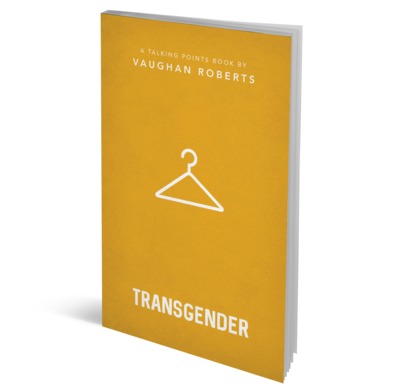
bookIn recent days, the subject of gender and transgenderism have been the talk of our county and our church. Coming, therefore, at the perfect time is Vaughn Roberts little book TransgenderIn preparation for my sermon on the subject I read his book with great profit.

In less than 80 pages, Roberts, a British pastor who has himself grappled with same sex attraction, introduces the subject (ch. 1), sets out a biblical response through the framework of creation (ch. 3), fall (ch. 4), and rescue/redemption (ch. 5). He concludes with a chapter on wisdom (ch. 6), where he speaks to individuals and churches on how to lovingly and truthfully respond to our trans neighbors and family members. Still, the chapter that is most important in his book is chapter 2, titled “The iWorld.”

In this section, Roberts frames transgenderism against the backdrop of the Enlightenment and the (post)modernism turn towards the subject. In just a few pages he explains how a recent flurry of advocacy for an age-old condition, i.e., transgenderism (see Deuteronomy 22:5), stems from a Western world head-over-heels in love with the self.

Continue reading

Considering the Conscience: A Book Review

conscienceAlready in this election cycle we’ve heard a great deal about the conscience. Religious liberty stands or falls with ones ability to speak and act according to conscience. Likewise, many political commentaries have spoken about the conscience with regards to voting. Some, like Wayne Grudem, have made a matter of moral obligation to vote for Donald Trump. Others, like Andy Naselli, have explained why his conscience cannot vote for the not-so-conservative “conservative” choice.

In truth, we are going to hear a great deal more about the conscience. But what is it? And how does a biblical understanding of the conscience help us in these difficult times—in our voting and more to be at peace with brothers or sisters in Christ who hold different views of the political landscape. Again, Naselli is helpful, as he and J.D. Crowley have written a book on the subject: Conscience: What It Is, How to Train It, And Loving Those Who Differ.

In what follows I provide an overview of their book that both encapsulates some of their key points and hopefully whets your appetite to consider further this important topic. Continue reading

When Evil Solicits Your Vote: Six Lessons from Judas’ Betrayal


judsa

Do you not know that friendship with the world is enmity with God?
— James 4:3 —

Going back to Cain (Genesis 4), evil has always positioned itself right outside our doors looking to destroy. But recently, Christians in America have faced new challenges. In a country that continues to trample first amendment rights and eviscerate religious liberty, there is great temptation to do anything to maintain our place in the public square. I value that endeavor and lament the way Christians are being threatened in public, but I wonder if we are not being tempted to overcome evil with evil—or at least, the lesser of two evils.

What follows began as a study in Matthew, not an attempt to speak into the political fray. But as I considered the actions of Judas, I couldn’t help but think about Christians who are using (or being tempted to use) their proximity to Jesus as a means of securing our worldly standing. In truth, as Psalm 118:8–9 says, “It is better to take refuge in the Lord than to trust in man. It is better to take refuge in the Lord than to trust in princes.”

With that truth in mind, I share a few observations about Judas that I pray will protect us from putting confidence in earthly princes, and instead will steel our resolve to take refuge in Christ. Continue reading

On Religious Liberty and the Freedom to Worship

declaration

But seek the welfare of the city where I have sent you into exile, and pray to the Lord on its behalf, for in its welfare you will find your welfare.
— Jeremiah 29:7 —

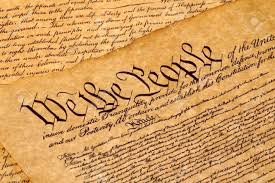
Today marks the 240th anniversary of the signing of the Declaration of Independence—a day that marks the birth of our nation and reminds us of the wonderful liberties we have in America. In celebration our family read that founding declaration this morning and praised God for placing us in this country.

At the same time, though, my praise is mixed with pain and petition.

America is not what it was when it was founded. In many wonderful ways the liberties that were not afforded to all men have been extended. But in other less admirable ways, the liberties constituent in the Declaration, Constitution, and Bill of Rights have devolved into a libertine version of hyper-individualism. (On this point listen Albert Mohler’s recent discussion with Yuval Levin). Whereas rights were once understood to be endowed by our creator, rights have become things which men can create or castrate as they—or the Supreme Court–wish.

One of the greatest differences the founders vision of liberty and today’s is found in the increasing distinction between the “freedom of worship” and the “freedom of religion.” The former is the freedom of personal belief and private religious assembly; the latter is the constitutional right—the very first right—which says in the Bill of Rights: “Congress shall make no law respecting an establishment of religion, or prohibiting the free exercise thereof; . . .”

In our day, the change in language to “freedom of worship” is altering the understanding of this first amendment right, and with societal pressure Christians are being forced to mute their beliefs—especially with regards to marriage, sex, and lifestyle choices (a clever euphemism in and of itself). For that reason, on this day of liberty I am both grateful and grieved.

But perhaps, as a pastor, I am most concerned about the way some Christians and Christian leaders celebrate the Fourth of July without voicing any concern for these changes. Can we watch fireworks, grill hotdogs, and eat apple pie, assuming all is well? I think not. As Os Guiness (A Free People’s Suicide: Sustainable Freedom and America’ Future) and Eric Metaxas (If You Can Keep It: The Forgotten Promise of America’s Liberty) have observed, America’s liberty is under threat from within. And therefore, this holiday leads me in two directions regarding religious liberty and the freedom to worship. Continue reading

A Better Understanding of Baptism

baptismBobby Jamieson is a clear thinker and compelling writer. He is also a good friend. But it’s not his friendship that impels me to commend his two books. Rather, it is the fact that I think his two books on baptism (Going Public: Why Baptism is Required for Membership and Understanding Baptism) succeed in answering the question: If baptism doesn’t save, why does it matter?

In a day when church membership is often taken lightly and popular ecclesiology focuses on activities and attractions more than exegetical essentials, Jamieson’s two books explain why Scripture requires baptism and why churches need to reclaim the value of this ordinance.

In what follows, I want to highlight three arguments from Understanding Baptism addressing three different kinds of people. First, he makes a case for why Christians reticent to be baptized should be baptized. Second, he explains why baptism is necessary for membership. And third, he shows how membership in the local church is the natural result of baptism.

In truth, this blog can’t do justice to all the Scripture Jamieson considers in his two books. Rather, if you find yourself in one of these camps—(1) an unbaptized believer, (2) baptized but not (intending to become) a church member, or (3) a member indifferent towards baptism—my aim is to spur you on towards picking up his book and going to the Bible to see what it says about baptism and the church. Continue reading

Trading in Our Patriotic Hymns for Songs of Lament

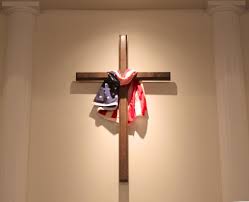
crossWith the Obergefell decision weighing heavy on our minds, I have been wondering how churches in America will worship this Sunday. Will they go on as usual singing patriotic hymns? Or will they, in light of recent days, reconsider their song selection?

For those involved in music ministry and church leadership, this is not a new question. And honestly, the Obergefell decision should not be the deciding factor. However, that ruling has solidified concerns Christians have with America, and thus raises the question again—Should a church incorporate patriotic hymns in a service of worship?

Thinking on that subject, I believe a church has 1 of 3 options—no incorporation (option #1), selective incorporation (option #2), and unqualified incorporation (option #3). I think the first two options are valid with #1 outweighing #2, while option #3 is troubling and in need of revamping—something that could be done as soon as tomorrow. Let’s consider together. Continue reading

Opening Our Eyes to Obergefell and Its Effects: A Pastoral, Cultural, and Legal Round-Up

SCOTUSOn June 26, 2015, in a 5–4 decision, the Supreme Court of the United States (SCOTUS) ruled that same-sex marriage was legal in all 50 states. In the hours that have passed, Christians have been praying and wondering aloud what comes next and how we should respond. To aid our collective understanding of the Supreme Court’s decision, I’ve listed dozens of resources under the following headings:

  • The Decision: What Did the Court Decide?
  • On the Pastoral Front: What do we say to our church?
  • On the Cultural Front: What do we say to our neighbor?
  • On the Legal Front: What about religious liberty?

I am so thankful for the men and women who have been reporting and commenting on these issues. May their wise words aid you—as they have me—to think and pray and act with grace and courage for truth in these days. Still before reading any of these posts, let me encourage you to watch this two minute exhortation from Russell Moore, president of the ERLC.

Continue reading