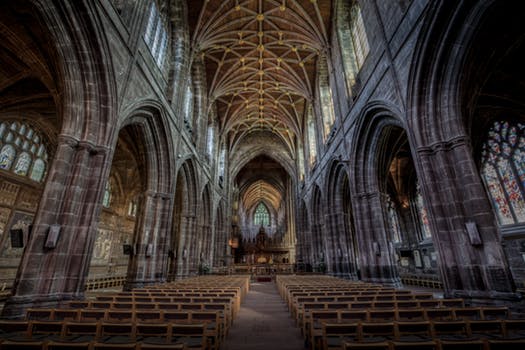
Apostles, Prophets, and Evangelists (pt. 1): The Church’s Three Foundational Offices


churchThe apostleship was the Divine expedient to meet the emergencies of the Church at its first establishment and outset in the world, and not the method appointed for its ordinary administration; and the peculiarities distinctive of the office, to which I have now referred, could not, from their very nature, be repeated in the case of their successors, or be transmitted as a permanent feature in the Christian Church.
— James Bannerman, The Church of Christ 223 —

In his discussion of the Church and its founding, James Bannerman notes the way in which Apostles played a peculiar (and unrepeatable) role. In his second volume ofThe Church of Christ, he shows from the corpus of the New Testament how we should understand these “pillars,” whom God used to found the church (Galatians 2:9; Ephesians 2:20).

In what follows, I’ll trace his argument to help us better understand the uniqueness of these men. My hope is that by understanding their place in God’s new covenant temple, we will better understand our need for their message and the discontinuity of signs, wonders, and mighty works which accompanied their ministry. I believe local churches have risen and fell with commitment to the apostles’ gospel, not the continuation of their miraculous gifts. But in our charismatic age, this distinction is often missed.

We need to recover an understanding of God’s designs for the early church, and how though dead, the words of the Apostles still speak. In the next post, I will consider the Prophets and Evangelists—two offices that complement the Apostles. But for today, we will look at the unique role of the Apostles. Continue reading

Why the ‘Founding of the Church’ Is Different from the ‘Founded Church’: James Bannerman on the Uniqueness of the Early Church

pillarsAnd he gave the apostles, the prophets, the evangelists, the shepherds and teachers, to equip the saints for the work of ministry, for building up the body of Christ,
— Ephesians 4:11–12 —

In Paul’s letter to the Ephesian church, he says that the exalted Lord has given gifts to the church (4:7–11). These gifts, he lists, are apostles, prophets, evangelists, and shepherd-teachers. (The last two words describing one office). From these four “word workers”—i.e., men who preach the word—the church is equipped to build itself up in love (4:12–16). Yet, what are these four offices and how do they work in the history of the church?

Answering that question, James Bannerman writes a chapter in the second volume of his The Church of Christ that masterfully shows the unique role of the apostles, prophets, and evangelists. Like last’s weeks look at Ebenezer Henderson’s ‘Divine Inspiration‘, with its look at spiritual gifts, here is another old book worthy of our reading.

What follows is an introduction to these three offices. Tomorrow, we’ll return to see what he says about each office and how they work to lay the foundation of the church. For those looking for a better understanding of why the miraculous, sign gifts do not continue today, I cannot commend Bannerman and Henderson’s works highly enough.

On the Origination of the Church

Bannerman first considers the genesis of the church. He begins,

In discussing the question of the kind of Church Government delineated and appointed in Scripture, it is a matter of some importance to fix the date when the Christian Church was formally organized or set up. It is plain that this is a question of considerable moment in the discussion; for, by a mistake as to the date of its formal establishment, we may be led to confound the extraordinary circumstances of its transition state with the ordinary circumstances of its normal and permanent condition. (214)

From this introductory question, Bannerman goes on to posits that the church in its institutional formation began after Christ’s resurrection. To be sure, the people of God, who he calls a church, were extant before the time of Christ, but the church in its formal membership did not come into existence until Christ was raised and the Holy Spirit was sent. Bannerman explains why this is and show us how the church was founded in the days of apostles and prophets (cf. Ephesians 2:20). Continue reading

Holy Spirit Power: The Gift, the Giver, the Goal, and the Gifts (1 Corinthians 12:1–11)

sermon photo

Holy Spirit Power: The Gift, the Giver, the Goal, and the Gifts (sermon audio)

Despite their obvious flaws, Paul loved the church at Corinth. And in his section on spiritual gifts in 1 Corinthians 12–14, he aims to help his spiritual children come to a true understanding of the Holy Spirit and the purpose of the spiritual gifts.

Important for us standing twenty centuries removed is the way he begins with the Holy Spirit as the greatest gift in 12:1–3, followed by an understanding of the triune God in vv. 4–6. When questions about spiritual gifts come up, we must begin here: the greatest gift is the Holy Spirit himself. He is the one by whom we might know the triune God.

Only after nailing down this truth can we move to understand the purpose and particulars of the spiritual gifts. Therefore, as I preached on this passage, this is where I focused—on the Gift and the Giver. We also considered the purpose or goal of the spiritual gifts and how these gifts functioned to promote the gospel in the early days of the church.

Next week we’ll focus more on the particular used of the sign gifts in 1 Corinthians 12:8–10, but for now you can listen to yesterdays sermon on Holy Spirit Power. Sermon notes are also available. Discussion questions and resources for further study are listed below. Continue reading

Understanding the Spiritual Gifts: A Few Translation Notes on 1 Corinthians 12:1–11

focusFirst Corinthians 12:1–11 is a glorious passage but also intensely debated. As I prepared to preach this passage on Sunday, I found that it is more than the theology that is challenging in these verses; it is also the translation of the text.

What follows are a few notes on what Paul is saying in these verses that help hone in on who he is speaking to and what God is doing. As we will consider this passage again next week, I will try to put up a few more translation notes as we consider this challening passage.

1. The ‘Spiritual Ones’ (v. 1)

The ESV, NASB, NIV, NRSV) all translate πνευματικῶν as “spiritual gifts” in 1 Corinthians 12:1 and 14:1. Others (e.g., CSB), however, have recognized the ambiguity of Paul’s language. While 1 Corinthians 12–14 pertains to spiritual gifts (χάρισμα = 12:4, 9, 28, 30, 31), there is good reason for rendering πνευματικῶν as “spiritual things” or “spiritual persons.” Let’s see why. Continue reading

Rightly Dividing the Cultural Background to 1 Corinthians 11

corinth

The Corinth Channel

There are a lot of cultural challenges to 1 Corinthians 11:2–16, a passage that invites discussion about the trinity, gender roles, the use of head coverings, and the role of angels in public worship. Tomorrow I will preach on this passage, but today I share a number of quotations from various commentaries related to various cultural and theological challenges in this passage. These quotes provide some background to this enigmatic passage.

Dress

In the context of prayer and prophesy, it makes sense that dress would be considered. For prophets often had a particular dress. Moreover, they often symbolized in their appearance various biblical truths. So for instance, John the Baptist appearance is given as wearing “a garment of camel’s hair and a leather belt around his waist” (Matthew 3:4). Importantly, this outward dress identified him as a prophet in the manner of Elijah (2 Kings 1:8: “They answered him, ‘He wore a garment of hair, with a belt of leather about his waist.’ And he said, ‘It is Elijah the Tishbite.’)

Likewise Isaiah 20 records how God commanded Isaiah to walk through Israel naked for three years to indicate God’s coming judgment on Egypt and on those who trusted in that foreign power. This outward expression of God’s will fits other examples too. For instance, the high priest wore garments of beauty and glory to reflect the presence of God’s holiness with Israel (Exodus 28:2); Nazirites did not cut their hair in order to express devotion to the Lord (Numbers 6); and many grieving saints tore their clothing or wore sackclothe and ash in order to express their contrition. So, throughout Scripture, clothing and hair did play a part in expressing worship to God.

Moving from Old Testament to Greco-Roman culture, the same attention to dress is found.

The Greeks’ self-identity arose most from their speech and education, while our Roman often distinguished himself by what he wore. It was not the Greeks eschewed head apparel. Rather it was clear to them and Romans that the habitual propensity of Romans to wear head apparel in liturgical settings stood in sharp contrast to the practice of others. (R.E. Oster, “When Men Wore Veils to Worship: The Historical Context of 1 Corinthians 11.4,” NTS 34 (1988): 494; cited by Ben Witherington, Conflict and Communion in Corinth24) Continue reading

Three Horizons in Biblical Interpretation

cropped-biblevizarc7mediumorig.jpg[This morning I teach the men of our church about three horizons in biblical interpretation. Here are the notes. What follows is a portion of content.]

Three Horizons in Biblical Interpretation

In Preaching and Biblical Theology, Edmund Clowney identified three horizons that the faithful interpreter must engage three horizons to rightly understand biblical truth. These three horizons relate to the biblical text, the biblical covenants (or epochs), and the biblical Christ (i.e., the canonical testimony about God in Christ).

Expounding on these three horizons, Richard Lints has written in his illuminating book, The Fabric of Theology,

The biblical text has three interpretive horizons: the immediate context of the book (or passage), the context of the period of revelation in which the book (or passage) falls, and the context of the entirety of revelation.

It is signally important that we take each horizon seriously if we want to understand the biblical material properly. While no horizon takes precedence over the others, each must nonetheless be regulated by the other two. The meaning of any given passage will depend to a great extent on its place in its own particular epoch and its place in the entirety of redemptive revelation. The theological interpreter of Scripture must allow the three horizons to dialogue with one another continually, helping to explain and clarify the meaning of the others.

It is when we keep all three horizons in dialogue that Scripture begins to inform us about what questions it considers important and the framework necessary to find answers to those questions.[1]

In other words, only by attending to the three horizons can we understand how to read Scripture on its own terms. Likewise, because our goal is to know God, not just Moses or Matthew, it is imperative we read theo-logically, i.e., seeking to know the word (Logos) of God (Theos).

Knowing God is our goal and it requires careful attention to grammar, history, and the covenantal canon. Only as we learn how to read these three horizons together will we be able see how the leaves and the trees (words and sentences) begin to form a well-ordered forest (the whole biblical canon), a forest that has come to us through many seasons of growth, decay, and rebirth (i.e., the progression of covenant that have led to Christ).

In the next three sessions, we will spend time on each horizon. But let me give some biblical bases for each of them.  Continue reading

Learning to See the Beauty of a Gospel-Centered Church

churchThis Sunday we start up a new cycle of membership classes at our church, what we call Discover OBC. And in our first part we look at the Gospel and the Church. I love teaching about these two subjects, because they are at the core of Christianity. The gospel is the message which brings hope to a sinful world; the church is the community created by that gospel and commissioned to protect and proclaim that gospel so that the whole world might hear of King Jesus.
I love the gospel and the church, and I can’t wait to teach about them Sunday. But it wasn’t always that way.

How Do You See the Church?

Admittedly, for me, I was slow to understand and appreciate the importance and beauty of the local church. In high school and college, I came to faith, began sharing the gospel, and learning how the Word of God impacted all of life. In this time, church was important, but only as an extension of my individual Christianity.

For me church was an a la carte affair. I was committed to worshiping on Sunday, but not to any particular church. As long as I heard the Bible somewhere, that was enough. I was committed to evangelism and discipleship, but I did not see them as necessarily connected to the local church. As long as the gospel was going forward, surely that was enough. Right? What did the local church matter?

Well, near the end of college I “sensed the need” to join a church. I didn’t have any biblical reasons for the desire; it was just something I felt. (N.B. I am glad for this decision, but I don’t think it is the way the Bible teaches us to make decisions). After five years of walking with Jesus, I moved across the country to join a Bible-teaching, elder-led local church. And “attach” is probably the right term, because I still conceived of the church as the place individuals attach themselves to one another, more than a covenant community created by Jesus and bound by his Spirit.

As I look back, I realize how much I conceived of the church and Christianity in radically individualistic ways. I had come to believe the gospel, but the operating system of my life was still the expressive individualism I inherited from my culture. Not surprisingly, this is how I approached church. Even after joining the church, I still approached church this way. It wasn’t until I began to study the Scriptures on the matter, that I began to see that the Bible was and is at odds with the individualistic Christianity that I first adopted.

Four Metaphors for the Church

Most helpful to me in understanding what the Bible says about church were the many metaphors Scripture gives to us about the church. For instance, 1 Timothy 3:15 says we are God’s household; 1 Corinthians 12 calls us the body of Christ; Ephesians 5 likens us to Christ’s bride; 1 Corinthians 3:16; 6:19 describes us as God’s temple; Ephesians 2:19–22 says the same thing; and 1 Peter 2:5, 9 adds that each of us are living stones in that temple. I have written about these things before and will cover them in our new members class, but today I want to suggest four others word-pictures that might help you and I think about what church is and isn’t.

  • First, the church is a family home not a spiritual hotel. That is, the church is not an amenity-filled temporary residence; it is meant to be a long-term, family-filled gathering place where we do life together. While our culture teaches us to be consumers, a church based on God’s Word teaches us to be brothers and sisters.
  • Second, the church is a military outpost, not an earthly resort. While there is a place for retreat and rest, the church is a royal embassy engaged in spiritual warfare. Therefore, we come to church not just to escape, but to be equipped and to work together to proclaim the gospel of the kingdom to a hostile world.
  • Third, the church is a heavenly practice, not an earthly pit-stop. On a long journey, rest is needed. But if we treat church as merely the rest on our journey, we miss that church is actually the goal, not the pit stop we take on the way to something else. More accurately, gathering to worship and fellowship is the way we practice our everlasting life. It is not given to merely assist us in earthly labors; it is meant to subvert earthly labors as it teaches us to store up treasures in heaven. In this vein, God may be calling you to use your gifts to build up the body of Christ, imperfect as it is, rather than using your GPS to find the service that best meets all our needs. But to embrace that we must remember the church is not yet perfect.
  • Fourth, the local church is a temporary shadow, not the full and final substance. How often do we complain (if only in our hearts) that church is not like we want it? In truth, this is how it will always be. Until all of God’s people, from all ages and all places, are gathered around the throne room, we will experience the thorns and thistles of this age—even in the church. Therefore, it may help to remember that our local assemblies are but grace-filled shadows of God’s ultimate goal—a new creation filled with resurrected saints.

Indeed, these kinds of word-pictures have helped me think more clearly about the biblical picture of the church. Based on the metaphors of Scripture, they have enlarged my heart for the church—in all of its grace and grit. A gospel-centered church is truly a beautiful creation. I pray these images will help you see its beauty and mission as well.

Soli Deo Gloria, ds

Exposing Abortion’s Allies (pt. 1): Expressive Individualism (Genesis 4:1–8)

rhythms-of-holiness

Abortion is a bloody evil that has taken the lives of almost sixty million children since 1973. Rightly, Christians (and non-Christians like Secular Pro-Life) have stood up against this modern-day holocaust. Through prayer vigils, sermons, information campaigns, legislation, and pro-life marches, much ground has been gained ground in the fight against abortion. But much ground remains.

In this year’s Sanctity of Life sermon, I addressed one issue related to the ongoing survival of abortion, and that is the rampant self-willed individualism that pervades our culture—and the church. In fact, the cocktail of personal autonomy, expressive individualism, isolated self-dependence, sexual immorality, and trust in technology has created a five-fold elixir that continues to fuel the abortion movement.  Therefore, I made the case that in addition to combatting the flames of abortion, we must aim to cut off abortion’s various fuel supplies.

Unable to tackle all of these allies to abortion, I focused on expressive individualism, something captured perfectly in LeCrae’s song, The Good, the Bad, the Ugly. In that song, Lecrae recalls the way his own self-will overcame his young Christian faith and led him to assist in the abortion of his child. It is a sobering song but also illuminating. Here’s what Lecrae rhymes,

I remember back in ’02/ I was in school and actin’ a fool
My soul got saved, my debt had been paid / But still I kept running off with my crew
Sex on my brain, and death in my veins / I had a main thing, we stayed up ‘til 2 (Smokin!)
Waking and baking we naked, my body was loving it / Soul was hating it,
And time and time after time, our bodies were close / The girl was so fine
We heard a heart beat that wasn’t hers or mine / The miracle of life had started inside
Ignored the warning signs / Suppressed that truth I felt inside
I was just having fun with this, I’m too young for this / I’m thinking me, myself, and I
Should I sacrifice this life to keep my vanity and live nice?
And she loves and trusts me so much that whatever I say, she’d probably oblige
But I was too selfish with my time / Scared my dreams were not gonna survive
So I dropped her off at that clinic / That day a part of us died

This song shows how self-will leads to and fuels abortion. It also reminds us that the God of resurrection and redemption is able to bring forgiveness and healing to all people, the same message that we find in Genesis 4. In truth, the only way we will make abortion unthinkable is to begin exposing and defeating the worldview beliefs that swirl around self. That’s what I sought to do yesterday, and I pray that God would help us to continue to take captive thoughts that lead to abortion and all forms of sin.

You can find the sermon online and the sermon notes here. Discussion questions and further resources are below. Continue reading

Praying with Passion (Psalm 126)

rhythms-of-holinessAs we begin 2017, our church has taken January to focus on a handful of spiritual disciplines—personal and public. The first in our series is prayer. But instead of just commending its importance and techniques to help, I took the route of seeing how God forms desire for prayer in our hearts.

By drawing near to God, by remembering the promises of his Word, and by desiring with increasing anguish Christ’s kingdom to come, we grow more passionate in our prayer. Indeed, passion is not a word that simply means “with heighten emotion.” Rather, its original sense relates to suffering (hence “Christ’s passion”), and this is what we do when we pray—we entering into the sufferings of Christ and weep for his will to be done.

At first glance, this kind of praying may seem off-putting, but I believe, Scripture—Psalm 126 especially—teaches us that this is the kind of prayer that endures. So if you want to grow in prayer in 2016, consider what Psalm 126 says and how it fuels prayer. You can read the sermon notes or listen online. Discussion questions and resources are below. Continue reading

Spiritual Desire: The Key to Cultivating Spiritual Disciplines

sun-heartOften, when we come to spiritual disciplines we list them, plan for them, and then labor to perform them. In the best scenario, we realize—sooner rather than later—we can’t do them apart from the power of the Holy Spirit. And so we pray and ask God to help us.

Yet, such approach may go wrong from the start. Why? Because we put the law (and its list) in front of the gospel (and its power). In other words, when we devote ourselves to discipline, we “covenant” with a bank of rules we trust to make us better—better people, better Christians, better (you fill in the blank). But of course, the law never brings life and can only be a delight after God has written his law on our heart.

The problem with any law-full approach to discipline, however, is not that it contains laws. The gospel is not antinomianlawless. The third use of the law is a gift to the growing disciple. The problem is when we call upon the Spirit to assist us after OUR plan is put in place. Now granted, if you set out to read the Bible, pray, and fast, you have already taken your cues from the Spirit’s inspired Word—especially, on that last discipline. But still the root cause of burnout remains. What is that? The problem of desire. Continue reading