Growing up with “Papa”: A Personal Testimony of Saving Grace and Protestant Reformation

Vatican, RomeIn reading some of Martin Luther’s writing recently, I came away with the distinct impression that Luther talked like the Bishop of Rome was always in the room with him. While not thinking much about church until I came to faith at seventeen, my Protestant heritage couldn’t quite make sense of the seeming ubiquity of the Pope in Luther’s writing. And I wondered, “Is that something that modern Catholics still experience?”

To an answer to that question of experience, I asked one of our elders, Jeff Dionise, about it. And thankfully, he took the time to share with me his insight into what it might ‘feel’ like to growing up Catholic. Even more though, Jeff shared a testimony of his own ‘Protestant Reformation,’ where he left the Catholic Church to find in Christ what the Pope could never give—eternal salvation and true grace in his hour of need.

Here’s a transcript of that conversation. Continue reading

Ten Things Ephesians Teaches About Christ and his Church

onur-318364.jpg

So that through the church the manifold wisdom of God might now be made known to the rulers and authorities in the heavenly places, . . .
— Ephesians 3:10 —

The ESV Study Bible has a succinct list of ten ways Christ and his Church are related and described in the book of Ephesians (p. 2267). For anyone wanting to dig deeper into what Scripture says about God’s people, Christ’s body and bride, and the Holy Spirit’s temple, the book of Ephesians would be an important starting place. Keep an eye out for these verses (listed below) and you will gain great insight into how Paul understands the church for which Christ died and is now building.

Christ is the head of the church 1:22–23; 4:15; 5:23
Christ is the cornerstone of the church 2:20
Christ is the Savior and sanctifier of the church 5:23, 26–27
Christ gives the church ministry workers 4:11–16
Christ loved and sacrificed himself for the church 5:25
Christ nourishes and cherishes the church 5:29
the church and her members dwell and grow in Christ 2:21–22; 4:15
the church is a means through which God manifests his manifold wisdom 3:10
the church submits to Christ 5:24
the church is Christ’s body, and individual believers are members of his body 1:22–23; 3:6; 4:4, 16; 5:23, 30

Soli Deo Gloria, ds

Photo by Onur on Unsplash

Martin Luther: Rediscovering the Gospel and Reforming the Church (A Biographical Sermon)

reformation

Martin Luther: Rediscovering the Gospel and Reforming the Church

As we gathered at church this Reformation Sunday, we did so with the fruits of the Reformation still impacting our lives. From the Bibles in our laps (or on our phones) to the message justification by faith alone in Christ alone, we who know the true gospel of grace are, in so many ways indebted to the men and women of the Reformation. Through their suffering, couple with the faithful who have gone before and after them, we have received an incredible heritage.

Accordingly, it is appropriate to spend time learning from their example. Indeed, it is even biblical. Hebrews 13:7 says, “Remember those who taught you the word of God, consider the outcome of their lives, and imitate their faith.” This morning, that is what our church did, setting our series of Ephesians aside for one week, in order to remember the life of Martin Luther and to learn from his faith.

Indeed, any study of Martin Luther requires a specific topic. His writing is so voluminous and his impact, not to mention his personality, is so vast, it requires any biographer to hone in on some aspect of his life. When John Piper preached a biographical sermon on Luther, he chose his relationship with God’s Word. For me, I chose to focus the church he aimed to reform with the gospel he reclaimed.

In this biographical sermon, I considered how Luther’s rediscovery of the gospel led him to fight for the purification and replanting, if you will, of the church. In truth, he never abandoned the church, but with the key of the gospel, he sought to unlock the church from its captivity to Rome. Therefore, there is much to learn from Luther about the gospel and the church, and how we can and ought to be gospel-centered churches.

To find out what we can learn from the life and legacy of Martin Luther, you can listen to the sermon online, or you can read the sermon notes. Discussion questions and additional resources are included below. Continue reading

What Servant Leadership Looks Like: Seven Lessons from Theodore Roosevelt

bookFor the last few weeks I have been listening to the audiobook by John Knokey, Theodore Roosevelt and the Making of American LeadershipThis has probably been one of the most enjoyable and fascinating biographies I’ve ever read. Knokey traces the development of Theodore Roosevelt’s leadership from his developmental years at Harvard to his two terms as president of the United States.

Most of his time—or at least, the most memorable time—is spent with Roosevelt as a frontiersman in the Dakotas and a military colonel on the way to Cuba. In these anecdote-filled chapters, the reader is given a firsthand introduction to how Roosevelt became a leader and how his leadership forged the spirit of America for the next century.

For anyone interested in American history or presidential leadership this book is excellent. In fact there are many lessons about leadership in the book and countless stories to illustrate them. To summarize, I will distill seven lessons from Roosevelt’s larger-than-life leadership, and make a few applications to Christian leadership in particular. Continue reading

Take Heart My Brothers: Six Pastoral Priorities in the Face of Church Conflict

ethan-weil-262745In fair weather, the Pastoral Epistles are a storehouse of spiritual wisdom and instruction for the life of the Church and her ministers. But as we know too well, such cloudless skies are infrequent. Thankfully, when affliction grips the body of Christ, Paul’s letters to Timothy and Titus are the most capable of helping pastors and churches navigate dark skies and turbulent winds. And thus in times of relational conflict and spiritual warfare, we (pastors) need to study them with an eye to what they say to about leading the church through conflict.

Indeed, in these letters (and others), Paul often speaks about the work of Satan, and significantly he places our enemy not outside, but inside, Christ’s fold. For instance, among born-again believers, Paul speaks of the way Satan finds a foothold (Ephesians 4:27), ensnares young believers ambitious to lead (1 Timothy 3:6–7), and turns brothers into opponents (2 Timothy 2:22–26). Because of his spiritual invasion, the church must always be on guard (1 Peter 5:8), praying against the schemes of the devil (Ephesians 6:10–19), and aware that ungodly people sneak into the church (Jude). Even more, wise elders must give themselves to steering the church straight in the face of opposition that comes from within the church and without.

To do this elders must keep a few things before their eyes. That is, we must prepare ourselves for the turmoil that sin and Satan bring to the church. And thus, in the face of constant threats, churches and church leaders do well to have a clear understanding of what to do when trouble comes. And there is no better place to find this counsel than the Pastoral Epistles.

So, if you are a pastor going through rough waters in your church, or if you are church member wondering what a faithful model of leadership should look like in the face of conflict, here are six priorities from the Book of Titus to guide your steps. Surely, these priorities will need to be administered with care in various contemporary settings, but they nonetheless provide biblical direction for churches to keep in mind when the wind and waves of church conflict seek to run the church aground. Continue reading

Grace on Display: In Paul’s Ministry and Christ’s Church (Ephesians 3:1–13)

more-than-we-can-imagine_

Grace on Display: In Paul’s Ministry and Christ’s Church

Most of the time when we read the Bible we seek to make direct application to ourselves. Because the Bible is for our instruction and sanctification, this is absolutely right. Sometimes in Scripture, however, we find that the first application is not to ourselves. Ephesians 3:1–13 is one of those instances, and yet it is also a passage bubbling over with grace for the believer.

As I preached on Ephesians 3:1–13, I sought to show the grace of God in Paul’s ministry, the grace of God’s in Paul’s gospel, and the grace that culminates in Christ’s Church. In short, even though this passage Paul reflects about God’s grace to him, it can strengthen our confidence in God’s grace as we understand how God has worked in church history and in what God intends for the church today.

Because my sermon deviated so much from my original notes, I am not including those this week. But you can find the sermon online. Discussion questions and additional resources can be found below.  Continue reading

More Than Could Be Asked or Imagined: Four Surprising Ways Christ and His Church Fulfilled the Promises to Israel

ben-white-197668When you read this, you can perceive my insight into the mystery of Christ, which was not made known to the sons of men in other generations as it has now been revealed to his holy apostles and prophets by the Spirit. This mystery is that the Gentiles are fellow heirs, members of the same body, and partakers of the promise in Christ Jesus through the gospel.
— Ephesians 3:4–6 —

In Ephesians 3, Paul explains how the unity of Jews and Gentiles in the church was a mystery hidden to the Old Testament people of God. In the strongest fashion he explains how Christ’s cross created “one new man” (2:15), tearing down the wall of hostility between Jew and Gentile. The result in Ephesians 3:6 is that Gentiles are “fellow heirs” (sugklēronomos) , “fellow members of the body”(sussōma), and “fellow sharers (summetoxa) of the promise in Christ Jesus”.

In these three desciptions, Paul uses the strongest terms to explain that the status of Jews and Gentiles is equal in Christ. No longer are the people of Israel advantaged over the Gentiles, as it was under the Sinai Covenant. Now in Christ Jews and Gentiles share equal statues. As Paul teaches, both are condemned for their sin and thus both redeemed by God’s free gift of grace—not by law-keeping. This makes all participants in Christ’s new covenant equals, brothers and sisters, co-heirs with their Lord.

Still, to get a handle on this newness in Christ, it is equally important to understand how the apostolic teaching was new—new to the first century believers and new to anyone today entering the church today. On that newness, Clinton Arnold gives a succinct outline of the ways in which the plan of God was previously unknown but now revealed through the gospel.

Under four points, he identifies (1) the means, (2) the Mosaic law, (3) the manner, and (4) the magnitude as constituting something different and greater than could be seen by the Old Testament saints. Here’s what Arnold writes (Ephesians, 190), Continue reading

An Argument for the (Selective) Use of Visual Aids in Expositional Preaching

karl-fredrickson-27507For me, few things are more exciting than studying the Word of God and considering how to apply and communicate God’s truth to others. Following a pattern set forth by Ezra (7:10), to study the Word, apply the Word, and teach the Word, is a glorious privilege. And yet, few things are more daunting or discouraging!
For all the gold that we find in Scripture (Psalm 19:10–11), we must communicate it with lips of dust. Therefore, we should not be surprised when we struggle to do so. In fact, discouragement and difficulty is a preacher’s common companion. As Paul queried about the ministry of the new covenant, “Who is sufficient for these things?” (2 Cor 2:16). The answer is, “No one is sufficient” Therefore, we must trust God and his Spirit to accomplish what we cannot.

At the same time, we should learn a thing or two about preaching the Word over time. For instance, this summer as I preached on the Psalms, I learned that sometimes it is exceedingly beneficial to use visual aids. As someone committed to expositional preaching, it has been my conviction to employ word pictures not visual aids. But this summer, as I preached through the Psalms, I learned that sometimes word pictures are best captured through visual imagery. Continue reading

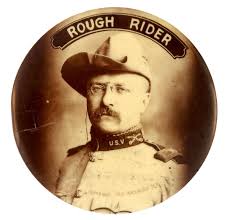
Teddy Roosevelt and His Rough Riders: An Illustration of Diversity’s Glory

teddy

There is a peculiar kind of glory that comes to a man
who unifies and empowers genuine diversity for a common good.

In history, we celebrate stories of heroic leaders who take disconnected misfits and make them a strong army. If you are familiar with the Bible, you might think of David and his mighty men—a diverse group of malcontents who became champions under David’s command. If you are more familiar with popular movies, you might think of Remember the Titans, where Coach Herman Boone led a newly-integrated T.C. William high school to a state football championship.

Indeed, we love to hear stories of leaders who take natural-born opponents and unite them together for the same cause. And even more, in our ultra-divided world, we need to hear these stories. And thankfully, there are many such stories that can be told.

Recently, I came across such a story in Jon Knokey’s book, Theodore Roosevelt and the Making of American LeadershipIn this fascinating book, Knokey tells the colorful tale of what happened when 1000 radically-different men from all over America were formed into a single fighting unit under the leadership genius of Colonel Roosevelt.

Here’s what he says. It’s long but entertaining and worth the read as it gives a fresh illustration of what we find in Ephesians 2—something I sought to bring out in yesterday’s sermon on Christ and his Church. Continue reading

God’s War Memorial (pt 2): How a Diverse Christian Community Displays Christ’s Glory (Ephesians 2:11–22)

more-than-we-can-imagine_

God’s War Memorial (pt 2): How a Diverse Christian Community Displays Christ’s Glory 

The church is more than just a collection of individual Christians or a consumer-oriented store for the religious. It is a people created by the cross of Christ, joined together in Christ to display his power and grace to the world. For this reason, the church is called a temple. As we learned last week, temples display the power of the God who dwells therein. And in the case of the church as God’s dwelling place, we are to bear witness to who God is in worship and in the way we live.

This week’s sermon tackles this foundational matter, and with a little help from Theodore Roosevelt, we learn how the unity of a diverse army brings glory to the commander. And because Christ is our great captain, we as his people ought to linger over how we can follow him and be his church.

For this week’s sermon you can listen online or you can read the sermon notes. Discussion questions and additional resources are listed below. Continue reading