 Last Sunday I preached a sermon entitled, “Keeping Time at the Altar By Setting Your Watch by the Son.” That sermon was part two of series of sermons explicating Genesis 8:20–9:7. You can find the introduction here. In all, my aim is to help members of my church, who are new creations in Christ (2 Cor. 5:17), order their lives by the pattern that comes in the New Creation. And, because Genesis 8:20–9:7, offers a glimpse of the new creation and that pattern, we are looking at each part. (For an overview of the whole pattern see this sermon on Genesis 8–9).
In the first sermon in this series, I argued that Christians should arrange their lives around the altar, which today occurs when the saints gather on the Lord’s Day to worship Christ. Yet, what do those saints do for the other six days of the week? That is what I attempted to answer in the second sermon. And in that sermon, I took three steps to move from (1) Israel’s calendar in Leviticus 23, to (2) Christ’s fulfillment of that calendar, to (3) our lives that should center themselves on Christ. If you want to see how this biblical theology moves to Christ, listen to the sermon. Yet, in that sermon I left out what I am writing here (in two parts)—12 ways to order your week by the Son.
Truly, if Christ has purchased us (1 Cor. 6:20), we are not free to do with our time whatever we want. Instead, as Paul puts it in Galatians 5:13, “you were called to freedom, brothers. Only do not use your freedom as an opportunity for the flesh, but through love serve one another.” Paul’s focus in this verse relates to the law, but part of that law relates to time—i.e., the Sabbatical Calendar (see Exod. 23:10–19; Lev. 23:1–44; Deut. 15:1–16:17).
Israel, as God’s son, was too immature to rightly define their own time. Rather, as Galatians 4:1–2 tells us, God’s children were treated as slaves and put under a guardian (the law) until the proper time. Jesus himself was born under the Law (Gal. 4:4) and had to keep the entire law, including all the commands related to the Sabbath. Yet, in keeping the Sabbath, he not only became the Sabbath-giver (cf. Matt. 11:28–30) but also reordered the calendar, such that annual feasts (like Passover) and mid-year rituals (like Yom Kippur) were all fulfilled in him.
In the New Testament, the consequence of this eschatological change was that the people of God now worshiped on the Lord’s Day, as found in 1 Corinthians 16:1–2; Acts 20:7; and Revelation 1:10. Indeed, as Jesus fulfilled and transmogrified the Passover into the Lord’s Supper, this became a weekly feast to be enjoyed everywhere God’s people gathered (1 Cor. 1:3; cf. Mal. 1:11), not just an annual feast celebrated in Jerusalem. To that end, the New Testament, as I understand it, defines Sunday (the Lord’s Day) as one day in seven to gather and worship. And this should be both the high point of the week and the central point of the Christian calendar.
Historically, liturgically, and confessionally this “Christian Sabbath” has been defined, specified, and applied in all sorts of ways. And at some point in the near future, I hope to say more about that. For now, I want to talk about the other days of the week and what Christians should do to orient themselves from and toward worship on the Lord’s Day.
Admittedly, these twelve orientations have to be general principles, not specific commands. And, if I am honest, these principles will need qualification that this article won’t have time to specify. Also, there are other principles that could be added to. So, don’t take this list as exhaustive or overly prescriptive. I am not trying to over-regulate what a Christian life looks like. Clearly, seasons in life, differing vocations, divergent interests, and various family dynamics will force these principles to form in asymmetrical ways. Over time, they will change in our lives, as well. That said, I am trying to offer wise counsel for those who are moving from the altar of God’s of worship to the city of their work.
In that way, take what is helpful. Retrofit what is partially helpful. And reject anything that stands in the way of walking faithfully with the Lord. Hopefully, however, there will be little rejection and much reflection. And so, to that end, here are twelve ways to order your week by the Son. Continue reading

 You think of how many church plants, unfortunately, often happen today. Maybe they happen just down the street of another church that agrees with them entirely in their theology. And you think, well, maybe we should have had a conversation before you started a church just down the street. Was this going to be a conversation? What’s going on here? (Caleb Morrell)
 On this Good Friday, I want to share a meditation from Alexander Watson (1815?–1865) related to the cross of Christ and the way Jesus’s death brought to fulfillment his triple office of prophet, priest, and king. But first, a little background.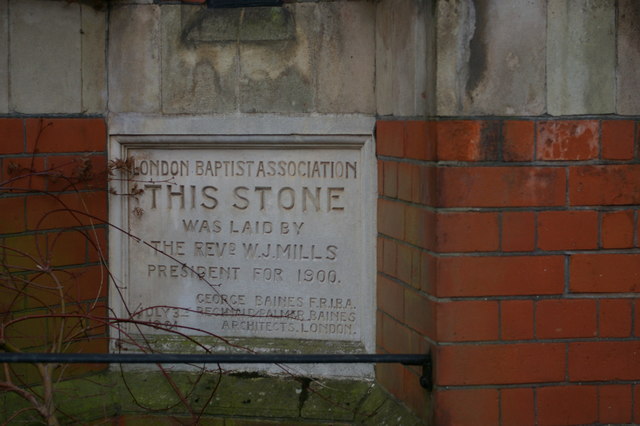

 6 Go to the ant, O sluggard; consider her ways, and be wise.
 Now Barnabas wanted to take with them John called Mark. But Paul thought best not to take with them one who had withdrawn from them in Pamphylia and had not gone with them to the work. And there arose a sharp disagreement, so that they separated from each other. Barnabas took Mark with him and sailed away to Cyprus, . . .
 Via Emmaus