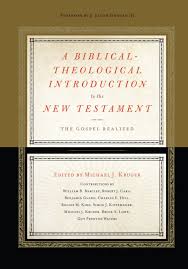
 In his overview of Ephesians, Guy Prentiss Waters, nicely summarizes what the spiritual powers are in that letter and in the world. Moreover, he explains what the presence and growth of the church means to the devil.
What does Paul understand the “powers” to be in Ephesians? He has several ways of describing them. They are “the rulers,… the authorities,… the cosmic powers over this present darkness,… the spiritual forces of evil in the heavenly places” (6:12). Paul mentions them in the same breath as “the devil” (6:11; cf. 4:27) and expressly sets them apart from “flesh and blood” (6:12), that is, human beings (cf. Gal. 1:16). We are therefore to regard these powers as unseen and angelic beings in league with and under the authority of Satan (cf. Eph. 2:2). They are not impersonal but personal. Paul locates them and their activities “in the heavenly places” (6:12; cf. 3:10), even as he documents their unceasing activity in the affairs of humanity.
Paul describes these powers in three ways.
- First, they are malevolent (“evil”) and therefore hostile to Christ and his people.
- Second, they possess an authority or power that is not localized but is universal (“cosmic”). The word “darkness” indicates a demonic authority that extends to all unbelieving persons, whether Jew or Gentile. “‘Darkness’ is the sphere in which these believers formerly belonged (Eph. 5:8)… and from which they were rescued by the Lord (Col 1:13).” It is, therefore, an authority that Paul associates with “this age” (Eph. 1:21; cf. 5:16; 6:13), the present Adamic order characterized by sin, corruption, curse, and death.
- Third, the plurality of these demonic powers and their designation by terms of rank (“rulers,” “authorities”) suggests a gradation within their numbers. Earlier in the letter, Paul stresses that the “prince of the power of the air” is “the spirit that is now at work in the sons of disobedience among whom we all once lived in the passions of our flesh” (Eph. 2:2–3). Satan therefore stands at the head of a host of demonic powers who govern and influence all those who are in Adam (cf. 2 Cor. 4:4).
The “powers” constitute a genuine threat to believers’ well-being (Eph. 6:11–12). Even so, Paul is insistent that the Ephesians understand that these demonic authorities have been brought into subjugation to Jesus Christ. In his exaltation, the second Adam, Jesus Christ, was “seated… far above all rule and authority and power and dominion, and above every name that is named, not only in this age but also in the one to come. And he put all things under his feet” The cosmic, mediatorial dominion of Jesus Christ encompasses “all things,” even the Devil and his angelic allies.
The “rulers and authorities in the heavenly places,” furthermore, are perpetually reminded of their defeat and subjugation (3:10). The “manifold wisdom of God,” which denotes the eternal purpose of God to redeem sinners by the death and resurrection of Christ and to gather the redeemed into a united people under the benevolent reign of the Lord Jesus, is ever proclaimed to them. The instrument through which God makes this wisdom known to the powers is “the church.” The very existence of the church, in other words, is standing testimony to the powers’ defeat and subjugation to the Lord Jesus Christ. “Ephesians” in A Biblical-Theological Introduction to the New Testament: The Gospel Revealed (ed. Michael J. Kruger; Wheaton, IL: Crossway, 2016), 272–73. Formatting mine.
Ever wonder why the church is under constant attack from devil and his minions? It reminds them of Christ’s Lordship, their defeat, and coming destruction. Hence, the church which is loved by God is hated by Satan. For that reason we must press into the Lord and the power of his Spirit.
Soli Deo Gloria, ds
 When was the last time you prayed against the devil? Or, attributed your physical pain or emotional vexations to a demonic spirit?
 Instead of a Sermon Discussion guide this week, I’ve written up something of a Post-Script to the Psalms, a few reflections on reading and preaching the Psalms as one unified book. For the PDFs of each book, see
  When I put glasses on for the first time, it made a world of difference. The fuzzy signs on the other side of the parking lot became clear, and instantly my ‘blindness’ was cured. The same is not true for spiritual blindness, however. As we see in Scripture, spiritual blindness is not cured with prescription lens, nor is it fixed instantly. Instead, what we find is multi-step process in the hands of our gracious God. Let’s consider.
 Is a canonical approach to the Psalms a new creation, or the invention of modern scholars? Or do we do we find anything like it in church history?
 Among recent studies on the Psalms, one of the most linguistically rigorous is that of Robert Cole, (former?) professor of Old Testament at Southeastern Theological Seminary. His monograph
  My best friend from high school
  Via Emmaus