 In discussions about salvation and interpretation of the Old Testament, two related questions are often asked.
- How were the Old Testament saints saved? Or, in whom or what did they believe?
- How much did the Old Testament know about the coming Christ?
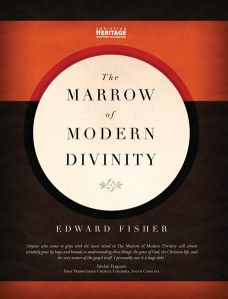
Recently, in reading through The Marrow of Modern Divinity by Edward Fisher, I came across a succinct, if slightly archaic, answer to these questions. In conversation form, Fisher explains how the Old Testament saints beheld Christ through the types and shadows of the Law. In short, he answers that the salvation we possess is of a piece with those under the old covenant. There are not two ways of salvation, but one, as Hebrews 11 suggests.
The difference between Israel and the church (which is today composed of Jews and Gentiles) is less about how they are saved, but how they came to know the one savior, Jesus Christ the Son of God. The former saw Christ through a veil of old covenant shadows and types; the latter have seen him in the substance of his person and work, now proclaimed through the witnesses of his apostles.
As always, such questions require elongated consideration about the whole Bible. But for short answers, what follows helpfully explains how the Old Testament saints beheld Christ. Continue reading

 It has been said that on the cross God’s wrath and mercy meet. Indeed, on the cross the full revelation of God’s undivided attributes are manifested. As just and justifier, Jesus receives in his body the full outpouring of God’s wrath. Yet, as God Incarnate, he simultaneously displays the love of God, as 1 John 3:16 states, “By this we know love, that he laid down his life for us, and we ought to lay down our lives for the brothers.” Accordingly, all other moral attributes (e.g., truthfulness, justice, goodness, mercy, peace, righteousness) are revealed in perfect proportion.
 What are the Minor Prophets about? Should we read them together, as one unified book? Or should we read them as twelve discreet books, written (Nahum) or spoken (the other 11) by twelve different prophets?
 The Lord passed before him and proclaimed, “The Lord, the Lord, a God merciful and gracious, slow to anger, and abounding in steadfast love and faithfulness,
 For the last ten years, God has kindly provided me a season of refreshing every other April in the city of Louisville through a gathering known as
  Earlier this week
 Via Emmaus