| 3 “Blessed are the poor in spirit, for theirs is the kingdom of heaven. |
Luke 23:46
Then Jesus, calling out with a loud voice, said, “Father, into your hands I commit my spirit!” And having said this he breathed his last
Acts 10:37–38
You yourselves know what happened throughout all Judea, beginning from Galilee after the baptism that John proclaimed: 38 how God anointed Jesus of Nazareth with the Holy Spirit and with power. He went about doing good and healing all who were oppressed by the devil, for God was with him.
Matthew 12:28
But if it is by the Spirit of God that I cast out demons, then the kingdom of God has come upon you.
Luke 17:20–21
Being asked by the Pharisees when the kingdom of God would come, he answered them, “The kingdom of God is not coming in ways that can be observed, 21 nor will they say, ‘Look, here it is!’ or ‘There!’ for behold, the kingdom of God is in the midst of you.” |
| 4 “Blessed are those who mourn, for they shall be comforted. |
Isaiah 53:1–3
1 Who has believed what he has heard from us? And to whom has the arm of the Lord been revealed? 2 For he grew up before him like a young plant, and like a root out of dry ground; he had no form or majesty that we should look at him, and no beauty that we should desire him. 3 He was despised and rejected by men, a man of sorrows and acquainted with grief; and as one from whom men hide their faces he was despised, and we esteemed him not.
John 11:34–36
And he said, “Where have you laid him?” They said to him, “Lord, come and see.” 35 Jesus wept. 36 So the Jews said, “See how he loved him!”[1]
|
| 5 “Blessed are the meek, for they shall inherit the earth. |
Matthew 11:28–30
Come to me, all who labor and are heavy laden, and I will give you rest. 29 Take my yoke upon you, and learn from me, for I am gentle and lowly in heart, and you will find rest for your souls. 30 For my yoke is easy, and my burden is light.”
Matthew 21:5, citing Zechariah 9:9
5 “Say to the daughter of Zion, ‘Behold, your king is coming to you, humble, and mounted on a donkey, on a colt, the foal of a beast of burden.’ ”
|
| 6 “Blessed are those who hunger and thirst for righteousness, for they shall be satisfied. |
Matthew 3:13–15
13 Then Jesus came from Galilee to the Jordan to John, to be baptized by him. 14 John would have prevented him, saying, “I need to be baptized by you, and do you come to me?” 15 But Jesus answered him, “Let it be so now, for thus it is fitting for us to fulfill all righteousness.” Then he consented.
John 4:31–32
31 Meanwhile the disciples were urging him, saying, “Rabbi, eat.” 32 But he said to them, “I have food to eat that you do not know about.”
|
| 7 “Blessed are the merciful, for they shall receive mercy. |
Matthew 9:27
27 And as Jesus passed on from there, two blind men followed him, crying aloud, “Have mercy on us, Son of David.”
Matthew 15:22
22 And behold, a Canaanite woman from that region came out and was crying, “Have mercy on me, O Lord, Son of David; my daughter is severely oppressed by a demon.”
Matthew 17:15
“Lord, have mercy on my son, for he has seizures and he suffers terribly. For often he falls into the fire, and often into the water.
Matthew 20:30–31
30 And behold, there were two blind men sitting by the roadside, and when they heard that Jesus was passing by, they cried out, “Lord, have mercy on us, Son of David!” 31 The crowd rebuked them, telling them to be silent, but they cried out all the more, “Lord, have mercy on us, Son of David!”
Luke 7:47–48
47 Therefore I tell you, her sins, which are many, are forgiven—for she loved much. But he who is forgiven little, loves little.” 48 And he said to her, “Your sins are forgiven.”
|
| 8 “Blessed are the pure in heart, for they shall see God. |
Psalm 24 (cf. Psalm 15)
A Psalm of David.
1 The earth is the Lord’s and the fullness thereof, the world and those who dwell therein, 2 for he has founded it upon the seas and established it upon the rivers. 3 Who shall ascend the hill of the Lord? And who shall stand in his holy place? 4 He who has clean hands and a pure heart, who does not lift up his soul to what is false and does not swear deceitfully. 5 He will receive blessing from the Lord and righteousness from the God of his salvation. 6 Such is the generation of those who seek him, who seek the face of the God of Jacob. Selah 7 Lift up your heads, O gates! And be lifted up, O ancient doors, that the King of glory may come in. 8 Who is this King of glory? The Lord, strong and mighty, the Lord, mighty in battle! 9 Lift up your heads, O gates! And lift them up, O ancient doors, that the King of glory may come in. 10 Who is this King of glory? The Lord of hosts, he is the King of glory! Selah
John 1:18
18 No one has ever seen God; the only God, who is at the Father’s side, he has made him known.
John 6:45–46
45 It is written in the Prophets, ‘And they will all be taught by God.’ Everyone who has heard and learned from the Father comes to me— 46 not that anyone has seen the Father except he who is from God; he has seen the Father.
|
| 9 “Blessed are the peacemakers, for they shall be called sons of God.
|
Ephesians 2:14–17
14 For he himself is our peace, who has made us both one and has broken down in his flesh the dividing wall of hostility 15 by abolishing the law of commandments expressed in ordinances, that he might create in himself one new man in place of the two, so making peace, 16 and might reconcile us both to God in one body through the cross, thereby killing the hostility. 17 And he came and preached peace to you who were far off and peace to those who were near.
Hebrews 2:10
10 For it was fitting that he, for whom and by whom all things exist, in bringing many sons to glory, should make the founder of their salvation perfect through suffering.
|
| 10 “Blessed are those who are persecuted for righteousness’ sake, for theirs is the kingdom of heaven.
11 “Blessed are you when others revile you and persecute you and utter all kinds of evil against you falsely on my account. 12 Rejoice and be glad, for your reward is great in heaven, for so they persecuted the prophets who were before you. |
Matthew 27:15–23
15 Now at the feast the governor was accustomed to release for the crowd any one prisoner whom they wanted. 16 And they had then a notorious prisoner called Barabbas. 17 So when they had gathered, Pilate said to them, “Whom do you want me to release for you: Barabbas, or Jesus who is called Christ?” 18 For he knew that it was out of envy that they had delivered him up. 19 Besides, while he was sitting on the judgment seat, his wife sent word to him, “Have nothing to do with that righteous man, for I have suffered much because of him today in a dream.” 20 Now the chief priests and the elders persuaded the crowd to ask for Barabbas and destroy Jesus. 21 The governor again said to them, “Which of the two do you want me to release for you?” And they said, “Barabbas.” 22 Pilate said to them, “Then what shall I do with Jesus who is called Christ?” They all said, “Let him be crucified!” 23 And he said, “Why? What evil has he done?” But they shouted all the more, “Let him be crucified!”
2 Corinthians 5:21
21 For our sake he made him to be sin who knew no sin, so that in him we might become the righteousness of God.
1 Peter 3:18
18 For Christ also suffered once for sins, the righteous for the unrighteous, that he might bring us to God, being put to death in the flesh but made alive in the spirit,
|
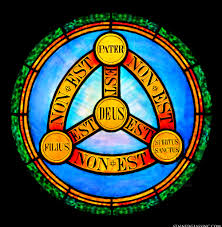
 Many have observed that Jesus’ Beatitudes did not materialize out of thin air. Rather, they show great continuity with the Old Testament. On this point, Craig Blomberg (in
  All the beatitudes that Jesus uttered in the Gospel,
 I am concerned that currently evangelical theology is not doing a very good job with the cross of Christ. Why do I say that? Because some of the most popular works on the cross of Christ are distorting, denying, or just plain ignoring the penal substitutionary nature of the atonement.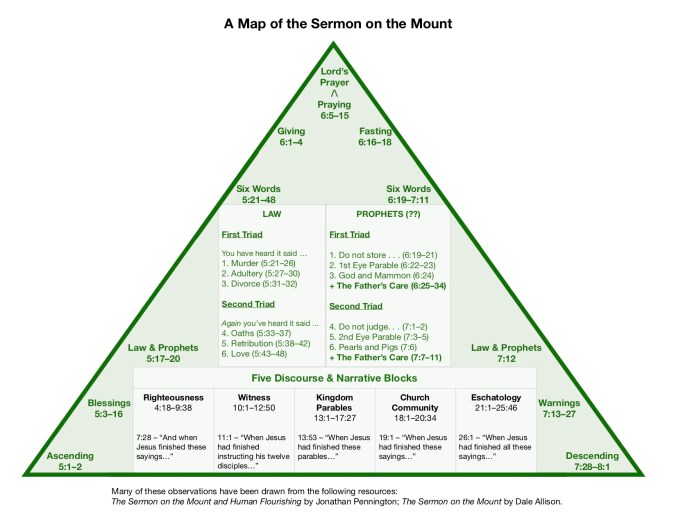
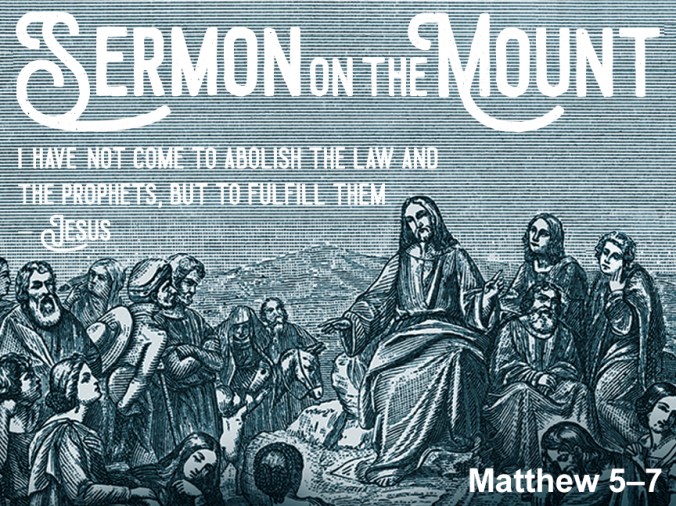
 The Sermon on the Mount is probably the most famous sermon ever preached, and for good reason. Its speaker is the Lord Jesus Christ; its location on a hill overlooking the Sea of Galilee is unique; and its language is both beautiful and profound. Even non-believers are familiar with many of the words Jesus spoke in this sermon.
 Earlier this
  Via Emmaus