 In recent years, interest in socialism has risen and conversations about Marxism, especially cultural Marxism, have permeated public discourse. From the Gallup Poll in 2019 which reported that four in ten Americans saw socialism as a good thing to the rise of Black Lives Matter whose founders openly identify themselves as “trained Marxists,” we are living at a time when Christians in America need to re-learn what past generations knew, and what Christians living in Cuba, China, and Czechoslovakia know, all too well: Communism, and its younger sibling Socialism, are godless ideologies that harm the masses.
As The Black Book of Communism (Harvard University Press) reports, nearly 100 million people died during the twentieth century under Communist regimes. And hence, it was both right and responsible for evangelicals during the Cold War to stand opposed to ideas of Karl Marx and his Communist Manifesto. As Grant Wacker reports in his biography of Billy Graham (America’s Pastor), the late evangelist often included a message against communism in his revivals. And more strategically, many Christians, evangelicals and otherwise, participated in the conservative project known as fusionism, in large part, to stem the tide of communism.
Today, however, with a generation of Americans untouched and untaught about Communism, the ghost of Karl Marx has risen again. In his book, Live Not by Lies, Rod Dreher addresses this very concern, when he begins by highlighting the concerns many from Eastern Bloc countries have had with modern America. He writes,
What unnerves those who lived under Soviet communism is this similarity: Elites and elite institutions are abandoning old-fashioned liberalism, based in defending the rights of the individual, and replacing it with a progressive creed that regards justice in terms of groups. It encourages people to identify with groups ethnic, sexual, and otherwise and to think of Good and Evil as a matter of power dynamics among the groups. A utopian vision drives these progressives, one that compels them to seek to rewrite history and reinvent language to reflect their ideals of social justice. (6)
What made these men and women flee Europe is now rising in America. The same thing is happening in Canada. Ivan, a trucker from Ukraine, put it like this when asked why he was joining the freedom convoy: “We came to Canada to be free—not slaves,” he said. “We lived under communism, and, in Canada, we’re now fighting for our freedom” (What the Truckers Want).
Importantly, this rise in elite-controlled social justice, woke racism, and identity politics is not something that stands outside the church either. Wokeness is making inroads within the church, too. From calls for social justice (largely undefined) to cries that Christian Nationalism (also undefined) are threatening our country, those in the church are missing something that previous generations did not and could not miss—namely, the evil that comes from a man-centered, God-denying, government-enforced attempt to build back better.
Indeed, while Critical Race Theory has gotten the most attention, one of its underlying promises, a vision of more fair and just society matches up well with Christians who want to do more than talk. In other words, advocates of social justice gain adherents by calling for a better world. And because some of the religious language maps onto Christian concerns, the result is an unholy fusion of Christ and cultural Marxism.
At the same time, some scholars have defined and denounced evangelicals, especially white conservatives who made a compact with the Republican party during the 1950s and 60s. One example of this is Kristin Kobe Du Mez in her book, Jesus and John Wayne. Expressing concern with the way patriarchal, white males championed the military and stood in the way of civil rights, women’s rights, and gay rights, she excoriates evangelicals for using their positions of power to prop themselves up and push others down.
Leaving a full evaluation of her book for someone else, I will simply say that she does not adequately consider the role Communism played in the 1950s and 60s. As Proverbs 18:17 reminds us, she who speaks first seems right, until someone else comes and questions her. And while she mentions Communism in her book, she does not consider the way Communist spies were infiltrating the halls of power throughout our country (see more below).
Like most of my generation, Du Mez has forgotten, or not cared to consider, how wicked communism was and is, and because she and others do not share the perspective that our Czechoslovakian neighbors do (see Live Not by Lies), they cannot appreciate the ways that evangelical leaders and conservative politicians worked together during the middle of the twentieth century. Nor, can she appreciate the fact that all the liberating works of the 1960s were suffused with communist ideas (see Roger Kimball, The Long March: How the Cultural Revolution of the 1960s Changed America). Even as civil rights were extended, and racial prejudice became illegal and unconscionable, there remained a set of rules for radicals that derived their origins from Cultural Marxists.
Today, the radicals of the 1960s have become our presidents and leading politicians. And in the church, the demands for egalitarianism, social justice, and gay rights are simply leftovers from the 1960s. Likewise, the progressive ideals of Jim Wallis, Ron Sider, and those who follow them, have shaped the way evangelicals—progressive and conservative—have approached culture. Indeed, thawed by the heat of Twitter, these old ideas are hatching new consequences. And because so many do not see or care to see the evils of Communism (consider NBC’s reporting of the Olympics) or the moral injustices of socialism, many of the radical ideas are facing little to no opposition. And that matters, because when the ideological offspring of Marx are given space to procreate, death not life results.
So with that long introduction out of the way, let me bring a witness to the stand, a man by the name of Whittaker Chambers. Continue reading
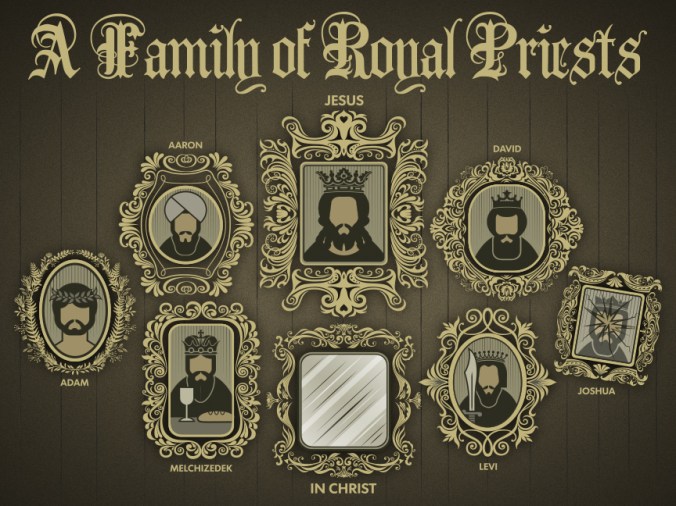 Crossway has a helpful series of blog articles called “
 And what was the one God seeking? Godly offspring.
 What will you do the next time you do not have a preacher? Oh, I am not talking about planning for an upcoming Sunday when you, or your pastor, will be absent, or when multiple teaching elders are unavailable. I am talking about when it becomes apparent 10 hours or 10 minutes before Sunday morning that the man called to preach simply cannot do it.
 When John Calvin returned to Geneva, after being exiled from the city for three years, he picked up right where he left off. Rather than preaching some preacher-centered ‘I’m Back” message, he simply preached the next verse in the Bible. So great was Calvin’s commitment to verse-by-verse exposition, he made no fanfare for his return to the pulpit. Rather, he preached the next verse in the text and pointed people to Christ.
 In the Spring of 2020, our church began a new sermon series on the Gospel of John. Little did we know that things would get really weird in March of that year, when the onslaught of Covid-19 led us to stop gathering for eight weeks. During that time and after, we looked Psalm 90–106 and Joel. Thereafter, our church studied Daniel, 1 Peter, and Proverbs 1–9, to name a few. Yet, it has always been the hope to resume our sermon series in John.
 In the Fall of 2019
  Keep a close watch on yourself and on the teaching [doctrine].
  Via Emmaus