A War of Words: How the Structure of Jeremiah Leads to Its Storyline

raphael-schaller-GkinCd2enIY-unsplashThis post is part of a series of resources for the Via Emmaus Bible Reading Plan. This month I am focusing on Jeremiah.

*************

If Jeremiah is structured around the word of the Lord, then it makes sense that the storyline of the book is also tailored to that end. God has called Jeremiah to speak his words to his people. Importantly, that word is not simply a message of comfort; it is a message that tears down and plucks up, a word that destroys and annihilates. Only then, can it build and plant (Jer. 1:10).

In Jeremiah’s call (ch. 1), we have an introduction to the man and his message, and as the visions signal, he will preach a message of judgment that will be rejected by his people. His message will include hope and blessing, but situated in the last decades of Judah’s reign in Jerusalem, his words of hope will all be future, not present. And thus, his words will go to war with his contemporaries. And over the course of his book, he will address the nation (ch. 1–24), the false prophets (ch. 25–34), the king (ch. 35–44), and the nations (ch. 45–52).

As seen yesterday, these four sections are ordered by various literary devices (disjunctive headings and narrative formulas), but they are also forming a storyline of God’s Word. And in his book, A Mouth Full of Fire, Andrew Shead shows how each section takes up the Word of God in order to tear down and pluck up the people of God. In order to understand the message of Jeremiah, therefore, we need to see how the book unfolds. And this is where Shead’s proposal is so helpful. Consider his outline. Continue reading

Can You See What Jeremiah is Saying? Finding the Literary Structure in a Book Where Structure is Often Missed

abstract close up cobweb connection

This post is part of a series of resources for the Via Emmaus Bible Reading Plan. This month I am focusing on Jeremiah.

*************

Whenever I teach hermeneutics or lead Bible studies, I want to help students of the Bible find the “breaks” in the text. Where does the human author insert literary devices to help the reader follow his message? In John’s Gospel, for instance, he organizes his introduction to Jesus around four days (John 1:19–51), and then he puts the wedding at Cana on the third day (2:1), which in context is the seventh day. In this way, John helps his audience know how he is ordering his material.

Such arrangement does not automatically produced meaning, but ignorance of an author’s literary structure will delimit our understanding. If we cannot see how the biblical author is writing, we won’t get what the author is saying. In any study of Scripture then, we must labor to understand the literary structure of a text. Sometimes this is easy, as in passages like Psalm 136, which repeats the refrain “for his steadfast love endures forever” (ESV) and follows the order of Israel’s history. But in other books, it is more difficult. And it is arguable that the book of Jeremiah is one of the most difficult books in the Bible for ascertaining a literary structure.

The reasons for this difficulty are manifold. First, Jeremiah is, by word count, the longest book of the Old Testament. And as we saw with Isaiah, it is a challenge to see the message of books so large. Second, the chronology of Jeremiah is difficult. The book does not proceed in historical order, and as a result some commentators (e.g., John Bright) have attempted to interpret the book by changing its order to match Israel’s history. This destroys the literary structure, however. As higher-criticism reigned over the last two hundred years, commitment to reading the Bible on its own terms was ignored and the mind of the interpreter trumped the words of the author. This will miss the message of the Bible and so we cannot follow those who rearrange the text.

Size and chronology are challenging in Jeremiah, but the greatest difficulty in finding the meaning of Jeremiah comes from divergent manuscripts. That is, when we compare the Hebrew text to the Septuagint (the Greek translation), we find that significant portions of the book are put in different order. This reminds us that the final form of the Bible came as a result of an editing process (cp. the arrangement of the Psalter), but leaving aside the formation of the final form, different final arrangements make it difficult to affirm a structure with certainty. And then, if meaning is tied to literary structure, then how should we can have confidence in finding a singular message about Jeremiah? Continue reading

What Does Baptism Look Like? Seven Observations from John 3:22–36

baptism_of_st_paul_-_capela_palatina_-_palermo_-_italy_2015-2“Look, he is baptizing, and all are going to him!”
— John 3:26b —

In John 3 a dispute about baptism arose between the disciples of John the Baptist and a Jew. While unnamed, this Jew caused an existential crisis for the followers of John. So great is their concern about purification, baptism, and the rise of Jesus, they run to their teacher and point to his baptism. Verse 26 captures their concern: “Rabbi, he who was with you across the Jordan, to whom you bore witness—look, he is baptizing, and all are going to him.”

In this question about baptism, prompted by a dispute about purification, we find an analogue to modern debates about this biblical ordinance. Today, there are questions related to the mode, the subject, and the place. That is: Does sprinkling or pouring count as baptism? What about sprinkling a believer? Or immersing an infant? (See video below). Does a private baptism between friends qualify? And how should we understand the difference (or similarities) between the initiating rite of the old covenant (circumcision) and the initiating rite of the new covenant (water baptism)? All these questions and more need biblical answers.

[The Greek Orthodox remind us that baptizō means immersion, plunging, dipping].

Over the last few years, I have written multiple articles on baptism in the Bible and its pre-requisite for membership in the church. As an unashamed Baptist, who affirms the historical confessions of London, Philadelphia, New Hampshire, and Nashville, I will continue to write on the subject. Why? Because baptism continues to come up in conversation with visitors and others who are thinking about membership at our church.

With that in mind, I offer another exegetical take on baptism—one that comes from John’s Gospel and the dispute about baptism found therein. Following the imperative to “Look!” we will look at what John says about John’s baptism, Jesus’s baptism, and the conversation in John 3 about the new birth, baptism in the Spirit, and the practice of baptizing repentant believers. So, with this visual approach to John 3, I offer seven things we see about baptism. Here’s the list; explanations will follow.

  1. Baptism is performed in public with a group of witnesses.
  2. Baptism requires biblical discernment.
  3. Baptism is handled by Jesus’s disciples, not Jesus.
  4. Baptism is always by immersion.
  5. Baptism requires people to seek water.
  6. Baptism leads to disputations.
  7. Baptism requires humility.

Continue reading

Seeing the Literary Structure of John 2–4

close up shot of bible text

The first step in understanding any book of the Bible is to see what is there and especially how the biblical author has arranged his material. In the case of the Gospels, for instance, it is important to remember Matthew, Mark, Luke, and John did not turn on their iPhones and hit record. While we have plenty of quotations from Jesus, nearly all of them have been translated from Aramaic and brought to mind by the Holy Spirit (John 14:26). This means we do not have Jesus’s spoken words in red letters. What we have are the Spirit-breathed words of God penned by the apostles.

In each book, the Spirit leads the authors to present Jesus in a coherent fashion. In Matthew’s Gospel, for example, Jesus is the Son of Abraham, the Son of David, the true Israel, and the prophet like Moses, to name a few ways he is presented. In John’s Gospel, Jesus is introduced as the true tabernacle (John 1:14), in whom the fullness of God dwells bodily. Throughout John’s Gospel, this theme of Jesus as the true and better temple will repeat (see e.g., John 2:19–22; 14:1–3).

Reading the Gospels on their own terms, therefore, becomes imperative for understanding their message. Harmonizing the Gospels (i.e., comparing Matthew to Mark to Luke to John) has its place, but it is far better to let the Evangelist speak each in his own way. When we do that, and stop strip-mining the text to find sources behind the Bible, we see how the Evangelists made their case for Jesus as God’s the Son, the long-awaited Messiah. To that end, this blogpost will consider one section of one Gospel—John 2–4. Continue reading

A Witness Against Wokeness: What Modern Christians Can Learn from an Ex-Communist

moises-gonzalez-e7qDqyaH99I-unsplashIn recent years, interest in socialism has risen and conversations about Marxism, especially cultural Marxism, have permeated public discourse. From the Gallup Poll in 2019 which reported that four in ten Americans saw socialism as a good thing to the rise of Black Lives Matter whose founders openly identify themselves as “trained Marxists,” we are living at a time when Christians in America need to re-learn what past generations knew, and what Christians living in Cuba, China, and Czechoslovakia know, all too well: Communism, and its younger sibling Socialism, are godless ideologies that harm the masses.

As The Black Book of Communism (Harvard University Press) reports, nearly 100 million people died during the twentieth century under Communist regimes. And hence, it was both right and responsible for evangelicals during the Cold War to stand opposed to ideas of Karl Marx and his Communist Manifesto. As Grant Wacker reports in his biography of Billy Graham (America’s Pastor), the late evangelist often included a message against communism in his revivals. And more strategically, many Christians, evangelicals and otherwise, participated in the conservative project known as fusionism, in large part, to stem the tide of communism.

Today, however, with a generation of Americans untouched and untaught about Communism, the ghost of Karl Marx has risen again. In his book, Live Not by LiesRod Dreher addresses this very concern, when he begins by highlighting the concerns many from Eastern Bloc countries have had with modern America. He writes,

What unnerves those who lived under Soviet communism is this similarity: Elites and elite institutions are abandoning old-fashioned liberalism, based in defending the rights of the individual, and replacing it with a progressive creed that regards justice in terms of groups. It encourages people to identify with groups ethnic, sexual, and otherwise and to think of Good and Evil as a matter of power dynamics among the groups. A utopian vision drives these progressives, one that compels them to seek to rewrite history and reinvent language to reflect their ideals of social justice. (6)

What made these men and women flee Europe is now rising in America. The same thing is happening in Canada. Ivan, a trucker from Ukraine, put it like this when asked why he was joining the freedom convoy: “We came to Canada to be free—not slaves,” he said. “We lived under communism, and, in Canada, we’re now fighting for our freedom” (What the Truckers Want).

Importantly, this rise in elite-controlled social justice, woke racism, and identity politics is not something that stands outside the church either. Wokeness is making inroads within the church, too. From calls for social justice (largely undefined) to cries that Christian Nationalism (also undefined) are threatening our country, those in the church are missing something that previous generations did not and could not miss—namely, the evil that comes from a man-centered, God-denying, government-enforced attempt to build back better.

Indeed, while Critical Race Theory has gotten the most attention, one of its underlying promises, a vision of more fair and just society matches up well with Christians who want to do more than talk. In other words, advocates of social justice gain adherents by calling for a better world. And because some of the religious language maps onto Christian concerns, the result is an unholy fusion of Christ and cultural Marxism. 

At the same time, some scholars have defined and denounced evangelicals, especially white conservatives who made a compact with the Republican party during the 1950s and 60s. One example of this is Kristin Kobe Du Mez in her book, Jesus and John Wayne. Expressing concern with the way patriarchal, white males championed the military and stood in the way of civil rights, women’s rights, and gay rights, she excoriates evangelicals for using their positions of power to prop themselves up and push others down.

Leaving a full evaluation of her book for someone else, I will simply say that she does not adequately consider the role Communism played in the 1950s and 60s. As Proverbs 18:17 reminds us, she who speaks first seems right, until someone else comes and questions her. And while she mentions Communism in her book, she does not consider the way Communist spies were infiltrating the halls of power throughout our country (see more below).

Like most of my generation, Du Mez has forgotten, or not cared to consider, how wicked communism was and is, and because she and others do not share the perspective that our Czechoslovakian neighbors do (see Live Not by Lies), they cannot appreciate the ways that evangelical leaders and conservative politicians worked together during the middle of the twentieth century. Nor, can she appreciate the fact that all the liberating works of the 1960s were suffused with communist ideas (see Roger Kimball, The Long March: How the Cultural Revolution of the 1960s Changed America). Even as civil rights were extended, and racial prejudice became illegal and unconscionable, there remained a set of rules for radicals that derived their origins from Cultural Marxists.

Today, the radicals of the 1960s have become our presidents and leading politicians. And in the church, the demands for egalitarianism, social justice, and gay rights are simply leftovers from the 1960s. Likewise, the progressive ideals of Jim Wallis, Ron Sider, and those who follow them, have shaped the way evangelicals—progressive and conservative—have approached culture. Indeed, thawed by the heat of Twitter, these old ideas are hatching new consequences. And because so many do not see or care to see the evils of Communism (consider NBC’s reporting of the Olympics) or the moral injustices of socialism, many of the radical ideas are facing little to no opposition. And that matters, because when the ideological offspring of Marx are given space to procreate, death not life results.

So with that long introduction out of the way, let me bring a witness to the stand, a man by the name of Whittaker Chambers. Continue reading

10 Things You Should Know About the Priesthood

priestcolorCrossway has a helpful series of blog articles called “10 Things You Should Know . . .” These articles summarize key ideas from some of Crossway’s recent books. And this week, they posted my contribution about the priesthood.

Here are the first three things you should know. The rest you can find here. The book you can find here. And a sermon series on the priesthood can also be found here.

1. The Edenic origin of the priesthood.

In Eden, God created mankind in his image to reflect his glory. In this setting, God crowned man with glory and honor (Ps. 8:5), authorized him to subdue and rule (Gen. 1:28), and gave him priestly instructions for serving in his garden-temple (Gen. 2:15; cf. Num. 3:8). This is the prototype of royal priesthood from which all other priests will be molded. In other words, when the priesthood is legislated in Israel, it will pick up language and imagery from Eden. At the same time, the Law of Moses divided the royal and priestly roles originally united in Adam. Thus, only a second Adam can unite priesthood and kingdom in a manner similar to Eden.

2. The cosmic fall of the priesthood.

When Adam sinned and fell short of God’s glory (cf. Rom. 1:21–23; 3:23; 5:12, 18–19), God expelled him from God’s garden-sanctuary (see Ezek. 28:11–19), destroying any chance of Adam serving God as priest-king. In the fall, Adam’s sin made sacrifice necessary, as indicated by the events of Genesis 4. Because death was the punishment for sin, blood must be shed. To be certain, the full consequence of sin and the need for a priest would require later revelation to explain (see Leviticus), but it is worth noting the original intent and downfall of the priesthood. For the rest of the Bible, we find a search for someone who could stand before God and serve as a mediator (cf. Job 9:33–35).

The Royal Priesthood and the Glory of God

The Royal Priesthood and the Glory of God

David S. Schrock

David Schrock traces the theme of priesthood throughout the Bible and displays how Jesus, the great high priest, informs the worship, discipleship, and evangelism of the church.

3. The fraternal development of the priesthood.

From Eden to Sinai, priestly ministration continued, but in a very ‘itinerant’ fashion. In the days of the Patriarchs, firstborn sons grew up to be mediators for their families. Job is a good example of this (Job 1:5), as is Abraham. In the Abraham narrative (Gen. 11:27–25:18), we find Abraham building altars (Gen. 12:7, 8; 13:4, 18), interceding for others (Gen. 18:22–33), and obeying God by offering a sacrifice (Gen. 22:1–18). While Abraham and his sons lacked the title of priest, these “priests” play an important role in understanding the earthly “priesthood” of Jesus—a priest in function, but without legal title. At the same time, the priestly service of firstborn sons helps explain Israel’s role as a royal priesthood (Ex. 19:6).

For the last seven points, see Crossway’s 10 Things You Should Know About the Priesthood in the Bible.

Soli Deo Gloria, ds

Isaiah’s Search for Godly Offspring: A Storyline for the Son(s) of God

josue-michel-eCZ24v-sQyM-unsplashAnd what was the one God seeking? Godly offspring.
— Malachi 2:15 —

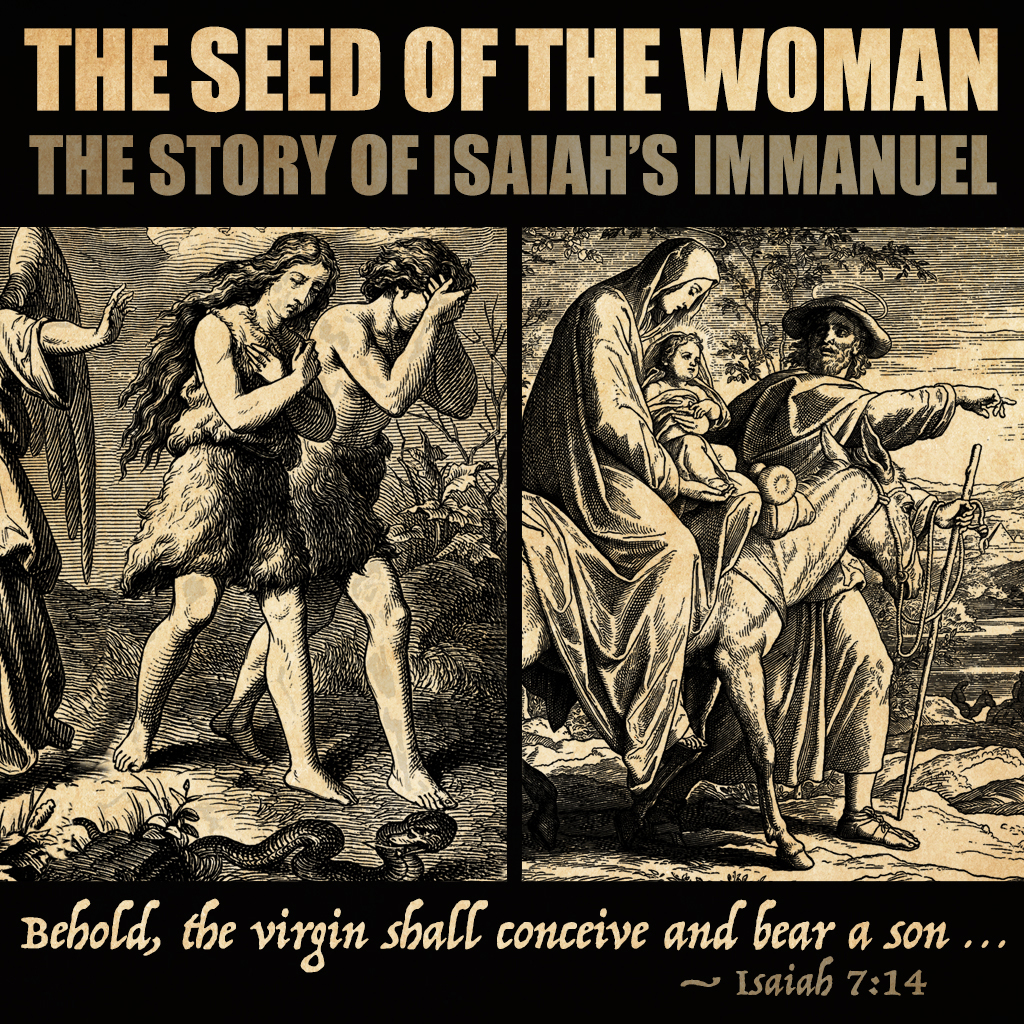
Maybe’s its odd to start of meditation on Isaiah by citing Malachi, but as I will show, Malachi 2:15 encapsulates a key theme that runs through the book of Isaiah—namely, the presence of godly offspring in the place of God’s dwelling (Zion). From the beginning to the end of Isaiah, the search for godly offspring is a central theme that holds the book together. And if we are going to understand the message of Isaiah—and not just verses from Isaiah—we need to see how it fits together.

The Search for Godly Offspring Begins

When Isaiah begins, he immediately brings us into God’s courtroom, where Yahweh, the sovereign ruler  of the cosmos is bringing a judgment against his people Israel. Isaiah 1:2–4 reads,

Hear, O heavens, and give ear, O earth; for the Lord has spoken: “Children [sons] have I reared and brought up, but they have rebelled against me. 3 The ox knows its owner, and the donkey its master’s crib, but Israel does not know, my people do not understand.” 4 Ah, sinful nation, a people laden with iniquity, offspring [seed/s] of evildoers, children [sons] who deal corruptly! They have forsaken the Lord, they have despised the Holy One of Israel, they are utterly estranged.

Here is the problem: God had redeemed the seed of Abraham in order to make them a kingdom of priests and a holy nation (Exod. 19:6). Yet, by the eighth century B.C., during the reigns of “Uzziah, Jotham, Ahaz, and Hezekiah, kings of Judah” (1:1), the city of God had become corrupt. Jerusalem traded in iniquity, so that wickedness marked all their ways and evil impelled all their intentions. As Isaiah 1:1–18 makes clear, the godly offspring were absent. And as a result, Isaiah 1–5 recall God’s intentions to empty Zion of all wickedness, so that he could once again create sons and daughters who would bear fruit for his glory.

This vision is how Isaiah begins his prophecy, and it helps us to see how the whole book will proceed. That is to say, by paying attention to the overlapping themes of sons and seeds (i.e. offspring), mothers and daughters, childbirth that succeeds and childbirth that fails, we get a clear(er) picture of what God is expecting of Israel and what God is planning to do for his rebellious people.

In truth, anyone who has been around church on Christmas knows the famous verses of Isaiah 7:14 and 9:6–7. But I suspect most don’t know how those verses fit into the structure of Isaiah and how the whole book anticipates the birth of Christ and the new birth promised by him (see John 3).

One way we misread Isaiah is to climb aboard the promise of Immanuel in Isaiah 7:14 and make it a connecting flight to Matthew 1:23. Positively, this approach may heighten our confidence in the predictive nature of the Old Testament—a truth I gladly affirm—but negatively, it fails to understand what Isaiah 7:14 means (in context) and how all of Isaiah is anticipating the virgin birth of God’s Son.

While direct flights are great when traveling from coast-to-coast, they are not advisable when seeking to understand the Bible cover-to-cover. And thus, in what follows I will trace the promise of seeds, sons, childbirth, and motherhood through Isaiah to show how the whole book anticipates the coming of Christ and all those children who will be born by the Spirit—the godly offspring that God has formed in his new covenant people. Continue reading

Preach Hebrews the Next Time You Don’t Have a Preacher, Plus a Post-Script on Answered Prayer

dawn-mcdonald-2RADIf5oR28-unsplashWhat will you do the next time you do not have a preacher? Oh, I am not talking about planning for an upcoming Sunday when you, or your pastor, will be absent, or when multiple teaching elders are unavailable. I am talking about when it becomes apparent 10 hours or 10 minutes before Sunday morning that the man called to preach simply cannot do it.

In such a situation, you have a few options. You could call on someone to preach something already prepared. Such preparation includes having a sermon ready, but it could also mean calling on a “prepared” person who could open a text and give a faithful exposition. Elder-qualified pastors and Bible teachers would fall into this category. And one of the best Resurrection Sunday expositions I ever heard came from a seminary professor who was called to preach 10 minutes before service as the teaching pastor lay ill in his office—literally, he was writhing in pain on the floor. (He’s okay now).

Extreme moments call for extreme measures. And churches shouldn’t be surprised that in a fallen world where clay pots preach the glories of God that sometimes those vessels of dust cannot stand and speak. Yet, knowing that, we can still be caught off guard, or in need of immediate relief. And this last weekend was such a case in our church.

What We Did When the Preacher Couldn’t Preach

As many readers of this blog know, I am not a full time blogger—hence, the regular but not absolutely consistent blog schedule. Day to day, I have the joy of serving at Occoquan Bible Church, located in Northern Virginia. Since 2015, I have been pastor for preaching and theology. So, most Sundays I am the one standing up and preaching.

At the same time, we have a deep bench of gifted preachers. And if you check our website, you will find messages from Ben, Rod, Jared, Dave, Ron, and Jeff. All of our elders have preached multiple times to our church. And by conviction, we do this because we believe the pulpit is the Lord’s, not man’s. It is God’s Word that is preached, not our own. And it is the faithful preaching of God’s Word that builds his church, not the gifting of any one pastor. For that reason, we intentionally share the pulpit. And by design I preach about 40 times a year, not 52.

Continue reading

The Via Emmaus Bible Reading Plan: February Resources for Exodus, Jeremiah, and Mark

Jesus washing the feet of Saint Peter on Maundy Thursday

This month the Via Emmaus Reading Plan is looking at Exodus, Jeremiah, and/or Mark. (See below for the tracks). If you are following this plan, or looking for a new reading plan, you can find helpful resources on the following pages. 

Track 1: Exodus

Track 2: Jeremiah

Track 3: Mark

If you have other resources on these books, please feel free to share.

May the Lord bless you and keep you and make his face shine upon you as you draw near to him in his Word. Continue reading

Getting Back Into John’s Gospel: An Introduction to Jesus Christ in John 1–2

john03When John Calvin returned to Geneva, after being exiled from the city for three years, he picked up right where he left off. Rather than preaching some preacher-centered ‘I’m Back” message, he simply preached the next verse in the Bible. So great was Calvin’s commitment to verse-by-verse exposition, he made no fanfare for his return to the pulpit. Rather, he preached the next verse in the text and pointed people to Christ.

This week, our church did something similar. In March 2020, we were forced to stop gathering for two months. And though we continued to preach the Bible (online at first and soon after together), we moved from John to Psalms and Joel and other scriptures. In leaving John, we always planned to come back, and by God’s grace we were able to do that on Sunday.

Picking up where we left off, we overviewed John 1–2 to remember what those chapters said. In seven portraits from those two chapters, we saw a beautiful picture of Christ. And in return, we learned two important things about ourselves. You can find those nine truths in this sermon: Getting Back Into the Gospel of John. You can also find our earlier sermons here, plus other resources on John’s Gospel.

May the Lord bless this series and permit us to continue to study the Gospel of John.

Soli Deo Gloria, ds