Hustle, Charlie Hustle!

charlie hustleBrett McKay, from the “Art of Manliness,” challenges men to hustle. In the spirit of Mark Chanski’s Manly Dominion or Owen Strachan’s Risky Gospel, McKay (with a few more expletives) challenges men to stop making excuses and hustle. He makes his point by observing how leaders in history hustle. He writes,

Looking at the men that I admire from history, they all have one thing in common: they were hustlers. Theodore Roosevelt accomplished an insane amount of work because he lived the strenuous life, i.e. hustled. Thomas Edison patented thousands of inventions and perfected the light bulb because he spent all day hustling. Frederick Douglass was an orator, diplomat, newspaper editor and author because he hustled. And pretty much every self-made man has the same story.

With a few personal anecdotes McKay makes a strong case that true men do not passively wait for good things to happen. They make things happen. Over all his article is worth reading, with a few caveats.

  1. Hustle will accomplish much on earth, but unless a man abides in Christ, he will accomplish nothing of eternal value. As John 15:5 says, “Apart from me you can do nothing.” Likewise, Jesus said in Mark 8:36, “For what does it profit a man to gain the whole world and forfeit his soul?” In short, hustle can make great earthly gains, but it is insufficient for heavenly treasure (cf. Matt 6:19-21).
  2. Similarly, this “world may belong to those who hustle,” as McKay says, but the age to come still belongs to the meek. Against the worldly wisdom that the world belongs to those who work for it, Jesus says the earth will ultimately be given “as an inheritance” (i.e., a gift) to the meek (Matt 5:5).
  3. Meekness and hustle are not mutually exclusive in the life of a Christian. God created a world where hard work is rewarded, and rightfully so. Proverbs speaks often about the dangers of idleness and the blessings of diligence. But no amount of hustle, work, or wisdom can earn a place in God’s eternal kingdom for men born “in Adam” (Rom 5:18-19). Christ alone gained the kingdom through hard work. Why? Because he alone worked without sin. For him, he gained the whole world by way of his perfect righteousness. For the rest of us, sin invites God’s wrath and misdirects our work.
  4. That said, hustle, hard work, and endurance are societal norms for the kingdom of God. While hustle will not earn the kingdom, it is a value esteemed in the kingdom. Paul says in Ephesians 2:10 that we are created in Christ Jesus for good works. Likewise, Paul commended the example of hustle when he compared himself to others saying, “I worked harder than anyone of them” (1 Cor 15:10), but Paul quickly added, “though it was not I, but the grace of God that is within me.”

Therefore, with these caveats in place, we can say that man’s calling is to organize the chaos, build organizations, solve problems, fix equipment, save lives, and serve others with passion, wisdom, and hustle. Passivity and purposelessness are not manly values, and neither are they godly qualities. Real men hustle, and saved by grace and empowered by the Spirit, men of God will hustle in their earthly labors.

Soli Deo Gloria, ds

(HT: Eric Bancroft)

Keeping In Step with the Spirit by Following in the Footsteps of J.R.R. Tolkien

ImageLast week, Albert Mohler republished one of his essays, “From Father to Son—J.R.R. Tolkien on Sex.” It deserves to be read by fathers and sons and everyone else. It is taken from Mohler’s book Desire and Deceit: The Real Cost of the New Sexual Toleranceand the essay is about J.R.R. Tolkien’s views on sex, captured in a host of letters to his three sons (see The Letters of J.R.R. Tolkien).

Mohler’s article is well worth the read as it sets out the ways in which Christian Scripture informed Tolkien’s sexual ethic and the way that the architect of Middle Earth stood against the prevailing notions of sex half-a-century-ago. Here are some of the best lines from Tolkien’s letters, which Mohler included in his essay.

  • The dislocation of sex-instinct is one of the chief symptoms of the Fall.
  • The devil is endlessly ingenious, and sex is his favorite subject,
  • Monogamy (although it has long been fundamental to our inherited ideas) is for us men a piece of ‘revealed’ ethic, according to faith and not to the flesh.
  • Faithfulness in Christian marriage entails that: great mortification. For a Christian man there is no escape. Marriage may help to sanctify and direct to its proper object his sexual desires; its grace may help him in the struggle; but the struggle remains.
  • No man, however truly he loved his betrothed and bride as a young man, has lived faithful to her as a wife in mind and body without deliberate conscious exercise of the will, without self-denial.
  • Christian marriage is not a prohibition of sexual intercourse, but the correct way of sexual temperance–in fact probably the best way of getting the most satisfying sexual pleasure . . . .

As is evident, Tolkien conceived of sex in a way that is lost on inhabitants of the twenty-first century, and that is foreign to many Christians too. His perspective needs to be heard, and fatherly model of speaking candidly to his children about sex needs to be imitated too. Let me close with Mohler’s reflections:

From the vantage point of the 21st century, Tolkien will appear to many to be both out of step and out of tune with the sexual mores of our times. Tolkien would no doubt take this as a sincere, if unintended, compliment. He knew he was out of step, and he steadfastly refused to update his morality in order to pass the muster of the moderns.

When it comes to sex, may we keep in step with the Spirit, by following in the footsteps of someone who did not succumb to the spirit of the age.

Soli Deo Gloria, dss

How Sheep Can Shepherd Their Shepherd’s Lambs

ImageI am thankful to be at a church that loves our children and encourages me to spend time with them. I have members who ask about the time I am spending with them and have never received a complaint for the time I take with them or the times I bring them with me to ministry activities.

On that subject, the need for churches to care well for their pastor’s children, Chap Bettis has provided seven important exhortations for the way churches can shepherd their pastor’s children. Let me share them with you: 

  1. Give grace to the pastor’s children on Sunday.  
  2. If you have a concern, talk to your pastor about behavior that characterizes the children. But do so with an attitude of loving acceptance.   
  3. Be generous in your praise.  
  4. Limit church criticism and complaint to private conversations among adults.  
  5. Be brave and rebuke the critics. Unfortunately, not everyone in the congregation will follow this suggestion. When grumbling and faultfinding spill over in front of you, speak up.  
  6. Give your pastors room to deal with their children’s hearts. Older children will go through some spiritual ups and downs. How will you think about those bumps? With care and affection? Or self-righteous judgment?  
  7. Give your pastors margin to minister to their families. Children need their father. . . . Even as a church member, you can encourage your pastors to care for their families.

These seven guidelines and the explanations Chap provide come from twenty-five years of ministry with, by God’s grace, children who are not embittered towards the church. 

May God multiply Chap’s testimony, and give pastors church families that shepherd their children well, even as they shepherd their church.

Soli Deo Gloria, dss  

[photo credit: ThomRainer.com]

Luke Short’s Long Life

sowingIn the Puritan Paperback, The Mystery of Providenceby John Flavel, Michael Boland gives the publishers introduction. Commenting on Flavel’s remarkable influence, he writes of Luke Short, a man deeply impacted by Flavel—some eight decades after Short heard Flavel!

Here’s what Boland writes:

Luke Short was a farmer in New England who attained his hundredth year in exceptional vigor though without having sought peace with God. One day as he sat in his fields reflecting upon his long life, he recalled a sermon he had heard in Dartmouth as a boy before he sailed to America. The horror of dying under the curse of God was impressed upon him as he meditated on the words he had heard so long ago and he was converted to Christ—eighty-five years after hearing John Flavel preach. (John Flavel, The Mystery of Providence11) Continue reading

B. B. Warfield and the Second Beatitude

warfieldNinety-three years ago today, Benjamin Breckenridge Warfield, a native of Kentucky and a world-renowned theologian went to be with the Lord. His death came six years after his wife’s, a woman who had spent years bedridden in their home in Princeton, New Jersey.

Nearly fifty years earlier (1876), Warfield had married Annie Pearce Kinkade. She was the descendent of Revolutionary War hero, George Rogers Clark. And when they wed, they were ready for a lifetime of happiness together. Presumably Warfield would teach; Annie would tend to the home and raise children.  I say presumably, because such were not the circumstances God gave them. Continue reading

Five Lessons from an Unlikely Missionary

The first missionary I heard of was not Lottie Moon or Jim Elliot. It was Dr. Dolittle, the man with the curious ability to speak to animals. When I was a boy my parents read to me about his astonishing adventures and the way he traveled over oceans to care for a host of animals.

I admit, most of my memories of that book have faded, but one memory remains: the pushmi-pullyu (pronounced ‘push-me—pull-you’). In Hugh Lofting’s book the bizarre animal was a ‘gazelle-unicorn cross’ with two heads at opposite ends of its body. In the book, Dr. Dolittle first meets a pushmi-pullyu while in Africa, and is eventually awarded one after vaccinating a kingdom of monkeys. Sounds interesting, doesn’t it?!

The gift of this animal sets Dolittle on a tour around England, the proceeds from which enabled him to retire to his home in Puddleby-on-the-Marsh. In all honesty, Lofting’s book is slightly absurd but it succeeded in charming readers young and old with this animal-loving ‘missionary.’ Continue reading

That’s the Prosperity Gospel

One of the reasons I’ve been preaching on “blessing” and considering the prosperity gospel this month has to do with the fact that I see its falsehoods in the Christians I meet, and I see its deceptions in my own heart. SEBTS ethics professor, David Jones hits this point  in his short article, “The Prosperity Gospel in My Own Heart.” He writes,

Imagine you’re driving to church on a cold, rainy Sunday morning, and to your dismay you get a flat tire. What is your immediate thought? “God, really? I’m going to church. Isn’t there some drug dealer or abusive husband you could have afflicted with a flat tire?” That’s the prosperity gospel.

Or maybe you don’t get that promotion at work, your child gets sick, or you’re unfairly criticized at church. The result? You get mad at God because you were overlooked, troubled, or disparaged. That’s the prosperity gospel.

The very thought that God owes us a relatively trouble-free life, and the anger we feel when God doesn’t act the way we believe he is supposed to act, betray a heart that expects God to prosper us because of our good works. That’s the prosperity gospel.

I don’t know an American Christian who hasn’t struggled with this sort of thinking—questioning God’s providential goodness when, in our attempts to serve him, he has permitted (or better: ordained) our trial. It is part and parcel of the evangelical experience in America that the message of salvation is accompanied by a promise of God’s good plan: “God loves you and has a wonderful plan for your life,” which includes eternal life and the absence of flat tires, right?

Not really. This is an American gospel of our own making. Therefore, we need to consider afresh just how much upward mobility we have imported into our own Christian faith. In my own case, I see far more than I would like to admit, and as I think on the prosperity gospel, I am beckoned to repent and return to the true gospel. Maybe God would have you do the same? And maybe, he would use David Jones’ article to help you see the tentacles of prosperity latching to your own heart.

For more reflections on the prosperity gospel, see this month’s 9Marks Journal on that subject.

Soli Deo Gloria, dss

The Prosperity Gospel: The New 9Marks Journal

prosperityThe new 9Marks Journal released today covering the subject of the “Prosperity Gospel.” In its thorough coverage of the subject, it helps readers discover, analyze, and respond to the many forms of this false gospel, which floods America and pours forth into the world. In it you can find articles from David W. Jones (whose written a book on the subject: Health, Wealth, and Happiness: Has the Prosperity Gospel Overshadowed the Gospel of Jesus Christ?), John Piper, D. A. Horton, and many others. They even included my article, “A Softer Prosperity Gospel: More Common Than You Think.”

Let me encourage you to take some time to read the articles, beginning with Jonathan Leeman’s editorial. Leeman rightly assesses the stock market value of the prosperity gospel and warns us not to buy its goods. Let’s pray that God would open our eyes to see the prosperity gospel pervading our land and enticing our heart, so that we can turn from its idolatrous offerings and find true blessing in Jesus Christ alone.

If you need further reason to read this journal, consider Leeman’s insightful editorial: Continue reading

Announcing Our Third . . .

stockingI am overjoyed to announce that we are expecting our third child in July. Here’s my announcement from Facebook:

At Christmas this year, our joy was increased
God gave his Son and more to the least.

An extra stocking was hung by our chimney with care
An announcement was made that we can now share.

Titus and Silas were told they would be 
Big brothers to a sibling three

Eager to meet the new baby soon
They counted the months, April, May, June

July is the month we expect our third child
Another rambunctious boy? Or a girl, sweet and mild?

Whatever God gives us we will give praise,
Aware of his goodness, proclaiming his grace.

Grateful to God for this gift and humbled by the stewardship of raising another child.

Soli Deo Gloria, dss

Whose ‘Blessed’? Five Reflections from the Psalms

blessedBlessingIt’s what every wants, but few know how to get.

In America, we have a certain brand of blessing that has come to be known as the prosperity gospel. You can find its explicit version on TBN and its more subtle form in a Christian bookstore near you. This subtler prosperity gospel comes with invitations to ask God for the impossible and promises to help you break through to the blessed life. In its softer form, the blood of Christ may not be denied; it’s just hidden behind the luggage of the Lord’s blessings.

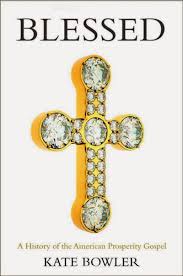
In other words, instead of centering on the “blessed and only Sovereign” (1 Tim 6:15), this soft prosperity preaching, as Kate Bowler calls it, centers on man and his earthly desires. Lost is a sense of eternal gravitas and the biblical conviction that God created the universe for his glory. What it lacks is a sense of what blessing is and isn’t. We need to let Scripture inform our understanding of blessing, and we need to see that true blessing is radically God-centered. Continue reading