What Does the Flood Teach Us About God?

floodAs it so often happens in preaching, to make one point from the text of Scripture, requires glossing over another. This is especially true when working with large chunks of Scripture.

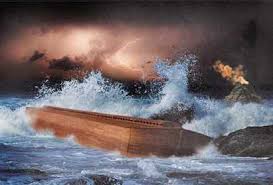
Yesterday, I did that as I preached the Flood narrative (Gen 5:28–9:17). In that section, Moses records that God was ‘sorry’ that he had created man (6:6), which raises a whole host of questions related to God and his relationship to the world: Can God suffer? What does it mean that he is sorry? Does God change his mind? Does God know the future? Etc.

As I mentioned those things in the message, my mind was thinking: “I am not spending enough time explaining this.” But since the goal was not verse-by-verse exposition but the exposition of the whole narrative, I pressed on.

Still important questions remain about what Moses meant in Genesis 6:6. Whole revisionist theologies have been created on the basis of those questions. Open Theism, a view that denies God’s absolute knowledge of the future along with his foreordination of contingent events, arises from the emotional problem with evil and passages like Genesis 6:6 which on the surface insinuates that God changes his mind or grieves over mistakes in history.

In yesterdays sermon, I did not get a chance to answer some of those questions, but here are a few places where I or others have addressed the subject of God’s impassibility and his relations with the world.

Can God Suffer?

Immutability and Impassibility: Essential Truths in an Uncertain World

God Does Not Repent Like a Man (John Piper)

Here’s the sermon audio from yesterday:

This message kicked off a series on the holiness of God in the Old Testament. Admittedly, the message focuses more on God’s justice and mercy than his holiness per se. Nevertheless, as the first major display of God’s action in redemptive history (post-fall), it displays a vital reality: In his holiness, God is dreadfully severe towards sin and awesomely gracious towards his covenant people (cf. Rom 11:22).

Soli Deo Gloria, dss

What’s Going on in Genesis 1–11?

genesisSince Julius Wellhausen suggested that the first five books were not written by Moses, there has been an endless discussion between biblical scholars about the first eleven chapters of Genesis. Some have suggested that it is a compilation document written over time from the various viewpoints of various redactors. For others, its poetic form proves that it is mythological account of creation, on par with other pagan etiologies. However, following the likes of G. K. Beale, it seems best to see any interaction between Moses and other ancient Near Eastern religions (and there certainly was familiarity and interaction) as polemical attempts to esteem Yahweh-Elohim as the sovereign creator of all things.

There are many reasons for affirming the historical nature of Genesis 1-11 and the singular authorship of Moses, but perhaps one of the most awe-inspiring is the literary arrangement of Genesis 1–11. Borrowing from the observations of others, let me suggest two suggestive patterns in Genesis 1-11 that show how carefully Moses, schooled in Egypt and inspired by the Holy Spirit, wrote a record of Creation, Fall, Judgment, Salvation, and New Creation. Continue reading

Thinking About ‘Near Death Experiences’

heavenDavid Jones, professor of Christian Ethics at Southeastern Baptist Theological Seminary, has provided an excellent resource on how to think about “Near Death Experiences” (NDE). In four pages, he gives thoughtful Christians a historical, cultural, biblical, and practical look into a discussion prompted by the recent movie Heaven is for Real.

Here’s a brief outline:

  • He begins with the way that all religions have NDE tales, and he chronicles the rise in recent Christian interest in the subject.
  • He points to the ten NDE in the Bible (e.g., the widows son, 1 Kgs 17:17–24; the Shunammite’s child, 2 Kgs 4:32–37;  the dead man who touched Elisha’s bones, 2 Kgs 13:21; Jairus’s daughter, Matt 9:18–26 [par. Mark 5:21–43; Luke 8:40–56]; the widow’s son, Luke 7:11–16; unnamed saints, Matt 27:52–53; Jesus, Matt 28 [par. Mark 16; Luke 24; John 20–21]; Lazarus, John 11:1–4; Dorcas, Acts 9:36–41; and Eutychus Acts 20:9–12) and observes that no one (including Jesus) returned to earth touting the glories of heaven.
  • He considers a number of other heavenly experiences in Scripture and concludes with cautionary counsel from Scripture about the recent book/movie Heaven is for Real and its predecessor 90 Minutes in Heaven—the book which Tim Challies notes as creating a new genre of Christian non/fiction (namely, Heaven Tourism).

If you have read the book, seen the movie, or are in conversation with those who have, let me encourage you to read Dr. Jones four-page outline. It will give you more than a few things to think about and help you formulate a better understanding of what Scripture says about heaven, seeing God, and near death experiences.

Soli Deo Gloria, dss

Noah and Moses: Priestly Prototypes

noahIn his commentary on the Noah story, Gordon Wenham observes a number of ways that Noah and Moses are typologically related to one another. In a section that asks how God’s mind was changed towards mankind after the Flood, he rightly suggests that the sacrifice of Noah had a propitiatory effect on God’s anger (Gen 8:20–22).

In developing this point theologically, Wenham posits two things: (1) the acceptance of every sacrifice requires the antecedent grace of God and (2) the sacrifice of Noah serves as a “prototype of the work of later priests.” (Genesis 1–15190). In other words, Wenham deals with both the character of God that is both holy and gracious; and he contends that in order for sinful man to enjoy God’s mercy and avoid his wrath, a priestly sacrifice is necessary.

Assigning to Noah a priestly role, he then relates Noah’s function to that of Moses another priest of God (cf. Ps 99:6). He cites R. W. L. Moberly with approval.

The striking similarity between the flood and Sinai, between Noah and Moses, is of great theological significance for the interpretation of each story. . . . The world, while still in its infancy, has sinned and brought upon itself Yahweh’s wrath and judgment. Israel has only just been constituted a people, God’s chosen people, yet directly it has sinned and incurred Yahweh’s wrath and judgment. Each time the same question is raised. How, before God, can a sinful world (in general) or a sinful people, even God’s chosen people (in particular), exist without being destroyed? Each time the answer is given that if the sin is answered solely by the judgment it deserves, then there is no hope. But in addition to the judgment there is also mercy, a mercy which depends entirely on the character of God and is given to an unchangingly sinful people. (At the Mountain of God92; cited by Wenham, Genesis 1–15, 191)

Moberly is exactly right on at least two accounts. Continue reading

With Calvin in the Theater of God

glory1A few years ago I read through some of  With Calvin in the Theater of God (by John Piper and David Mathis). The book spotlights a reality of Calvin’s theology that has been noticed by many who read him: Calvin was enthralled with the creation of God because in it he perceived the manifold perfections of the God of Creation. Might we all be so observant of God’s glory.

This morning, as I have picked up Calvin’s two volume devotional—what others consider his theological treatise—I was struck by Calvin’s wonder at God’s creation and the way it calls men and women made in his image to see God in his creation. Although the translation below (which is available for free online) is a little more difficult to read than Battles’ translation, it captures the same breathtaking truth: Man is not excused from worshiping God, because all creation testifies to God’s beauty.

Consider Calvin’s Scripture-saturated meditation and drink in the wonder of how God has revealed himself in creation:

Since the perfection of blessedness consists in the knowledge of God, he has been pleased, in order that none might be excluded from the means of obtaining felicity, not only to deposit in our minds that seed of religion of which we have already spoken, but so to manifest his perfections in the whole structure of the universe, and daily place himself in our view, that we cannot open our eyes without being compelled to behold him. Continue reading

Without Holiness . . .

bushSunday I will begin a series of sermons on the holiness of God, namely his kindness and severity evinced in the stories of Old Testament Israel. Since the history and example of Israel has been given to Christ’s church, it is vital that we labor to know those men and women who walked with God in the Wilderness, and more, we must know the Holy One of Israel, whose holy love impelled the Father to send the Son to die for sinners.

In truth, we in the modern church are not comfortable lingering with God and meditating on the fact that he is a consuming fire (Heb 12:29). We are much more accustomed to bite-size theology, ten minute devotionals, and casual worship. And yet, what the church needs most today is a fresh encounter with the holiness of God.

Or maybe I just speak for me. I continue to be struck by how much my faith is influenced by the weightlessness of modern evangelicalism. I am not surprised at how my ambient culture has impacted me; I am surprised by how little the God of the Bible has impacted modern Christians. This is why I will be preaching on the kindness and severity of God found throughout the Bible (cf. Rom 11:22).

Without Holiness . . .

Most recently, this thought about our need to ponder the holiness of God was stirred afresh by David Wells in his book God in the WastelandHis soul-searching, heart-pulverizing disclosure of God’s holiness indicates what happens to grace, sin, God, and the gospel when churches overlook the holiness of God. In his survey of Scripture and church culture, he explains what has happened to the modern church who by and large operates without a sense of holiness.

Consider his words, which I’ve bullet-pointed to draw attention to the idea of holiness’s absence (pp. 144–45). Continue reading

Raised for Our Justification (Sermon Audio)

But the words “it was counted to him” were not written for his sake alone, but for ours also. It will be counted to us who believe in him who raised from the dead Jesus our Lord, who was delivered up for our trespasses and raised for our justification.
– Romans 4:23-25 –

On Resurrection Sunday I preached a message on Romans 4:23-25. I asked the question: What does the resurrection of Jesus Christ mean? And I showed from Romans 4:25 how Christ’s resurrection served to justify his people. In four points, I argued

  1. Justification comes from belief in God’s word, not our personal fancies
  2. Justification comes from belief in the God of history, not merely belief in historical facts
  3. Justification comes from belief in the Gospel, not our works
  4. Justification comes from Christ himself

On this last point, I aimed to show Christ died and rose as public person, not a private individual. In biblical terminology, Christ died and rose again as a Bridegroom purifying his bride, a Shepherd rescuing his sheep, and the Head of the Church justifying his body.

Accordingly, when Christ was raised from the grave justified his bride, his sheep, his church. It is a glorious truth, one worth pondering now and forever. Here’s the message.

Soli Deo Gloria, dss


Holding Fast to the Truth

truthLast week The Gospel Coalition posted a blog I wrote on the nature of truth. I argued that truth is inspired by God, incarnate in Christ, and progressively revealed by the Spirit as the Triune God effects redemption throughout the ages.

Here’s its summary:

Without coincidence, true truth is triune truth: it’s decreed by God (the Father), personified in God (the Son), and effected by God (the Spirit). Contrary to popular belief, truth isn’t based on personal feeling, self-understanding, or a contemporary situation. It’s based on God’s revelation, centered in the gospel, and revealed by the transforming work of the Spirit.

Unlike the mood of our age, truth isn’t something we can create, discover, or deny. Like the innocent man Pilate sentenced to death, truth has a way of coming back to life.

May we, like Jesus, make the good confession and hold fast to the truth.

You can read the whole thing here: Holding Fast to the Truth.

Soli Deo Gloria, dss

Christ’s Resurrection Confers Glory Upon Shameful Sinners (1 Corinthians 15:35-49)

gloryThis post wraps up a three-part meditation from our Resurrection Sunday Sunrise Service (part 1 and part 2).

The last thing to see about Christ’s resurrection is how God confers glory upon those who do not deserve it. In fact, this is again the difference between Adam and Christ: The first was created to glorify God, but failed. He led the human race into shame. By contrast, Jesus came into the world in the likeness of sinful flesh (Rom 8:3). He took the form of a servant (Phil 2:5-8) and died shamefully so that he might arise gloriously and confer glory to all those who rise with him. Continue reading

What is Saving Faith?

faithOn Easter as we call people to repent of sin and believe on Christ, it is worth our time to consider the essential nature of saving faith. Therefore, from Romans 4 I have gleaned eight truths about saving faith. I am sure this list is not exhaustive, but I pray it will help you think about the kind of faith you have in Christ.

Saving Faith

1. Saving Faith responds to the one, true and living God. 

Verse 3 says, “‘Abraham believed God, and it was counted to him as righteousness.'” In context, this citation of Genesis 15:6 is the driving force for Paul to appeal to Abraham. In Romans 3 Paul wrapped up his argument that every Jew and Gentile has sinned and fallen short of God’s glory (v. 23); the wrath of God stands to condemn all men for their sin (1:18; 2:5; 3:18), unless they have faith in God.

Thus as Paul explains what saving faith is in Romans 4, he quotes or alludes to Genesis 15:6 at least nine times (vv. 3, 4, 5, 9, 10, 11, 22, 23, 24). Paul’s point is to show that those who believe in the God of Abraham will find legal pardon—i.e., God will reckon them righteous by means of faith in him. What follows are the stipulations attached to that justifying faith, but first foremost saving faith is faith in God. Continue reading